

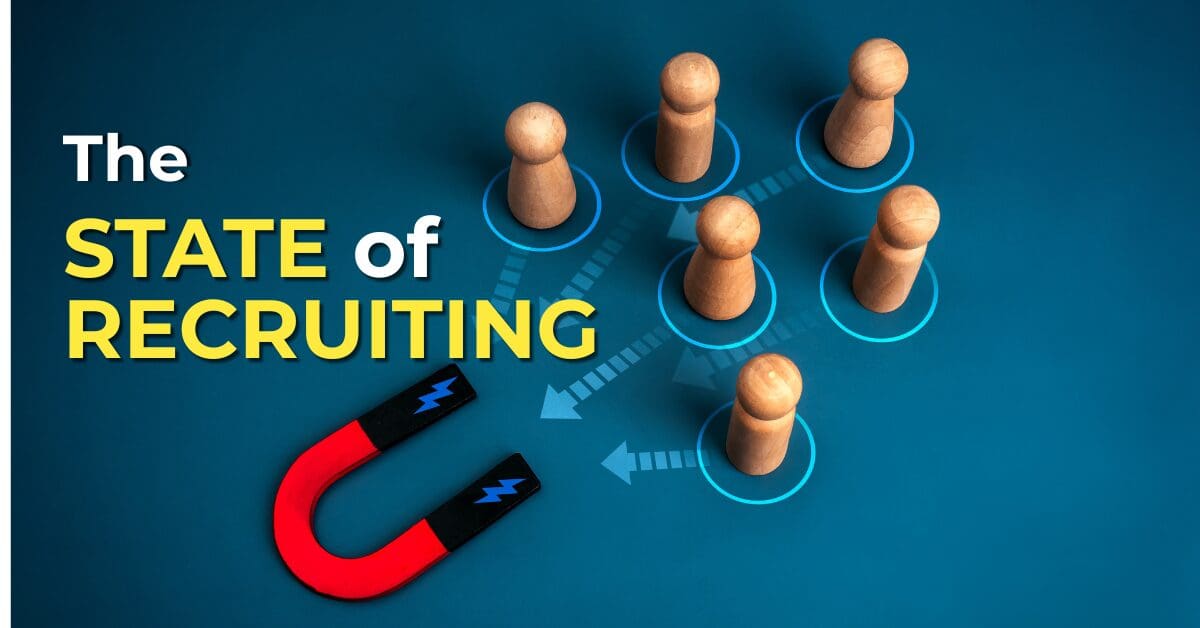
Anyone in the industry can tell you there’s no silver bullet to recruiting. Yet as the hiring market evolves, your recruiting strategy must change as well. Successful recruiting today requires a combination of intentional sourcing, clearly defined candidate criteria, and benefits that align with how today’s workforce evaluates employers.
Katelyn Milanes, director of culture and employee engagement for Fisk Lawnscapes, based in Colorado Springs, Colorado, recommends leaning into your unique differentiators.
“Candidates want to know that their work matters and that they’re part of something bigger than just a paycheck,” Milanes says. “Companies that clearly communicate their purpose and show they genuinely care about their people will attract employees who are engaged, committed, and aligned with their culture.”
Where Are Landscape Companies Actually Finding Talent?
Across company sizes, one of the most successful recruiting methods remains employee referrals. However, having a strong company culture and understanding your value proposition are necessary for this tactic to be effective.
“The best employees for landscaping come from within,” says Elizabeth Elliott, owner of Himmel’s Landscape and Garden Center, based in Pasadena, Maryland. “When we need a new crew member, we just say, ‘Hey, find your next coworker,’ and it works well. We have family units, and it works just fine for us.”
Milanes adds that employee referrals create a natural alignment between new hires and the culture from day one. These individuals tend to already understand their expectations and values, leading to a better long-term fit.
John Bosch, VP of operations for Virginia Green, based in Richmond, Virginia, says they also find the best candidates with employee referrals. Bosch says depending on the time of the year, their referral bonus ranges from $250 to $1,000. He says they pride themselves on how they invest in employee development, provide a positive work environment for all and continue to innovate.
While job boards remain a necessary tool for recruiting, several companies note that brand recognition increasingly impacts candidate quality.
“This is why having a well-thought-out and clear employer value proposition is so important,” says Heather Reitano, senior recruiting manager for The Davey Tree Expert Company, headquartered in Kent, Ohio. “This lets candidates know exactly what they can expect from you as an employer and what makes you different or better to work for when compared to other companies. When candidates already know your brand and what it stands for, they are much more likely to apply, and these candidates are likely to be the high-quality candidates you are seeking.”
Pete LaSage, human resources specialist for David J. Frank Landscape Contracting, Inc., based in Germantown, Wisconsin, says it is their brand recognition and product reputation that attracts people the most to their company. They also utilize Team Engine to push ads through to the major job board and social media platforms.
Being proactive and working with local high schools, colleges and programs like SkillsUSA can all help build out your future pipeline as well.
Jennifer Jones, director of national recruiting for Mariani Premier Group, headquartered in Lake Bluff, Illinois, says they’ve found great success partnering with NALP partner universities and colleges to acquire talent for their associate designer and intern programs.
Marion Delano, director of technology & marketing for Level Green Landscaping, based in Upper Marlboro, Maryland, says they’ve seen results over the past two years with their Manager Associate Program. This program allows recent college graduates to join Level Green in a management role, but without the initial responsibilities of a full-fledged account manager or operations manager.
These graduates shadow and get exposure to both types of roles to determine which route they’d prefer. They are progressively given more responsibility while working under a manager until they are eventually running one to two crews themselves or managing five to 10 accounts on their own.
“In the past two years, we’ve promoted 100% of our manager associates into full-time account manager or operations manager positions, and the vast majority have had significant success in those roles,” Delano says. “It’s allowed us to have a constant pipeline of talent available to backfill positions when necessary and pre-fill growth roles with individuals who understand the job and are already well versed in our company and culture. It’s really been a smashing success.”
Another way to get in front of high school students is to participate in career fairs and conduct mock interviews. Elliott says they recruit students from these mock interviews to help during their spring busy season.
“Three of those students have stayed with us over the years,” Elliott says. “All three of those particular students went on to colleges to study environmental or horticultural-based education.”
Reitano says programs like SkillsUSA are important because they instill interest in the landscaping industry in high school, when students are starting to think about potential career pathways.
“Sources like these often do not meet current staffing needs but will certainly pay off in the form of interested candidates down the road,” Reitano says. “So, if you still plan to be in business in 2 to 4 years (and I think most of us do), then you cannot ignore niche programs like these.”
What Skills Matter the Most in New Hires?
While education can be helpful for certain positions, many landscape companies are more concerned about a candidate’s attitude, adaptability, and long-term potential than formal credentials.
“I think that’s a critical approach to hiring,” Elliott says. “Don’t hire the position, hire the person. I’m a good example of a person who does not have a college degree, but I own a very successful business, and we’ve grown the business. It’s the skill set and the attitude that matters. It’s not the college degree that matters. However, that being said, we highly value education, and we encourage our employees to seek higher education, to seek training and professional development whenever possible.”
Jones says they prefer a landscape architecture degree for their designers and value trade school certifications for roles in construction, masonry, and horticulture, but industry experience is the most valuable.
“In our industry, hands-on field experience, work ethic, and practical problem-solving skills are far more valuable indicators of success,” Milanes says. “We focus on hiring people who bring real-world experience, curiosity, and a willingness to grow, whether they come from a high school background, a trade program, or have learned through years in the field.”
Delano says they’ve found a college education is helpful for their account managers as they have the communication skills necessary to to deal with their clients professionally.
One common element that landscape companies are prioritizing in their candidates is strong soft skills, as they are recognizing technical skills can be taught.
“The number one thing we’re looking for is character,” Bosch says. “We’re looking for candidates who want to learn the business and grow with us. We do not require previous experience. If you have a great attitude and a solid work ethic, we will develop that candidate for success.”
Reitano says the willingness and ability to learn is the number one skill set required by their hiring managers.
“As a company that prides itself on employee development, the job-specific skills will always be something that we can and will teach a new hire,” Reitano says. “However, the willingness to learn these skills is a prerequisite.”
Delano says they’ve also had success training people without a horticulture background.
“If they’re eager to learn, possess good customer service and organizational skills, and generally have a passion for the outdoors or nature, they’ll typically do great,” Delano says.
Jones says some of the traits they look for in new talent include a willingness to collaborate, adaptability, curiosity and a focus on quality. Milanes says they also value people skills such as self-awareness, good judgment, and the ability to work well with others.
“For our field positions, we prioritize reliability, strong work ethic, and the ability to work well in a team,” Delano says. “Technical skills can be taught, but attitude and dependability cannot. We also value problem-solving ability and attention to detail — our work requires people who take pride in quality.”
Reitano says problem-solving is a necessary skill because they need people who are able to find the best solutions for the specific challenges that they will undoubtedly encounter.
Elliott says flexibility and the ability to approach strangers are two skills she prioritizes with the retail side of her business. She says the willingness to approach people is something the younger generations have struggled with.
“We can sense when a person has that within them, and we just need to tease it out of them,” Elliott says. “It does require extra training. It does require more handholding in the beginning, but it’s our responsibility as employers to train the next generation because they really had a disadvantage by not having the socialization they needed for several years. We’re doing what we can to hire what we see in a personality.”
Beyond soft skills, comfort with technology is becoming more of a baseline expectation. Milanes says while the industry continues to adopt new technologies, employees need to be more comfortable using these tools.
“That said, we don’t expect everyone to become tech experts,” Milanes says. “What we look for is openness: a willingness to learn, adapt, and use the tools that help us work safer, faster, and more efficiently. If someone brings that mindset, we can teach the rest.”
Jones says Mariani ensures their associates are continuously learning via training offered through the Mariani University Program and their various internal roundtables, leveraging different perspectives and knowledge sharing.
“Administrative-type tasks are becoming a larger part of the account and operations manager roles, and as such, they’re spending a larger portion of their day on the computer,” Delano says. “Having a good grasp of basic computer skills is becoming non-negotiable. We’ve also increased the number of computer and phone applications we utilize, so again, a good understanding of how to effectively and efficiently use technology is vital.”
Delano says as AI continues to become more ubiquitous, a willingness to embrace AI usage will also be important.
Is AI Driving the Younger Generation to the Industry?
There has been speculation that, as AI eliminates the need for many entry-level white-collar jobs, younger generations are turning to the trades for more job security, but the reality is more nuanced.
“The advantage of our profession is that you get to be close to nature in a field that still fundamentally relies on work that can only be done by human hands,” Jones says. “We look forward to working with NALP to change the hearts and minds of the younger generation, encouraging them to consider a career path in landscaping.”
LaSage says he has noted a slight uptick in younger applicants this last quarter.
“This hasn’t been something that we have seen just yet in younger generations, however, I do anticipate having more conversations about this in the future,” Reitano says. “I think what we might see is that trend continuing, and AI has the potential to elevate a lot of the roles that we usually see in the landscaping industry. So, to me, it’s not really a question of job security as much as job quality.”
Landscape companies are finding that more often younger candidates are attracted to the industry because of the impact they can make, rather than a desire to avoid AI. Elliott says many young people want to be a part of something greater than themselves and not just collect a paycheck.
“They want to work in jobs that allow them to be outside and improve the environment,” Delano says. “There’s a growing recognition among younger workers that they want to do environmentally impactful work, and landscaping provides that opportunity. We’ve had a lot of interest from the younger generation who view landscaping as a path to help improve their communities — they want to be more hands-on with nature and environmentalism.”
Delano says the degree types of their younger job applicants have changed as well as traditional landscaping programs shrink, the majority of their applicants now have environmental studies or business degrees.
“These tend to be individuals who love the outdoors and being in nature and want a career that allows them to live those values and hobbies,” Delano says.
What Resonates with Candidates?
Some of the features that attract individuals to landscape companies include strong cultures, growth opportunities, competitive pay, comprehensive benefits, work-life balance and a forward-thinking outlook.
Culture and Career Growth
Jones says their commitment to building the world’s premier concierge outdoor living company is a journey that many want to be a part of.
“It is really hard not to get excited about what we do,” Jones says. “We are working on some of the country’s most distinguished and beautiful landscapes, creatively solving challenges for our clients to exceed their expectations.”
Delano says their culture, stability and reputation as a family-owned business all serve as major draws for their company.
“We highlight the fact that we are family-owned and plan to remain that way,” Delano says. “That has become a real selling point as more and more companies in our industry become private equity-owned. We also have a clear career ladder that we actively promote. People can see a path from crew member to crew leader to foreman to branch manager, and we have numerous examples of team members who’ve made that journey with us.”
Milanes says their growth opportunities also interest their new hires the most.
“We invest in our team by paying for certifications, training, and development programs, and we provide clear growth tracks so employees can see a path forward,” Milanes says. “People appreciate knowing that their hard work and ambition are recognized, and that there’s support for them to advance both their skills and their careers.”
Pay and Benefits Expectations
Competitive pay also can’t be overlooked. Reitano says they’ve seen significant increases in pay expectations post-COVID.
“Wages rose by about 5% each year for several years after the pandemic, well above the historical 3% that we saw during the previous decade,” Reitano says. “Additionally, many states have enacted minimum wages at or above $15/hr, which only fueled this wage inflation.”
Bosch says all of their employees are salary based with 40-hour work weeks, including their technicians.
“We also provide a very competitive salary and incentive structure based on your production,” Bosch says.
Larger landscape companies like Davey and Mariani note they also have the competitive advantage of offering a full range of benefits that smaller organizations may not be able to provide, such as medical, vision, and dental insurance and a 401(k).
“Our full-time hires are eligible to receive health insurance with us on day 1 and many other benefits as well,” Reitano says. “There is no waiting period. We are also unique in our employee ownership model. Our employees are the owners of our company, so they are the ones who directly benefit from the company’s financial success.”
Flexibility and Work-Life Balance
One major shift in candidate priorities is time off and general schedule flexibility. Bosch says on an average day, their employees work from 6:30 a.m. to 2:30 p.m., and team members appreciate having most of their day available to them.
“They want to know they can do meaningful work without sacrificing personal time, and they value employers who support that,” Milanes says. “We’ve seen that offering clear communication about pay, schedules, growth opportunities, and a supportive culture can make a big difference in attracting and retaining top talent.”
Elliott says they moved from a five-day workweek to a four-day workweek last year for their landscape division and it has served as a great morale boost for the team.
“Even though those employees lost a lot of overtime, what they gained back was their ability to either have more time off with their family or to get another part time job, if they wanted to,” Elliott says. “In years past, there would be the question about do we get a raise this year? But I think people are really happy right now to have a job with people who care about them and a good work environment. I think they care more about that, and value flexibility and being treated with respect and kindness more than that dollar every year.”
Delano says previously their PTO policy was on par with other landscape companies in their area, but when they realized it was lacking compared to other competing industries in their area, they increased their PTO scale for long-tenured employees.
With younger generations in particular, there is a greater focus on work-life balance.
“They want to know about schedules, time off, and how we handle work during peak seasons,” Delano says. “We’ve had to be more transparent about expectations upfront and more flexible where we can be.”
Jones agrees setting expectations within reason is critical to retention. Mariani has adopted flexible time-off plans that support their associates’ work-life balance goals.
Investing in Technology
Companies that are investing in technology and looking to the future have also been able to attract younger candidates. Delano says that they strive to be on the cutting edge of technology implementation, leveraging everything from autonomous mowers to AI platforms like ChatGPT and Claude.
“Some candidates, particularly younger ones, appreciate that we’re a modern company using current technology,” Delano says. “It signals that we’re professional and forward-thinking. However, for some candidates, especially those less comfortable with technology, it can be intimidating initially.”
Delano says they emphasize to those who are more wary of technology that they aren’t looking for tech experts, but a willingness to learn.
“Once people get over any initial hesitation, most find that technology actually makes their jobs easier,” Delano says. “I do believe overall this helps us attract new employees, as more individuals understand that being technologically forward is a necessity of a growing and successful business these days. I think it’s one part of what makes people comfortable coming to work for us.”
This article was published in the March/April/May issue of the magazine. To read more stories from The Edge magazine, click here to subscribe to the digital edition.