

When Stuart Ward, owner and general manager of Buckhead Landscape and Design, based in Chamblee, Georgia, started looking for a salesperson several years ago, he realized they did not have a defined sales process in place.
“To bring in a salesperson who may or may not be from the industry, who probably didn’t have any idea how we do business and how we sell business, that’s when we started working on it,” Ward says.
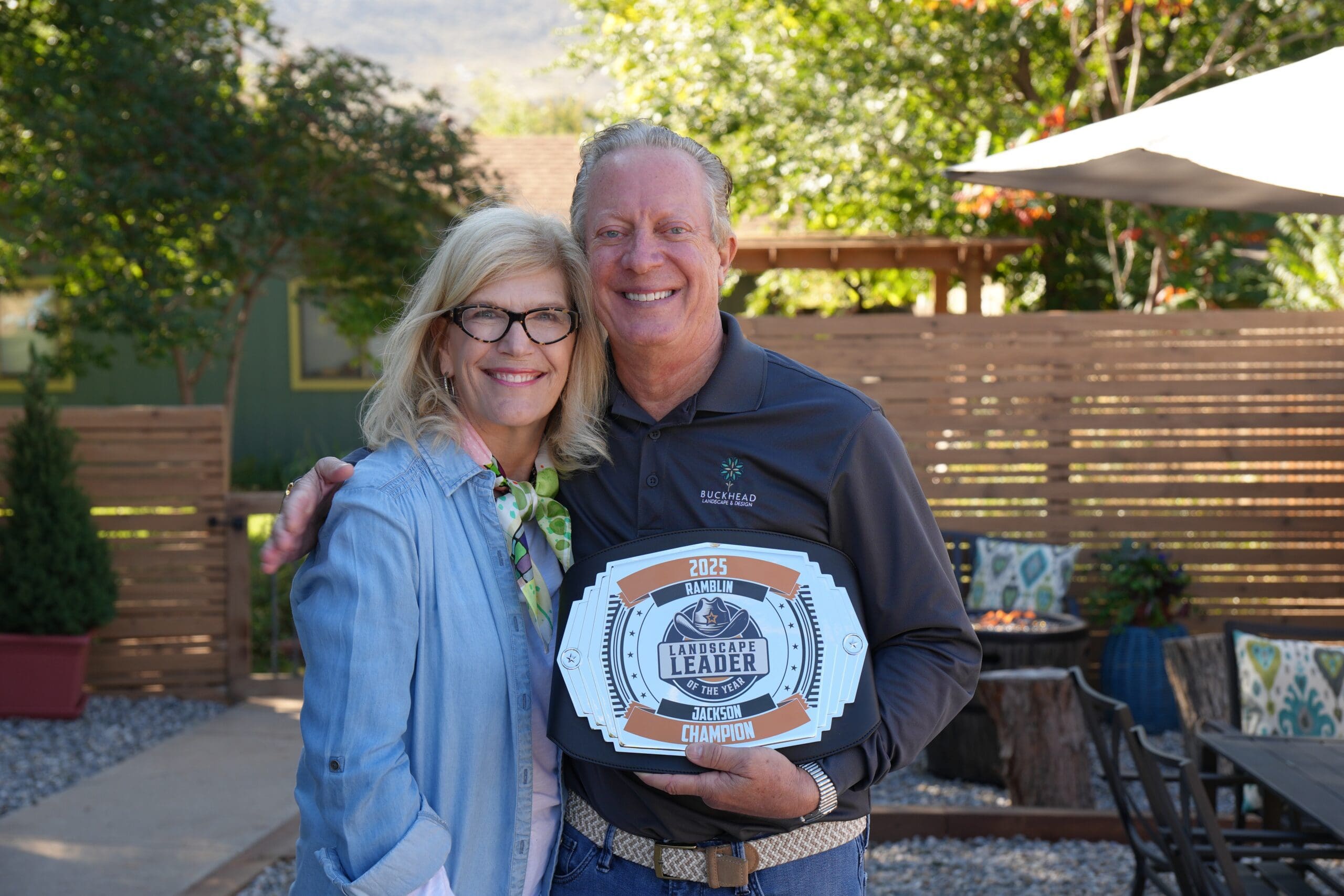
The culmination of Ward’s efforts was recognized this year during the Landscape Leader of the Year competition hosted by The Landscaper’s Guide, the education and events division of Ramblin Jackson.
During this online competition, three landscape business owners presented their most valuable “What’s Working Now” strategies before a live audience who voted for the winner.
Ward outlined the framework of his repeatable system that increased sales close rates, improved accountability, and enabled him to expand his team as he prepares to transition ownership of the business to his son at the end of the year.
As the 2025 Landscape Leader of the Year winner, Ward received the championship belt and a $500 donation to the Humane Society, the nonprofit of his choice.
Ward says he feels very honored to win as they had to prequalify before becoming a finalist
“I put a lot of effort into the presentation,” Ward says. “I wanted to do my best, and I knew I had a lot of people who were watching and supporting me. At the end of the day, I was surprised and proud for the company and for myself being able to do all of that and come out on top.”
Starting and Growing the Business
Ward worked in corporate sales in the chemical and environmental industries for 20 years before starting his landscape company in 1996.
He had always taken pride in how his property looked, and when he heard one of his neighbors complaining about how much someone had quoted them, he offered to do the work for half the cost. They ended up taking him up on his offer and that’s how he started doing lawn maintenance on the side.
“It finally grew to the point where I could not do both,” Ward says. “I just did not have the personal time to do all this other stuff. I made a kind of scary decision to go for it, and went negative for a couple of years until I was able to get it where I wanted it to be. But I had a safety net. My wife was a nurse and she had a steady income and benefits.”
Now, the company has 28 employees on staff and makes $4 million in annual revenue.
The company has a 70% residential and 30% commercial customer base. Ward says they strive to have a 50/50 split between maintenance and design/build work.
Buckhead’s Sales Process
Since partnering with Ramblin Jackson, Ward says they’ve had an influx of leads. His sales process ensures they can successfully convert these individuals.
“Incoming leads go to our office manager, who responds to the lead either via email or via phone call,” Ward says. “Then they enter them into our CRM, and we use LMN, and then they assign the lead. Because we don’t have a salesperson, there are different people in the company now who take leads depending on if it’s a project or maintenance, so she will assign it, and then that person follows up with the lead.”
Ward says taking the time to qualify the lead is the next critical step.
“They might be too far away, or maybe they just want a little job done,” Ward says. “There are a million reasons why they may not be qualified, but whoever’s acting as the salesperson needs to qualify them to make the most of their time and the prospect’s time. If it’s not a fit, then we’ll refer them many times to NALP.”
If a lead is qualified, they will set up a vision call to get a clear understanding of what their dreams are for a particular project.
“They want to get as much information from that phone call before they go out to meet with them, and then they meet with the client,” Ward says. “They walk the property, get a budget, and if not, you want to get a range, and that’s always a little bit tricky, but you want to walk away with a general sense of what they’d be willing to spend.”
Ward says they also schedule the next meeting with the prospect before leaving.
“If you can do it in the calendar right there, and get it on their calendar, so that way everybody commits, and it’s easier to have that follow-up meeting,” Ward says.
Ward says they also have a company policy that any estimate over $5,000 has to be presented in person.
“In the past, we’d send it as an email and hope they call,” Ward says. “We’ve always done it that way. But I think it’s better to present it, because you can address objections right there. You can clarify things they may not understand. It’s harder to say no when you’re face-to-face. There are all sorts of benefits to presenting it in person.”
Previously, Ward says they had very loose guidelines and expectations when responding to a lead.
“We didn’t have any sort of face-to-face contact at all,” Ward says. “We didn’t know anything about budgets. We didn’t know how they heard about us. It was really bad. We would just email it to them most of the time, and didn’t hear back. It was not a sales process. It was really an order process. It’s reactive sales where there really were no sales involved.”
Now, their office manager is expected to respond to an incoming lead within an hour, and once it is assigned, that employee is expected to get in touch within half a day. Ward says once they have a salesperson on board, they will expect them to get back to leads quickly.
“Our belief is if you can get back to someone really fast, like five minutes fast, your close rate goes way up because they’re thinking about it right then,” Ward says.
Ward says by outlining their sales process this way, they can add as many people as they want, and everyone’s following the same sheet music versus doing their own thing.
“Our close rate has gone way up because we’re following a common process all of us now,” Ward says. “That’s how it’s affected our growth. We’ve just seen a really strong surge in closing larger, complicated projects, because we’re selling, we’re not just estimating. The retention has gotten better because in the sales process, you’re setting the stage for the relationship between the company.”
Building Your Own Sales Process
Ward recommends companies sit down as a team with everyone who touches the customer at any stage. Walk through every single step of the sales process.
“The customer calls, who answers the phone?” Ward says. “What do they say? How is the lead assigned? How quickly do they have to get back to them? When they do get back to them? What do they say? How do they say it? I mean, it’s painful, and it’s like teaching a child, but you have to map out every single step of the whole process, and that’s the real work.”
Ward recommends building out mini scripts for different situations, such as what to say if someone isn’t a qualified lead. They’ve also outlined red flags to watch for when qualifying customers.
Key Takeaways
- Buckhead Landscape and Design transformed its sales outcomes by developing a structured, repeatable process that increased close rates and accountability.
- The company’s new system emphasizes rapid follow-up, in-person estimate presentations, and clearly defined communication steps to improve client conversion and retention.
- When creating your own sales process, involve every team member who interacts with customers to ensure consistency and clarity.
