


How long does it take to finalize a company rebrand? For Monarch Landscape Companies, based in Los Angeles, California, their CMO Karen Schakarov jokes it takes as long as carrying a baby to term.
Monarch has grown rapidly through mergers and acquisitions since the company’s founding in 2015. Yet they did not have a clear and concise brand strategy in place.
“As we really continued to evolve and grow, it became abundantly clear the absence of a strategy was actually hindering our growth,” Schakarov says. “In order to really declare who we are, claim what we represent, visually as well as knowledge of brand awareness, it became abundantly clear to the leadership here that it was a key component that was missing within the organization’s health.”
Despite being a large organization, Schakarov says they were never worried about the cost of conducting a rebrand.
“We understand the cost not to do something,” Schakarov says. “The concern was more about our teams embracing what we were doing, feeling their voice was heard, and having everybody feel part of the trajectory of change in order for it to be very successful. We are very fiscally responsible. We’re not doing things just to do them. There’s a reason. There’s a budget, and we stick to it.”
Developing the New Branding
Schakarov says one of her main objectives when she joined Monarch was to determine this new brand and strategy. She began working to understand the team’s frustrations and the confusion with their customer base.
After comprehending the dissatisfaction and fractured perception of Monarch, the team then had to define who they are as a company. Schakarov formed a brand ambassador committee of 20 individuals and asked for volunteers. The committee included everyone from CEOs of acquired companies to receptionists, providing a mix of diverse perspectives.
“In order to be very successful, I needed to partner with my team, and I needed to hear A) their thoughts on this and B) the willingness to truly be the foot soldiers and go out to market with what we’ve created and help sell it and wear it as part of their DNA,” Schakarov says. “You can’t do that if you’re sitting on an island by yourself. I think that’s really short sighted.”

Once they had internally developed their brand strategy, Monarch worked with creative director Thig Gishuru and his firm Thig Studio to develop their new logo, color palette and tagline.
The entire process took nine months and had a couple of false starts. Schakarov acknowledges it wasn’t the easiest process, but she also knew to trust her instincts.
“We couldn’t get this wrong, so we erred on the side of caution, not burdened by a desire to finish on a certain time, but rather to get it right,” Schakarov says.
She says she had an interesting, difficult conversation with CEO Brian Helgoe about her desire to start again.
“Brian is an amazing CEO,” Schakarov says. “He’s a rare individual and an exceptional leader, and as such, he trusts his team and makes it really safe to have difficult conversations, and, in fact, encourages them. I would have failed at my job if I didn’t have the difficult conversations.”
Monarch’s new tagline is ‘Cultivating Growth.’
“As an organization, we talk about being the brand of choice,” Schakarov says. “Culturally, we are the employer of choice. To take care of our team is critically paramount for us. We are the landscaper of choice. We really want our customers to feel as if we choose them and they choose us and how much we value them. The third thing is we want to be the acquirer of choice. As we evolve and we go through M&As and acquire other companies, we want them to come to us.”
Schakarov says their logo started with the letter M for Monarch. It evolved from mountains to people locking arms to its current design, in which different people see various shapes like a butterfly.
“It’s not for me to dictate to you how you view it, but it is my hope that you feel something,” Schakarov says. “That you feel a connection and a commitment, and you feel what we culturally want you to feel. I think we’ve done a really good job of that, and I’m really proud at the team’s effort in getting there.”
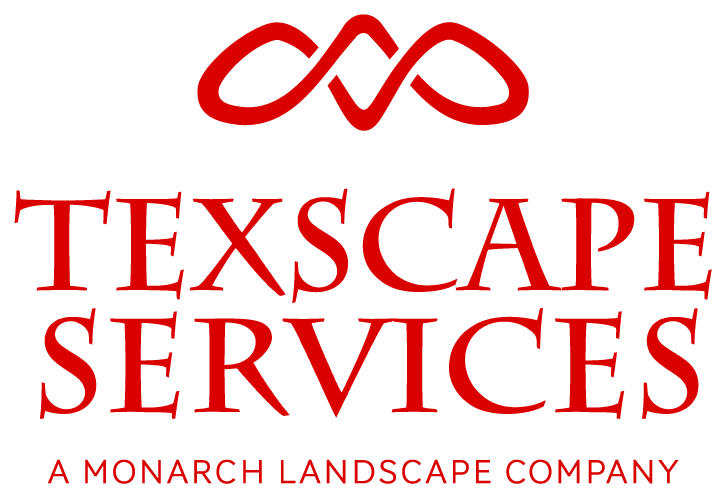
The branding committee also put serious thought into their brand color of ‘poppy.’ Schakarov says this hybrid between a red and an orange is something that is unique to Monarch.
To thread together all their different companies while preserving their heritage, Schakarov says they decided to align on their color palette, logo and tagline. Beneath each company name is ‘A Monarch Landscape Company.”
“They keep their legacy font and that’s how their name is written,” Schakarov says. “What they’ve evolved into is our one unique color palette, one unique icon and one unique tagline.”
Rebrand Rollout Strategy
Rather than launching their new brand all at once nationally, Monarch is taking a regional, staged approach. Schakarov says they didn’t want to overburden their teams with a brand relaunch during the busy season.
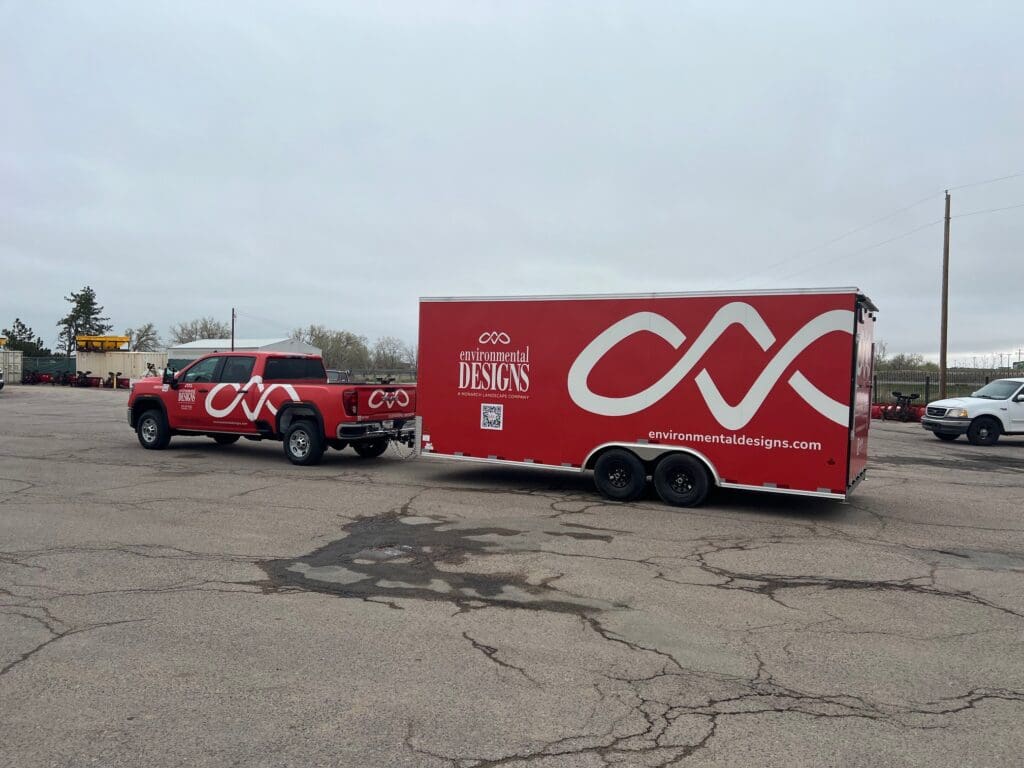
“That would have been a really poor leadership decision to say, selfishly, we want it all done at once at the cost of the teams,” Schakarov says. “I didn’t want to have to take trucks out of service to rebrand them. I didn’t want to have team members getting confused about what’s happening.”
She says they chose to start with Environmental Designs, based in Colorado Springs, Colorado. The next rebrand will take place in California by September.
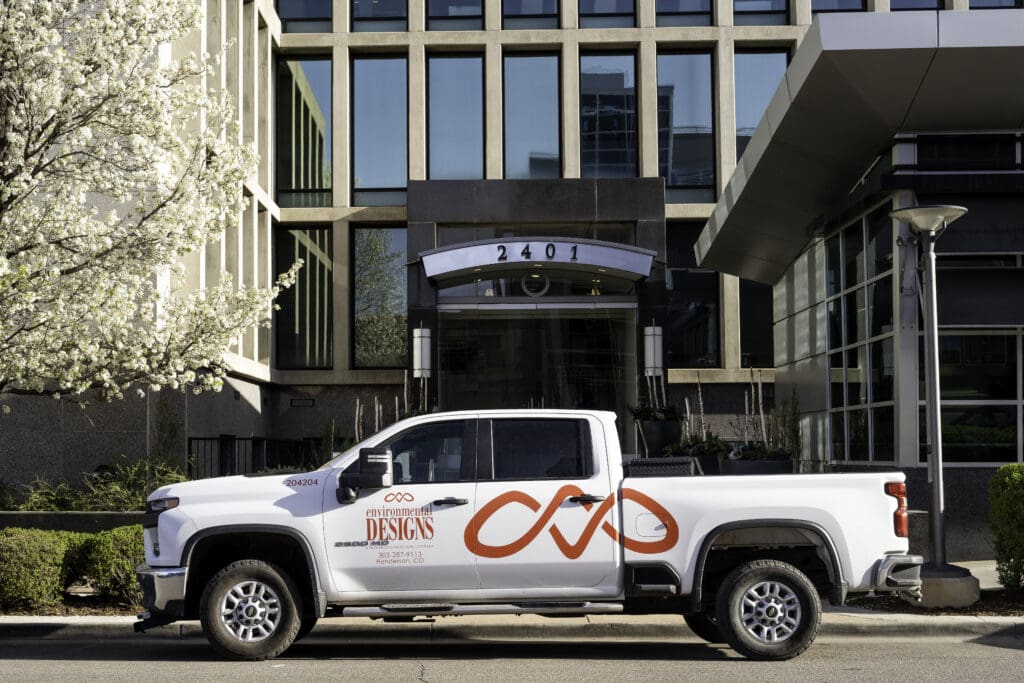
“We’re working with the leadership team to figure out what works for them,” Schakarov
says. “This is really a collaboration, and I need my partners to tell me this is a good time, and that’s when we’ll do it. All the pieces are now in place; we just need to hit the lever when our teams say we’re good to go.”
The plan is for three or four regions to be rebranded this year and the remaining will be swapped out in early 2026. Schakarov says it will also take time to update and rebrand the subsidiary company websites.
Monarch has launched their uniforms nationwide already.
“I am happy to report everybody loves them, which you never hear, but we were meticulous,” she says.
For future acquisitions, Schakarov says their logo and color palette will change when they believe it is the right time as they want to respect those businesses’ heritage.
“We listen to the team on the ground,” Schakarov says. “We listen to the customers. I think Brian, our CEO, is very insightful. He has been doing this for most of his adult career, so he really has the intuition of when, and if so, it’s a discussion. It’s not an edict.”
Advice for Others
Deciding if it’s time to rebrand your own company can be tricky. You shouldn’t change for the sake of change, but evolution is critical.
“When you look at companies like Coca-Cola, and if you look at their trajectory of their evolution, you have to evolve or die,” Schakarov says. “Life changes, times change, principles change, and if you’re not evolving, then you’re no longer relevant.”
Schakarov isn’t saying everyone needs to change their logos immediately, but she recommends leaders be curious and consider when they may need to evolve.
The biggest challenge of implementing a rebrand is simply people don’t like change.
“Even if it’s a good change, there’s always a reluctance and fear and so really getting people to understand the value and that this is good and that I need your help, but it’ll be worth it in the end,” Schakarov says. “Shifting that mindset was probably the biggest challenge.”
Schakarov recommends working with your key stakeholders and embracing their concerns when considering a rebrand. She adds that it’s important to communicate these changes in a positive way to your customers and give them space to ask questions.
She says creating a brand ambassador committee is critical.
“You need people from across the entire organization to be the soldiers, to feel their voices are heard, because the absence of that, it won’t succeed,” she says.
Be patient and don’t be afraid to pause.
“Begin with the end in mind,” Schakarov says. “What do you want to achieve? This is the path, and if it’s through the evolution of a logo or a tagline or a color palette, or switching everything over or keeping it the same, it needs to be a thoughtful decision that you can’t make sitting in a room by yourself.”
Key Takeaways
- A successful rebrand requires internal alignment. Monarch’s rebrand prioritized employee buy-in through a brand ambassador committee representing diverse roles, ensuring the new identity felt authentic and inclusive.
- Rather than rushing the launch, Monarch chose a staged, region-by-region rollout to avoid overwhelming teams during peak seasons and to align with operational readiness.
- If considering a rebrand, it should be done with thoughtful intention, not just for change’s sake.