

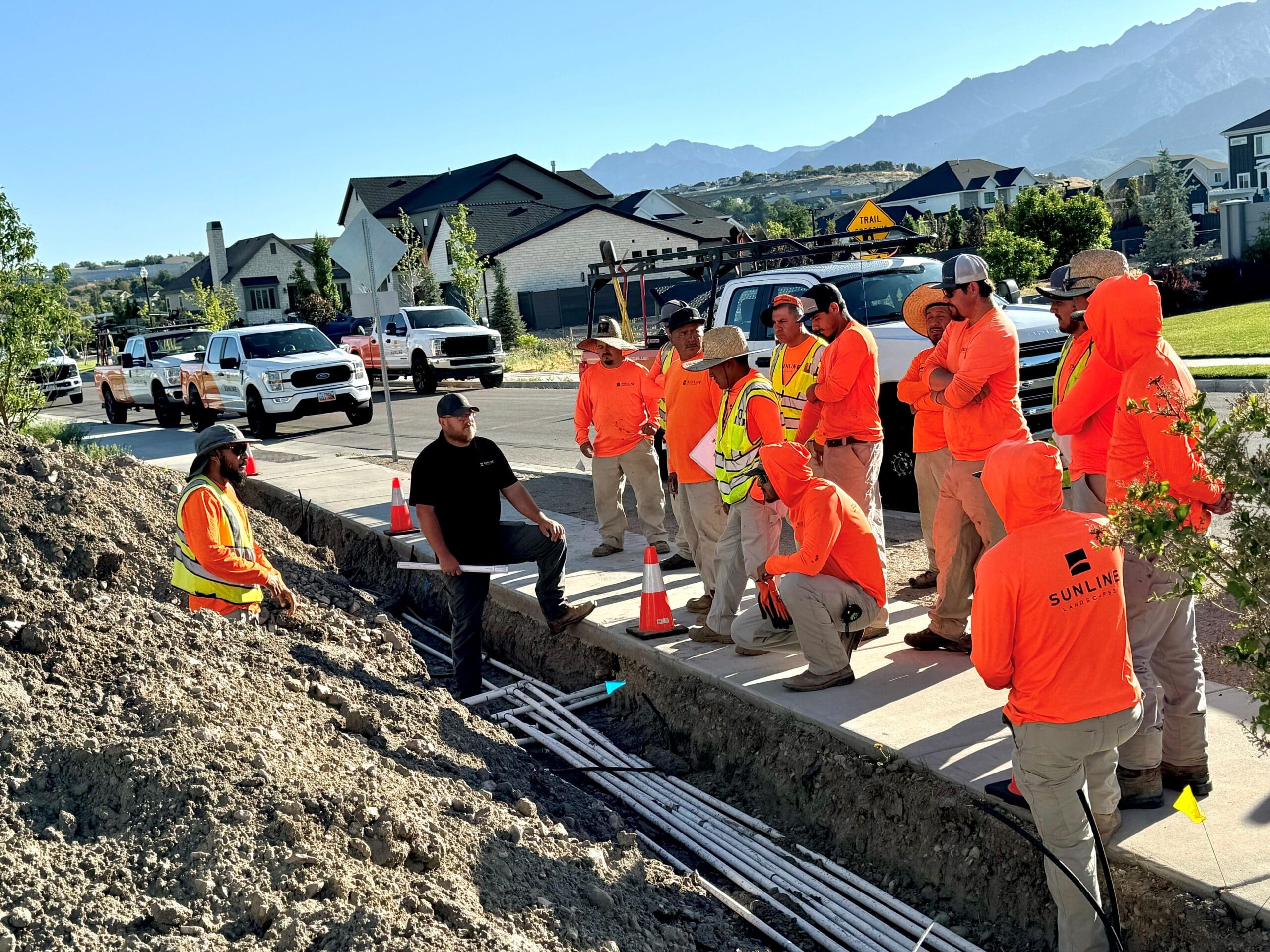
Promoting your team members into leadership roles has multiple benefits, including a continuation of your company culture and providing a rewarding career path for your high-performers.
“The culture is the biggest piece,” says Curtis Atkinson, founder and CEO of Sunline Landscapes, based in Bluffdale, Utah. “Sometimes bringing somebody in at a higher level takes a little more time to build trust within teams just because they’re new, and they need to earn that trust. Having someone internally promoted, they already know everybody. They’re like, ‘Oh, he’d be great in that position, or she’d be awesome in that role.’”
Brad Blair, vice president of operations for residential & tree care branches at Southern Botanical, based in Dallas, Texas, adds that the leaders you promote internally have likely seen good and bad examples of leadership performance in the role you are looking to place them in.
“Promoting employees to be leaders provides continuity and they have already demonstrated the skills we look for in leaders, as well as the values key to our success; customer service, integrity and trust, intellectual curiosity,” says Angela Cornish, vice president of corporate administration for Virginia Green, based in Henrico, Virginia.
Creating a Diverse Leadership Pipeline
As you look for leaders within your landscape organization, it’s important to have a pipeline of diverse individuals you feel will work well in management roles. Blair advises having a clear understanding of where you might be weak from a diversity perspective and start building up internal candidates’ leadership skillsets and responsibilities.
Cornish says this starts with their recruiting. She says they educate and reinforce the value of diversity with their managers. They also challenge their managers to provide opportunities that may require additional time or training.
“We believe our company is stronger when diversity is woven into its fabric,” says Amy Snyder, director of public relations for Ruppert Landscape, based in Laytonsville, Maryland. “Leaders with varied backgrounds bring fresh perspectives, unique problem-solving skills, and different experiences, allowing us to address challenges faster and make better decisions as an organization. To empower employees from underrepresented groups, we offer coaching, mentorship, and leadership development programs tailored to help them grow into leadership roles.”
For instance, Ruppert started a training program delivered in Spanish to their Spanish-speaking team members, which focuses on soft skills like communication and leadership.
Atkinson says he’s less concerned with someone’s background, race or gender and more about putting the right person in the right seat. He says they have male and female employees of all backgrounds in the field and on their admin teams.
“It’s more ‘Do you love what you do?’” Atkinson says. “‘Do you want to advance? Do you like a team environment? Can you work well with others? Are you willing to be coachable and teachable and have fun?’”
Atkinson says one of their project managers has been with the company for 11 years. He came from Mexico and started as a laborer with no industry knowledge. Now he could potentially be running the operations of the construction teams next year. Atkinson says this employee got to this point by wanting to learn new things and taking on extra work.
“He’s all in on our culture,” Atkinson says. “He’s all in on what we’re trying to do. Everyone loves working with him. Clients love him. He’s just a standout leader.”
Preparing Employees for Leadership Roles
When employees voice they want to take on more responsibility, having a clear process they can follow will help them train and prepare for leadership roles effectively.
Atkinson says if someone is showing interest in moving up in their career path, they have bullet points for each role they need to accomplish first, like earning various NALP certifications, before they can move up. He adds that when employees fail, use these as teaching moments so they can learn how to do better moving forward.
Similarly, Blair says they have a branch manager checklist that covers everything a branch manager is responsible for, including P&L management, sales & operations management, fleet and asset management, motivating & employee counseling and more.
Snyder says it is up to their managers to outline the competencies and experiences needed for a team member to move up to the next role.
“To support our commitment of promoting from within and preparing our team for future roles, we hold annual associate branch manager interviews,” Snyder says. “Interested employees from across the company come to our corporate campus to participate in a panel interview. Their branch manager helps them prepare, and they leave with a clearer understanding of their leadership readiness and the areas they need to focus on for future opportunities.”
Cornish says they have regular check-ins where they’ll discuss career goals and development plans.
“Team leads and operations managers will work to identify developmental opportunities so that when a position is posted, they can apply, having some experience already,” Cornish says. “Our training team will also work with employees to help prepare them for the interview.”
If an employee shows leadership potential but is reticent, Snyder says it may be due to a lack of confidence in their abilities.
“In these cases, it can help to have a conversation about their concerns and weigh the pros and cons together,” Snyder says. “If they feel lacking in certain areas, offering additional training might boost their confidence and skills.”
In situations where a promising employee truly doesn’t want to move into a leadership role, Cornish and Snyder agree you need to support the employee, but ultimately, the decision to take the next step is theirs to make.
Advice on Leadership Development
If you want to develop leaders from within who are bought in to your company culture, it requires staying connected to your team. Atkinson encourages being present and taking note of who is stepping up to the plate.
“If you’re mingling with the team, that means a lot,” Atkinson says. “When you have your management meetings and one-on-ones with your direct reports, they’ll bring names to you, too. Just try not to be an absentee owner.”
Cornish also recommends getting to know your employees, not just your direct reports, and learning about what motivates them and where they see themselves in the next three to five years.
“Don’t just meet with them once,” Cornish says. “Follow up, provide direct feedback, keep an eye out for developmental opportunities. Help them seek out mentors and let them know it’s ok to make mistakes. Be their advocate.”
Atkinson adds you shouldn’t micromanage.
“True leaders rise to the top,” Atkinson says. “Give them some responsibility and let them go.”
Snyder notes that if you identify promising team members and offer training/coaching, there are always emerging leaders ready to step up when the time comes.
