

Newsletters can be an overlooked communication channel with customers, but for it to be truly useful for your organization, it’s important to avoid common pitfalls, hone your mailing lists and ensure long-term consistency.
Mistakes to Avoid
Lauren Hoogewind, marketing director of the Rocky Mountain Region – Mariani Premier Group with Designs By Sundown, based in Littleton, Colorado, says one of the biggest mistakes she sees with newsletters is copy overload.
While you have a lot of great information to share with your customers, narrow down your newsletter to one or two topics per email. Not only does this increase the likelihood they’ll read the information provided, you can also gain a better sense of what topics resonate with your clients and which do not when it comes to open rates.
Another misstep is starting a newsletter but sending it out with no rhyme or reason.
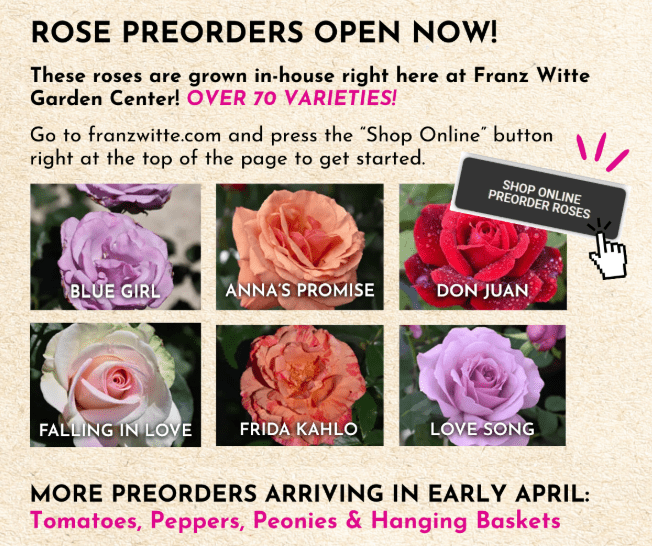
Alissa Votroubek, content marketing specialist with Franz Witte Landscape Contracting, Inc., based in Nampa, Idaho, says consistency is key.
“It helps to prime your audience for what to expect,” Votroubek says. “I follow a similar formula and schedule, so they have been conditioned to expect their fresh new email around the same time every two weeks.”
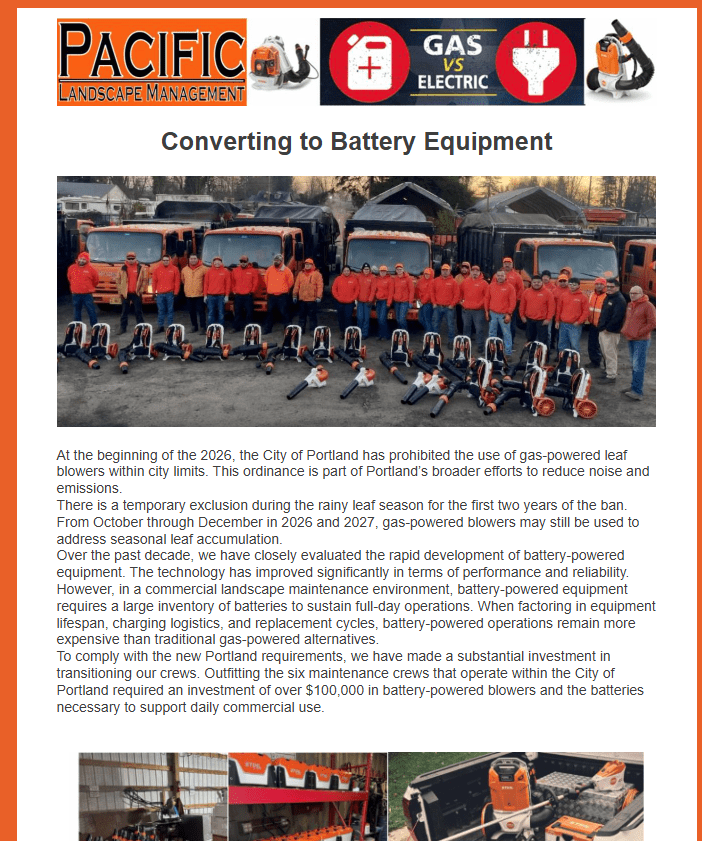
Bob Grover, founder and chairman of Pacific Landscape Management, based in Hillsboro, Oregon, also recommends doing your research on the different email platforms available, as they’ve had trouble with their provider, Constant Contact, being spam filtered out.
“Make sure whatever tool you’re using is the best tool that will get the least likely spam filtered out,” Grover says.
It’s also important to strike a balance between using your newsletter to be informative and promotional. If you only view your newsletter as a direct sales tool, you’ll likely see low engagement and high unsubscribes as people don’t want to be sold to in this manner.
“We tend to shy away from too much self-promotion, but if we are getting the word out, email is a good place for it,” Votroubek says. “We do a big sale around Labor Day each year, so we use most all of our channels to announce that.”
The Power of Segmentation
One way to ensure that your newsletter efforts are worthwhile is to practice mailing list segmentation. This helps get the right message to the right audience, increasing their overall relevance and performance.
Votroubek says starting a newsletter from scratch allows you to experiment with segments and create tags or subcategories for your subscribers based on what kind of content they want to see, ensuring they only receive exactly what they are looking for.
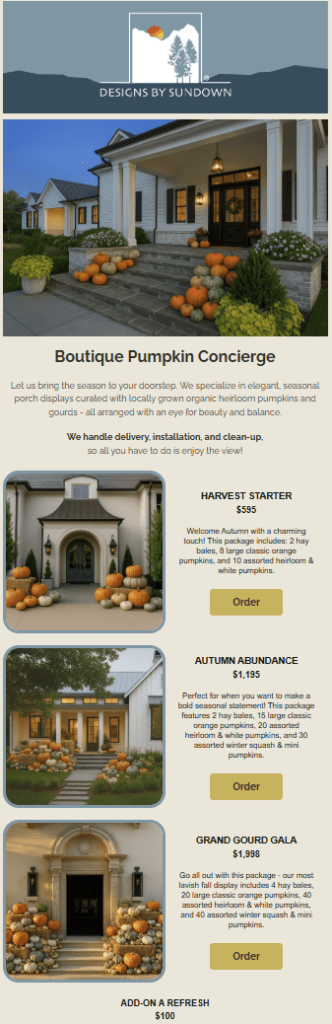
Hoogewind says they segment their list by customer type (commercial versus residential), and status (current customer, prospect, lost lead). When a client signs a contract with Designs By Sundown, they are opted in to communications.
“They’re entered into our CRM, which auto-populates a segment within our MailChimp account and tags them as ‘current customer,’” Hoogewind says. “This is also how it functions when we get a lead that doesn’t end up signing, they get pulled in and tagged as ‘future opportunity’ or ‘lost lead’.”
These future opportunities and lost leads make up 66% of Designs By Sundown’s overall mailing list. Hoogewind says while she sends a monthly email to their current clients, she’ll send an email to this full list every six to eight weeks.
“We often see conversion on small services from non-clients such as spring clean-ups/mulch or fall pumpkin décor,” Hoogewind says. “It’s not often we see a non-client sign-on for full property maintenance from these campaigns.”
Advice for Others
If you want to create a sustainable newsletter, take advantage of the seasonal nature of the business and plan your content ahead.
“We have a schedule based on past years of topics to cover and often start with previous years’ issues that are updated for current year,” Grover says. “Then as issues come up that didn’t happen in previous years will be plugged in.”
Hoogewind says they typically knows the main topics of each month’s newsletter for the year. She then does the actual design/copywriting/scheduling closer to one month in advance so she can adjust for any seasonal variables, such as droughts.
“It’s a great way to batch content generation in a predictable way to ensure a regular cadence and not falling behind when our season gets busy,” Hoogewind says.
Lastly, Grover says you need to have an individual who is passionate about the business to own the responsibility of your newsletter if you’re going to produce it in-house. He is still responsible for writing the content of their customer newsletter, but he says this doesn’t have to be an owner’s responsibility.
“It has to be a priority,” Grover says. “You have to be committed to do it consistently. If you’re just reposting stuff or you’re not making a good effort at it, I’m trying to make it as personal as possible, and I think that’s really important. Be committed. Be consistent. It’s got to be with somebody who also fully understands the business and the message that you’re trying to create.”
A customer newsletter doesn’t have to be elaborate to be effective, but it does need structure behind it. With a clear owner and relevant segmentation, you can have a reliable touchpoint to keep clients informed and prospects engaged long after the first conversation.