Even though inboxes have become crowded over the recent years, sending newsletters can be a powerful strategic communication tool with customers when they are executed properly.
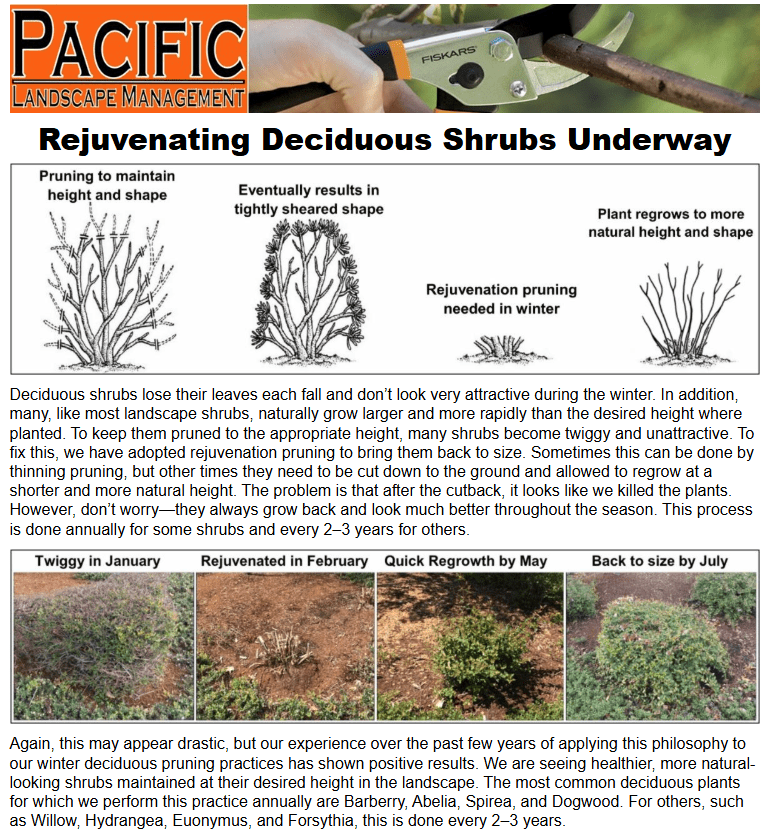
Bob Grover, founder and chairman of Pacific Landscape Management, based in Hillsboro, Oregon, says they have had a newsletter since their founding and originally produced, printed and mailed it out via snail mail before eventually moving to a digital version 15 years ago.
“Client communication and education are foundational to our service,” Grover says. “We believe the newsletter provides background information to help customers understand seasonal issues we are dealing with.”
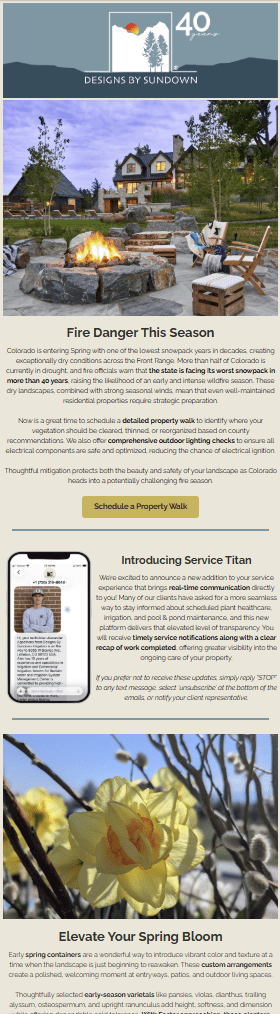
Lauren Hoogewind, marketing director of the Rocky Mountain Region – Mariani Premier Group with Designs By Sundown, based in Littleton, Colorado, says they’ve had some form of e-newsletter for two and a half years.
“While our client representatives remain the primary point of contact for existing clients, we saw an opportunity to deliver added value through more proactive, strategic communication,” Hoogewind says. “This initiative allows us to share timely, forward-looking seasonal and topical insights that help clients stay informed as their properties evolve. From design trends and enhancement opportunities to region-specific considerations such as water restrictions, it provides a thoughtful, curated way to communicate broader industry knowledge and anticipate our clients’ needs rather than simply respond to them.”
Define Your Goal
If you’re considering creating your own client newsletter, it’s best to first define your overall goal, as this will guide the frequency, format and content of your newsletter.
Alissa Votroubek, content marketing specialist with Franz Witte Landscape Contracting, Inc., based in Nampa, Idaho, says the main goal of their newsletter is to paint a picture of what is happening at Franz Witte Garden Center.
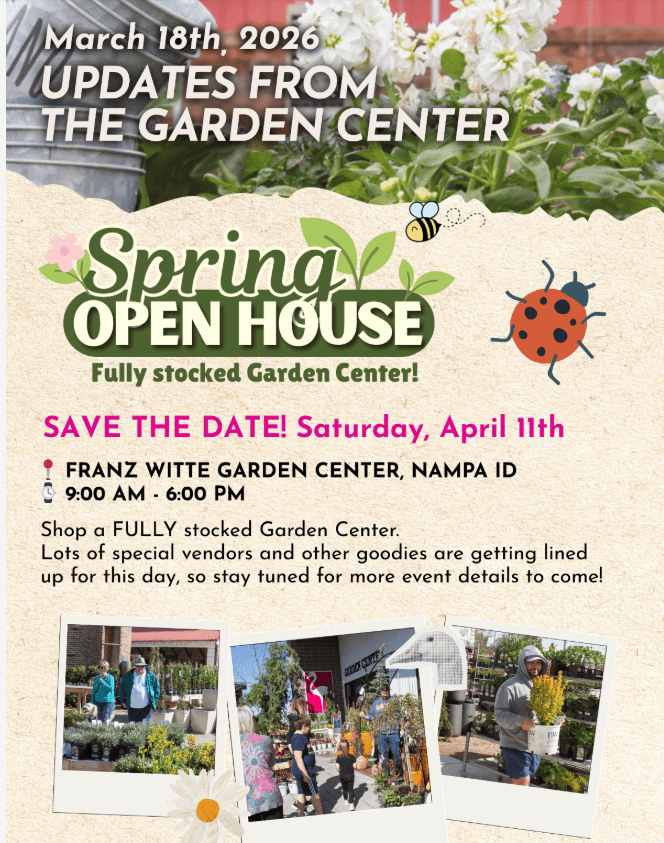
“The layout, verbiage, designs and photos all reflect the experiences inside our store and the overall brand and culture of our company,” Votroubek says. “The newsletter is meant first and foremost to consistently provide value and ease of information to our subscribers.”
Votroubek sends out their garden center newsletter on a biweekly basis and includes a mixture of content from behind-the-scenes info to what events and workshops are upcoming.
Grover says their newsletter is designed to constantly show customers and prospects information that helps them know and believe that Pacific Landscape Management is the most capable, professional and sophisticated landscape service provider. While in the past they would send out their newsletter monthly, they switched to a weekly mailing with only one subject.
“We were doing multiple articles once a month, and quickly figured out nobody’s going to click through and read all those things,” Grover says. “So we went to weekly and try to be as quick as possible.”
Hoogewind says their customer newsletter elevates the level of service clients experience by proactively sharing insights and opportunities homeowners may not have naturally thought about. She notes that their newsletter reinforces their role as a trusted advisor who anticipates their clients’ needs.
“Recent topics include seasonal pool maintenance offerings, spring container planting, Denver water restrictions coming this summer/the drought,” Hoogewind says. “Upcoming, we plan to share tips for preparing outdoor spaces for entertaining, paired with Memorial Day furniture sales (we have two furniture curators on staff).”
Hoogewind says that before 2025, they would send out their newsletters around six times a year, but now they opt to send their newsletter out on a monthly basis.
Designing for the Attention Economy
To stand out from the numerous other emails flooding customers’ inboxes, focus on providing educational, engaging information that is easily digestible.
“People like to be informed, not sold through these tools,” Grover says. “Our goal is to have the graphic and headline to plant the seed of the subject even if someone does not open and read.”
Votroubek recommends when writing and designing your newsletter, think about how to make the content easier for the reader and not focus on what it can do for you.
“People are getting inundated with messages of every kind all day every day,” Votroubek says. “If you look at your email design and see something you would hate to read yourself, something is wrong! Keep it simple and provide value for your reader!”
Votroubek says they often see the most engagement around March and April, whenever their most notable annual events are coming up or when rare or sought-after plant shipments are announced.
Hoogewind agrees that less is more, as when you don’t break information down into bite-sized segments, clients won’t take the time to read it.
“I recommend focusing in on great imagery and two to three main content blocks each month,” Hoogewind says. “Also, be sure to include a clear CTA (call-to-action). What do you want the customer to do after reading this, and are you clear about that? For example, a big button that says, ‘Schedule a Consultation’ or ‘Learn More’ is key.”
Hoogewind says since their audience is active landscape maintenance clients, they often see the most conversions when they share information about incremental add-ons such as design improvements, seasonal color or outdoor furniture.
Metrics to Track
It’s hard to know if your newsletters are hitting the mark if you aren’t monitoring specific metrics and adjusting in response to this data.
“The beauty of this type of digital advertising is you can capture lots of data and insights, monitor and adjust your strategy accordingly in real time,” Hoogewind says. “I’m always reviewing performance and making small adjustments month-to-month.”
Hoogewind says they monitor their open rates, click-through rate, conversions and revenue actualized. She says they have around a 65% open rate, and she monitors what type of content is performing the best via clicks.
Votroubek adds that the best way to determine the overall health of a newsletter is to track these numbers over time as patterns will emerge if you see numbers going up, down or stagnating. She says since they don’t do any direct sales through their newsletter, they monitor who is visiting the website direct from viewing their email.
“If we don’t see activity directly following our ‘call to actions’ in the newsletter, like new class signups or web traffic, this might be an indication that the newsletter has not performed enough to make the investment worth it; however if we continued to see the same level of viewership or increased open rate despite lack of action, it would still serve a purpose to provide value for our subscribers,” Votroubek says.
She recommends looking at newsletter benchmarks similar to a person’s bloodwork results.
“It is an overall indicator of health, and if something falls out of range it means a change is in order,” Votroubek says.
Some of the elements to consider changing include the types of content, their length and the calls-to-action used. The good thing is that there isn’t a lot of harm in making these small tweaks to create a more engaging newsletter overall.
“Compared to the nominal cost of the email marketing platform (Mailchimp) and my limited time spent, it’s one of our highest ROI and lowest CAC (for lost-lead email campaigns) we have in our marketing mix,” Hoogewind says.