

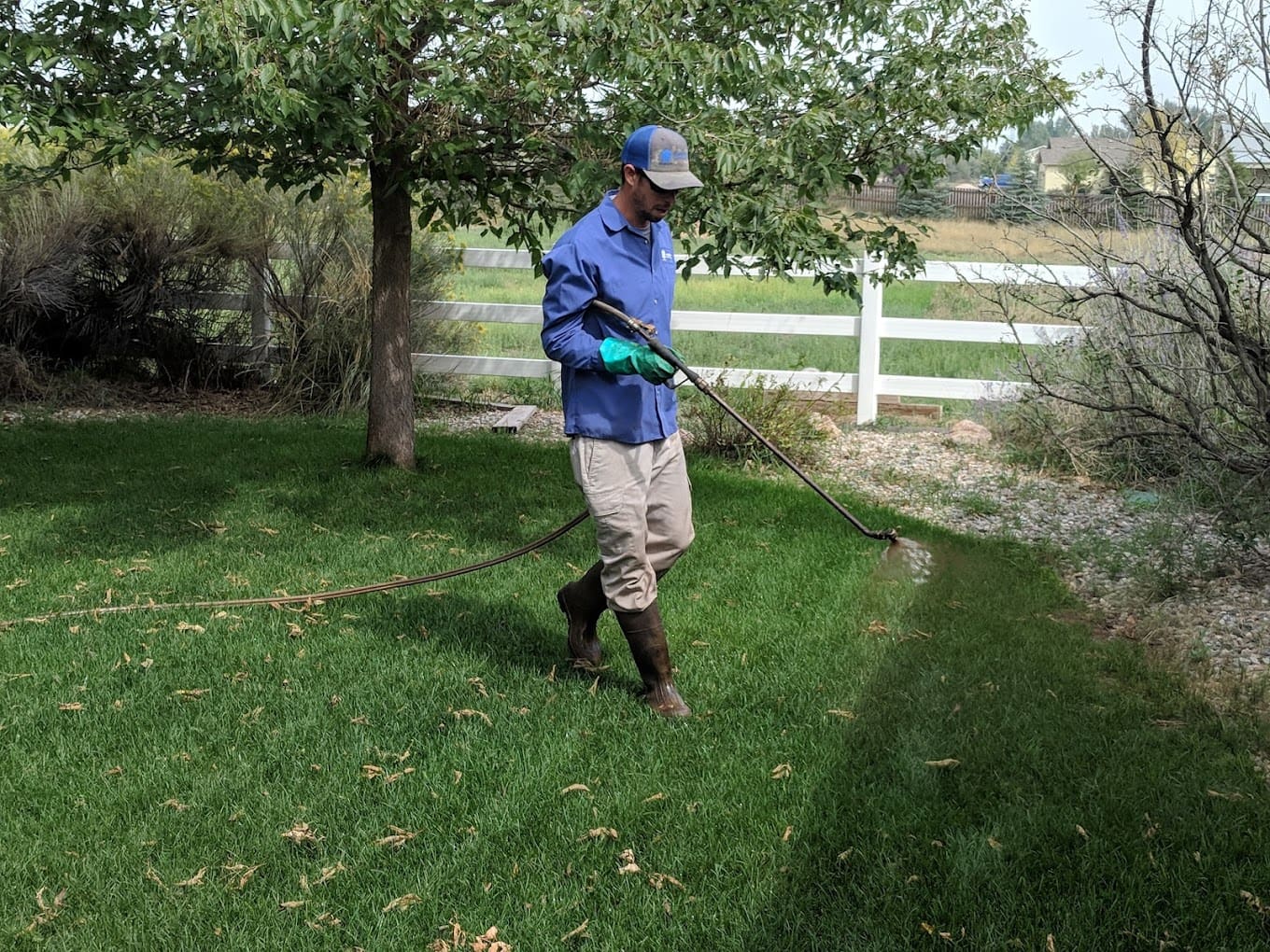
In the past, American Turf and Tree Care, based in Greeley, Colorado, was struggling with paying for non-productive work. Around 10 years ago, they changed this by rolling out production commissions for their field technicians.
Blair Matthews, head of sales and marketing at American Turf and Tree Care, says the commission-based pay aligns their technicians with the company’s goals of improving their production numbers.
Now, instead of having employees taking hour-long breaks at the gas station or fiddling around at the shop before leaving in the morning, they have a team of eager technicians hungry to get their work done.
He says there is a learning curve to this model, and he estimates, at first their production rate improved anywhere from 10-20%.
“We had a goal of guys producing $5,000-$5,500 a week,” Matthews says. “Nowadays, if guys don’t produce at least $10,000 a week, they’re mad. But it’s taken a few years to get there.”
Matthews says they originally got the production commission idea from Triangle Pest Control in Raleigh, North Carolina.
How It Works
The company has graduated tiers for their field staff, so a brand-new rookie technician may come in at 13% commission, and then if they hit certain milestones, they will be bumped up to 14% and then 15%. If they get their state-qualified supervisor license, they’ll be raised to 16%.
“The most basic premise of this is, if we send them out to do $1,000 worth of work that day, they get paid their tier of that $1,000,” Matthews says.
Moving up on the percentage scale is merit-based rather than by years with the company. Matthews says the main driver of getting a pay bump is based on hitting their goals, providing great service and doing good work.
American Turf and Tree Care field techs do not receive a base pay. Their pay comes 100% from their commissions. Matthews says the one caveat to this is during the winter when they are not producing. If team members want additional work, they can do hourly work such as measuring properties and sending out marketing proposals.
The company has one person per truck, so each technician owns their route. Being paid based on their production allows technicians to figure out their pace and produce good work, so they’re not dealing with callbacks. Matthews says it also fosters individual responsibility.
“If I send Ryan out the door that day, and he’s got $1,000 worth of work, his pay that day is based on that $1,000 worth of work,” Matthews says. “If we send them out the door with $1,000 worth of work and they come back and only complete $500 of it, then what they make is their percentage of $500.”
If a technician has to go back and do rework, they don’t get paid for that visit. This motivates technicians to do the job right the first time.
“They’re not dinged financially for it, other than they lose that time,” Matthews says. “It’s their time, and there’s only so much time in the day. If I’m having to spend my time going and doing free work, which I don’t make money on, then I can’t make money doing paid work.”
Aside from production commission, the company’s technicians can also earn sales commission for any work they sell. Matthews says their technicians aren’t focused on selling, but rather solving customers’ problems.
“Generally speaking, our customers are very appreciative of it,” Matthews says. “Like, ‘Hey customer, I was treating your lawn today for your fertilizer application, and I noticed you have grubs. Here’s the picture. Would you like for me to add that for you today?’ We’re solution-based, not just selling to pad our pockets.”
Benefits of Commission-Based Pay
The main benefit of this compensation model is creating a motivated team that is focused on getting their work done. Matthews says previously, they had technicians who would skip a property if it looked like a gate was locked. Now, their field staff is driven to produce as much work in the most efficient way possible.
For the right employees, Matthews says this pay structure is extremely motivating as they see the opportunity to control their income.
“The team that we have today could not imagine it any other way,” Matthews says.
Matthews says this model also allows their field team to experience a good work/life balance as they are paid for their work, not their time. If someone can finish their route properly by noon, they are free to enjoy their afternoon.
“We’re not expecting them to be here doing non-productive stuff,” Matthews says. “In fact, we want them to go out and enjoy their family, or whatever it is. I think that’s a huge benefit. We ask them to get out the door by a certain hour in the morning, do your work efficiently, get it done, and then have a great afternoon.”
Matthews says there aren’t many days when the team is working past 1:30 or 2 p.m. Technicians can also communicate with their router and request a lighter schedule so they can be done by a certain time if they need to make an appointment.
This control over their pay and work hours has helped with retention as well.
“This is our fourth season with most of our guys, we haven’t had to hire anybody new,” Matthews says. “In fact, our revenue is growing. The number of customers is growing, and we’re actually two technicians less than when we were two or three years ago.”
Challenges of Commission-Based Pay
This payment model for field staff does feature some hurdles, such as making sure there is enough work to support the team.
“The biggest challenge is ‘Are we selling them enough to keep these guys busy?’” Matthews says.
Matthews says if they run out of work for the week, there’s not much they can do.
“The amount that a technician makes week to week is not dead-on consistent,” Matthews says. “You’re not going to be making $1,000 every single week. Some weeks, you might be making $2,500. Some weeks, you might be making $1,200. There is fluctuation in that, but we try to manage that expectation right up front.”
Matthews says that every day is not the same, but they try to balance it out over the course of a two-week period.
American Turf and Tree Care also conducts informal training where they coach their technicians on how to be good stewards of their money and the importance of saving up for the slower winter months.
Another challenge they have to deal with is during the summer, when temperatures get too hot, they have to bring the team back in and reschedule the work.
“It’s a safety thing for the customer’s property and a safety thing for the technicians,” Matthews says. “I don’t want guys out there working in that kind of heat, wearing long sleeves, long pants, rubber boots, and gloves.”
Matthews says one aspect they have to manage closely is quality to ensure the team isn’t rushing and executing a job poorly.
Advice for Others
Whether commission-based pay is viable for your own company will vary based on a number of factors. Matthews notes that you do have to build a team of go-getters. People who can’t move beyond the hourly pay mindset are probably not the best fit.
“Just expect to have a little bit of turnover in your team, because they’re not going to be able to wrap their head around this because they’re so stuck on hourly,” Matthews says.
Matthews says commission-based pay for field workers is best suited for services that offer consistency, like spraying lawns. He says this model can work with two employees per truck, but consider first if you really need two people per vehicle to execute a job.
He also recommends paying attention to your routing so this model is equitable for everyone. He says they tailor their routes based on their technicians’ efficiency, and those who are faster can take on more work.
Review the pricing of your current services to see if they can support this model. Matthews says that as you regularly increase pricing, your technicians will also receive raises with this compensation structure.
Matthews acknowledges this is a major change for companies, and you’ll have to rethink other aspects of your operations and how this will impact your culture.
“It is a complete game changer,” Matthews says. “I would never, ever go back. We all want to grow. The bigger the company, it’s going to be a bigger project to integrate, admittedly. But if you’ve been having problems with a lack of productivity, and you switch over to this, there’s absolutely going to be some turnover, so just know that going into it.”
