

Performance reviews can easily be seen as a task that is ‘nice to have’ but not necessary for your business to function. However, reviews can help build stronger teams, better leaders, and higher client satisfaction, if you are executing them effectively.
“Once you get to a certain size, the only way you can know if your employees are getting honest performance feedback is to require written reviews that include objective metrics,” says J.T. Price, CEO of Landscape Workshop, based in Birmingham, Alabama.
Keys to Productive Performance Reviews
Effective performance reviews start long before the actual meeting. Robert Jackson, Chief Human Resources Officer for Monarch Landscape Companies, based in Los Angeles, California, says they have consistent conversations and meaningful coaching moments throughout the year.
“At Monarch, we don’t ‘save’ feedback for the end of the year; we build on it all year long,” Jackson says. “By the time we sit down for a formal review, it’s a continuation of an ongoing dialogue, not a surprise. Our leaders are equipped to focus on progress, potential, and partnership because performance is never just about the past; it’s about where we can go together.”
Brian Connors, president of Peak Landscape, Inc., based in Truckee, California, says it’s important to have difficult conversations early on before things get out of control or swept under the rug. He will have short five to 15-minute chats in the spring and summer and then formal reviews every two months.
When conducting formal performance reviews, objectivity and preparation play a major role in their success.
“It’s critical to be clear and objective, preferably using numbers,” Price says. “If an employee doesn’t walk away from a review knowing how they are doing, what they are doing well, and what they need to do better, what is the point?”
Connors says they utilize a 10-bullet point list with one to 10 scores that they work through for their reviews every time.
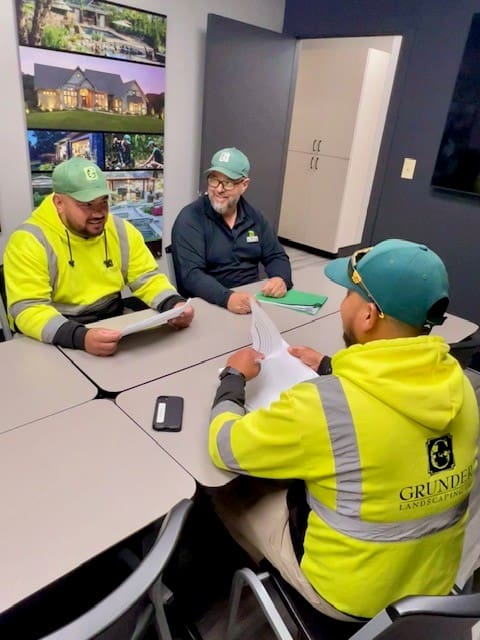
Dawn Arnold, director of sales operations for Grunder Landscaping Company, based in Miamisburg, Ohio, says it’s equally important for the employee and manager to come into the review ready for an open, two-way conversation.
“At Grunder Landscaping, we focus on coaching and mentoring rather than just evaluating,” Arnold says. “A productive review should highlight strengths, clarify expectations, and create a plan for growth.”
What to Review
Performance reviews should be standardized so that every time you meet with your employees, they are being measured against the same criteria.
At Landscape Workshop, they review their team members’ performance against their goals for the prior period, their strengths and opportunities for improvement, their goals for the coming period, and what they need to do to reach the next step in their career.
“Each role has objective measurements – for a sales person it is new sales and pipeline activity numbers; for an account manager it is safety, customer retention and satisfaction, enhancement sales, and labor efficiency,” Price says.
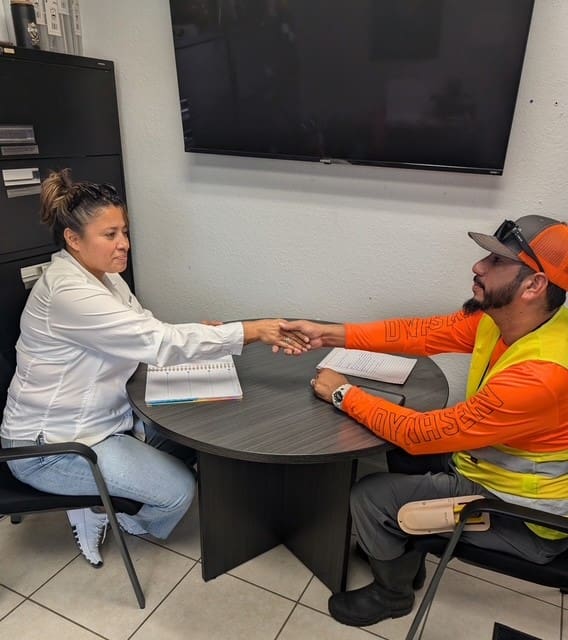
Arnold says they focus on an employee’s core job responsibilities, quality of work, teamwork, client service, accountability, and alignment with their company values.
“We also review progress toward individual and departmental goals, and whether the employee is growing in ways that support both their career and the company’s success,” Arnold says.
Grunder Landscaping also has their employees conduct a self-assessment in Inova, their performance management system, so they can reflect on their own performance. They incorporate input from other managers and team members when relevant in the review.
“Our Inova system provides a standardized format to ensure consistency across departments,” Arnold says. “Every review covers job-specific expectations, company values, and overall contribution to team and client success. For certain roles, we also review performance metrics tied to sales, efficiency, or safety.”
Connors says their bullet point checklist reviews safety, dedication, professional appearance, team member communication and preparedness, attitude, damage to company or client property, treating company property with respect, self-motivation, excessive overtime consumption and overall performance/efficiency.
“If people are getting close to an 80 out of 100, typically, they’re not around a lot of times,” Connors says. “It’s just kind of a sign if you can’t perform. We try and hire slowly, fire quickly, and just get them out the back door if they’re not working.”
Connors adds that if an employee had been earning anywhere from an 8 to 10 for a certain bullet point but has slipped to the 5 to 7 range, they will take the employee aside and talk with them to see if something is going on.
Jackson says their reviews assess the whole person and the results they deliver, how they show up for their team, how they live Monarch’s values, and how they are growing professionally.
“For some of our employees, that includes mastering English through our language programs, which opens doors for career mobility,” Jackson says. “We celebrate both the measurable wins and the personal progress that may not show up on a scorecard.”
Jackson says they use ADP Workforce Now as their electronic performance management system, which anchors every review to a consistent set of metrics and competencies, while still giving space for leaders to personalize the conversation.
Keeping Reviews Positive
Performance reviews can carry a negative connotation for your team, as some may view them as a time to be criticized. This doesn’t have to be the case.
“We frame reviews as opportunities, not punishments,” Arnold says. “Managers are trained to balance constructive feedback with recognition. We also have a second manager sit in on the review to provide perspective, support, and additional feedback. This reinforces that reviews are about growth, not ‘gotchas.’”
Jackson adds that having regular check-ins throughout the year eliminates the element of surprise.
“The review becomes a recap of an ongoing dialogue, not an ambush,” Jackson says. “Leaders are trained to make space for both celebration and constructive feedback, and we make sure there’s enough time in the conversation to really listen.”
Connors acknowledges that performance reviews can be stressful for owners as well, but they need to recognize they are in the people business and get comfortable with being uncomfortable.
“I wouldn’t be where I am right now if I didn’t get into uncomfortable situations and just go for it,” Connors says.
You can’t let your fear of upsetting an employee prevent you from letting them know where they are falling short.
“For low performers, it should be constructive feedback on what they need to do to stay at Landscape Workshop,” Price says. “This is inherently painful for a low performer, but it should not be mean-spirited.”
Jackson adds that you also shouldn’t wait to recognize top performers during their performance review. This should be happening in real time. It could come in the form of public shoutouts, raises and discussing new opportunities with the team member.
Performance reviews can also be a prime time to celebrate an employee’s accomplishments and discuss their career goals.
“For an excellent performer, a review should largely be about understanding whether the employee is happy, what they want next in their career, and how the company can help them get to the role or compensation they want,” Price says.
Every review should include a forward-looking discussion to ensure high-potential employees receive the development needed to advance.
“If an employee shows potential for leadership or wants to expand their skills, we use the review as a time to map out training, mentoring, or new responsibilities,” Arnold says. “Promotions or advancement are tied to both performance and readiness, and the review provides a structured way to talk about that.”
Providing Tangible Next Steps
The main aspect of making performance reviews worthwhile is providing specific and useful feedback that the employee can act on.
“Specificity is critical,” Price says. “What is the performance that needs to be improved, and what are the specific actions that need to be taken to improve that performance.”
Connors recommends putting yourself in the employee’s shoes and giving them concrete examples of their poor performance and how something should be executed.
“Just treat people with the respect that you want to be treated with,” Connors says. “And we try and always start out with ‘You’ve been doing a great job with this, but we want to see some improvements in A, B and C.’ It can’t just be a beat down.”
Jackson says they never stop simply at ‘do better.’
“Together, we build a development plan that’s specific, actionable, and supported by real resources such as training, mentorship, language classes, or stretch assignments,” Jackson says. “Tangible advice is about giving people both the direction and the tools to succeed.”
Arnold says they focus on action-oriented coaching, so instead of saying ‘be more organized,’ a manager might suggest tools, share time management strategies, or set a specific goal.
“Tangible advice means giving employees something they can practice and measure progress on,” Arnold says.
Advice for Others
Arnold and Jackson agree that performance reviews should be used as part of an ongoing coaching conversation that is a component of your culture.
Tap into technology that can help you standardize your process, but don’t forget the human element. Your managers should know not just what to say but how to say it. Listening, coaching and mentoring should remain at the center.
No matter how frequently you conduct formal performance reviews, it is essential to be consistent with them. Connors says once you have a plan of attack and a formal system, stick to it.
“It’s important to remember the most effective performance reviews are the ones where employees walk away clear on where they stand, energized about where they’re going, and confident that their company is invested in helping them get there,” Jackson says.
This article was published in the November/December issue of the magazine. To read more stories from The Edge magazine, click here to subscribe to the digital edition.
