
Water management as a service can sound simple. Connect some smart controllers and collect a fee, but each controller creates additional data, more responsibility and higher client expectations.
“The biggest mistake is treating it as a product to sell rather than a service to deliver,” says Justin White, CEO of K&D Landscaping, Inc., based in Watsonville, California. “If you promise savings and then do not actually monitor and adjust the systems, you lose trust fast.”
Keys to a Successful Water Management Program
Technology is the backbone of your water management program because if you can’t monitor and adjust your sites remotely, you simply have another route.
“Smart, weather-based controllers and central control platforms let us adjust schedules remotely using real evapotranspiration data instead of guessing,” White says. “Flow sensing and leak detection catch problems before they wash out a slope or spike a bill. Remote monitoring lets us manage dozens of sites without rolling a truck for every little change. Without that tech, you are just reacting. With it, you are managing proactively.”
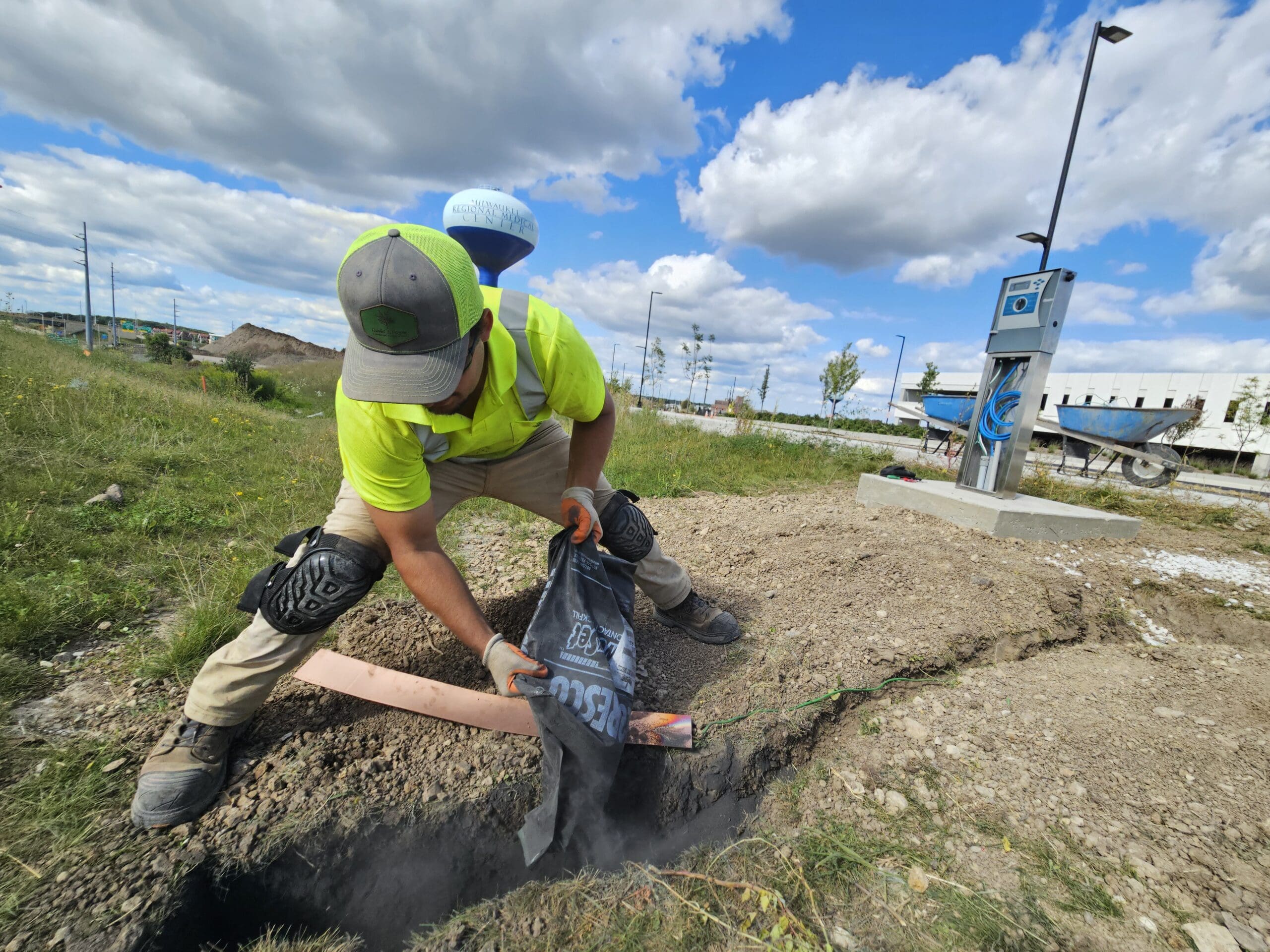
Rob Bardunias, COO of David J. Frank Landscape Contracting, based in Germantown, Wisconsin, notes flow sensing paired with a master valve is often the piece that people skip, but it pays for itself the fastest.
“A flow sensor catches a broken lateral at two in the morning and shuts the zone down before you’ve dumped thousands of gallons across a parking lot,” Bardunias says. “Every dramatic save we’ve had came from flow.”
Dillon Wilde, vice president of the irrigation division with Wilde Companies, based in Holden, Massachusetts, says they rely heavily on Hunter’s Hydrawise platform, which gives them visibility into system performance and generates alerts when something requires attention.
“From there, we have a team of individuals who work together to review and diagnose those alerts, acknowledge the issue, communicate as needed, and schedule service when an onsite visit is required,” Wilde says. “The technology is important, but the real success of the program comes from having a process and a team in place to properly interpret the information and act on it.”
Bardunias also recommends having a documented site record that breaks down the irrigation system zone by zone and outlines the head type, precipitation rate, plant material, soil and sun exposure of the property.
“Without that, the software is just a fancy timer, because nobody knows why zone 14 should run differently than zone 15,” Bardunias says.
Avoid Common Water Management Mistakes
Because you are monitoring the irrigation system, Wilde says clients may assume that you will catch every possible problem, so it’s important to set clear expectations upfront on what is being monitored, how frequently it is being reviewed, and what types of issues the technology can and cannot identify.
Bardunias says you should also avoid promising a savings percentage, as there are times the weather will not cooperate or a client may add to their landscape, and then you have a number you’re trying to beat.
If you’re going to introduce your water management program as a service, make sure you are not underpricing the work just because you’re nervous to charge for something clients may assume is free.
“If you sell it cheap, it becomes the thing that gets skipped when July is busy — and a skipped program is worse than no program, because now you’ve been paid for something you didn’t do,” Bardunias says. “Worse still, someone has an expectation at a price that is impossible to deliver on well.”
Another major mistake is starting with no baseline data on how much water the site was using before. If you can’t demonstrate the positive changes you made, the renewal conversation becomes a matter of opinion.
“It’s like starting a diet without any measurements,” Bardunias says. “Where are you starting and where do you want to go?”
Wilde adds you shouldn’t underestimate the amount of data and alerts that will come as you scale this program up.
“In the beginning, when we had fewer connected controllers, it was relatively easy to review the controller maintenance page once a week and stay on top of everything,” Wilde says. “As the number of controllers grew, that approach no longer worked. We had to become much more organized and dedicate specific individuals to monitoring and managing the incoming information.”
It is also critical to have someone dedicated to managing this program; otherwise, water management becomes something only done when there is free time. Bardunias says they struggled with this in the past. Now it serves as a career step for technicians who want to grow without leaving the field.
Advice for Others
White notes that water management is one of the best recurring revenue opportunities in this industry, but only if you commit to doing it right.
“Start by building the capability, not the sales pitch,” White says. “Get the right technology, train your people, and learn to actually deliver savings before you go sell it. Then price it with confidence, because the value is real and you should not give it away.”
Wilde recommends launching the program during a slower part of the season rather than during spring start-up or fall blowout season.
If you already install smart controllers for clients, chances are you’re already doing informal water management for free. Bardunias advises documenting what you already do, pricing it, and putting it in an agreement.
Wilde suggests reaching out to your local manufacturer or distributor representative and having them sit down with your team to help configure the alerts and settings properly. He says starting with the right alerts and a manageable process can make a big difference as the number of connected controllers grows.
“I would encourage other contractors to embrace monitoring,” Wilde says. “When it is done well, it creates additional service opportunities, helps the company look more proactive and professional, and provides real value to the client. At times it may feel like a loss leader, but when the program is structured correctly, it can be a win-win for both the contractor and the customer.”