
If you are selling irrigation systems as a product instead of a service, you are missing out on the chance to offer a water management program where you can serve your clients better, reduce water waste and better protect the landscapes you are responsible for.
“While there is certainly financial value in a well-run monitoring program, our primary goal has never been to simply create another recurring revenue stream,” says Dillon Wilde, vice president of the irrigation division with Wilde Companies, based in Holden, Massachusetts. “We look at monitoring as a way to improve the overall level of service we provide. In many cases it creates additional service opportunities and strengthens the client relationship, but we believe the value to the client has to come first.”
Shifting From Repair Calls to Reliable Water Management
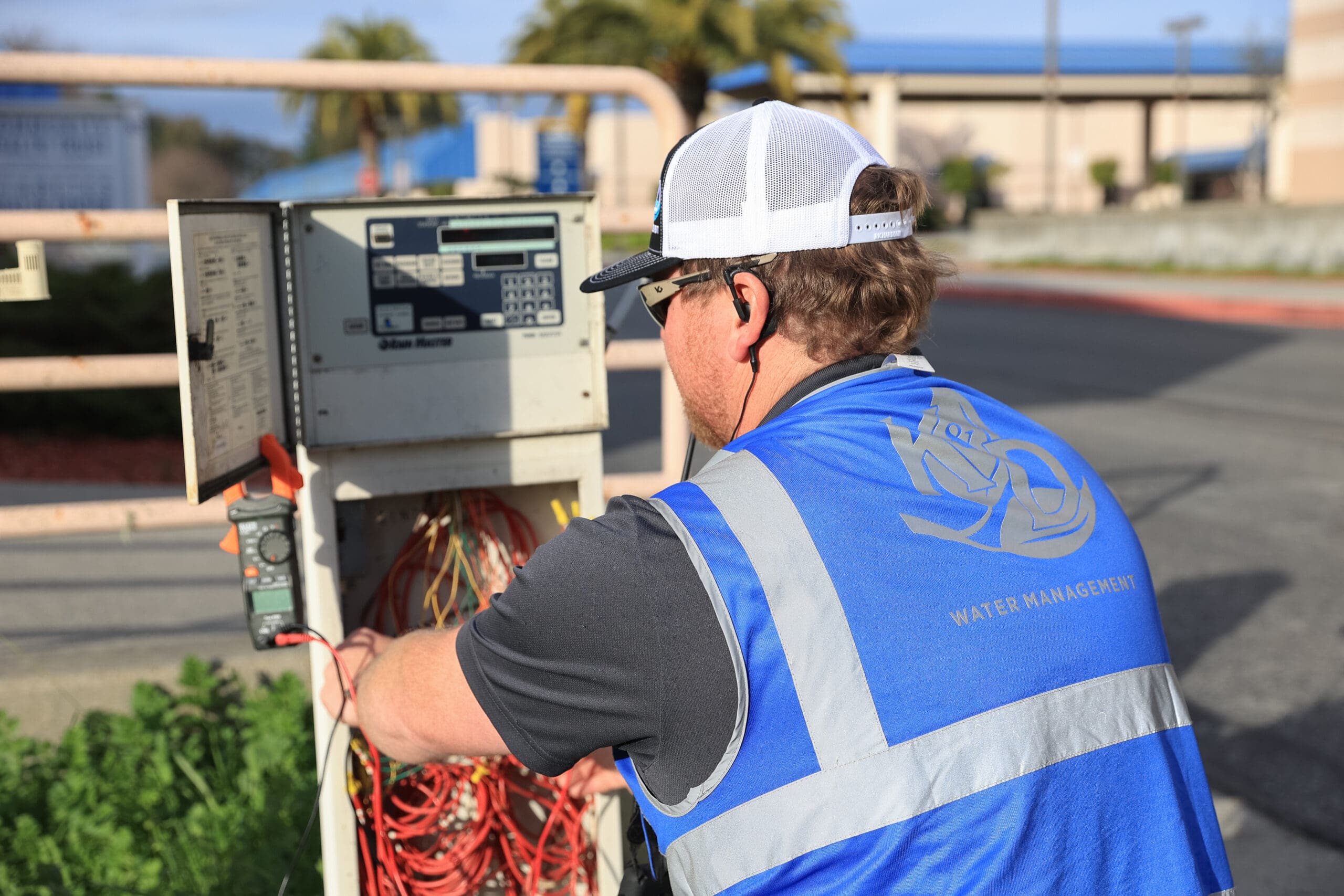
Justin White, CEO of K&D Landscaping, Inc., based in Watsonville, California, says they first realized the opportunity to create a water management program as part of their monthly service after a client request.
“Once we saw how much water the average property was wasting and how much money we could save them, the lightbulb went on,” White says. “Water is not a one-time fix. Systems drift, weather changes, seasons turn, and controllers need constant attention. That ongoing need is exactly what makes it recurring. We stopped thinking about irrigation as a repair call and started thinking about it as a service our clients could not run their properties without.”
The turning point for David J. Frank Landscape Contracting, based in Germantown, Wisconsin, was seven years ago when David R. Frank took over the company after the passing of his father and founder of the company.
“For decades we were selling activity — spring startups, midseason repairs, and fall blowouts,” says Rob Bardunias, COO of David J. Frank. “Water management is selling an outcome: the right amount of water, in the right place, at the right time, with someone accountable for the result. The equipment was always there. The program discipline is newer.”
Bardunias says in the past they had brown spots they’d chase all season on commercial properties and clients asking why they were paying for repairs on a system that was still failing them.
“When we actually pulled the water usage and weather reports alongside run times, it was apparent that sites were overwatering badly in some zones and underwatering in others — and the fix wasn’t parts, it was management,” Bardunias says. “We priced ongoing oversight for the next season, and they signed without much negotiation. That’s when it clicked: they weren’t buying labor hours, they were buying not having to think about it.”
Water Management Business Models
There is no one specific way to structure your water management program.
For K&D Landscaping, they provide water management services to all of their maintenance clients, while some purchase upgrades, such as more frequent service checks. White says 25% of their maintenance revenue comes from water management and irrigation.
“We price it based on the site’s scope and complexity,” White says. “Number of controllers, number of zones, acreage, water source, and the level of monitoring and reporting the client wants. Some clients want full management with monthly reporting. The key is that the savings we generate almost always outweigh what the client pays us, so the program pays for itself.”
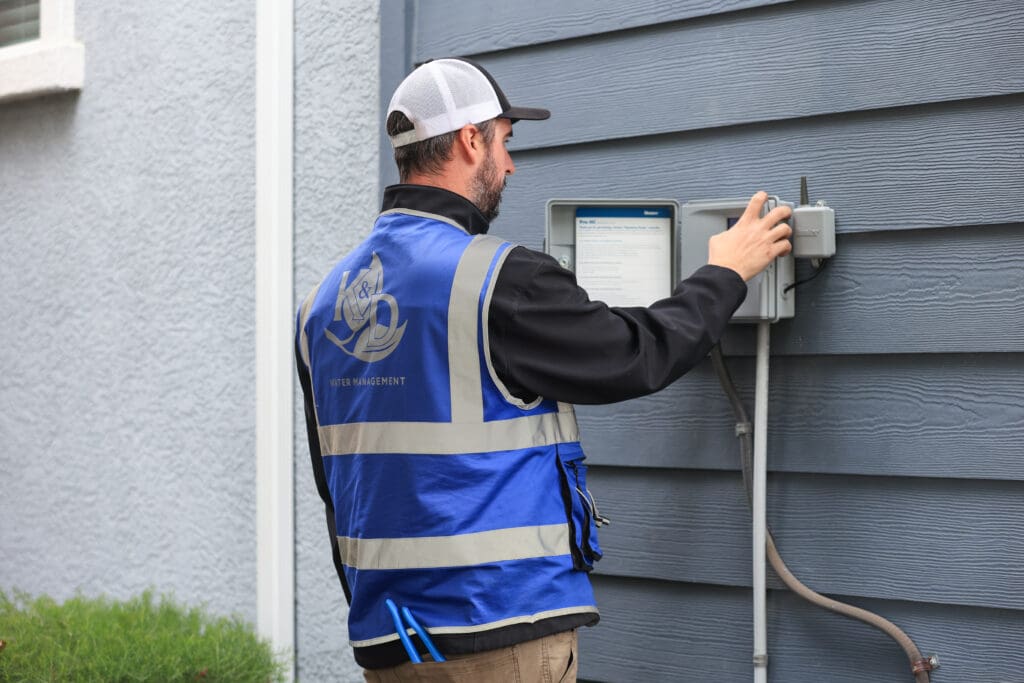
Similarly, Wilde Companies integrates their remote management into how they service their clients instead of it being sold as a standalone service. Wilde says one-third of their customer base is currently enrolled in their remote water management program. He says they charge one flat rate for their program that makes sense for the customer but allows them to dedicate the appropriate amount of time and attention to monitoring.
Bardunias says about roughly 40% of their client base use their water management program, with about 25% of commercial accounts and just under 50% of their residential clients taking advantage of it.
“Against our total client base, it’s a small number, because plenty of DJF clients don’t have irrigation systems at all,” Bardunias says. “Against clients who have a system we service, penetration is much higher, and against commercial accounts with 12+ controllers, it’s the majority.”
David J. Frank prices their program on controllers and zones, charging a base management fee per controller, plus a per-zone rate, adjusted for site complexity. Bardunias says the fee scales with how often they are physically on site adjusting the system.
“We deliberately don’t do shared-savings pricing, where you take a cut of the water saved,” Bardunias says. “It sounds elegant, and it’s a trap: it caps your upside on well-run sites, it makes you the villain when a client adds landscape or the weather changes, and it means arguing about baselines instead of talking about plant health and a thriving beautiful landscape.”
Bardunias adds that while their irrigation division brings in around 5% of their revenue, the water management program generates more repair, upgrade and retrofit work than unmanaged sites because they are regularly visiting and catching things.
Defining Your Water Management Services
When building out your water management program, the key is to create a system that is proactive instead of reactive.
Bardunias says before they manage, build, or expand anything, they first conduct an audit: testing for distribution uniformity, inspecting head-by-head, checking pressure, and doing a full zone inventory.
“We also pull twelve months of water billing history,” Bardunias says. “You can’t prove improvement without a starting point.”
Then they will build a schedule off evapotranspiration and plant needs, not a calendar and update the system throughout the season.
White says they also start with an audit before installing or upgrading to smart controllers and sensors where it makes sense.
“From there we handle ongoing monitoring, seasonal scheduling adjustments, repairs, and regular reporting,” White says. “The client walks away with a healthier landscape, a lower water bill, and one team accountable for all of it.”
Wilde says their program consists of remote system monitoring, review of system alerts, seasonal scheduling adjustments, and proactive system management throughout the irrigation season.
“When an issue is identified, our team evaluates the information remotely to determine whether it can be addressed through the controller or if an onsite service visit is necessary,” Wilde says. “The goal is to stay ahead of problems rather than waiting for a client to notice an irrigation issue or landscape stress and then call us.”
Wilde Companies reviews their managed accounts daily Monday through Friday and push notifications are sent to mobile devices for major system alerts so critical issues can still be addressed over the weekend when necessary.
Bardunias says their program is also designed so flow anomalies, communication failures, and controller faults come to them, and oftentimes the client never even knows there was a problem. He says their sites are continuously monitored and adjusted as conditions change.
David J. Frank also provides monthly usage reporting during the season and a year-end summary, as well as a walkthrough with recommendations for next year’s capital work.
Irrigation systems need attention throughout the season, so it only makes sense to define and charge for the peace of mind you can provide clients.