

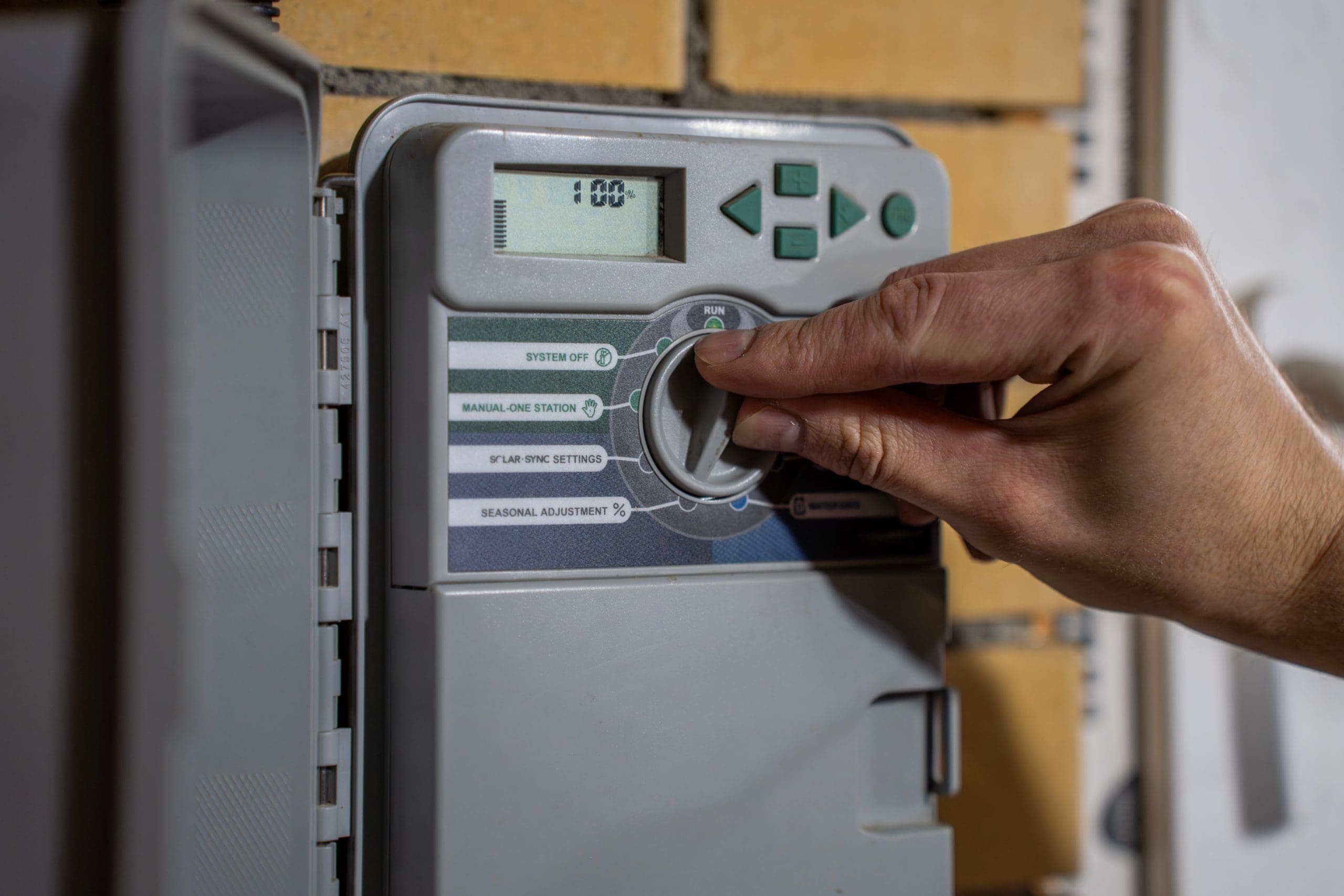
Smart controllers for irrigation systems are frequently championed as one of the low-hanging fruit when it comes to increased water efficiency. However, this technology cannot reach its full potential without a professional setup.
In fact, professional calibration nearly doubles smart irrigation savings. According to the Healthy Green Spaces Coalition, when an irrigation specialist tunes a smart controller, the water savings jump from 8–22% out of the box to 36–46%.
The EPA estimates that proper smart controller adoption and calibration nationwide could save more than 390 billion gallons annually.
Because evapotranspiration (ET) controllers rely on accurate inputs to make scheduling decisions, incorrect assumptions about the site can quickly lead to water waste. To properly calibrate a customer’s smart controller that utilizes ET rates, make sure you are taking these various factors into account.
Irrigation Type
First, audit the customer’s irrigation system as a whole, as no smart controller can overcome a poorly installed irrigation system. Determine if each zone is being watered evenly and if the pressure levels match what the sprinkler heads are designed for. Check the system’s components for leaks or damage.
Once you have confirmed the irrigation system is functional, then you can input the system’s application rate and efficiency. The application rate will vary depending on the brand, type and installation details of the sprinklers.
Keep in mind that with efficiency, the lower number input, the more water will be applied as the controller will try to compensate for these water losses. To minimize overwatering, it’s best to use the highest possible efficiency value.
Soil and Plant Type
In order for an ET controller to make the right soil water balance calculations, the correct soil type needs to be input in the controller. The soil affects the infiltration rate to the root zone and the amount of water that can be held in the root zone.
For instance, clay soils hold water well, but it takes time for the water to infiltrate into the root zone. The inverse is true for sandy soils. Take into consideration if a site has substantial compaction because even sandy soils can have limited infiltration if they have become too compacted, and this can lead to runoff.
You also need to account for the different plant material in the landscape and their water requirements. Plants with deeper root systems can go longer periods without being watered. The age of the plants will also play a factor as even more drought-tolerant plant material will require more water if it is still getting established.
Slope
The slope of different zones should also not be overlooked as this can lead to runoff if these locations are programmed the same as a flat portion of the landscape.
ET controllers can use multiple irrigation start times with shorter durations, allowing more time for the water to enter the slope soil between the watering events.
Rain Sensors
You also want to ensure that your client’s smart controller features a rain sensor, as it verifies that the property actually received rainfall and shuts the system down during and after the event for a period of time, depending upon the amount of rain received.
While some smart controllers will utilize weather data from nearby weather stations, actual conditions can vary from properties that are even just a mile apart. On-site rain sensors provide the best accuracy.
Taking the time to fine-tune your customers’ smart controllers to their specific site will not only result in additional water savings but also position your company as a trusted partner in water management.