

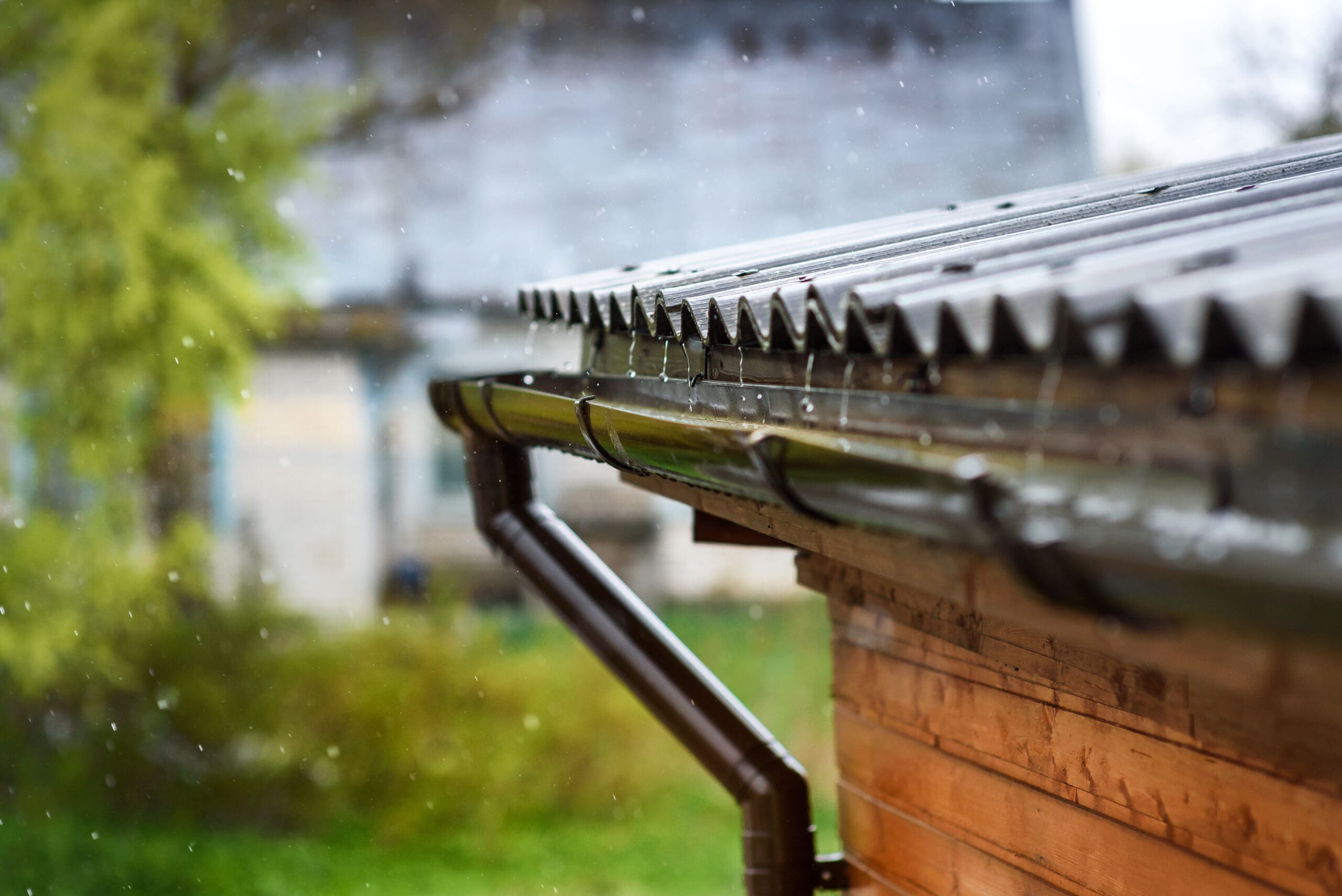
As sustainable water use becomes more top of mind for customers, one option you can present is incorporating rainwater harvesting to supplement their irrigation usage.
Rainwater collection can help reduce stormwater runoff and has fewer contaminants compared to surface and ground waters. How much water a client can expect to collect and be able to use in their landscape varies greatly depending on their area and the frequency of rainfall.
One rule of thumb from the American Rainwater Catchment Systems Association is that 1 square foot of catchment area times 1 inch of rainfall equals 0.6 gallons of water. So, if you have a 1,000-square-foot roof, for every inch that falls, you could collect 600 gallons of water.
The regulations and rules surrounding rainwater harvesting vary widely depending on the state in which you are located. Before offering this as a service to clients, make sure you are familiar with any codes in your local area.
For instance, in Colorado, households are allowed to use a maximum of two rain barrels with a combined storage of 110 gallons or less. For a more comprehensive outline of which states feature regulations when it comes to rainwater harvesting, click here.
Considerations When Installing Rainwater Harvesting Systems
If your area does encourage the use of rainwater harvesting systems and your clientele is expressing an interest in these systems, there are a number of factors that go into installing an effective system.
The major components of a rainwater harvesting system are the collection surface, gutters, downspouts, pre-filtration systems or first-flush devices, storage tanks and distribution systems, which can include sanitization.
If your client has asphalt shingles, be aware that these can leach toxins, and this water should not be used for watering vegetable gardens.
Gutters should have some form of screening to prevent large debris, such as leaves, from entering them. To ensure irrigation efficiency, include filtration before entering the cistern and again before the water enters the pump and irrigation system to capture any particles. For small systems, a first-flush diverter will suffice.
Tank screens and an insect-proof flap valve should be used to prevent pests like mosquitoes from accessing the rainwater.
The simplest catchment option is placing a rain barrel at a gutter downspout to collect rainwater. The barrel should be opaque to inhibit algae growth, not leach toxic materials and have a wall thickness that can withstand freezing.
It is most practical to use captured rainwater in drip irrigation systems as the supply can be provided by gravity pressure alone or by a pump attached to the storage system.
If your client wants to connect to their existing irrigation system, disconnect the main line from the potable water source and connect the main line to the cistern.
Be mindful that if the catchment area is not large enough to capture enough water for irrigation, supplemental water is needed. A backflow prevention device should be used to prevent cross-contamination with potable water sources.
A well-designed rainwater harvesting system should be designed to store all the water that will run off the collection areas in a single rainstorm.
How to Maintain a Rainwater Harvesting System
Rainwater harvesting systems should be easy for your clients to use and low-maintenance, but stress to them this does not mean they require no maintenance.
Failing to maintain a rainwater system can result in poor water quality, mosquito infestations, algae blooms and decreased water supply.
Develop a maintenance checklist that either you or your clients can conduct on a regular basis.
The condition of the roof should be inspected on a yearly basis and after large storm events. Tree branches should be trimmed to stay away from the roof. Watch for algae growth and deteriorating roof materials.
It is recommended to clean gutters and downspouts at least every six months, as debris will decrease the amount of rainwater and the quality of water.
During the summer, monitor the pump’s pressure as low flow may indicate the system is clogged.
The filters and screens going in and out of the storage tanks should be cleaned and inspected in accordance with the manufacturer’s guidelines. Also, inspect the tank, lines and connections for leaks regularly.
In colder climates, lower the water level in the storage tank to allow for freeze expansion. Also, empty the first flush diverter before a freeze and protect pipes from freezing temperatures.
Explain to your clients that no matter how much they invest in their rainwater harvesting system, if they fail to maintain it, they will not be able to maximize its usage.
