

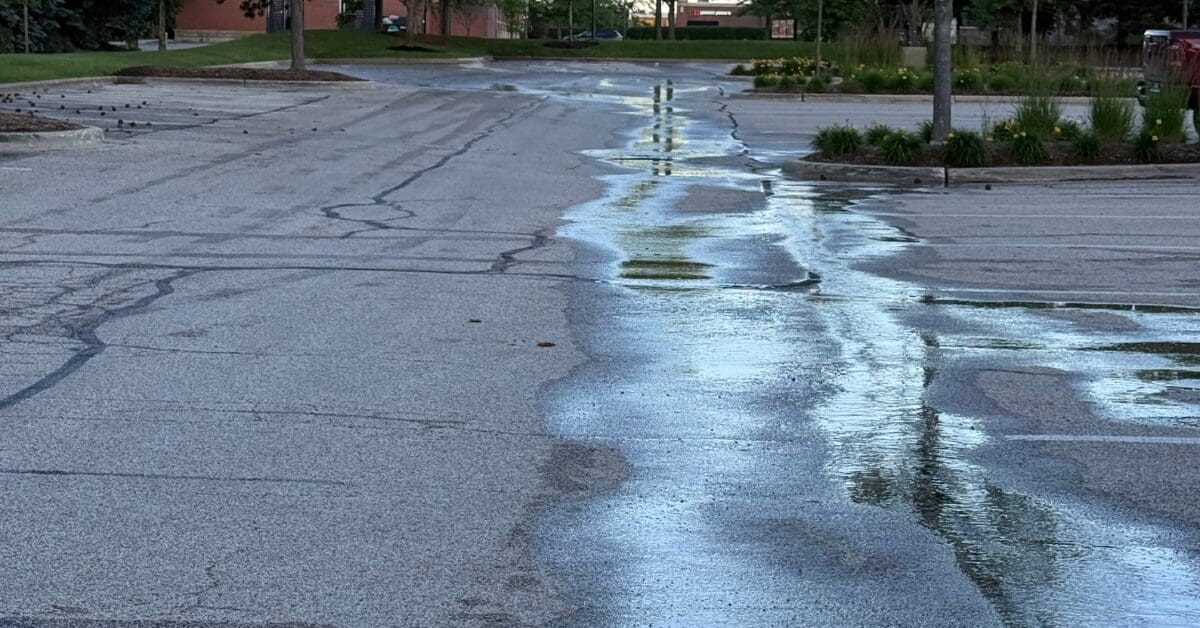
There are many ways water waste can fly under the radar if your crews aren’t trained to spot it. Yet proactively monitoring irrigation systems not only helps you avoid upset customer calls, but it can also separate your company from the competition.
“If you’re not currently offering smart irrigation upgrades to existing customers, then you are missing an opportunity to generate additional revenue,” says Larry Giroux, segment manager for Ewing Outdoor Supply.
Common Culprits of Water Waste
Water can be lost from everything from broken sprinkler heads and poor hydrozoning to undetected leaks and mainline breaks.
“A broken mainline flowing at 100 GPM can waste 36,000 gallons per day, causing catastrophic landscape washouts, sinkholes, and massive water bills,” says Steve Barendt, senior product manager with Rain Bird.
Poor hydrozoning often occurs when irrigation is the last thought on a project and the homeowner is trying to cut costs.
“Something has to be the sacrificial lamb,” says Kevin Battistoni, national customer experience manager with Hunter Industries. “That could be the difference of turning what went in as an eight-zone system to these huge hydrozones where we have five different types of plant material with five different water demands all getting watered at the same time with the same heads, so some stuff is going to get drowned and some is going to be super dry.”
In areas such as Arizona and some areas of California where it’s particularly hot, these inefficiencies will become noticeable very quickly.
Battistoni recommends that if a company doesn’t have an in-house irrigation department, they start a dialogue early on with the irrigation contractor when designing so they can select plants with similar water needs and avoid creating a small area that needs multiple irrigation zones.
Another common cause of water loss is if an irrigation system has high pressure. This can result in misting or fogging, where the water vaporizes and drifts away from the target areas.
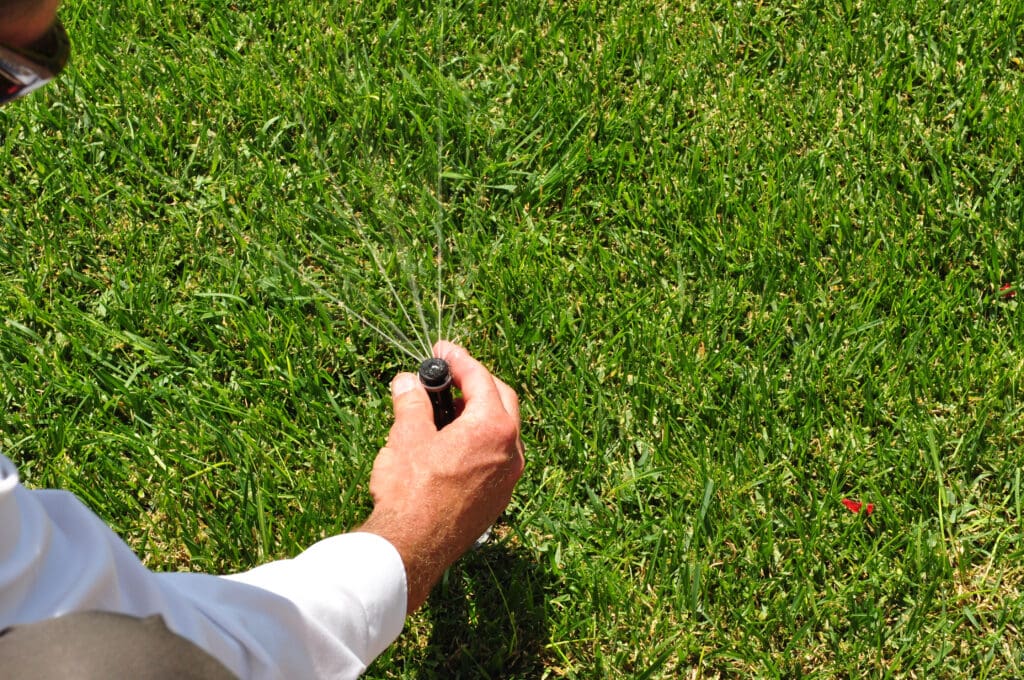
“Upgrading to high-efficiency nozzles paired with pressure-regulating spray bodies can reduce zone run times by up to 35% and save up to a gallon of water per minute per sprinkler head,” Barendt says.
Giroux says companies should also make sure heads are properly adjusted and not spraying onto parking lots, streets and driveways to avoid runoff.
Runoff can also occur due to poor programming. Battistoni says anytime an irrigation system is laying down water faster than the infiltration rate of the soil, you’ll end up with runoff, which is why it is important to ensure you are using an application rate the ground can handle.
Battistoni says Hunter offers a free runtime calculator to assist with proper programming where a user can provide their zip code and go zone by zone, inputting their slope, soil type, plant type, irrigation system, and it will provide an irrigation schedule for them.
“I walk onto sites and save people 50% just by reprogramming their controller because they have a set it and forget it mentality,” Battistoni says.
Barendt adds that when people fail to adjust controllers for changing weather, this leads to landscapes being overwatered by 30% to 50%.
“At a minimum, every home should have a rain shut off device,” Giroux says. “There’s no bigger waste of water than an irrigation system operating during a rain event. This is why it’s important to offer an annual sprinkler inspection to your customers.”
Training Crews to Spot Irrigation Issues
Because many of these issues are visible during routine maintenance visits, crews can play an important role in catching water waste early. Your crews don’t need to be irrigation experts to be able to spot warning signs either if you take the time to train them.
“It’s training the fundamentals, which doesn’t need to be overwhelming,” Battistoni says. “It’s very simple.”
When your crews can walk on site and recognize these issues, it can be an opportunity for your team to upsell the client.
“The off-season is a great time to have in-house training for your employees to learn what to look for on every jobsite, residential or commercial,” Giroux says. “Ask your local distributor to come in and help with the training.”
Barendt recommends crews take a proactive approach by checking for physical damage such as broken heads, clogged nozzles or stuck valves during their site visits. He says they should also watch for signs of inadequate pressure.
“Look for sprays and rotors that do not fully pop up, nozzles failing to reach their designed throw distance, or water failing to reach the end of a drip line,” Barendt says.
Meanwhile, excess pressure will be indicated by misting or fogging water during operation. Battistoni also recommends training crews on how to take a dynamic pressure reading. Knowing the pressure at the irrigation heads will allow them to know if the heads need to be upgraded.
“If I can go to the furthest head from point of connection, and I’ve got the right dynamic pressure for that type of sprinkler head, then I know everybody else is good too,” Battistoni says.
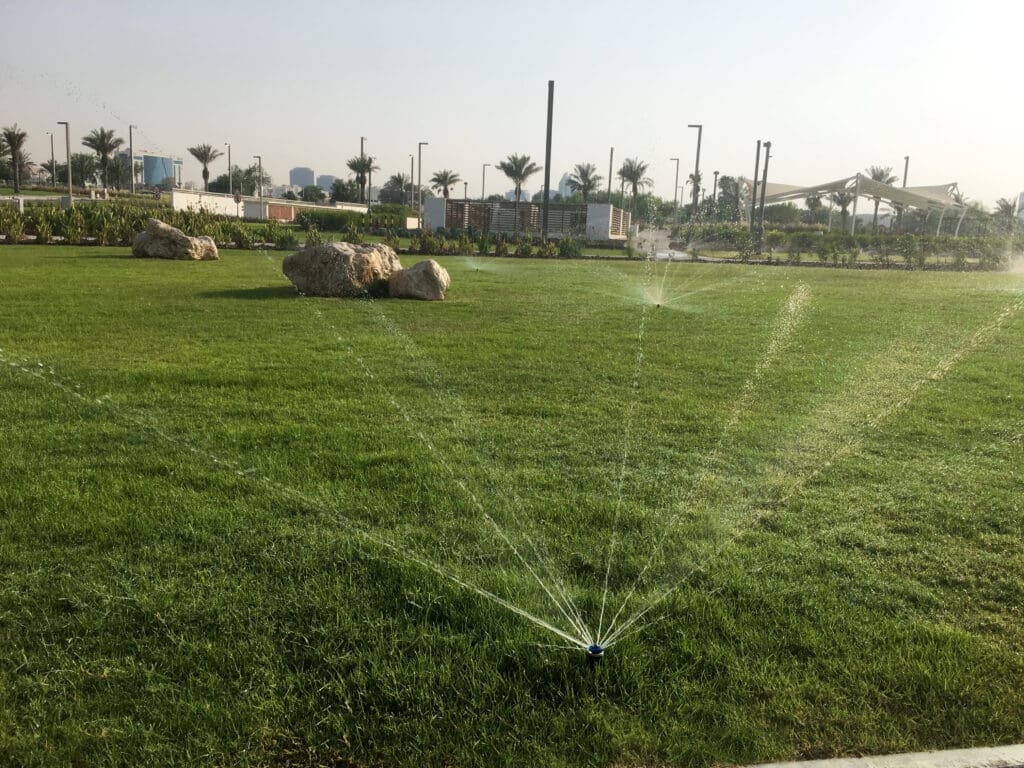
Visual signs of turf stress or localized dry spots can all be an indicator of an irrigation issue. Battistoni says a simple field test that crews can use to determine if brown spots on a property are due to poor irrigation is by dropping a sheet of paper on that dry area, turning on the irrigation zone, and waiting five minutes. If they have a saturated piece of paper, they can rule out lack of head-to-head coverage as the cause.
“Do not increase nozzle sizes to fix dry spots, as this can exacerbate pressure loss; instead, address the underlying pressure or spacing issues,” Barendt says.
Battistoni says crews should also look for the cardinal sin of mixing rotary sprinkler heads and spray heads on the same zone, as they have very different application rates.
“They could see a zone where there’s a bunch of mist heads and there’s a bunch of rotary heads, and they’re like, ‘Well, it all looks like it’s getting watered to me,’ Battistoni says. “They’re right, but you’re going to have three inches of water being laid down in some areas and a half inch in others.”
To ensure distribution uniformity, crews should make sure the proper rotor nozzles are selected during their site survey of head-to-head coverage. Barendt says different nozzle selection based on quarter, half, full, or three-quarter patterns is critical to ensure the irrigated area is all receiving the same amount of water.