

After putting in the time and effort to attract talent to their landscape company, organizations are working hard to improve their overall onboarding process.
This focus on welcoming and training new hires from the get-go is paying off, as many companies are seeing increased retention rates with their rookie employees. Patrick Murray, co-founder of Local Roots Landscaping, based in Pittsburgh, Pennsylvania, says their current average retention rate for new hires is 90%.
He credits this to their strong training program and 30- and 90-day reviews with new employees. They also conduct monthly scorecard reviews with all their team members using the Leanscaper framework.
“It reviews financial, operations, people and client metrics, so they know where they stand and why they got the bonus that they got that month,” Murray says. “That has proven to be really good for retention.”
Strengthen Your Onboarding
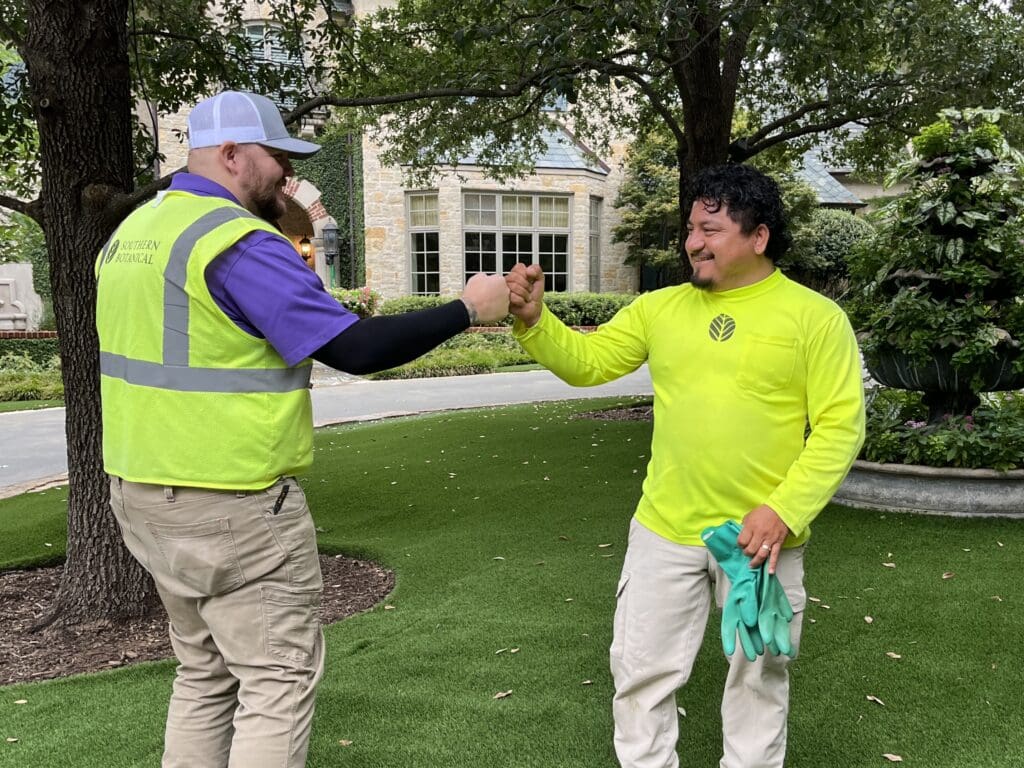
Jennifer Thomas, director of recruiting, onboarding & culture for Southern Botanical, Inc., based in Dallas, Texas, says they’ve also seen improved new hire retention this year by building out a more structured and supportive onboarding experience. She says they make a point to set clear expectations starting during the interview process.

“I truly believe there’s a place for everyone, and it’s just really setting those expectations even before hire,” Thomas says. “Every new hire has a clear plan, hands-on training, and a SoBo buddy, so we really work to help them feel connected and confident from day one, but a job description, onboarding plans and development plans are all part of that to improve new hire retention.”
Carrie Velkover, chief human resources officer for Visterra Landscape Group, headquartered in Rosemont, Illinois, says they are working to standardize their onboarding process across their brands.
“We have started by creating tailored onboarding experiences for each operating entity and are continuing to develop the process to support future growth,” Velkover says. “This ensures new hires receive a consistent, welcoming, growth-oriented experience.”
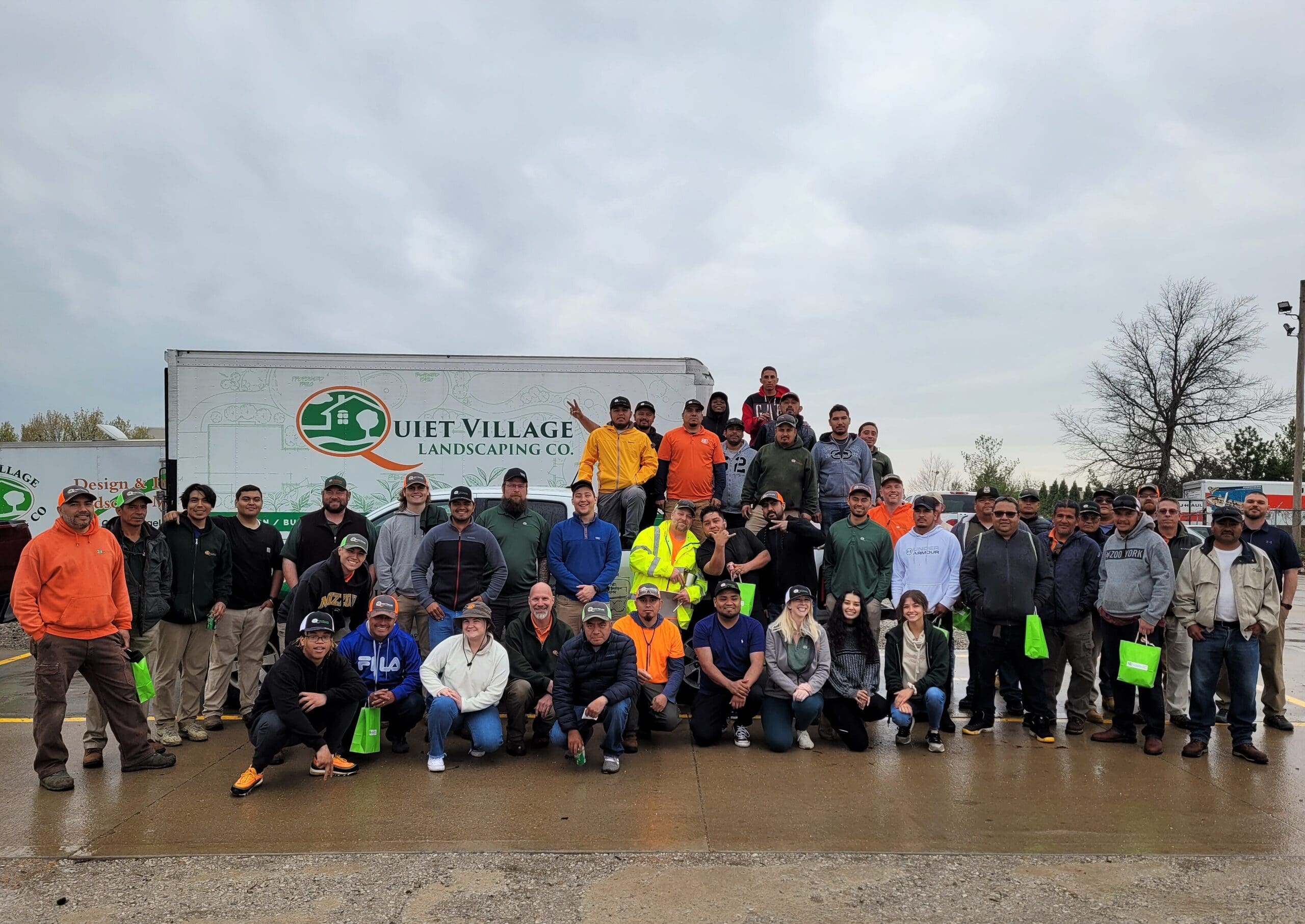
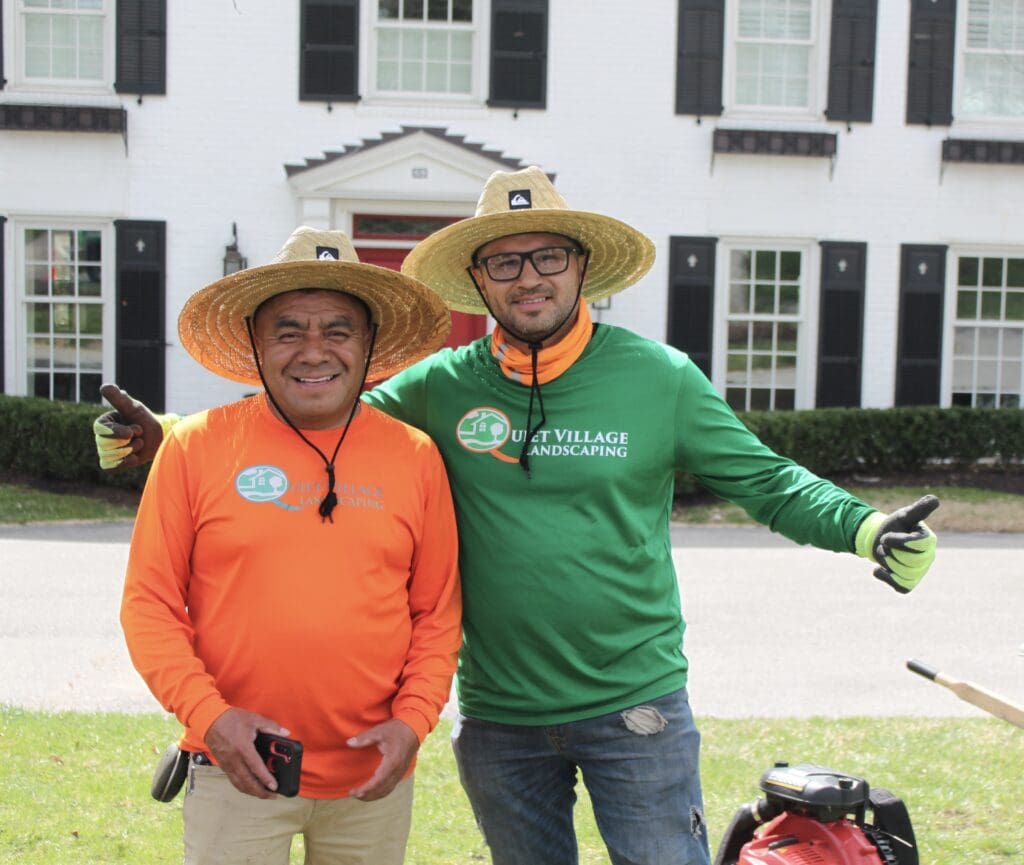
Dennis Evans, owner of Quiet Village Landscaping, based in St. Louis, Missouri, says they started working to improve their onboarding six years ago and now review it every year to see where they can improve. This year, they’ve added a mentoring and shadowing program to help get new hires up to speed.
“We retain 80% of new hires for at least 12 months,” Evans says. “Part of that number is applicant screening, an elaborate interview process, and a robust onboarding program. It is a lot of work but worth it on the front end versus letting a bunch of poor performers and bad cultural fits in the door. That actually will cost you more time and money.”
Mick Mulhall, president of Mulhall’s, based in Omaha, Nebraska, says they take into account the different ways their team members learn when it comes to onboarding. For instance, they have a structured classroom-based process for their full-time team members.
“For our non-office team members, we do a much shorter program,” Mulhall says. “It’s more interactive, and then we plan on then following up with our annual meeting. Every year, we do a full company annual kickoff, and then try to reinforce what they learned in a mini NEO (new employee onboarding) session in that larger meeting.”
Why Employees Stay
There is no one silver bullet as to why employees stay with a company long-term. Rather, it is a combination of factors, including company culture, compensation and benefits and the opportunity for growth. Evans says his team members appreciate the ongoing training, regular team building events and the company’s practice of open-book management.
“There’s a real sense of pride here,” Thomas says. “We do things the right way, and we care deeply about one another. We utilize ‘The Green Standard,’ so we work to be part of something excellent and special. I think that’s what makes people stay.”
Thomas adds that giving people the opportunity to learn and grow helps them stay.
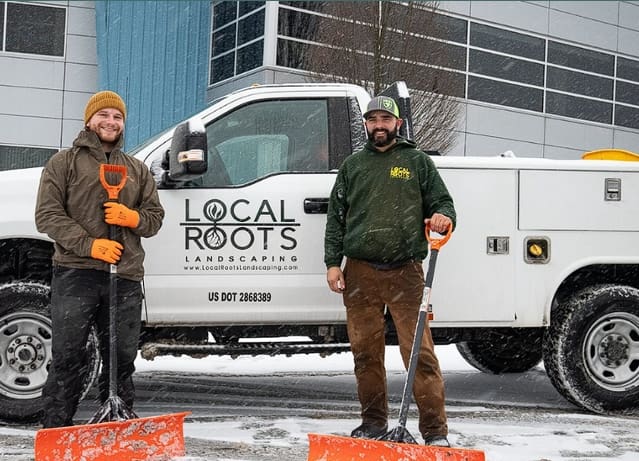
“It’s a very healthy team culture and environment where support and cross-training and love are abundant, and the people just feel heard and loved by each other,” Murray says. “It’s not just management doing their part. It’s literally the teams in their own world all coming together, and it’s special. That’s why people are sad if they have to leave.”
Mulhall says the most common reason his team members stay is for the people.
“The real legacy of it is that group of people who’ve chosen to work together to try to make this impact on our community here, and I do think that what we have is special,” Mulhall says. “I work with a guy who’s worked here since the 70s, and he still comes into work every day and genuinely seems to enjoy what he does.”
While there have been reports of an ‘empathy recession’ in other industries’ workplaces, landscape companies have not encountered this issu,e as a strong company culture mitigates political and social conflict.
“I’m really proud of the culture we’ve built,” Thomas says. “It’s rooted in respect, teamwork and appreciation. Our people look out for each other, and it’s something we work hard to protect.”
Mulhall says one of their core values is being inclusive, and they make a point to talk about what this really means for them as an organization.
“The common things that you talk about include what does it mean to be inclusive on the dimensions of age, of country of origin, of first language, and what we’ve been talking about a lot more recently is political party,” Mulhall says. “For us, trying to get out in front of, ‘What is Mulhall’s, what matters to it, and what doesn’t, and what isn’t part of what we talk about inside these walls?’”
Competitive compensation and benefits should also not be overlooked.
“Compensation is one part of how we invest in our people, alongside development, safety and benefits that truly support them,” Thomas says.
Velkover says their employees regularly say they stay because of the tangible investment in their well-being. Their free health care to crew members is often mentioned as a key differentiator and reason for commitment.
Visterra also switched benefit providers to allow for lower premiums across every health care plan. Additionally, they have expanded their time off policy for office and crew-level individuals. Visterra conducts annual pay reviews and implements wage increases each April, ensuring that pay remains competitive and aligned with market trends.
Mulhall’s wages have gone up consistently for the past five years to match inflation. Quiet Village issued wage raises between 8%-20% with the average around 12% in 2025. Evans anticipates that in 2026, wages will go up by a smaller percentage.
Murray says while they raised wages in 2021 and 2022, these have stabilized, with certain positions receiving incremental increases.
Why Employees Leave
As far as why employees leave organizations, it tends to be either due to life changes or a bad cultural fit.
“It’s often relocation or life changes, or some people are getting out of the industry,” Thomas says. “I think we’ve made progress in keeping people who want to grow their careers with career ladders and growth opportunities, and definitely focusing on internal mobility.”
Thomas says they often have boomerang hires who leave to explore different companies but end up returning to Southern Botanical.
In Visterra’s case, their employees cite seasonality, heavy workloads, or limited visible advancement as reasons to leave.
“We are addressing this by improving communication about career paths, promoting internally where possible, and linking day-to-day roles with long-term goals,” Velkover says.
Mulhall says they tend to lose talent by not having enough opportunities for them as a small business.
“As a company whose ambition it is to make a positive impact in our community and to maintain and to structure the business in a way that can make sure that we maintain that as our North Star, that’s why we want to grow,” Mulhall says. “We like the size of the company we are, but we don’t like not having those opportunities for a lot of the people we’ve recruited who choose to work here.”
Key Takeaways
- Structured, thoughtful onboarding is directly improving new-hire retention across the industry.
- Supportive teams, cross-training, pride in their work, competitive compensation and meaningful benefits work together to drive employee loyalty.
- When employees leave, it is typically due to life changes or lack of growth opportunities, not dissatisfaction with culture. Landscape companies are countering this by strengthening career ladders, improving internal mobility, and emphasizing long-term development.
