If you’re watching the Super Bowl, or any sporting event for that matter, and you don’t know what the score is, it can be hard to stay engaged. Similarly, it can be difficult for your team to feel like they have a stake in the business when they don’t know how your landscape company is performing or how their actions can influence its overall success.
This is why some landscape companies have implemented open-book management in their organizations.
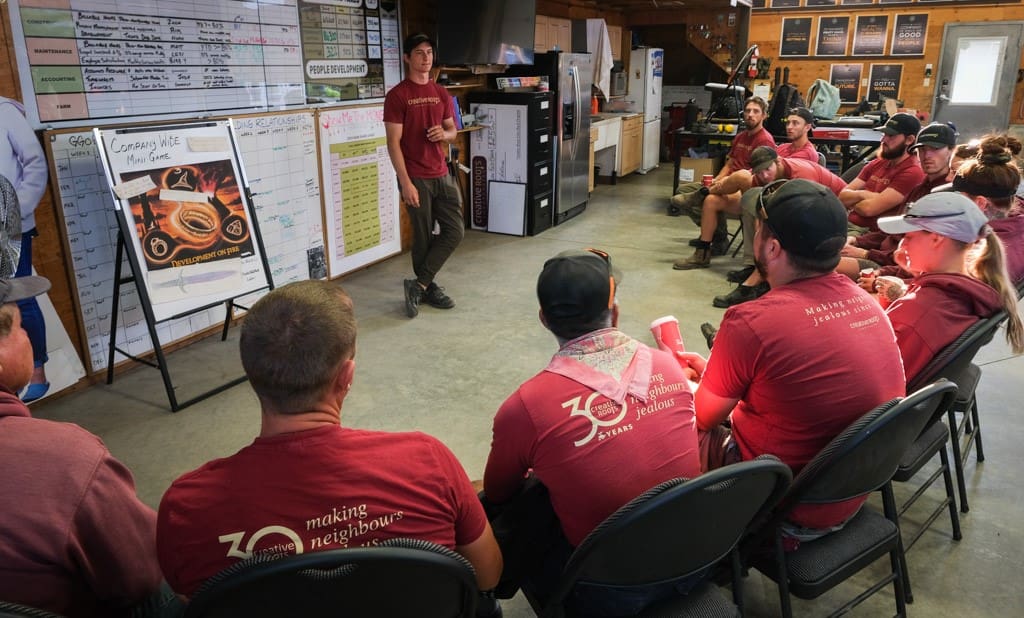
“We practice it because in any team effort, the players need to know what’s happening on the field, and they have to have a deep understanding of the game they’re in,” says Ryan Markewich, owner of Creative Roots Landscaping, based in British Columbia, Canada.
Mark Aquilino, president of Outdoor Pride Landscape & Snow Management, based in Manchester, New Hampshire, says they have been practicing open-book management for four years, and they started because he wanted people to know how to play the game of business.
“Because the game is played live, we forecast every single week,” Aquilino says. “We’re able to be much more proactive about our business instead of reactive.”
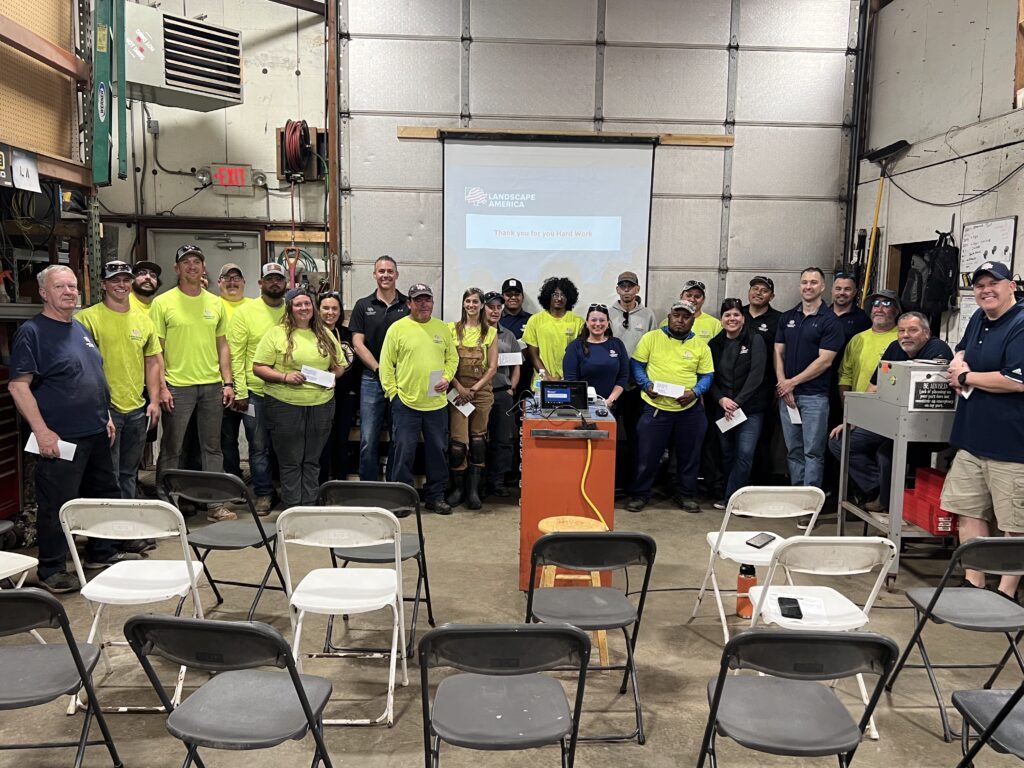
Doug McDuff, president of Landscape America, based in Wrentham, Massachusetts, says they started using open-book management in 2019 as a way to stop playing from behind and analyzing the business from a rearview mirror.
“Open-book forecasting just helps us to, in a way, predict the future,” McDuff says. “One of the other reasons why we wanted to do it was we were trying to engage our team more and get them more involved in understanding what it means to run a business and having some ownership thinking in our business.”
J.T. Price, CEO of Landscape Workshop, based in Birmingham, Alabama, says they don’t call it open-book management at their company, but one of their five core values is ‘We are transparent.’
“Fundamentally, we at Landscape Workshop believe that it’s not reasonable to expect people to perform at a high level if they don’t know how they individually are doing, how their branch is doing, and how the company as a whole is doing,” Price says. “And without knowing how we are doing, we can’t possibly be focused on getting better in an efficient way.”
Implementing Open-Book Management
Markewich admits he was the biggest roadblock to implementing open-book management at first.
“I just didn’t have a high level of business acumen when it came to strategy or stuff like that,” Markewich says. “It was just getting past the behaviors of myself and committing to the system.”
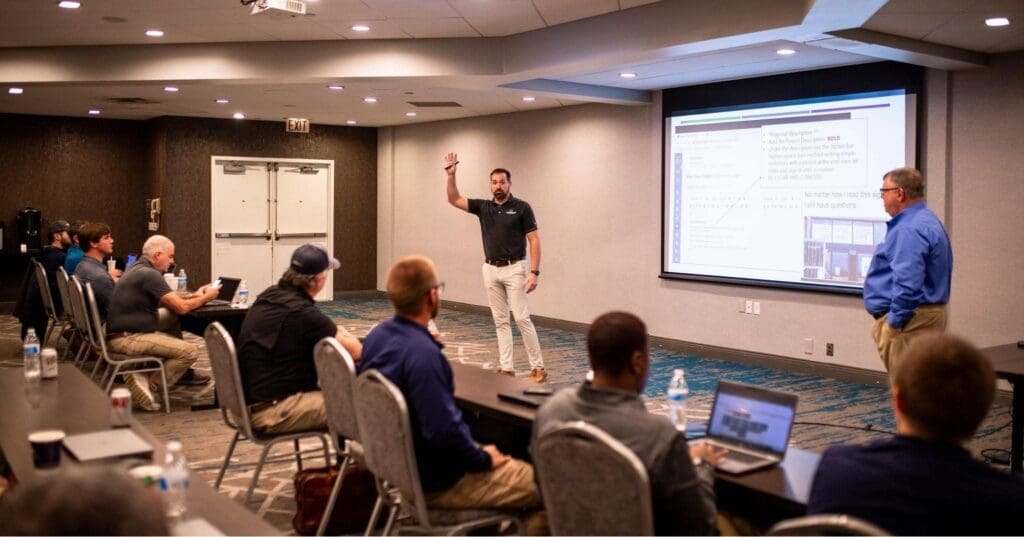
Aquilino says the hardest aspect of open-book management was learning the system and teaching it to others. He recommends hiring an open-book coach who can help with this process.
“We wanted to make sure the way that we rolled out open book that it was easy, understandable, and something that everybody knew was to create more opportunities,” Aquilino says. “Not for us to question every decision that’s made out there.”
McDuff says one of the biggest challenges they had starting out was ensuring the team had access to all the financials and information they needed.
“It’s not just the owner going out there and gathering the information and giving it to the team,” McDuff says. “It needs to be other people in the organization that are responsible for making those forecasts every week.”
McDuff says they’ve refined their forecasts into a dashboard of key metrics, such as their gross profit, equipment costs and revenue streams. They have a weekly open-book update with the entire staff.
Aquilino says they conduct open-book reports weekly with the team, focusing on total revenue and forecasting their gross profit line.
“We want them focusing on those things that they can control,” Aquilino says. “The things below gross profit, like our G&A type stuff that’s heavily reviewed by myself and our controller. Whereas our teams out in the field, we want them responsible for and constantly looking at the direct costs that they easily influence.”
Markewich says they meet on a bi-weekly basis and they also focus on covering metrics their team can affect. He notes you shouldn’t overlook non-financial metrics like people development. He says they create smaller scoreboards where they can track the behaviors, processes and systems that can impact a set target.
Price says they share everything from profitability and sales metrics to customer satisfaction and labor efficiency metrics.
“We are trying to drive specific behaviors and performance, and if we measure something and are transparent with the data, we are able to manage it,” Price says.
One decision you have to make with open-book management is how far down in the business you want to communicate the metrics.
Landscape Workshop ensures all account managers, general managers, estimators, project managers, and administrative and corporate team members are on their monthly ‘all managers’ calls. Price says they share more limited information with their crew leaders.
Markewich says they have monthly company-wide meetings where everyone on the team participates, even if they just started yesterday. Aquilino says they also go over their financials with everyone in the company.
“The reason for that is just so we can get people talking about something as simple as not going back to a site twice, making sure you have the right tools,” Aquilino says. “That’s what we all want. We all just sell time out in the field, so how we control that time is how we control our margin.”
Creating Employee Buy-In
How well you go about messaging the addition of open-book management and what it means for your organization will greatly affect your employees’ response.
Aquilino says employee buy-in was the easiest aspect for them because of the way they rolled out the system. They made it clear that open-book management is simply a tool to help them all win and potentially earn a bonus. He says it was essential to eliminate any stigmas associated with open-book management.
“Controlling the narrative to make sure that everybody knew that this was a great opportunity and that this was really something that’s going to allow all of us to think and act like owners was the biggest thing that we needed to focus on,” Aquilino says.
Aquilino says that by involving their leadership team and getting them on board first helped as well. For Creative Roots’ team, Markewich says the response was a mixed bag as employees weren’t sure what they were getting into, but the team quickly realized that open-book management was a positive change.
Price says that early on, some managers were resistant to everyone seeing their numbers every month, but these folks didn’t fit the culture Landscape Workshop was building so they either learned to appreciate the transparency or left the company.
“Some folks didn’t enjoy the accountability that comes with clearly measurable performance,” Price says. “But high performers love knowing how they are doing and being recognized for their performance, and they want to be on a winning team and appreciate that the company keeps score in a transparent way.”
McDuff says his team was receptive to open-book management from the start. He says they’ve appreciated the transparency and it’s helped with their retention.
“I can see that being an issue for some companies, where at the beginning, it feels additive, like it’s taking up more time,” McDuff says. “You already have enough on your plate as a manager, and then now you’re tasked with coming up with these financial projections every week on top of what you’re already doing.”
McDuff points out that once it becomes part of your day-to-day and helps you make better decisions and have better discussions with your team, it is well worth the effort.
It also helps to tie some form of bonuses or profit sharing to your open-book management.
“If you’re going to get people to help design the game, you have to give them a stake in the outcome through rewards and recognition,” Markewich says.
Markewich says they prefer to call it profit gains sharing, rather than bonuses, as employees have to reach a certain profit threshold to receive a share.
“We have 10 levels of profit sharing over and above that threshold,” Markewich says. “Now the hourly employees have the ability to earn 15% of their gross earnings at level 10. Salaried employees have the ability to earn 25% of their salary of their gross earnings. So it’s not an equal system; it’s an equitable one and it’s paid out quarterly.”
Aquilino says connecting open-book management to bonuses gives staff a taste of victory that makes caring contagious. He says it’s not just managers stressing the importance of safety, but crew leaders are invested in avoiding accidents.
“Not only do they care if something bad happens, but they understand the cause and effect of it happening as well,” Aquilino says.
Both Landscape America and Outdoor Pride pay out bonuses quarterly.
The Importance of Financial Literacy
One essential element for open-book management to be successful is to invest in financial training for your entire team.
Markewich says you can’t just report out numbers to your team. You must ensure they truly understand what the numbers mean and how they can influence them. He says about 80% of their business literacy is shared in an informal way.
“Just being part of the conversations around how those numbers are simply stories about people and work they’re doing,” Markewich says. “It’s tying being human and what we do as humans to the outcome.”

Markewich says it’s important for your team to understand the rules and the outcomes beyond just working hard so they know how to win.
Aquilino says they do an open-book rollout every year where they go over the plan, cover how the team can earn bonuses and educate the team on financial topics. Price says they conduct trainings every year for all their managers to understand basic accounting principles.
McDuff says they have a kick-off meeting at the beginning of the year where they will explain what the different numbers and terms mean. He will also play the penny game with the team.
“Everyone gets 100 pennies, and we go through the profit and loss with that,” McDuff says. “That’s usually a really fun exercise. It helps the team understand the true costs of the business and maybe dispel some misinformation. They pull pennies off the table for each line item on everything, right down through overhead.”
Advice on Open Book Management
For those still hesitant about open-book management, understand that it does not mean making everyone’s compensation public. McDuff notes it’s more about forecasting and sharing a scoreboard with your team.
Aquilino says sharing the health of the company is extremely beneficial.
“Understand that open book is a tool that makes business a team sport,” Aquilino says. “It teaches financial literacy and if you follow that process, and you own it, and you breathe it throughout the organization, it can have a massive effect on your bottom line.”
Price notes transparency becomes more critical to driving behavior and performance in larger companies.
“No matter what size you are, I think it’s amazing,” Aquilino says. “I think the smaller you are, the more influential it can be. I think it’s a great training tool and a great resource to be able to teach financial literacy to people.”
Markewich agrees that no matter your company’s size, it only helps to have everyone on the same page and work from a place of honesty and trust.
“I think that if every landscaper adopted open-book management, we would have a much stronger industry and be able to attract more talented people,” McDuff says. “People would stick around at companies a lot longer than they do because they would they would understand it. They would trust the management. They would be appreciative of the transparency. It just changes the culture of the business.”
This article was published in the March/April issue of the magazine. To read more stories from The Edge magazine, click here to subscribe to the digital edition.
Key Takeaways
- Open-book management helps employees understand the business’s performance and their role in its success, fostering a sense of ownership and accountability.
- Focus on sharing metrics that your team can influence.
- Effective implementation requires consistent communication, financial literacy training, and tying employee incentives to business performance to create a team-focused mindset.