

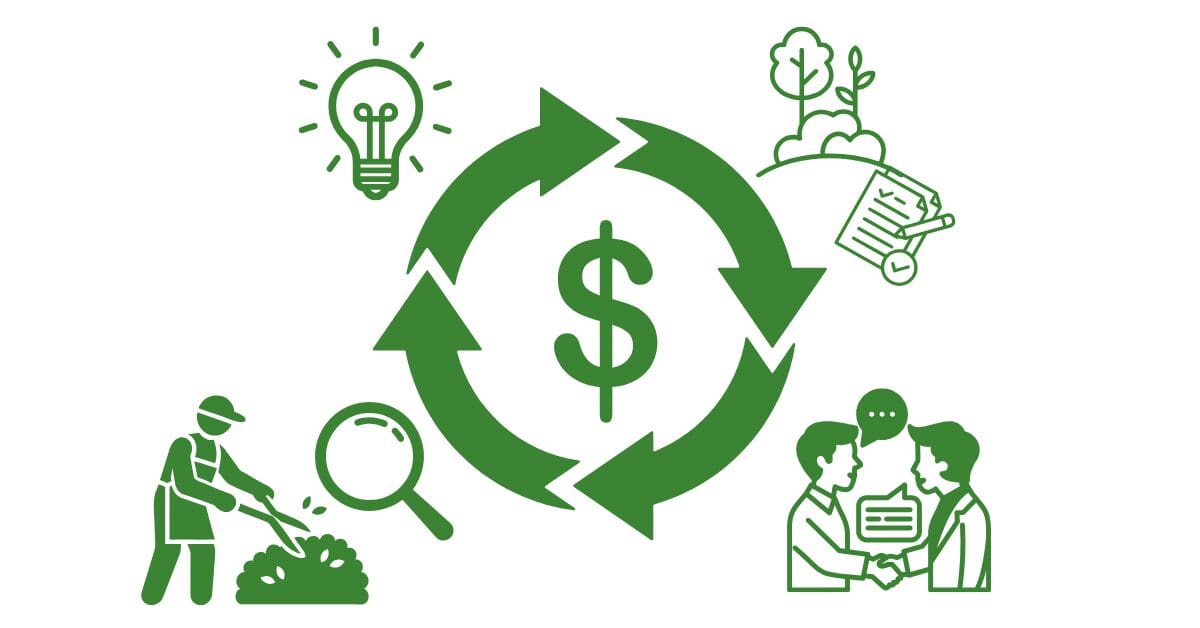
Does your company’s growth rest on the shoulders of one or two individuals, or is it something your entire team is driving towards? Without a system in place to recognize, capture and act on opportunities, your team can easily walk past various forms of growth on properties every day.
“Commercial landscape companies have hundreds of interactions with clients and properties every day,” says Loren McIrvin, CEO of Allied Landscape, based in Livermore, California. “The people creating the most value are often the people closest to the work. Rather than teaching everyone to become salespeople, we teach employees to become better observers. Field teams identify problems, opportunities, and risks. Sales professionals then develop solutions. Everyone contributes to growth while staying focused on the responsibilities they perform every day.”
McIrvin will cover how companies can activate every role to contribute to revenue growth in a structured way during his session, “The Organic Growth Engine: Building a Company-Wide System to Scale Commercial Maintenance Revenue” on Wednesday, Nov. 11 at 9 a.m. at ELEVATE.
“I’ll show how to define growth responsibilities for every role, train employees to recognize opportunities, implement simple technology to capture and communicate those opportunities, and establish the leadership routines and metrics that make growth repeatable,” McIrvin says. “The goal is to build a company where growth becomes part of everyday operations — not something dependent on a few talented salespeople.”

Creating Value for Clients
McIrvin says the key is shifting employees’ mindset from simply selling to creating value.
“Employees are trained to identify issues that help protect the client’s landscape investment, improve appearance, reduce risk, conserve water, and prevent future problems,” McIrvin says. “Leadership reinforces this through coaching, recognition, simple technology, and accountability. Employees begin to see themselves as trusted advisors instead of workers completing tasks, and growth becomes a natural outcome of delivering better service.”
He says that every recommendation made should solve a problem, reduce risk, improve risk, reduce long-term costs or improve the client’s property. They train their team members to educate, rather than sell.
“When recommendations are rooted in stewardship and long-term planning, clients don’t feel like they’re being upsold — they feel like they’re working with a trusted advisor who is helping them make better decisions about one of their most valuable assets,” McIrvin says.
McIrvin says they focus on two types of growth: expanding existing client relationships and winning new commercial maintenance contracts.
For existing clients, employees learn to recognize irrigation deficiencies, plant health concerns, safety hazards, deferred maintenance, aging assets, preventive maintenance opportunities, and enhancement projects.
“For new contract sales, our teams become our eyes and ears in the marketplace,” McIrvin says. “While working on properties, they capture neighboring properties that fit our ideal client profile, ‘For Lease’ signs, poorly maintained landscapes, adjacent properties that improve route density, master-planned communities, HOA meeting notices, and other indicators of opportunity.”
Cultivating Role Clarity
To ensure that employees aren’t overwhelmed by too many expectations, McIrvin says each team member has one or two simple responsibilities that fit naturally into their existing job.
For instance, field employees identify and capture opportunities while crew supervisors validate these observations and reinforce quality.
“Employees don’t need to sell or diagnose every solution — they simply need to recognize opportunities and capture them using standardized mobile forms with photos and notes,” McIrvin says. “Consistent coaching and follow-up quickly make this part of their normal routine.”
Account managers prioritize opportunities, develop solutions, and strengthen client relationships.
“Rather than presenting one-off proposals, they build long-term landscape roadmaps that include enhancements, preventive maintenance, water management strategies, and capital improvements,” McIrvin says. “Weekly coordination with operations ensures approved work is scheduled efficiently without disrupting production. This creates predictable growth while improving service delivery.”
Business developers focus on acquiring new clients. Branch managers coach the process and remove barriers. Leadership provides visibility through scorecards and accountability.
“Everyone contributes without taking on someone else’s responsibilities,” McIrvin says. “Growth becomes systematic because everyone knows what to look for, how to capture it, and how to move it through the organization.”
Want to build a growth system to scale your maintenance revenue? Register for ELEVATE, and we’ll see you in Tampa, Florida!