

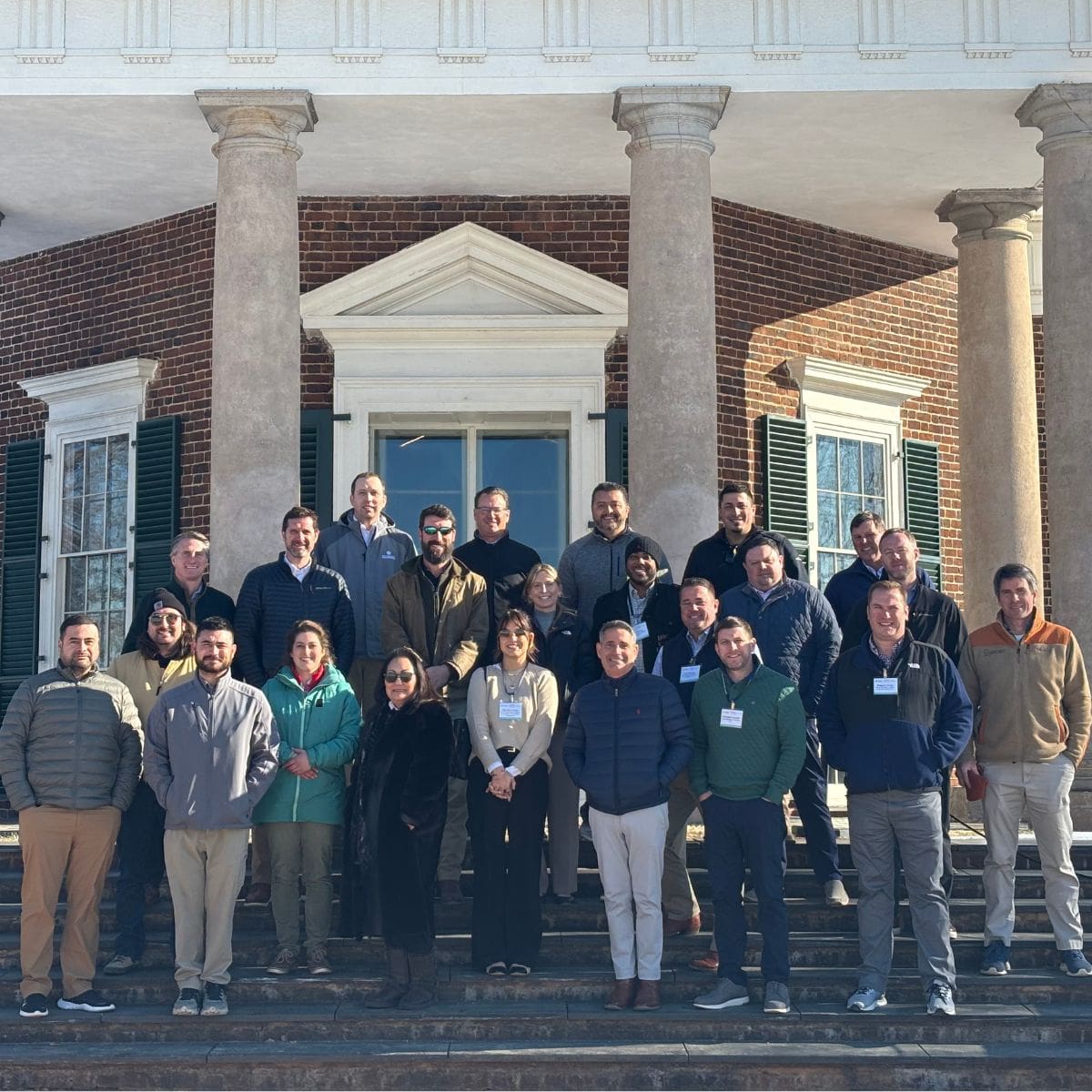
The first cohort of the NALP Executive Leadership Program, in partnership with UVA Darden School of Business, completed their training recently and gained actionable insights on leadership, negotiation, finance and more during the program, which was held on Jan. 13-16.
This three-day program featured interactive learning that utilized the Socratic method and included a tour of Monticello.
“Our job is not just to lecture at somebody and provide data,” says Sean Martin, Donald and Lauren Morel Associate Professor of Business Administration at UVA Darden School of Business. “It’s to get people to think through why they believe what they believe, and in doing so, come to some much more fundamental truths. A phrase that you’ll hear some professors here say is, ‘If you leave this class with more questions than answers that actually means we’re finally asking the right questions.’ Our goal is to dismiss all of the easy questions really quick and get down to what you’re really grappling with and get you to think through angles that you haven’t maybe thought through before.”
Access to Peer Perspectives
Attendees of this event went in with high expectations and were not disappointed with the knowledge they gained.
Skyler Westergard, learning and development manager with LandCare, says he was particularly pleased with how approachable and personable the professors were.
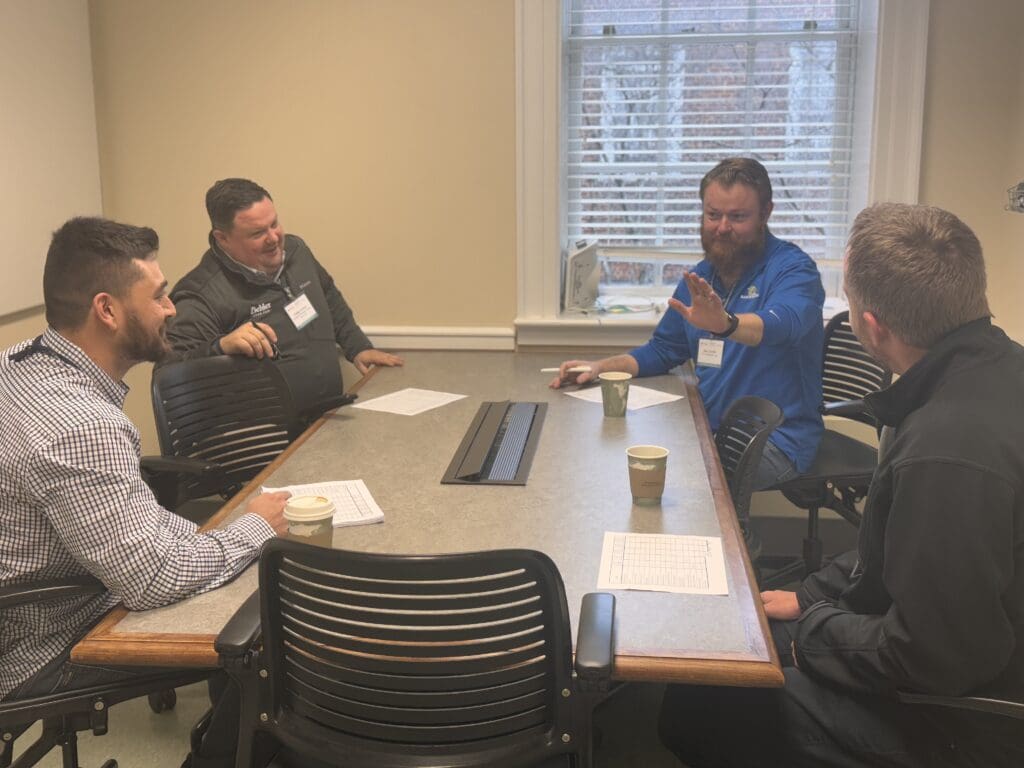
“They are masters at unpackaging complex information in a way that’s easy to understand,” Westergard says. “I really liked that part of it, just their ability to teach materials so well and to really manage a classroom. At this event, it was not a lecture, it was interactive, so they were really good at pulling people in.”
Zac Chaffin, CFO of EarthWorks, Inc., based in Lillian, Texas, says while he expected it to be more of a lecture setting, he appreciated the open dialogue with his peers.
“We’re all trying to better ourselves at whatever point in our career and I really enjoyed hearing other people’s perspectives and challenging my own,” Chaffin says.
Andrew Keppel, market vice president with LandCare, says he loved the Socratic method of learning and the event was better than he expected from a networking perspective.
“The professors were amazing,” Keppel says. “The folks in the class were amazing. I was really excited to have the opportunity to network and get to know other people from across the country. So, I loved every aspect of that.”
Key Insights Gained
Participants walked away with multiple takeaways, but Chaffin says one that stood out to him in particular was the need to trust his own team more.
“I’ve always had this mindset of leadership comes from the top, and it really doesn’t,” Chaffin says. “It comes from the bottom up and letting your people run. Being at my position, I catch myself a lot of times when somebody comes to me and has an idea or has an issue, and I go ‘No, we can’t do that.’ The program really made me reflect on I got to stop saying no from the very beginning. I got to start asking more whys.”
Westergard says his biggest takeaway throughout the program was the importance of processes and how they can impact the success of a business from company culture to negotiating.
Keppel says he learned the value of how going into a situation prepared improves the outcome and the importance of subtracting to ensure your team is focused. He says he also realized the power of encouragement.
“It sounds basic when I just say encourage, but it’s not basic,” Keppel says. “Leading your teams to where they need to go through encouragement, instead of telling them where they need to be or where they need to go was a key takeaway for me.”
Part of the pre-work for attendees was to read case studies on organizations going through large-scale changes and how the leaders executed these changes and the results.
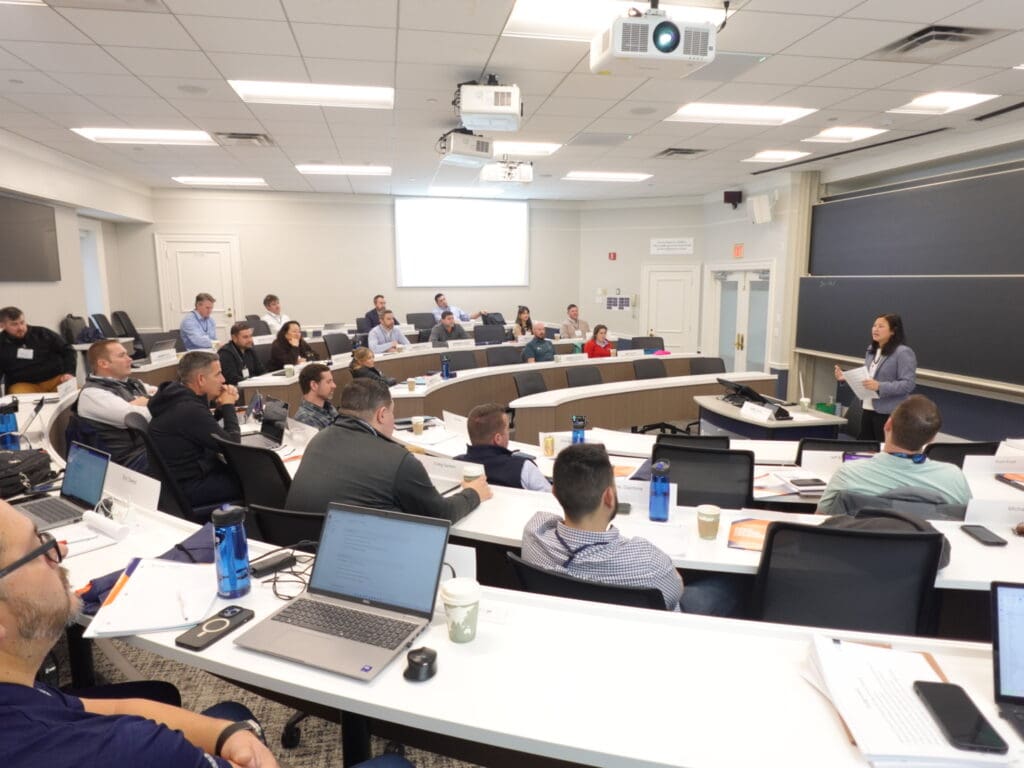
“We also have cases that challenge people to think through what is their leadership philosophy, and what I think is revelatory for a lot of people who come is they learn that people really do have genuinely different ideas about how to get what they prioritize, and so we challenge them to think through that,” Martin says.
The cohort was challenged to consider what they invest their money in and if it aligns with their leadership philosophy.
“Everybody left with some real food for thought,” Martin says. “No organization is perfectly aligned. No leader does everything perfect all the time, but we’re doing ourselves a disservice if we’re not objectively looking at where we might be misaligned. Because when you’re at the top of an organization and you let those misalignments persist it affects everybody who works in that company. Your decisions meaningfully affect dozens, hundreds, and sometimes thousands of people. So it might work for you, but that’s not good enough.”
Chaffin says he enjoyed the financial sessions and the tour of Monticello the most. Martin says even this part of the program had a specific educational purpose.
“Thomas Jefferson was always a student and you see it when you walk through Monticello,” Martin says. “He was always experimenting, and he didn’t always get it right. He had a lot of truly amazing ideas. He had some absolutely out there crazy ideas, but he tried stuff. So it’s an opportunity also to say, ‘What am I not trying? Can I be creative like this? Can I be innovative like this?’”
Tips for Success
If you are considering attending next year’s Executive Leadership Program on Jan. 12-15, 2026, it is highly recommended to review the advanced reading assignments provided for participants.
“Cases in which people do not do the preparation will get through the material, but you will get nowhere near the depth that you could otherwise get,” Martin says. “When you don’t do the pre-reading, you’re sort of stuck on square one.”
Chaffin adds it’s important for attendees to have some background and some skin in the game before they show up for the program.
“Do the prep work,” Keppel says. “Take it seriously, and it makes it worth it. Participate because one, that just makes it more fun. Just go in and do your part, and don’t be afraid.”
Westergard agrees that participants should come willing to share and speak up.
“They’re going to gain a lot from it based on how much they put into it, with the pre-work and being interactive in class and letting their own ideas be challenged,” Chaffin says. “I would tell anybody that does decide to join next year to be vulnerable. It’s okay to be wrong. It’s okay to not see eye to eye with everybody in the room. Open up; ask questions.”
Don’t miss out! Spots for the Executive Leadership Program are limited and fill up fast. Sign up today to be the first to know when registration opens.
Key Takeaways
- This program emphasizes the Socratic method, encouraging participants to challenge their own beliefs and engage in deep discussions rather than passively receiving information.
- Attendees found significant value in learning from their peers’ experiences, broadening their perspectives on leadership and business strategies.
- It is critical to complete the pre-readings and actively engage in discussions to maximize the benefits of the program.
