

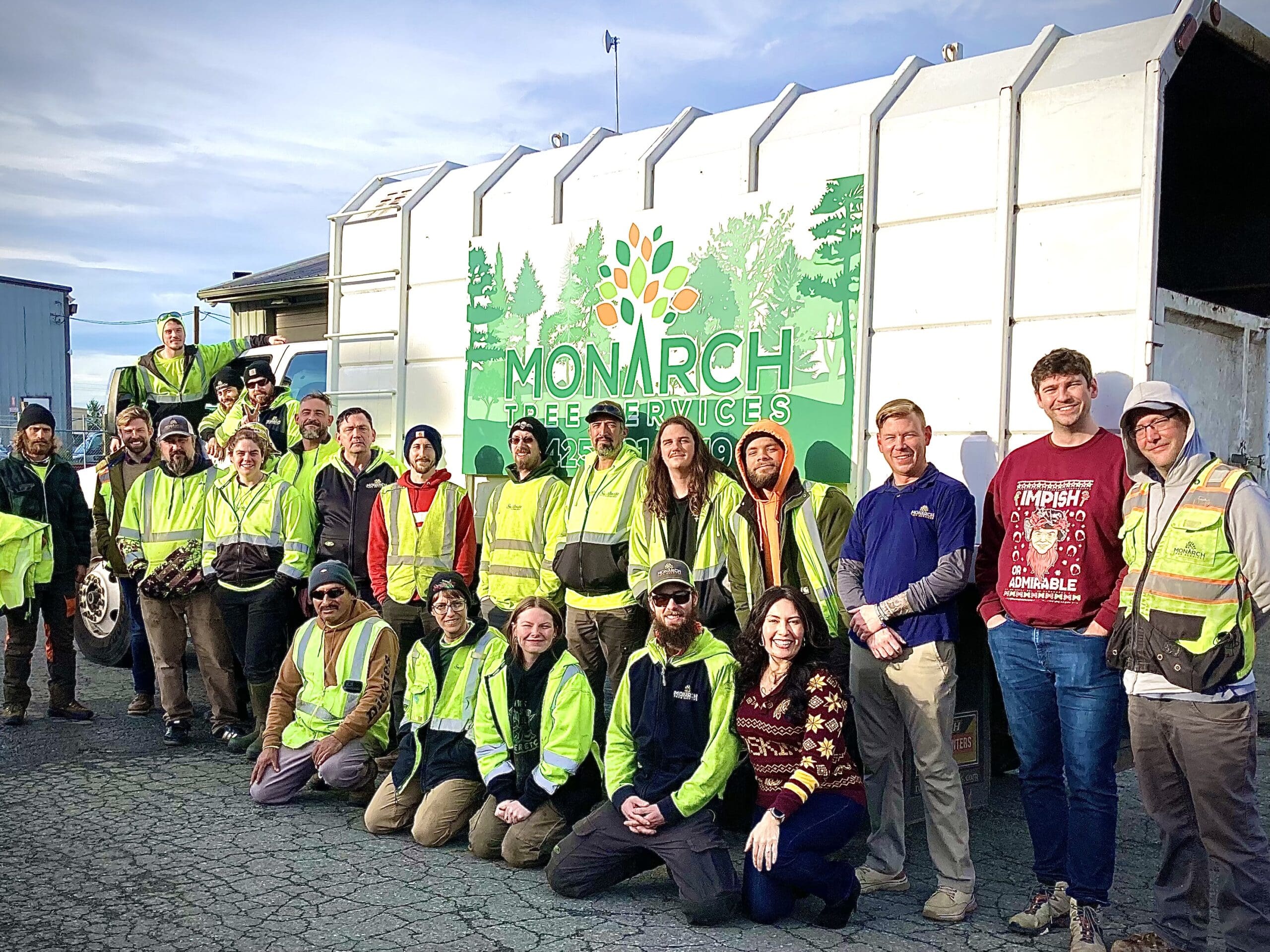
Rapid growth can be exciting, but without intentional planning and systems in place, you run the risk of eroding your company culture and your quality standards.
“Don’t grow for the sake of growing,” Rick Sartori, vice president of East Coast and arbor for Monarch Landscape Companies, based in Los Angeles, California. “Be intentional. Align your client mix, your staffing and processes before you add volume. Listen to the frontline teams.”
Teams can become stressed when pushed to meet challenging client demands and schedules without the proper amount of staffing. Amy Snyder, director of public relations for Ruppert Landscape, based in Laytonsville, Maryland, says rapid growth can put pressure on the team to maintain their high standards of quality while training team members.
“We pride ourselves on delivering consistent service to our customers, so when new work comes in quickly, the team feels the responsibility of keeping that promise while onboarding new employees and integrating new customers.”
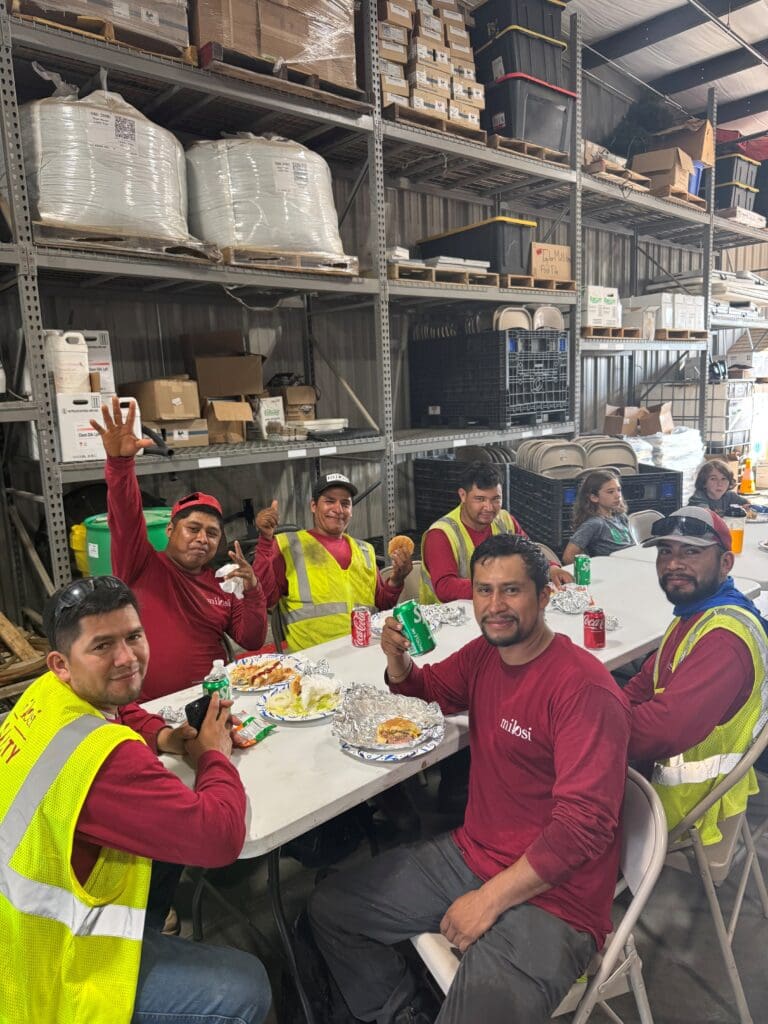
Austin Salsbery, branch manager for Milosi, based in Hendersonville, Tennessee, says finding the right people to continue to fill their accountability chart is one of their biggest stressors.
Early Warning Signs
Sartori notes it’s critical to protect your culture because once burnout sets in, it’s hard to undo.
Paying attention to behavioral and emotional indicators from your team members can serve as an early warning sign of burnout.
“If we notice a team member who may seem more stressed, frustrated, or possessing a different tone than normal, we ask difficult questions to determine what’s going on,” says Allen Sweeney, CEO of APHIX, LLC, based in Frankfort, Kentucky. “Everyone has a life outside of APHIX and sometimes that causes stress at work, and sometimes it’s the other way around. We genuinely try to foster an environment that allows both to flourish.”
Snyder says decreased engagement, gaps in communication, customer feedback, or uncharacteristic mistakes are all changes they watch for.
“We also monitor overtime, turnover patterns, and the overall ‘feel’ of the branch,” Snyder says. “Our managers stay close to their teams, so they often sense strain before it shows up in metrics.”
Ian McCarthy, owner of Blue Claw Associates, Inc., based in Osterville, Massachusetts, also recommends keeping a close eye on your team’s work hours. He says they typically work 45 to 55 hours a week in the busy season, but if they hit 60 hours a week, they know everyone is becoming maxed out.
Adjusting Client Mixes and Services
One way to implement more sustainable growth is to be intentional about your client or service mix. Salsbery says this is something their company is in the process of doing right now.
“We are beginning to realize that we need to focus our efforts on a specific client that requires a specific level of service – and tailoring our services to meet those needs,” Salsbery says.
Sweeney says once they began scaling, they focused on commercial maintenance services and will continue to do so in the future.
Sartori says they are regularly evaluating their client base to ensure they are focused on accounts that align with their team, their capacity, geographic footprint and services.
“In some cases, we’ve even looked at low-performing, low-margin work or work that’s maybe out of the geographic footprint that we maybe took on at some point just to build some volume,” Sartori says. “We look at is that disrupting the team’s ability to deliver on scope? We’ll look at maybe moving on from those opportunities just to protect the team and free up some capacity for more strategic type clients that they can focus on.”
Snyder says when one of their branches reaches a size or geographic footprint that starts to stretch the team’s bandwidth or impact response times they will proactively split it to create a new branch.
“This helps maintain our culture, preserve strong customer relationships, and give emerging leaders room to grow,” Snyder says.
For more short-term challenges, McCarthy says they’ll move teams around to support crews that are already overworked.
Proactive Hiring and Retaining Top Performers
If you want to protect your team from burnout, you can’t wait until workloads are unsustainable for your current crews. Sweeney says previously, they would hire once a role was needed, and the team was stretched thin. Now, they’ve started to hire for where the business will be in the next six to 12 months.
Snyder says they monitor labor ratios, overtime trends, job costing, and customer needs closely so they hire proactively and meet those demands before the strain is too much for their teams.
“Our field leaders play a big role in that process, providing real-time feedback on crew capacity and are quick to flag when their teams are nearing their limits,” Snyder says. “By combining data with on-the-ground insight, we can plan staffing needs ahead of time and avoid the cycle of over-hiring and seasonal layoffs that’s common in our industry.”
Sartori says some of their leading indicators include backlog growth, overtime trends with hourly employees, crew utilization, onboarding timelines and overall client demands. He says they start backfilling additional capacity before employees get overwhelmed.
“We’re always building a bench strength of A-player type candidates,” Sartori says. “That way, we’re ahead of the curve. If our leading indicators are telling us that this individual is getting a little bit overloaded in the amount of revenue that they’re managing, we can act accordingly and get somebody in the door to help build out that capacity.”
Milosi fills seats in relation to their revenue goals. Salsbery says this allows their finance department to approve budgets and help them prioritize what seats are most important to fill first.
McCarthy says one strategy they use is if they have a project where they don’t have a crew that can take it on, but they have applicants who want to work with them, they will split up the top two employees on one crew and put them on their own crews, and then add additional labor for them to spread the load across their crews.
Work can become even more overwhelming for employees if burnout causes some of your top performers to leave. When growth creates opportunity, it is key to reward these individuals by allowing them to rise through the ranks.
“We find that top performers love an environment that is rapidly changing and growing,” Salsbery says. “The key is delegating responsibilities to our top performers at the right time. This acts like fuel and helps them learn a new skill or grow in another area of the business.”
Sartori says providing stretch opportunities without overwhelming team members is one way to continue to help top performers feel valued.
“Many of our leaders started in the field and grew with us,” Snyder says. “We also emphasize pay transparency, competitive benefits, performance bonuses, and an environment where people feel connected to the culture.”
Sweeney adds that while competitive pay and benefits are necessary, you need to live out a company culture that people want to be a part of.
Implementing Systems and Processes
Before you start growing rapidly, make sure you have a strong organizational structure with clear roles and responsibilities.
“In order to successfully scale, team members need to be trusted to do their part so that the entire business can move forward,” Sweeney says. “We find that when there is a weak or missing link and others have to fill dual roles, that’s when people get frustrated and burned out.”
Sartori agrees that burnout often occurs when individuals are wearing too many hats.
“We’re continually making sure that each person owns a piece of that business, whether it’s operations, sales or management, so that everybody has a key piece in that role, and there’s not too much overlap,” Sartori says. “The more overlap we have and people managing through those three key components of the business, the more people are spinning out of control.”
Snyder says consistent communication rhythms like daily huddles, weekly staff meetings, and monthly reviews keep everyone informed and connected. Meanwhile, their strong onboarding and training programs allow new hires to acclimate and become productive quickly.
Salsbery says optimizing your technology stack can also take care of simple and mundane processes, allowing your team to do more of what they love.
Managers’ Role in Mitigating Stress
Managers can also make a major difference when it comes to preventing burnout by setting realistic expectations and fostering a team environment where employees feel supported.
“I coach the managers to stay hands-on with their people, not micromanaging, but just be engaged,” Sartori says. “That means monitoring their workloads weekly. And that can come up through branch meetings or their one-on-ones, knowing when to jump into support crews during peak periods. I want my managers to reassure their teams that if they need to jump in to help out and support the team, that it’s a team effort, and they feel like they’ve got the support from upper management.”
Sartori recommends managers review employee PTO balances to see who is banking them up.
“I want to make sure that we’re keeping our ax sharpened and if someone’s got 200 PTO hours, their ax is probably not too sharp,” Sartori says. “We’re encouraging people to take PTO.”
Snyder agrees that managers should redistribute workloads when needed and encourage employees to take time off during slower periods.
Sweeney says they’ve moved away from working from daylight to dark like many landscape companies do in the early days.
“We adopted a 4-day work week many years ago and have found that it really helps to mitigate burnout,” Sweeney says. “Weather plays an impact from week to week, but this schedule really helps managers and crews manage burnout.”
Additionally, when managers take the time to express their appreciation in various ways, this can boost employee morale. Salsbery says their management team will organize events throughout the summer months to break up the grind.
“We might end the day early and meet back at our shop to grill out for dinner or have a food truck stop by,” Salsbery says. “This gives our team something to look forward to and gets their minds off of their work for a bit.”
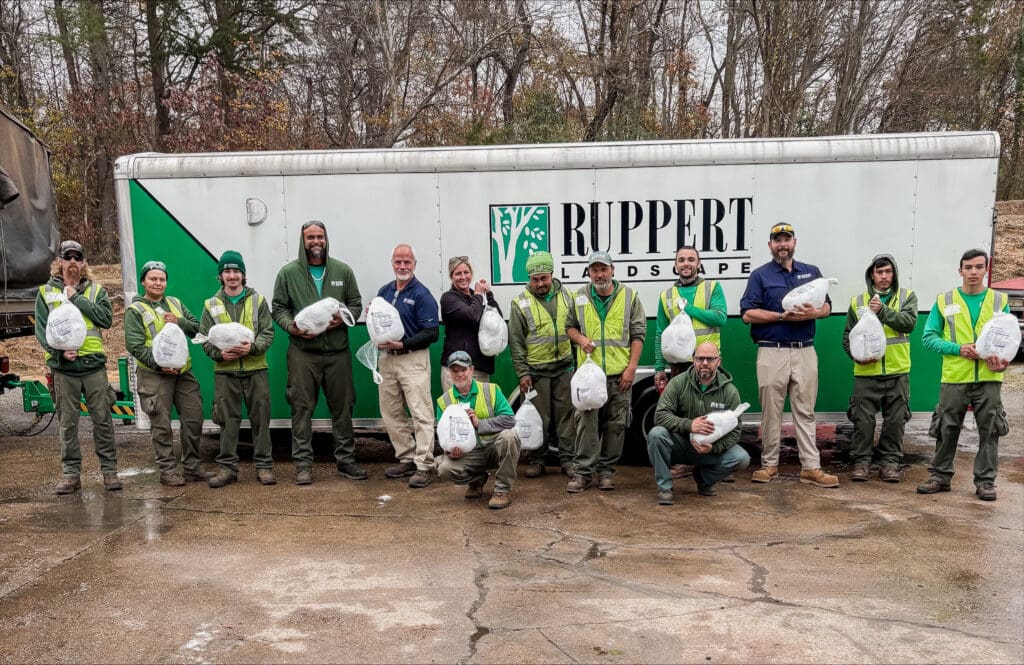
At Ruppert, one branch-level event they host is ‘Branchgiving,’ where teams gather for food and fun and receive a turkey to take home to their family.
“Building these strong relationships ensures that when challenges arise, team members have a supportive network to rely on,” Snyder says.
This article was published in the March/April/May issue of the magazine. To read more stories from The Edge magazine, click here to subscribe to the digital edition.