

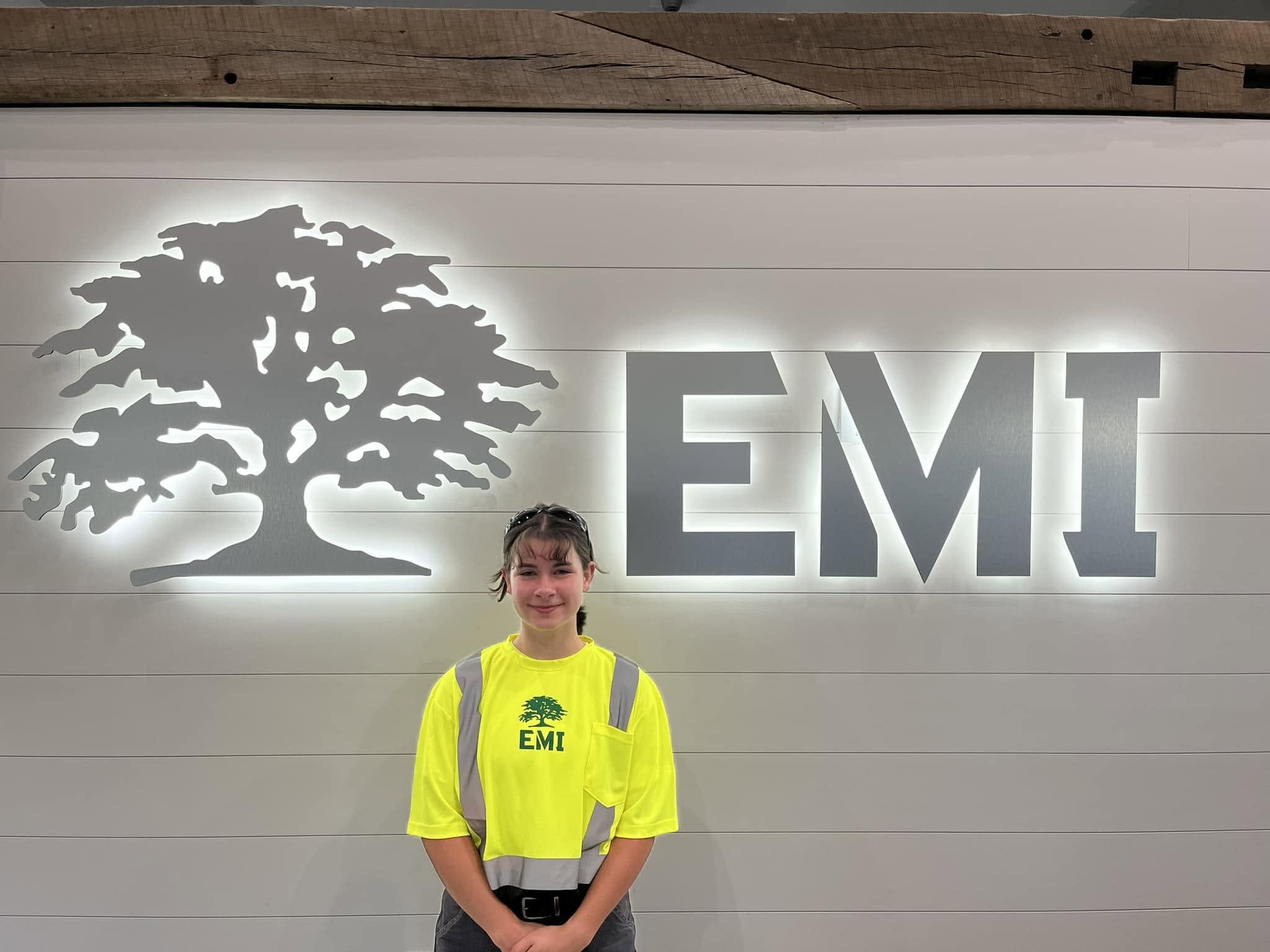
Photo: EMI
Internship programs are an investment, but they can pay off with a long-term pipeline of future employees if you are intentional with the structure.
An internship program is also a particularly useful recruiting tool if you participate in the Career Fair at the National Collegiate Landscape Competition, as this is where many promising landscape and horticulture students seek out summer internships.
Don’t View Interns as Cheap Labor
If you want your internship program to fail quickly, then only view it as a form of cheap labor where your interns spend their entire time on a mowing crew.
Not only will this give them a limited view of what all the landscape industry has to offer, but word will also quickly spread among their fellow students that your company isn’t worth interning at in the first place.
“If a student has a bad experience because they were stuck on an irrigation crew all summer, and that wasn’t what they were expecting, you better believe that’s going to get passed around to every other student in the department that we’re recruiting from,” says Taylor Anderson, systems development and growth manager with Sunline Landscapes, based in Bluffdale, Utah.
Anderson says she had an internship like that herself in the past, where she worked on a crew for eight weeks out of her 10-week internship.
“I didn’t need to move to California to work on a crew,” Anderson says. “Find the right balance between it, because it is important for them to go out. I don’t think people realize how hard our guys work.”
Brad Stephenson, co-owner and CEO of New Castle Lawn & Landscape, based in Birdsboro, Pennsylvania, says you’re doing your interns a disservice if you only trust them with menial tasks. Instead, he provides his interns with meaningful work. For instance, one intern, who is now with New Castle as a turf technician, helped create a budget they ended up using in the business.
“Now we had to do some tweaks and stuff, but even to this day, I’ll ask him about things, because he’s seen a lot more than probably some of my other employees have seen,” Stephenson says. “I opened up the books, showed him everything, so he has a more global view on things.”
Identify Your Program Manager
One key to a strong internship program is identifying who on your staff is responsible for it as a whole.
Without a point person owning your overall internship program, it can easily slip people’s minds and not have much substance.
“If you forget about them and you have to pawn them off on somebody, it’s not fair to them,” Stephenson says. “They just feel like they’re just getting thrown around.”
Anderson says you need to find someone who is passionate about the program and ensure the rest of the team is on board. She says she achieves this by encouraging staff to just let the intern shadow them as they go about their normal tasks.
“If you have to set up extra things for them to do, then people aren’t going to be as bought in so making sure everybody knows what you’re expecting when you’re looking out for an internship program, and you’re communicating well,” Anderson says.
Stephenson cautions that smaller owner-operator companies may not have the overhead to take on this additional responsibility. He says when he first started their internship program, he struggled, but as he’s added on additional VPs, his interns have had more opportunities to learn.
“Getting them to our people and experiencing different things has been important, and that evolution is that Brad no longer takes the interns,” Stephenson says. “Let’s get them to the people who actually can work through some stuff and really dive in, and they love it.”
However, Josh Chalfant, associate director of training and development with Environmental Management, Inc. (EMI), based in Plain City, Ohio, argues that as long as you are running a successful business, size doesn’t really matter.
“If you are doing something and you’re doing it well, and you’re willing to bring somebody in and teach them what you’re doing, you can have a successful internship program,” Chalfant says.
Have a Set Structure
To ensure both your interns and your organization have a mutually beneficial relationship, it’s critical to have a set structure in place.
Chalfant recommends treating your internship like a class, complete with a syllabus and schedule.
“The industry throws curves,” Chalfant says. “We all know that. You have to bend with those curves, but if you stray too far from the schedule, you have to bring it back.”
It’s ideal to have your interns rotate through your different departments so they can understand the bigger picture. Anderson adds that by not pigeonholing their interns in a role they thought they were interested in, they can discover the career path they’re truly passionate about.
Each intern should also be paired with a mentor they meet with on a regular basis. The mentor should make sure the intern is meeting their set goals and answer any questions the intern may have.
“You also have to be careful in choosing the person who’s going to do that,” Chalfant says. “It’s not for everyone. Just because somebody is a good landscape employee does not mean they’re the right fit to help that intern through everything.”
Know Your Capacity
To ensure each intern has the best possible experience, be honest with yourself about your team’s capacity to take on a certain number of interns.
Stephenson says three is the maximum they’ll take on, and he lets the team decide how many they feel comfortable bringing on that season. Similarly, Anderson says they also limit themselves to three interns at the most, and it depends on their needs for that year.
Chalfant says currently they have six interns.
“This is probably the most that I have done is six,” Chalfant says. “I don’t know that I really want more than that at this point in time. I would have to have more help before I took on more.”
Treat Interns Like Employees
Because ideally, interns should be individuals you’d one day like to have work for your company full-time, treat them like you would any of your employees.
“Don’t just hire an intern because they’re looking for an internship,” Anderson says. “Hire your interns like you would hire employees. You wouldn’t just hire somebody off the street because they were looking for a job. You would hire somebody because they’re culturally a fit. They’re going to work hard, and they align with your values.”
Stephenson says he makes a point to include their interns at all of their company events, such as their staff picnics, so they can get a sense of the culture in an off-work atmosphere.
Chalfant says that interns are more likely to convert to full-time employees when they feel like they are a good fit and comfortable with the company.
“I think if somebody wants to start an internship program and they haven’t done that, they should reach out to somebody who’s currently doing it, or reach out to somebody with workforce at NALP to get them in touch with somebody to ask questions,” Chalfant says. “Network, find out how a couple of different companies are doing it, bounce ideas, and create a great program.”