

Next week, hundreds of students from across the country will use their spring break to travel and compete in the National Collegiate Landscape Competition. This year marks the 50th anniversary of this landmark event, which has served as a career catalyst for many now in the industry.
Often, students first hear about NCLC and what it has to offer through professors, their university horticulture club, or older classmates.
“At first, I honestly thought it was a little crazy that companies would invest so much time, money, and resources into a student competition,” says McKenna Rowles, irrigation manager with Ruppert Landscape, based in Laytonsville, Maryland. “But after experiencing NCLC firsthand, it made complete sense. These companies were genuinely committed to identifying, supporting, and developing future talent, and that level of investment really stood out.”
Jenn Myers, senior director of workforce development for NALP, recalls being surprised and excited after learning about NCLC as a student.
“I remember talking to friends in other majors, and they had nothing similar for their programs,” Myers says.
Amayrani Castillo, a landscape consultant for Lawn Management Company, LLC, based in Houston, Texas, says that as a student, she was genuinely impressed by how many companies wanted to invest time and resources into supporting young professionals entering the industry.
A Career Fair That Opens Doors
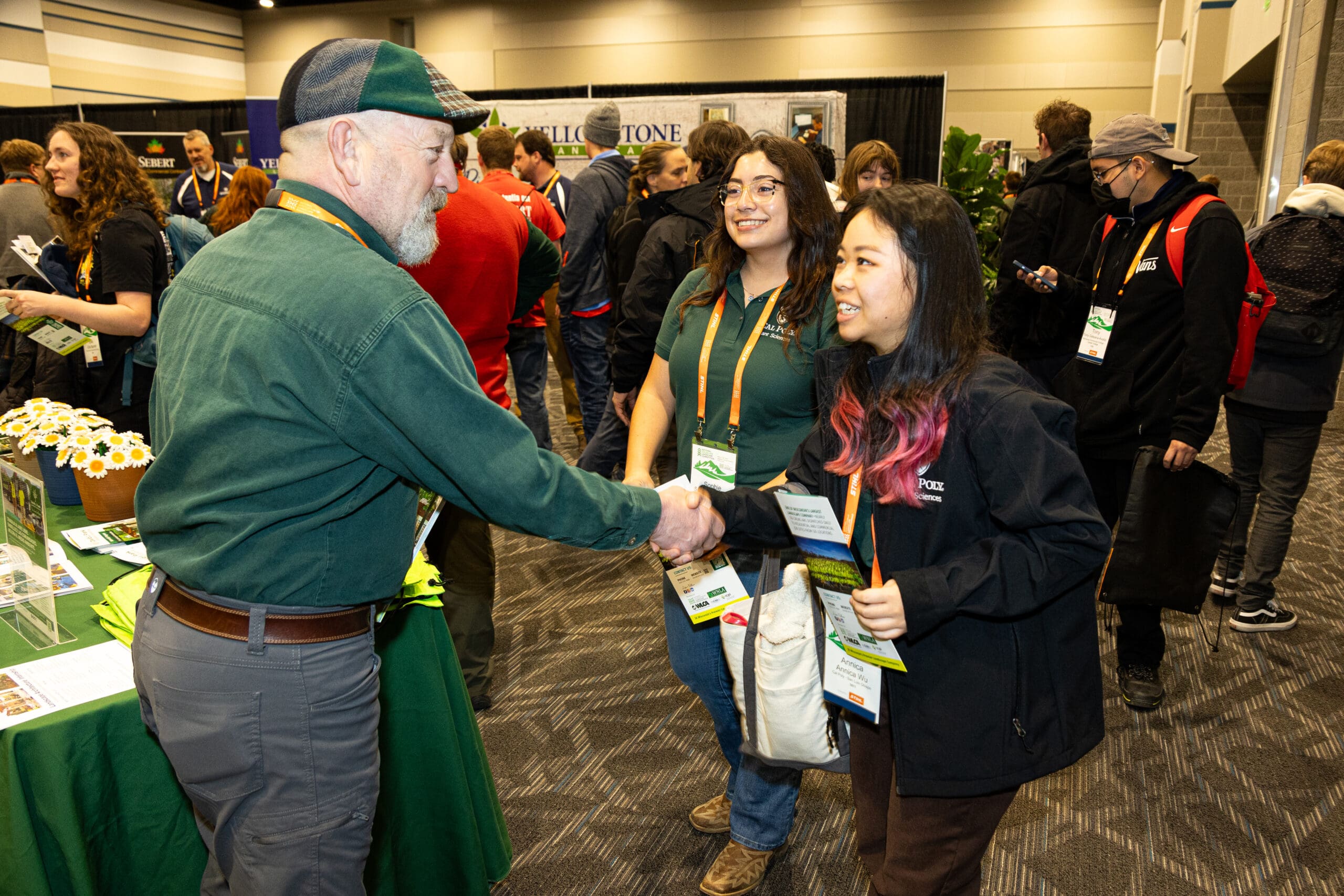
One of the key components of NCLC is the career fair, which is eye-opening for many participants.
“It was overwhelming at first,” says Kohler Brafford, principal of White Pearl Management, based in Leesburg, Virginia. “It is where I found my internship and my full-time employment out of school when I was least expecting it to happen. Don’t leave any cards on the table is my best advice when walking the floor.”
Daniel Greenwell, an arborist representative with Bartlett Tree Experts, headquartered in Stamford, Connecticut, says when he attended, he had no clue that there were so many companies recruiting for such exciting job opportunities.
“I didn’t land any internships from the career fair because I had already committed to one a month prior to the competition,” Greenwell says. “I would have pursued one, though, if I didn’t already have one lined up. I did get to meet people from the organization that I had just committed to intern with, which was really cool.”

Photo: NALP/Philippe Nobile Photography
Similarly, Macey Robinson, market vice president of North Texas and Oklahoma for LandCare, headquartered in Frederick, Maryland, says she didn’t realize just how many opportunities the landscape industry presented until she attended NCLC.
Rowles says she was intimidated by the career fair at first, but once she realized they were simply having conversations and not formal interviews, it became much more enjoyable. After competing at Alamance Community College in 2018, Ruppert Landscape reached out to Rowles with a follow-up call.
“That outreach made a strong impression on me,” Rowles says. “It showed genuine interest in my experience and helped turn a brief interaction at the competition into a real professional opportunity.”
After speaking with professionals at the booths, Castillo also received both interviews and job offers following NCLC. She says attending NCLC reinforced her confidence that the green industry was the right path for her.
For Myers, the three companies she was most interested in for her internship were at the NCLC career fair, and she was hopeful that she could finalize her choice for the summer after meeting with them and others onsite at NCLC.
“After walking the career fair floor, with over 75 companies, I felt confident I was making the right choice with Chapel Valley Landscape Company for my internship,” Myers says.
Competitions That Put Technical Skills to the Test
The other major aspect of NCLC is the 30 competitive events, which span everything from construction cost estimating to landscape lighting installation.
This is a time when students can challenge themselves in hands-on events and learn about other aspects of the industry. It also allows landscape professionals to watch competitors show off their potential in real time.
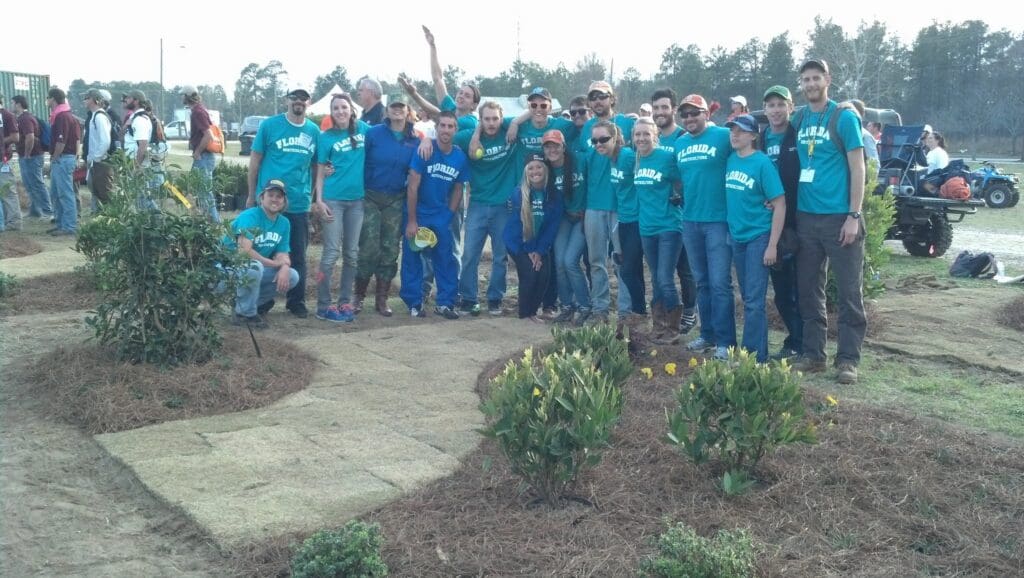
Photo: Daniel Greenwell
“NCLC helped lay the foundation for my career by strengthening my technical skills and reinforcing the importance of professionalism and teamwork in the industry,” Rowles says. “Competing alongside students from other programs and interacting with industry professionals exposed me to career paths and specialties I hadn’t previously considered. It also gave me a clearer picture of the expectations of the workforce and helped build my confidence to pursue opportunities within the landscape profession.”
Castillo says each event she competed in has played a role in her professional development.
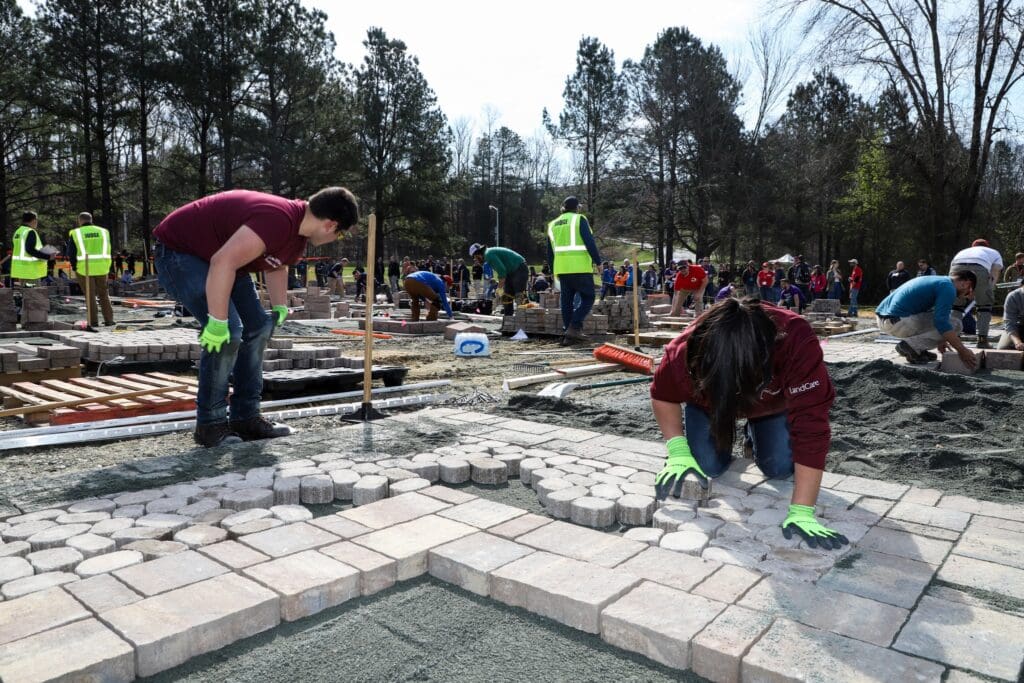
“Construction cost estimating was something I learned through an NCLC workshop and later applied when assisting our in-house estimator in the field,” Castillo says. “Hardscape installation taught me the proper steps for patio installation. Irrigation troubleshooting is something I use almost daily, and I am now a licensed irrigator in the state of Texas. Landscape maintenance operations and landscape plant installation are both essential skills I rely on in my day-to-day work.”
In other cases, the competitive events help students learn which specialties are not their path. Robinson says this was the case for her with the interior plant design event.
“I had just joined the LM program a few months before and did not have much knowledge, so my advisor just advised me to pick a competition that intrigued me,” Robinson says. “Honestly, it was probably the worst design the judges had ever seen. I wish I had a copy of it just to reflect back on how much I have grown and learned from my years in the industry.”
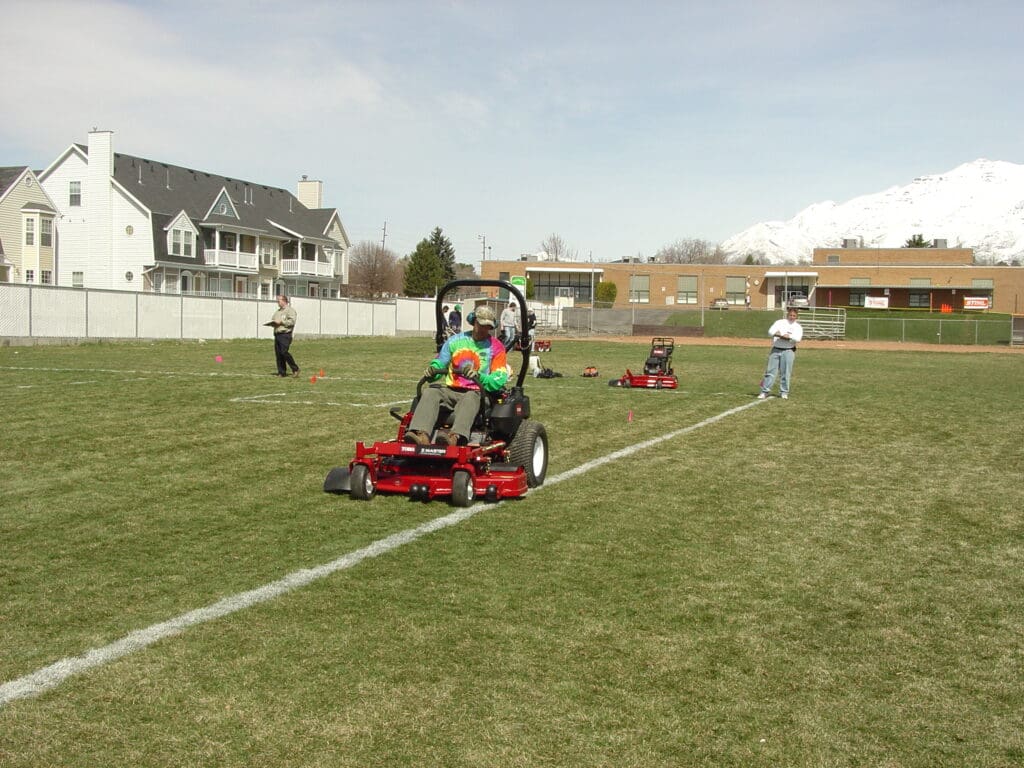
Greenwell says he also learned lessons from the events he competed in. For instance, the compact track/skid steer operation event taught him the importance of understanding and following safety protocols when operating landscape equipment. He also learned from the exterior landscape design event that sometimes he overthinks things.
When students have the opportunity to return to NCLC multiple times, they often use this as a chance to improve their skill sets and broaden their perspectives.
Brafford says his first year, he got his feet wet competing in five different events, and in the following three years, he wanted to finish first in all his events. During his senior year, he ended up placing in the top three for four of his events.
Greenwell says he also wanted to sharpen his skills by competing in two of his events for a second time.
“Sadly, I don’t think my rankings improved much,” Greenwell says. “However, I know that I learned more from the first time to the second time. I am a competitive person, so I really wanted to improve my rankings, yet, at the end of the day, I was just grateful to attend and extend my network and learn from the industry.”
Rowles used her second year competing to expand from three to five events. She says this allowed her to test a wider range of skills, learn new aspects of the industry, and make the most of the opportunities NCLC offers.
“NCLC gave me a platform to demonstrate my work ethic, dedication, teamwork, and professionalism in a real-world setting,” Rowles says. “Being able to showcase those qualities in front of industry leaders directly influenced my career path and led to opportunities I may not have had access to otherwise. It helped clarify the direction I wanted to take in the industry and gave me the confidence and connections to pursue that path.”
Advice for Current Students
The unanimous advice from these past competitors to current students on the fence about participating in NCLC is to not overthink it, step out of their comfort zone and attend.
“You won’t get these opportunities again in life,” Brafford says. “It will open doors for you that you didn’t even know existed. Our industry is huge!”

Photo: NALP/Philippe Nobile Photography
Greenwell encourages students to not stress over how they will perform in the competitive events and to give NCLC a fair shake.
“I don’t think you will meet a single professor who is going to shame you if you don’t get a certain score in your event,” Greenwell says. “Certainly, there is value in ranking highly in your events, but as a baseline, you, as a student, are receiving so much value simply by attending this event, regardless of how you rank in your individual events. You will not be deemed unemployable by industry if you rank towards the bottom in any of your events (ask me how I know).”
Myers agrees students should not put so much pressure on themselves as the true value of NCLC lies in the relationships formed there.
“Every competition, conversation, and challenge helped shape my confidence and career direction,” Rowles says. “NCLC is truly a privilege for both competitors and sponsors, and the opportunity to be part of something that connects education with industry is something I value even more in hindsight.”