

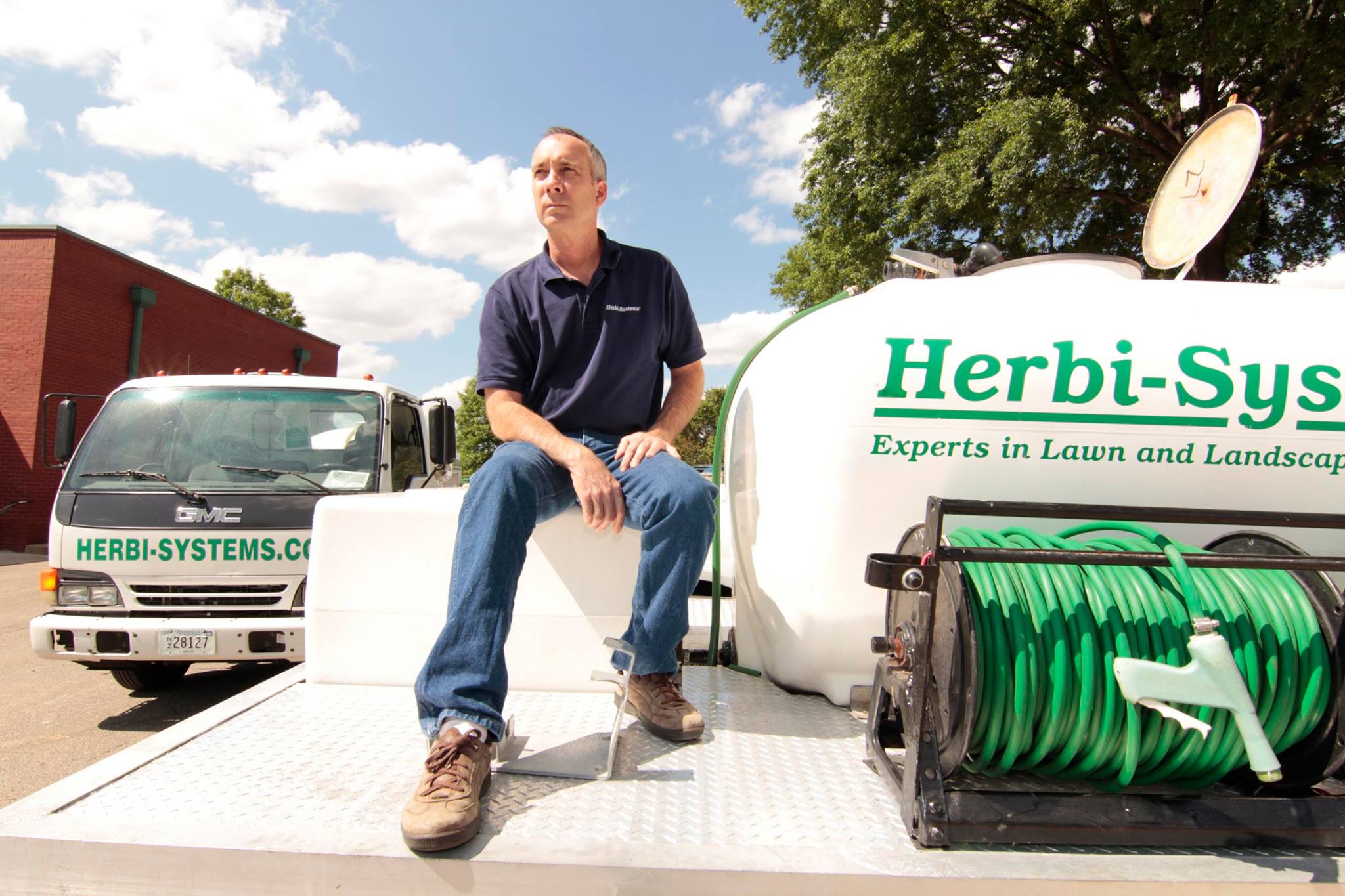
Kenny Crenshaw originally wanted to be a farmer. However, he lacked the resources to do so in the 80s.
Instead, he was presented with the opportunity to start a lawn care company with Bob Taylor. He had worked for Taylor mowing lawns while attending college. At age 22, he started Herbi-Systems, based in Memphis, Tennessee, in 1984.
Crenshaw says, at that time, all he knew was that he wanted to work outdoors and have his own company.
Taylor had 30 years of experience and helped get the company started in the right direction. When he was ready to retire, Crenshaw bought out his portion in the early 90s and took on the business as the sole owner.
Crenshaw admits that in the early years, he didn’t know what he was doing.
“There’s a big difference between having a degree in agriculture and running a lawn care business,” Crenshaw says. “Fortunately, early on, we had people who helped us with chemicals and fertilizers, our distributors, and then later on, we joined a consulting group.”
Building a Company Worth Working For
Herbi-Systems currently has a team of 70 employees. Crenshaw says six or seven team members have been with the organization for 25 years and 25 additional employees have been with the company for over 10 years.
“We have people coming up, one of my sons is here, and then my partner, he’s got two sons here, and we’ve got other young people here that want to make this a career,” Crenshaw says.
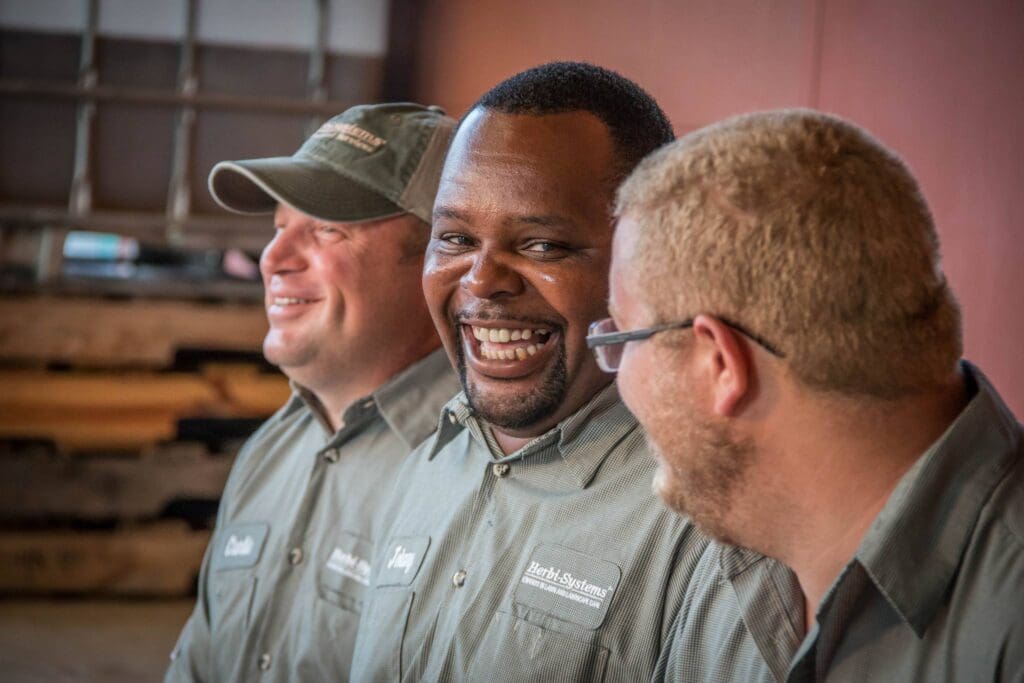
While they aren’t looking to expand to additional branch locations, Crenshaw says their industrial weed control business is growing as fast as they can find and train people.
Crenshaw takes pride in having created a good place for people to work.
“I enjoy people being able to come to work here right out of high school, and learn the lawn care trade, and eventually start meeting their goals of having a family, a house,” Crenshaw says. “I get a lot of satisfaction out of seeing other people meet their goals.”
He says many of their team members first came to work for the company until they got a ‘real’ job.
“I got a guy here with a criminal justice degree who came to work here until they got on at the police department,” Crenshaw says. “I’ve had people come here until they got on at the fire department, and they stayed. They came here until they were going to finish college and get a ‘real’ job, and then they just stayed. A lot of people fall into the lawn care business, thinking that’s what I’ll do until I get a ‘real’ job. They find out they enjoy it.”
Crenshaw says they’ve been able to grow by controlling their turnover. He says this all comes down to treating people well.
“A lot of people come here from bigger corporations who got tired of being treated like a number and told do more, more, more, and no one ever recognized what they did,” Crenshaw says.
He says the number one thing that keeps people with a company is money, but the second most important element is recognition and job satisfaction.
“After you pay a reasonable market-based compensation, then recognition, job satisfaction and those other things, they make a difference,” Crenshaw says.
Creating a Culture of Accountability
Crenshaw says they will drive roughly a million miles a year with zero tickets and zero accidents caused by their drivers. This is thanks to their culture of accountability.
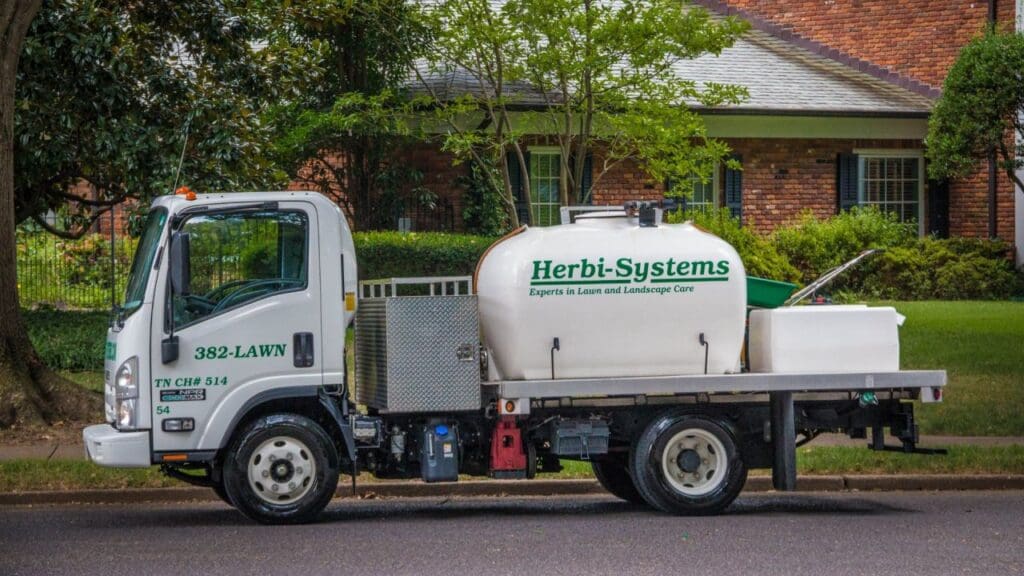
“I tell people we put up with sloppiness, tardiness, laziness, stinkiness, but you cannot lie or steal or have a bad driving record and work at this company,” Crenshaw says. “That’s our top three things. No lying, no stealing, and you can’t have a bad driving record. Because people who have bad driving records are reckless. They’re reckless, they’re careless, and they’re not going to work here.”
The company also provides a safe driver bonus at the end of the year.
“If you have gone through the whole year with no tickets, no accidents, you didn’t let your spreader fall off your truck, you didn’t run over a curb and ruin a tire, you get $500 check,” Crenshaw says. “We have about 60 drivers, and so we handed out $30,000 two weeks before Christmas.”
He says they will have everyone stand in a circle and call out the drivers’ names as they present the checks. Crenshaw says employees also don’t want to be the only one who didn’t get a safe driver check.
Crenshaw says they also make a point to drug test because driving under the influence never ends well.
Never Stop Innovating
Crenshaw enjoys working in the shop on equipment and has even developed several inventions to help in the field.
“The days of figuring out how to treat lawns are long past,” Crenshaw says. “Now we’re trying to figure out how to treat two more lawns a day and still do a good job. We’re trying to figure out how to hire people that our competitors couldn’t hire.”
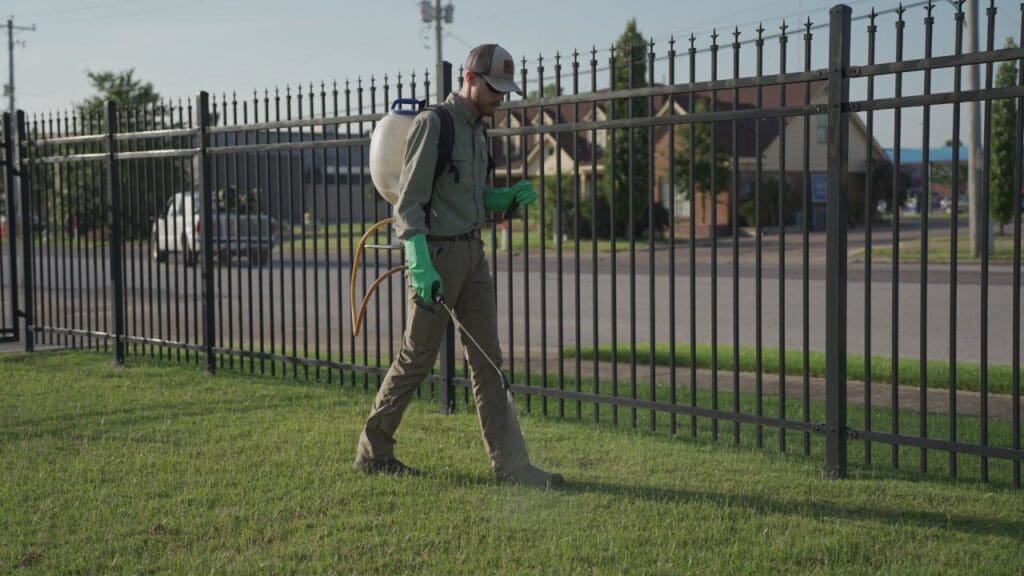
One of his inventions is an herbicide applicator that has two triggers and two applicators. He is currently working on a newer model sprayer that will go into his markets.
Crenshaw says they are also always adapting their marketing strategy.
In the 1980s and 1990s, he says you didn’t have to do much to get business beyond answering the phone.
As the market became more competitive, he started running ads on the radio and in the Yellow Pages. They also hired Don Nichols with Yes Marketing to help them with their direct mail and telemarketing efforts. Crenshaw has even done TV ads and billboards.
“We realized that we had to market,” Crenshaw says. “If we didn’t market, we weren’t going to grow; we were going to shrink.”
Crenshaw says they will move their marketing dollars around as certain methods’ effectiveness waxes and wanes.
“We know a lot of our marketing budget is wasted every year, so we keep moving, shifting, and evaluating,” Crenshaw says.
He says they regularly review their lead sources, what it costs per lead and per sale as well as their close rate.
“There’s really no silver bullet to marketing,” Crenshaw says. “Some of it is brand awareness, some of it is lead generation, you’ve really got to do it all.”
Competing Against Giants
As the largest locally owned lawn care company in the Memphis market, Crenshaw says they have an advantage against some of the other companies going the private equity route.
“If people can easily make a choice between a competent, reliable local company and a national company, they will choose that company over a national brand,” Crenshaw says.
Crenshaw recommends that other independent companies looking to remain competitive against private equity-backed businesses get involved in peer groups and work with consultants.
“They can give you the expertise that the M&A guys bring,” Crenshaw says.
He encourages networking with other successful people if you want to continue to thrive.
“You can’t read enough leadership books,” Crenshaw says. “You can’t read enough Wall Street Journal articles. You can’t read enough trade magazine articles. You just can’t do enough of that stuff to meet the needs of a very complicated business in a very complicated society. You’ve got to get that from peers and from experts.”
A Chick-fil-A Approach to Lawn Care
Crenshaw says that lawn care is a commodity because at the end of the day, companies are using the same products and same equipment to get the job done.
The key is whether you are a McDonald’s or Chick-fil-A, whereas the first may have a few cars in the drive-thru, Chick-fil-A has cars backed around the corner.
“McDonald’s has been in the business a long, long time,” Crenshaw says. “They created the fast food business, but they’ve gotten sloppy. They’ve gotten lazy. Their training is not as good as it used to be.”
Crenshaw argues that customers will drive an extra mile or two to stop at Chick-fil-A over a McDonald’s because they like the experience there. Similarly, Herbi-Systems works to provide their customers with a good experience. Crenshaw says they make it easy for customers to contact them and actually reach a human being.
“We use technology where it’s appropriate to make the customer experience better, but we reject it when it makes the customer experience worse, even if it saves us money,” Crenshaw says.
One example of this is how they strive to keep the same technicians on the same route.
“We never purposely put someone on another route simply because it’s a bit more efficient,” Crenshaw says. “Most of our techs know our customers. The customers know the tech. You’d be surprised how many customers will call in here, and they know their tech’s name. Is it more efficient to have a computer route people and shift them all over the market? Probably so. But you’re going to lose efficiency when you’ve got a guy that pulls up in a yard that he’s never seen before, and he’s got to spend two or three minutes evaluating what that yard needs, versus the other guy, he already knows what the yard needs, and when he pulls up, he just confirmed what he already knew.”
Crenshaw says their growth is mainly limited by their ability to find labor and get the work done.
“You spend a fortune on marketing and bring the customers in, but if you can’t get to get them serviced and keep them happy, you can’t afford to churn these customers,” Crenshaw says.
Crenshaw says he doesn’t have any long-term goals for the business; he simply wants to go to work and do better than he did yesterday.
“I think at the end of the day, you just really have to be satisfied that you’ve done the best you could do with what you had,” Crenshaw says.
