


Quality employees are fantastic, but those who stay with your lawn or landscape company long-term are the Holy Grail of team members. These individuals can provide operational consistency to your clients and develop a wealth of knowledge and experience.
Misty Gil, recruiting specialist and company ambassador for Myatt Landscaping & Construction, based in Fuquay-Varina, North Carolina, notes some of their maintenance managers have been overseeing the same properties for their entire careers at Myatt.
“They know the location of irrigation valves, can anticipate recurring insect populations and seasonal challenges, and have established strong relationships with our clients,” Gil says.
Chad Sikes, CEO/partner at CityGreen Services, based in Chattanooga, Tennessee, notes their spring ramp-up period is faster with the same crew leaders and labor staff year over year, and crews take ownership of their routes.
Chris Joyce, president of Joyce Landscaping, Inc., based in Marstons Mills, Massachusetts, adds that everything is firing on all cylinders when you have great players on the team for a long time. Joyce says 50% of his workforce has been with the company for 10 years or more, and 18% have been with him for 20 years or more.
“Instead of bringing a new candidate in and trying to bring them up to speed with our mission and our goal, it’s just like a marriage,” says Nick Klotz, president of Executive Property Management of Michigan, LLC, based in Jackson, Michigan. “You just build on it over time, and it just gets stronger and stronger if done correctly.”
Tim Lake, president of T. Lake Environmental Design, based in Dublin, Georgia, says their long-term employees can also pass on institutional knowledge to younger employees who have joined the organization.
“From the tactical to the stuff that’s just in heart, it’s super valuable,” Lake says. “It’s priceless.”
Where Long-Term Employees Come From
As for where these long-term hires are coming from, the number one resource companies mentioned were word-of-mouth referrals from current employees. Joyce, Klotz and Lake say they’ve gotten referrals from friends and clients as well.
Lake says in one specific instance, he had the dean of the school they’re close to calling him up to tell him that he was going to ‘hire this kid.’
Gil says in their case, before hiring a recruiter, many of their team members came through Craigslist and worked their way up into management roles.
When looking for long-term employees, it’s important to be selective with who you bring on as it greatly impacts your ability to retain them.
“Hiring someone who is simply looking for a job often doesn’t lead to lasting success,” Gil says. “However, bringing on people who thrive in results-driven environments and enjoy being part of a collaborative team is the key to building a committed, long-term workforce. Passion and alignment with the team culture make all the difference.”
So, is it possible to identify these steadfast team members from day one during the interview process? There’s no absolute way to know, but there are positive indicators to look for, as well as red flags.
“You always want to be around people you know, like and trust, and if you don’t have a good feeling on the front end, you’re usually right 99% of the time,” Joyce says.
Sikes says promising candidates tend to talk about the future and are interested in the stability and goals of the company.
“Advancement opportunities should be of concern and benefits/401k and insurance,” Sikes says. “Though we are a blue-collar business, we are looking for professionalism and knowledge during the interview process.”
Lake says their favorable interviewees show up on time, are appropriately dressed and carry a pocketknife.
“The whole thing about carrying pocketknife tells me that that person is pragmatic, that they understand what everyday carry item is useful and necessary,” Lake says. “That’s a person who’s prepared and who has the tools with them to do the job, and who seeks to be a useful person in the world.”
Gil says one of the most telling signs for them is if the applicant has a passion for the industry.
“When a candidate speaks enthusiastically about their past work and accomplishments, it shows they genuinely care about what they do,” Gil says.
Gil notes it’s also important to ask why someone left their previous job as it can provide insights into their priorities and career path. Klotz says if an applicant absolutely bashes their former employer during the interview, it could indicate they won’t be satisfied with your organization either.
“Vague or negative answers, especially if they blame employers without reflecting on their own growth, can signal potential issues with retention,” Gil says.
Joyce and Lake note a reluctance to make eye contact during the interview can indicate a lack of interest in the job.
Klotz says another red flag for him is when an interviewee has no personal goals or hobbies.
“It just shows a lack of drive overall, which we want team members that are going to want to nurture some growth within themselves and within the company,” Klotz says.
The Power of Onboarding
However, just because a new hire seems like a promising addition doesn’t mean you can be negligent with your onboarding process. First impressions go both ways, and you need to impress upon your new employees that your company is somewhere they can see themselves at for a long time rather than just a stepping stone job.
“It’s very important because, especially at a company our size or a lot of companies like our size, it can be a very intimidating process,” Joyce says. “If they don’t understand the expectations, the policies and procedures early on, they’ll just get lost in the inertia.”
This is the time to get new hires up to speed on their responsibilities and help them understand who your company is and how you operate. Lake says they indoctrinate their employees over 90 days, and if the employee isn’t all in by then, they will part ways.
Sikes advises having a training program and mapping out the first 30, 60, and 90 days for each position.
“The onboarding experience is absolutely critical to setting the tone for long-term success,” Gil says. “From day one, we want new employees to understand and embrace the quality of work we expect and feel a sense of pride in what they accomplish. Pride in one’s work is a key driver of retention — nobody wants to spend 8–10 hours a day producing mediocre results.”
Klotz notes that when you’re onboarding the goal is to make new employees feel welcome and at home from the start.
Fostering Loyalty
Some of the elements that can help foster loyalty to your company include providing a fulfilling career path, competitive wages and a culture of respect and connection.
“Career development is a cornerstone of our employee retention strategy,” Gil says. “We believe investing in our team not only benefits the individual but strengthens the entire organization. We actively encourage employees to pursue professional certifications, such as obtaining their pesticide license, and we provide opportunities for them to attend seminars, field days, trade shows, and specialized classes.”
Gil says they conduct monthly training sessions and provide a clear roadmap for employees to understand what skills are required to progress.
“When employees see that we’re committed to their success and that their aspirations align with opportunities within our company, it builds loyalty and inspires them to stay and thrive with us,” Gil says.
Joyce agrees employees stay when they see a career ladder and know where the growth is. He says a lot of their people in leadership positions today started out in entry-level jobs with the company.
Klotz says his grand vision is to make it clear to new hires that landscaping isn’t just a job, but a career.
“We need to do away with the term laborer and start using apprentice,” Klotz says. “The whole idea being there’s a bigger picture in mind.”
Competitive wages can help with retention as well, but paying above the market rate isn’t the main deciding factor for employees staying.
“While compensation is important, we’ve found that other factors, like job satisfaction, work environment, and career development opportunities, play a larger role in retaining employees over the long term,” Gil says.
Lake says they do profit sharing when the company reaches their margin goals, as this allows employees to share in the business’s success.
Your company culture and other employees also impact the ability to retain good team members long-term. Klotz says while they don’t pay above the market average, their employees stay long-term because they treat them as family, and their opinions matter.
“You’ve got to lead with empathy,” Joyce says. “You have to understand your employee and who you’re managing, and you’ve got to figure out what makes them tick and be able to be a person to them, not just an employee-employer relationship. You’ve got to be emotionally engaged with them more, not just on the work level, but so they understand that you care about them.”
Sikes says being approachable and having a personal relationship with your key employees can turn them into recruiters for your organization. Gil notes that the Myatt family’s involvement in the day-to-day operations resonates with employees.
“Their active presence not only sets the tone for our values but also reinforces an environment where employees feel supported and appreciated,” Gil says. “Together, these elements create a workplace where long-term employees feel valued, connected, and empowered to succeed.”
Lake says his team members appreciate the level of transparency his company provides and how they hold everyone accountable for their actions.
“I have always said we spend as much time with our work family as we do our babies at home,” Sikes says. “I am going to choose to surround myself with good people and like-minded individuals.”
Joyce says their benefits, profit sharing, and being part of a winning team are all reasons his employees have stayed long-term. He says they are proud to work there.
“I have grown tremendously as a landscaper and a person since the first day I started at Myatt Landscaping. Myatt has allowed me to grow in areas that stretch far beyond the horticulture field,” says Herbie Champion, installation and construction division manager for Myatt who has been with the company for 21 years.
Recognizing Tenure
It’s also critical not to take your long-term employees for granted. How you recognize and reward your team members will vary based on their personal preferences. Talk to your long-term employees to understand what means the most to them.
Lake says when he asked his team what would be the most meaningful thing for them, they answered cash.
“If you’ve been here 10 years and beyond, for every year after 10, you get $100 bucks,” Lake says. “At your 10th year, you get $1,000. At 12 years, you get $1,200. At 32 years, you get $3,200 cash.”

Joyce says they recognize their employees on their annual anniversary, and when team members have been with the company for more than 20 years, he presents them with a Rolex watch.
“We have 11 employees who have been with us who have been presented with Rolex watches,” Joyce says.
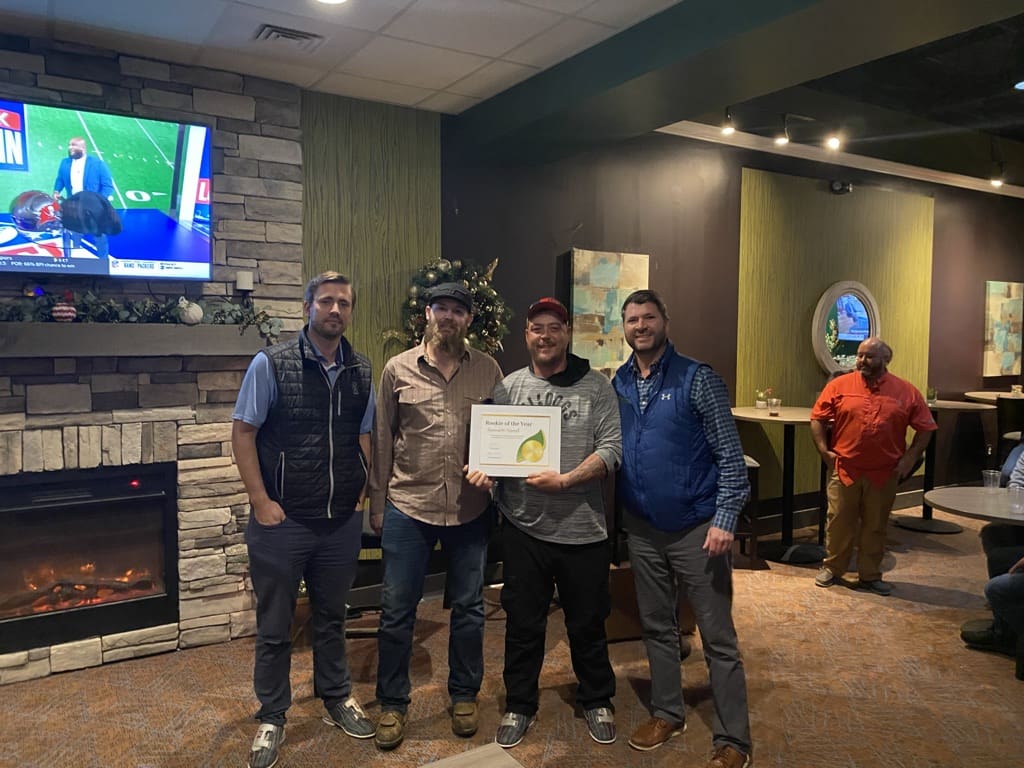
Gil says each year they celebrate employees who have reached significant anniversaries like 5, 10, 15 years, and beyond, with a special crystal award presented during a holiday team meeting, ensuring the entire team is part of the celebration.
“In addition to the award, employees receive a bonus and a personalized thank-you letter that acknowledges their contributions and extends our gratitude to their families for their support,” Gil says.
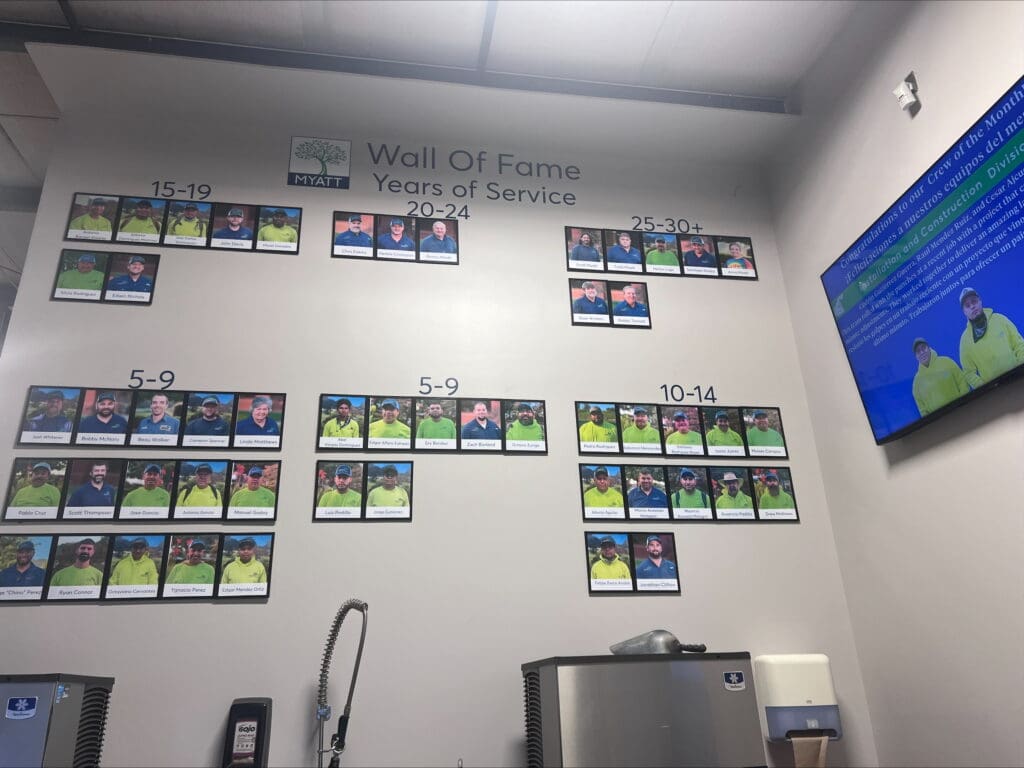
Employee anniversaries are also shared in their monthly newsletter and team members who have been with Myatt for five years or more are showcased on their ‘Wall of Fame.’
“New employees often share how they aspire to one day join the ranks of this honored group,” Gil says.
Advice for Others
While some may argue that the days of devoted employees are gone, the truth is younger generations can be just as faithful if you have built out a desirable workplace that recognizes and rewards hard work.
“Younger generations often value purpose in their work, opportunities for growth, and a sense of belonging,” Gil says. “If they see that their hard work leads to tangible results, personal development, and a supportive team environment, they’re more likely to commit long-term.”
If you want more long-term employees, Klotz and Lake encourage starting with your culture first.
“First figure out who you are, and write it down and then live it, and expect everybody else to live it, and put that first,” Lake says. “I don’t care what capacity, capabilities, technical skills, whatever kind of rockstar you are if you don’t fit these, you don’t fit here.”
Gil agrees you should seek out those with a passion and a cultural fit.
“During the onboarding process, set the tone by introducing new hires to the quality of work expected and pairing them with long-tenured employees who can mentor and guide them,” Gil says. “Invest in career development by offering training, certifications, and clear pathways for advancement. Regularly review pay scales to remain competitive and provide employees with tangible opportunities to earn more as they grow their skills. Finally, foster a team-oriented culture that values communication, collaboration, and mutual support, ensuring employees feel connected to the company’s mission and to one another.”
Sikes says you need to create an atmosphere that sells itself.
“You want people that take pride in the work they produce,” Sikes says. “Give your people the right tools to thrive. Our industry is a small fraternity of people; word gets around on how you treat your staff and the quality of work you provide; reputation is huge.”
Joyce recommends companies invest in profit sharing so their team has a stake in the matter.
“I truly believe, if you’re a destination company, you’ll get young employees to come to your company and you’ll be able to retain them,” Joyce says.
This article was published in the March/April issue of the magazine. To read more stories from The Edge magazine, click here to subscribe to the digital edition.
