


The importance of quality communication with your clients cannot be overstated. For many landscape companies, the level of communication they provide is one of their key differentiators.
“Effective communication is the cornerstone of any successful relationship,” says Kaylie Gibbons, maintenance business manager with Landcrafters, based in Pinellas Park, Florida. “By fostering transparency and professionalism across our team, we set a high standard that ensures every client feels heard, valued, and respected. This approach minimizes misunderstandings and fosters trust, contributing to long-term, positive relationships with our customers.”
Honing Your Team’s Communication Skills
Even if you have a single point person for your customers to interact with, it’s critical for your entire team to know how to engage with your clients.
Glenn Bonick, owner of Bonick Landscaping, based in Irving, Texas, says everyone from their designers and client reps to their accounting team and crew members interacts with their customers to ensure a good experience.
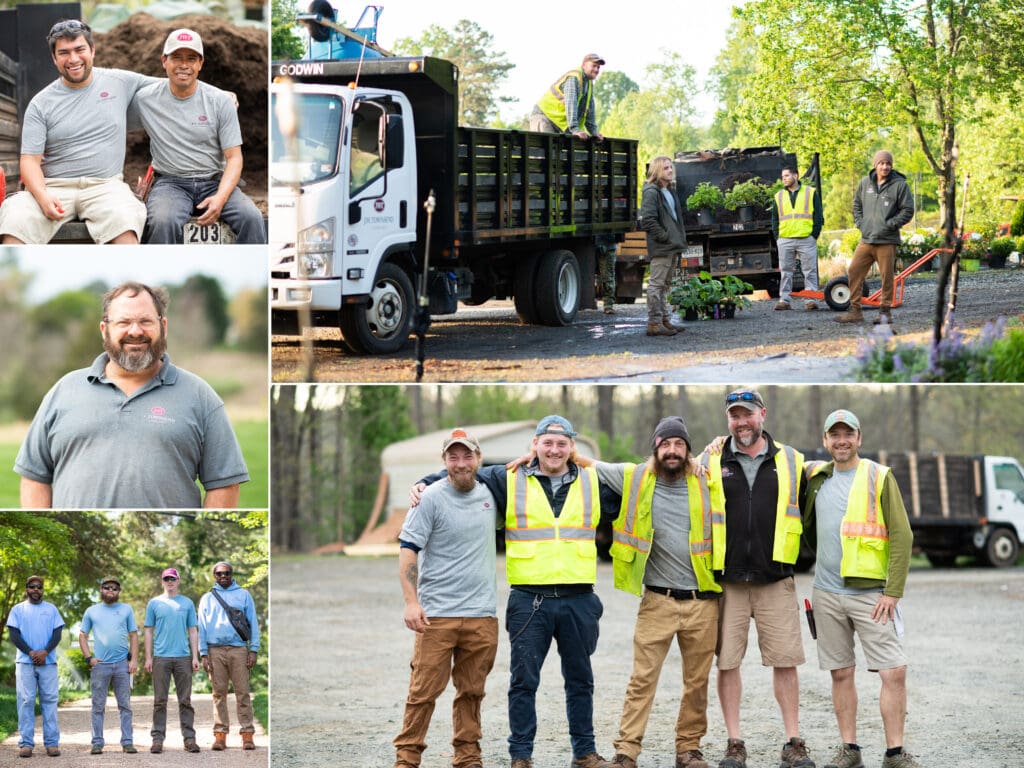
Leigh Townsend, president of J.W. Townsend Landscapes, based in Charlottesville, Virginia, says they make sure every crew has an English-speaking team member on-site to handle any client communication in the field.
When residents of an HOA approach their crew members, Gibbons says they are trained to remain patient and professional.
“They kindly direct homeowners to communicate their concerns through the appropriate channels — typically the property manager or board members,” Gibbons says. “This ensures that all requests are assessed properly and handled efficiently through the assigned account manager.”
Some of the key skills for providing quality communication include being personable, passionate, transparent and consistent. Active listening and striving to provide a solution for the client is also essential.
Townsend adds team members should be confident, competent, assertive, modest and professional.
“We are constantly reminding our team that it is ok to tell a client, ‘I don’t know the answer to that question, but I will find the answer and will get back to you,’” Townsend says. “More often than not, we find that folks feel pressured to have all of the answers, all of the time. We try to educate our team more about the importance of maintaining an open line of communication and building a trusting relationship versus needing to have all of the answers.”
Gibbons says they have weekly training sessions that focus on their face-to-face interactions, emphasizing patience and professionalism. They teach their team members to listen, understand and find a solution.
Bonick says they discuss communication in every meeting. They concentrate on communication styles and adapting to different people’s communication styles.
Townsend says their communication training focuses on what the staff should and should not be sharing with the client. For instance, telling a homeowner their turf looks bad because it’s been cut too short reflects poorly on the company when their turf crew handles the mowing.
“The response we’d like to see and that we are training our gardeners to respond with is, ‘Yes, you are correct, that turf does look a little rough. I’m sorry about that. I will contact my team leader, and we will discuss this with our mowing team. Thank you so much for bringing this to my attention,’” Townsend says.
Navigating Communication Challenges
Some of the common issues when communicating with clients are addressing requests for unsound practices, micromanaging and managing multiple people interacting with the client.
When dealing with customers who want something done that isn’t feasible or horticulturally sound, Gibbons says they lean on their credentials and certifications to prove their expertise. This allows them to guide their clients toward sustainable and effective landscaping solutions. They explain the importance of proper horticulture techniques.
Bonick adds you should validate the client’s needs, then explain how their request may adversely affect them and offer a solution.
Townsend notes that when they have good communication with their clients, they are more likely to trust their judgement on caring for their garden.
“When a client suggests a plant or a practice we do not recommend, we encourage the following approach,” Townsend says. “‘Ok, let’s try that plant, but in our experience, that plant will not be happy in that location. However, we are willing to try it, and if it doesn’t work, then perhaps we can replace it with a plant that we think will be happier in that location.’”
Townsend says half of their clients will still want to try the plant they do not recommend, and the other half will trust them to choose a plant that will perform best.
Another common challenge is dealing with those who prefer to micromanage. Bonick says these individuals require predictable communication and you should pay attention to the areas they are focused on.

“Education is always important and, especially with micromanagers,” Bonick says. “They may be focusing on a particular part of the project, so you must explain that there is a process and how changing it could affect them, then manage the new expectations.”
Townsend says they can usually tell early on if a client has very specific expectations and will over-communicate. They will send updates and pictures as well as make multiple site visits a day.
Gibbons says for their HOA clients, they meet with the property manager and board members at least once a month. They also provide detailed reports and rapid follow-ups on community-wide concerns.
“At the same time, we uphold consistent service standards across the property so that every homeowner feels their needs are being met within the broader context of the community,” Gibbons says.
Miscommunication can occur when multiple team members are communicating with the same client. Gibbons and Bonick recommend your team collaborate internally so everyone is on the same page and your message is consistent. Gibbons says their account manager is the point person who relays updates to the client.
“We try to avoid this scenario, but it still happens,” Townsend says. “The best outcome is to have a meeting with the client, with all parties present, such that each team member can communicate the relevant information to the client, but at the same time establishing a designated point of contact going forward.”
Keys to Success
Some of the ways to elevate your team’s interactions with clients include utilizing their preferred channel of communication, having a system to document conversations, and setting boundaries.
Townsend notes there are so many options for communicating available at people’s fingertips that there is no excuse for poor communication.
“We cater to our clients’ preferred method of communication,” Townsend says. “In fact, we ask how they prefer to communicate when we are first ‘hand-off meeting’ with them to begin caring for their garden. We want communication to be as easy as possible for all parties.”
Townsend says they strive to understand how involved a client wants to be. Some prefer a daily report of what has been accomplished, while others are more hands-off and trust them to handle the project professionally.
“A bigger challenge for us is communicating on a high level with all clients such that each client has a ‘red carpet experience’ with our company, whether they are spending $5,000 or $500,000 with us,” Townsend says.
Bonick says they also ask the client their preferred communication style as they have a better chance of getting information and responses from them in a timely manner.
Gibbons says they adapt to their clients’ preferences but also utilize the ‘triangle process.’
“At the start of each relationship, we ensure that the account manager, property manager, and a board member are included in all communications,” Gibbons says. “This ensures clarity and alignment among all parties involved.”
However you end up communicating with your clients, it’s important to log any requests in one location so information is not lost. Bonick says they use group texts and Microsoft Teams to manage client preferences based on the project. Gibbons says they utilize Aspire to track client communications, issues, and tasks.
“This system ensures all requests are assigned to the appropriate team, and progress is monitored until completion,” Gibbons says. “Additionally, we provide monthly quality audit and irrigation reports to maintain a clear record of all interactions and services.”
As client expectations evolve with the addition of more communication tools, it’s critical to set response policies for your team as well as boundaries with customers. Gibbons and Bonick both follow the 5/10 rule.
“If you receive a text, email, or call before 5 p.m., respond that day, even if it is to only say you have the information at a specific time,” Bonick says. “If it’s after 5 p.m., respond by 10 a.m. the next morning.”
Gibbons says complaints that require on-site attention are addressed within 72 hours or during the next scheduled service, depending on the issue.
Townsend says they don’t have a set policy for response times, but they train their team to respond immediately, even if it is just a message letting them know they are in the field right now and they will get back to them shortly.
“This tells the client that we got your message and we’ll be back in touch; this type of acknowledgment is usually successful because the client hears back from us immediately and knows we are working on their question,” Townsend says.
Bonick says he coaches his team to respond only to after-hours requests if it is an emergency. Otherwise, answering on a Sunday may cause the client to expect this. Townsend says they ‘train’ their clients that they are very responsive from 7 a.m. to 7 p.m. Monday through Friday, but their team is not texting or emailing on Saturdays and Sundays.
“Unfortunately, green industry workers are often on the clock six or seven days a week, but we feel very strongly about providing our team with a balanced life,” Townsend says. “We work really hard Monday through Friday. The weekends are for resting, family, and friends. We want our clients to understand this too, and while some of them resist this ‘training,’ we have found that it works.”
This article was published in the May/June issue of the magazine. To read more stories from The Edge magazine, click here to subscribe to the digital edition.
