


Employees have lots of options when it comes to choosing a landscape company to work for. Aside from competitive wages, one of the ways to stand out is to provide unique benefits that are less common in the industry.
“In our world, finding employees is so hard that your benefit package can be the difference,” says Mark Ables, president and CEO of Ables Landscapes, based in Hollywood, South Carolina. “We really stress that when we interview people. We have to say it’s more than just comparing dollar per hour with our company versus another because these benefits really have a lot of value.”
Some of the possible areas to explore include offering more education and training opportunities and taking a more holistic approach by providing mental health support and flexible schedules.
“I feel years ago, if you offered health insurance, 401(k) and paid time off, you were in the top 60%,” says Chris Ahlum, president of Ahlum and Arbor, based in Columbus, Ohio. “Now employees want different things. They want flexibility and purpose. Employees don’t come to work anymore just for a paycheck, and quite honestly, we don’t want just ‘paycheck employees.’ Managing multi-generations really requires us to think outside the box to be able to cover what everyone wants.”
Check out these three companies and how they go above and beyond with the benefits they award their teams.
Case Study: Ables Landscapes
One of the most unique benefits that Ables Landscapes offers their employees is access to their dream manager.
The company employs a full-time dream manager, Morgan Behrens, who essentially serves as a life coach for their team members.
“The dream manager really gets to know our people, and the way it works is she meets with them once every four to six weeks,” Ables says. “They have a dream session, and they talk about their goals in life. It’s not just at work; it’s the whole person. So it might be a physical goal, it might be personal, might be spiritual, and Morgan hears them out and puts some steps in place to say, ‘All right, next time you meet, what do we need to do to get one step closer to this goal?’”
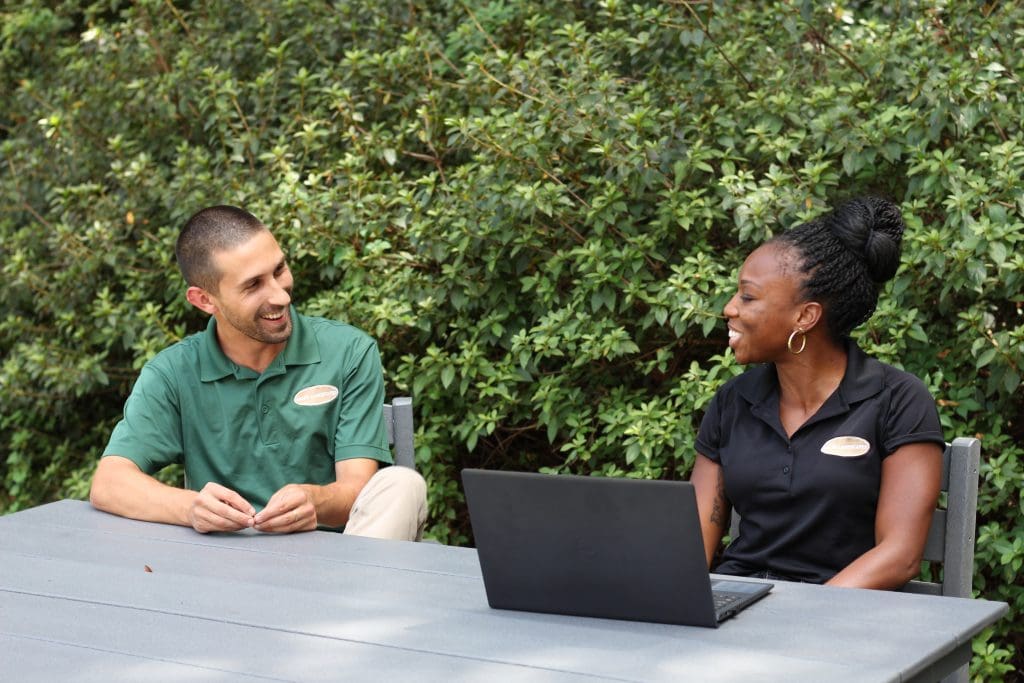
For example, they have a lot of non-English speakers on staff, and the DMV is a real challenge for them. Ables’ dream manager will set up an appointment and go with them to help them get a driver’s license, which is life-changing for them.
“She’s got little mini-plans for all of our employees that she’s working and keeps up with,” Ables says. “Some people are all in with it, and they love it. Some people keep things close to the vest, and it takes a while to pry goals out, but eventually, they do.”
Ables says having a dream manager helps them better support their employees emotionally, physically and financially. It has also provided more accountability and boosted employee morale.
“I think the dream manager program has definitely created a culture here that is hard to beat,” Ables says. “It’s not an instant, you flip a switch, and our culture got great because we hired Morgan. It’s taken a few years of building trust and for that turnover rate to go way down and retention rate to stay high, and for people just to see that their lives are getting better through their own work.”
Ables says they’ve recently added a workplace chaplain as well, who is on-call for big life-impacting events like a tragic loss or if a loved one is in the hospital.
“Whatever it is, they’re there for a call,” Ables says. “They’ll go visit, and they also come out to our shop and meet with our people. They build some relationship capital.”
He says his employees also really appreciate their profit sharing and their PTO policy. After conducting a company survey, he realized that PTO is more important to the team so they’ve been more generous with it.
The company conducts profit sharing twice a year, so employees understand it is not a Christmas bonus but tied to the company’s performance.
Ables says he invests in offering these different benefits because that’s what he wants to be known for in 100 years is how they take care of their people.
“You got to put your money where your mouth is there, and that’s going to take time,” Ables says. “It’s going to take resources, and it’s going to take money. You’ve got to be profitable to be able to pay for these things. So it forces us to do a good job with our estimating and our pricing and all that. Year by year, we’re just trying to get a little more generous as we can. That’s the underlying thing. It’s just it’s the right thing to do for our people.”
Case Study: Ahlum & Arbor
Ahlum says for years they have talked about becoming a destination company, and they are at the point where they have to tell applicants they don’t have a position for them.
“I hear many companies complaining about not having employees, but these days, they just don’t show up,” Ahlum says. “You have to work to attract them and then work harder to keep them. Offering different unique benefits attract this next generation of talent.”
Ahlum & Arbor offers a number of benefits tied to their employees’ knowledge. For instance, they pay for employee education and conferences.“Once they are a certified arborist, they will never not have enough CEUs working for us,” Ahlum says. “One of our values is knowledge and we want all of our employees to continue to grow. We challenge them each year, ‘What’s next?’”
The company also has a program that covers an employee’s college education in a green industry-related field. Ahlum says employees see the company putting resources toward them. Another program offered is an apprenticeship that takes a new hire to a certified arborist in three years and has guaranteed pay scales.
“It’s hands-on and book theory learning and builds great, well-rounded employees,” Ahlum says.
Ahlum has noticed the younger generation wants flexibility and to learn so they have started to cross-train their employees as well.
“It helps build ‘the bench,’ but they also get the satisfaction to learn something new,” Ahlum says.
He says one benefit that his team seems to appreciate the most the gear stipend as they can pick their favorite rope, saddles and hard hat without having to pay for it.
“We just increased our gear stipend this past year based on employee feedback,” Ahlum says. “I know this significantly increased their morale and it helped with production! Anytime you have a happy employee production is better than with an unhappy employee!”
Ahlum admits they have rolled out benefits that have not worked in the past, which is why they try to listen to their employees and hear what they want.
“We use surveys sometimes to ask questions about this,” Ahlum says. “We don’t necessarily use a poll, but the anonymous surveys allow us to get a better feel for what they want if they do not feel comfortable talking to us about it.”
He also suggests asking why an applicant took another role with a different company. It can unveil a benefit that people are looking for that you do not have.
Case Study: Ryan Lawn & Tree
One of the most notable benefits Ryan Lawn & Tree offers employees is the fact that they are an ESOP (employee stock ownership plan), which empowers employees to own part of the company they work for and serves as a retirement fund. Only 6,358 companies in the U.S. are ESOPs.
The shares are allocated based an employee’s salary and their tenure with the company. Employees have to be with the company for six years before they are fully vested. In addition to the ESOP, they also offer employees a 401(k).
“We call it the get-rich-slow benefit,” says Steve Klecan, director of operational support for Ryan Lawn & Tree. “We have many millionaires in our company because of the ESOP.”
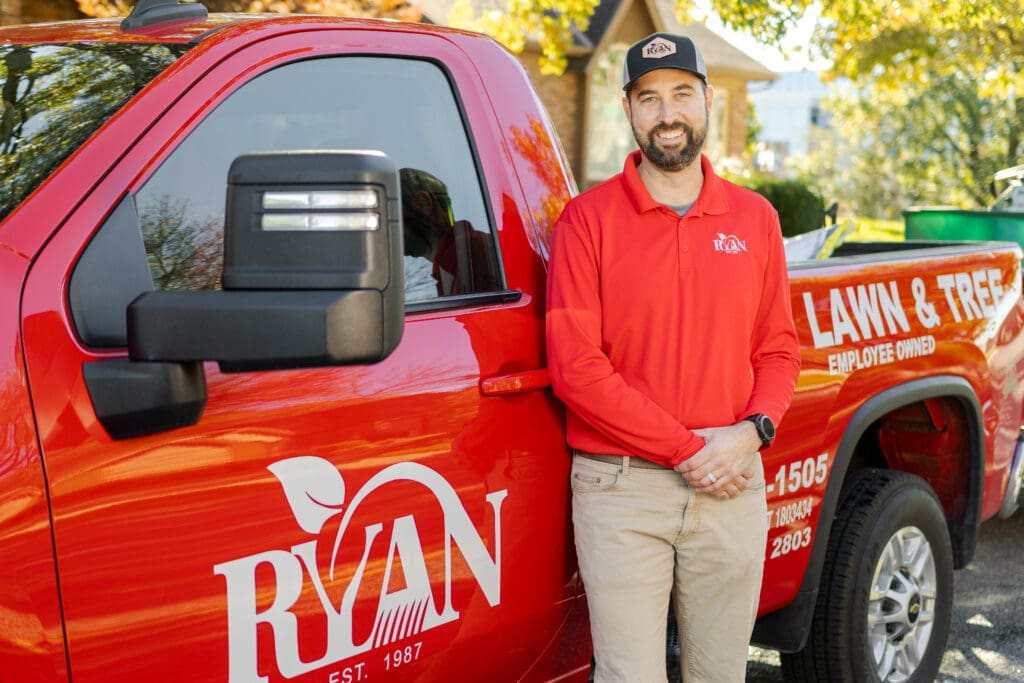
Rodney St. John, vice president of agronomy with Ryan Lawn & Tree, admits that the ESOP benefit is harder for younger people to understand its true value when recruiting, but the idea of being an employee-owner and the decisions you make influencing the company does resonate with them.
“We hire about 5% of all applicants,” Klecan says. “That is big to us to make sure that not only are we getting the right people, but they understand our benefits and that they’re part of the team here.”
Phillip Fisher, COO of Ryan Lawn & Tree, says their faith in the workplace also attracts a unique person to their company and they see it as a benefit that they feel free to express that faith at work.
“You wouldn’t believe how many people that we get that come in and say that our mission statement the first three words are ‘To serve God,’ and how important that is to them and joining us at Ryan Lawn & Tree is why they applied,” Klecan says.
Family is another value Ryan Lawn & Tree backs up with their benefits. They are very flexible with their employees if they need to show up an hour and half later in order to take their kids to school. The company also started providing two weeks of paternity leave two years ago.
Klecan says depending on who you talk to, what benefit matters the most will vary.
“I think that shows us why we have to be diverse in the benefits that we’re giving to satisfy everybody,” Klecan says.
Career-minded individuals value the amount of training and education invested in them, including public speaking professional development.
“It is a special thing that we do, and it gives our individuals confidence up there in front of people whether it be 10 people or 500 people,” Klecan says.
For their field employees, one privilege crew leaders receive is a company truck to drive to and from their house.
“If it’s a personal use, we have them pay for the gas,” Klecan says. “But that one benefit that kind of goes unrecognized. Typically, we always say it saves a person $5,000 to $7,000 just between the gas consumption that they’re not utilizing to get to work every day and insurance. There are some individuals, it’s literally their only vehicle, and that’s a special privilege we have here at Ryan.”
Ryan employees also receive lawn and tree care services up to $1,000.
Another appreciated benefit is the ability to share PTO. St. John says he experienced his co-workers’ generosity as he had only been with the company for six months before dealing with a serious illness.
“People all over the company were donating time and sending me cards and prayers that I had no idea who they were,” St. John says. “They allowed me to stay home and recover from my illness. That was amazing.”
Fisher says they pride themselves on how every frontline worker receives the same amount of benefits as their founder, Larry Ryan. Klecan encourages listening to your people and figuring out what makes them happy.
“I think you just have to be creative and be open,” Fisher says. “You can’t be set in your ways on what you’re going to offer or you’re going to lose. There are some things we offer today I’m like, that’s crazy, but for this generation, we have to offer the two weeks of paternity leave and different things like that.”
This article was published in the March/April issue of the magazine. To read more stories from The Edge magazine, click here to subscribe to the digital edition.
Key Takeaways
- Unique benefits such as flexible schedules, mental health support, and profit-sharing programs to attract and retain talent in a competitive labor market.
- Personalized and long-term benefits significantly boost employee morale, accountability, and loyalty.
- Listen to what matters to your team and craft benefits that meet their various needs.
