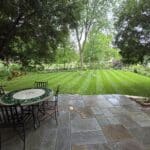

Aidan Friel, president and CEO of Blue River Landscape & Design, based in Bridgeport, Pennsylvania, was 15 when he started his company in 2021 and made $60,000 in annual revenue in his first year. Now at 20 years old, his business is projecting around $2 million in annual revenue.
Like many others in the industry, Friel originally launched his business as a way to save up money to afford college. However, unlike others who began by mowing lawns, Friel used his background knowledge of landscaping to start out doing design and install work.
Despite his young age, Friel presented himself in such a professional manner that no one doubted his abilities, and many assumed he was older than he was at the time.
By the time Friel was 17, he realized that landscaping was where his true passion lay and decided to forgo going to college.
“Now every day is like a college class, learning something new,” Friel says. “We’re building on our skills. We’re always just trying to be a little bit better than we were yesterday.”
Learning From Industry Immersion
Friel says every aspect of the business has been self-taught. He says he’s learned over time by attending industry events, networking with peers and reading different materials online.
“There’s no better way to learn than hands-on,” Friel says. “There was a lot of trial and error. If I told you there wasn’t, I would be completely lying to you. It’s not all sunshine and rainbows, that’s for sure. We’re still figuring things out along the way, and anyone who says that they got it completely figured out, in my opinion, is just lying.”
Friel says when they encounter those errors while learning, how they go about making the end result right for the client is what matters the most to them.
“No matter what happens, we’re going to make it right,” Friel says. “It doesn’t matter if I lose money. It doesn’t matter if the project is completely unprofitable. It doesn’t matter if we have to completely redo it. We’re going to make it right because that’s just what we want to be known for.”
He says the most challenging part of the business is simply having to create everything from scratch and wearing all the different hats to ensure the business runs smoothly.
“Executing the jobs, that comes easy because that just comes with the passion, drive and the good team to back it,” Friel says. “But all the backend stuff, it might not be your favorite thing to do, but it has to get done. It’s some of the most important pieces of running a landscape company.”
Friel says as he’s grown the business, he has been able to pass on some of the different responsibilities to various team members.
One of the reasons the company has been able to scale up so quickly is thanks to Friel being creative with financing. He admits that he has taken risks when it comes to marketing, hiring and purchasing compared to others. Yet he says there have been plenty of times where these risks haven’t paid off.
Knowing Their Niche
Friel says if he were starting the business all over, he would prioritize building the brand before taking jobs he didn’t necessarily want just to fill the schedule.
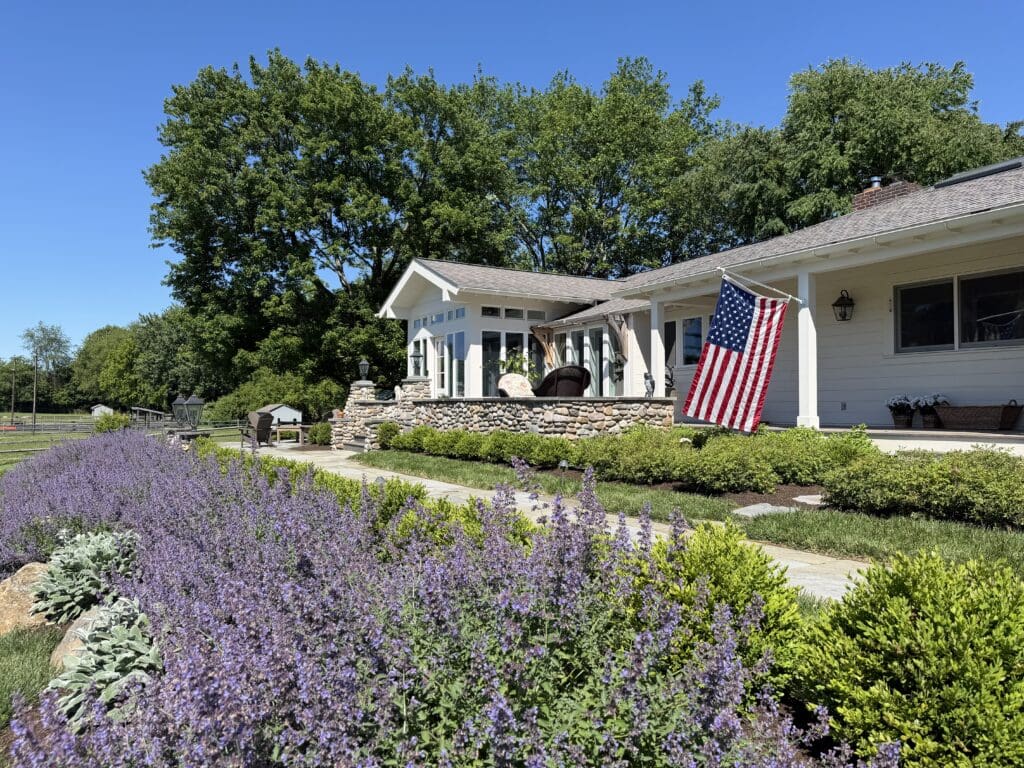
Friel says their niche is high-end full-scale residential projects that transition to maintenance contracts.
“We’re really good at making their dreams come true,” Friel says. “So, we’re really good at executing from start to finish.”
Previously, the company was known as VIP Landscaping, and Friel decided to rebrand the company this year to help them get away from the smaller projects that don’t work for the company anymore.
The business is named after the landscaping company his father started in the early 2000s in Colorado.
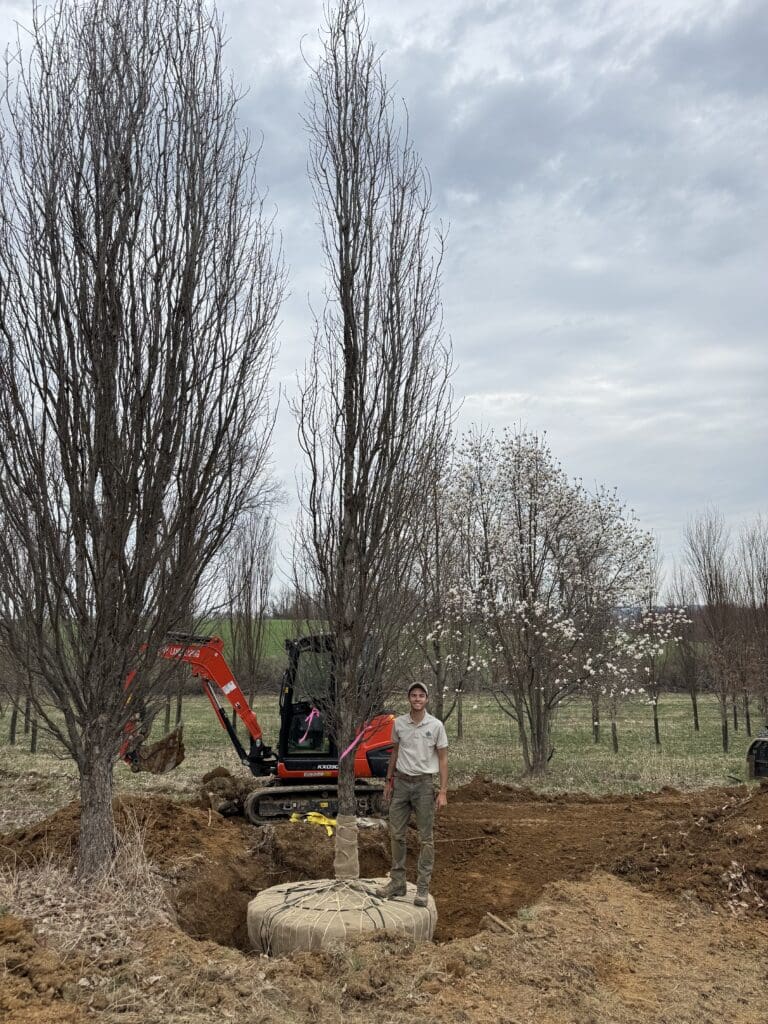
Another one of Blue River’s specialties is transplanting large caliper trees. Friel says this allows them to build and supply mature landscapes for clients.
“Maybe that tree doesn’t work in that spot anymore, but we’re going to continue to let that live somewhere else in the property and continue its legacy,” Friel says.
He says his team loves the challenge that this work presents, as no tree’s root structure is quite the same as the other.
The company also maintains a handful of commercial properties and does commercial snow removal. He says their commercial maintenance jobs come from their residential clients who specifically want them to handle a site.
Friel says they only bid on commercial snow work, which makes up 20-25% of their business.
Gathering Insights from the Family Business
Growing up, Friel’s father didn’t want him to have anything to do with the industry.
Friel’s grandfather and father immigrated in the 1970s from Ireland. After working on the Alaskan pipeline, Friel’s grandfather ended up moving to Pennsylvania and bought a small landscape company and started mowing lawns. Friel’s father helped with the business, but it never grew.
Friel says he learned from watching his grandfather struggle with his company what not to do. He says one of the main things he learned to avoid was not having a plan. He says his grandfather worked in the business rather than on it.
“We do our budgets multiple times a year,” Friel says. “We view them multiple times a year. We build out different scenarios as far as what could happen and possibilities as far as if we decided to do scale up to this or scale back or whatever it may be.”
When his grandfather put the business up for sale, and Friel tried to purchase it, his father told him if he wanted to get into this industry, he’d have to build a business himself.
Friel admits at first he was angry with his father for turning him down, as he wanted the security of having clientele to start with.
“That first year going into it (full-time) was very scary that we weren’t going to have enough work,” Friel says. “But we did, and I made it work. That proved to myself that I didn’t need that; I stepped out of my comfort zone. Now I look back, and I thank him for that, because I would have been stuck in that little bubble, whereas now everything’s self-built.”
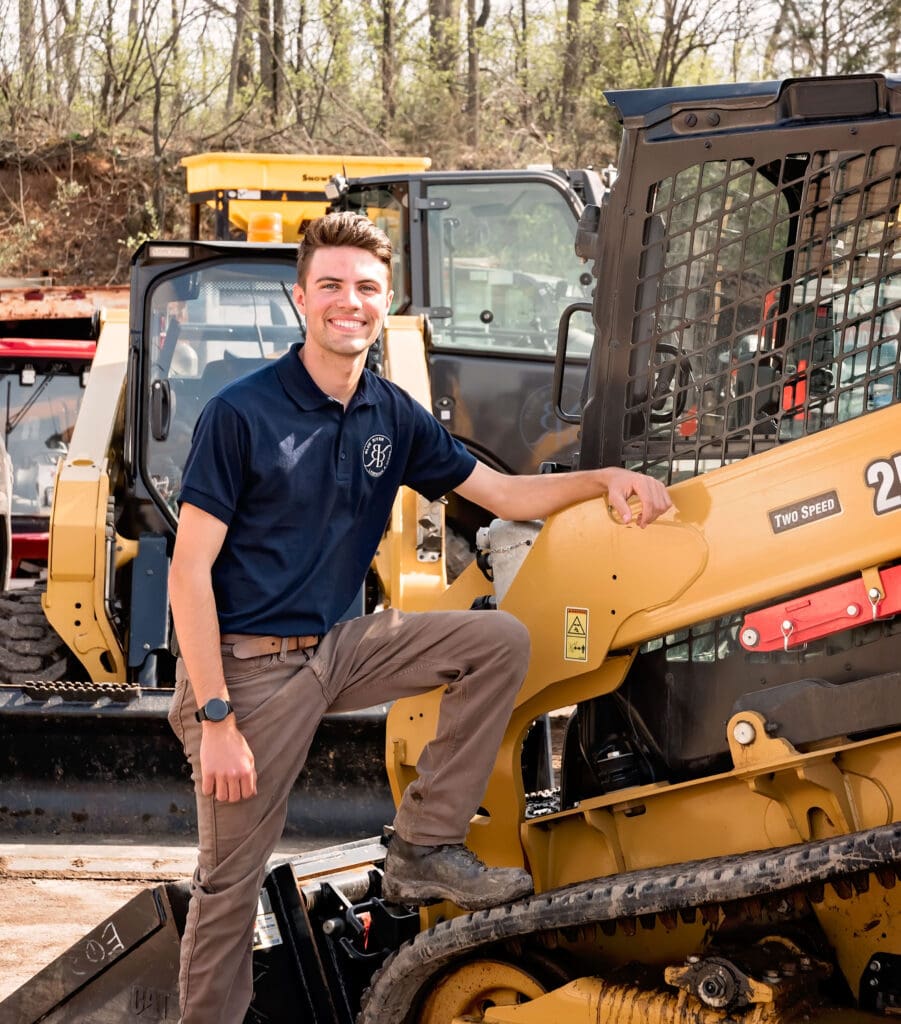
Another lesson that Friel learned from his grandfather was the cost of operating rundown equipment, which prompted him to run an equipment-heavy business.
“Some people have told me that’s stupid,” Friel says. “Other people spend $20,000 a month on fixing equipment. We may spend $20,000 a month on financing equipment. We have no downtime, though, so you take it in strides. There’s no right or wrong answer to any of these.”
Friel says they opt to replace their equipment every one to three years as he wants to avoid unnecessary breakdowns. They will conduct equity evaluations to see how much money they will either lose or make on the equipment.
“It’s just being able to find that fine line between what makes sense for the business, being able to afford these larger pieces of machinery and expensive new pieces of machinery,” Friel says.
Building a Tight Team
Another reason that Blue River is an equipment-heavy business is because Friel prioritizes his team members’ well-being. He says he wants to ensure he’s building a company where people are happy and excited about the next step.
“We want to make sure that our employees are not only happy, but they’re healthy,” Friel says. “That’s not only just from a safety standpoint, but that’s also from a longevity standpoint. We want the machines to do the heavy lifting.”
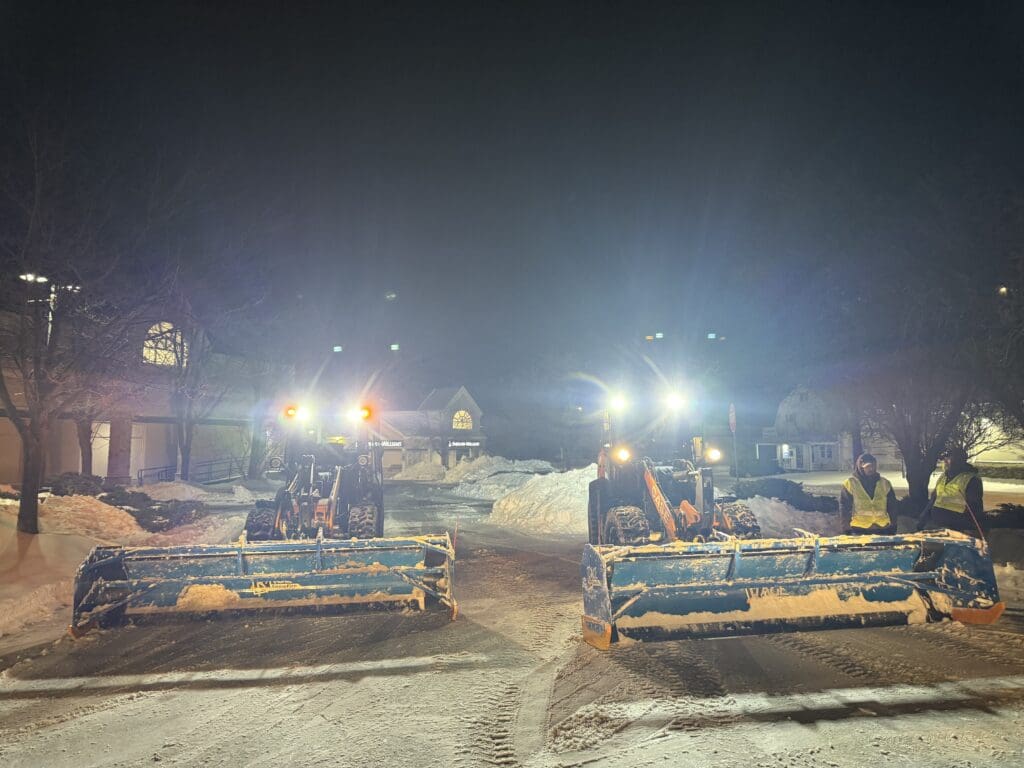
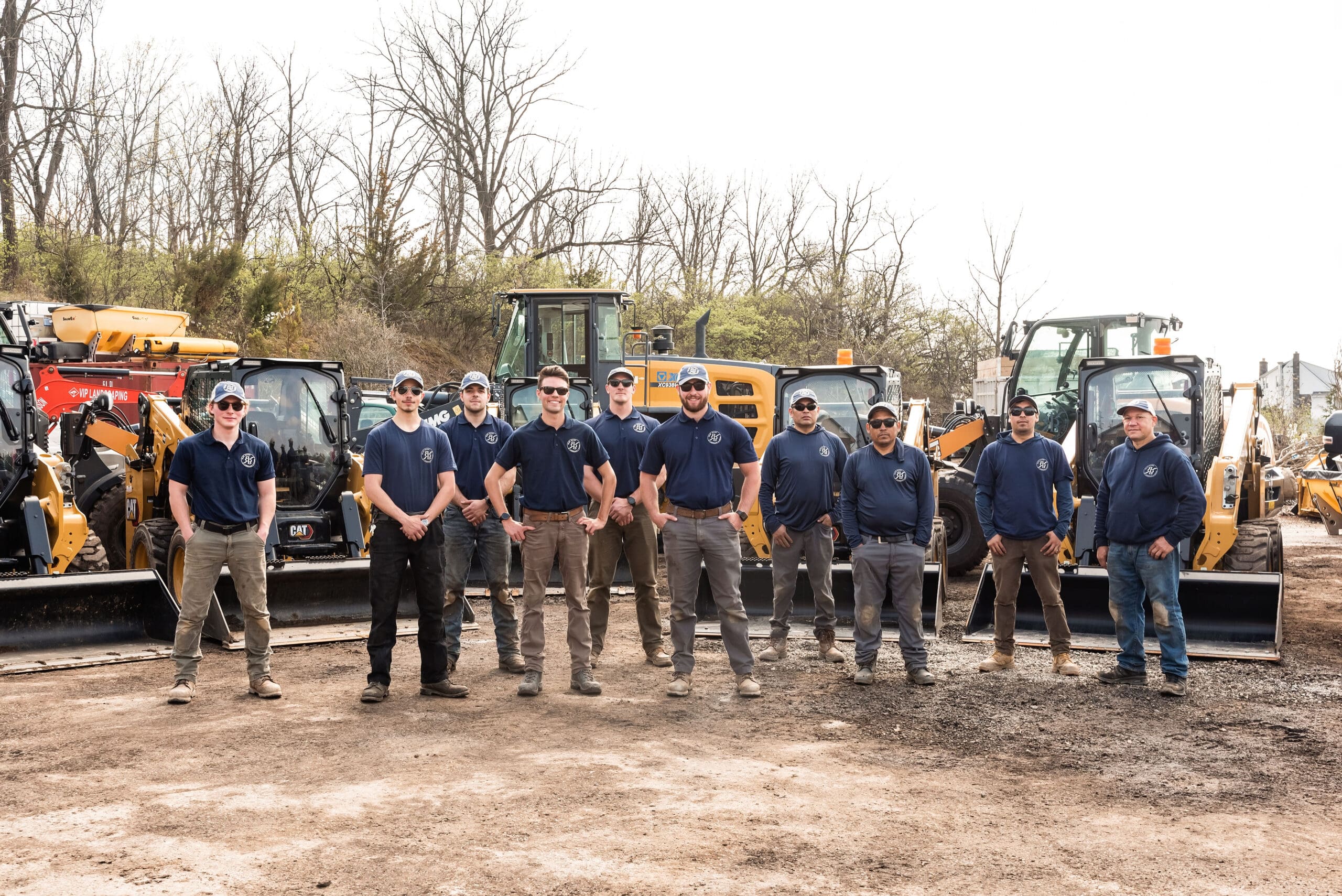
Friel’s three core employees have been with him from day one, and his current full-time staff is seven to eight employees, with 60-70 employees who help with the snow work. He says he’s not looking to have a ton of employees on staff, but to produce the best-quality work.
He says he retains his team members by treating them well and giving them trust and respect.
“Giving people the ability to try and fail and learn from that is the best way, in my opinion, to be able to grow the company,” Friel says. “People need to learn the way that they want to learn. Because if I’m teaching them a way that they don’t understand, and it doesn’t work for them, we’re going to butt heads and it’s never going to work.”
Friel says he’s close with his team and will discuss with them their goals to make sure they are all aligned and working as a team to get there.
“Everyone has their own their personal needs and wants, but I try and take that into account as a company owner and from there, build the company based on what my people want,” Friel says.
Friel says he doesn’t have a specific company size in mind, but he doesn’t want to become too large. He says if they could reach $20 to $25 million, they would be able to pay a great team a lot of money and still provide quality high-end residential design/build work.
“I say $25 million, tentatively,” Friel says. “I think with the team that we have, and if people are telling me, ‘Let’s push higher.’ Of course, we’re going to.”
Friel says he joined NALP because it is a prestigious organization and sees being an active member as the next step in his growth journey.
“I definitely want to win at least a couple NALP awards; that’s for sure in the next five years,” Friel says. “I see us potentially, at the end of five years, purchasing some land to build a shop and a nursery. Just having a great team that’s just knocking it out of the park with just gorgeous projects.”
Friel’s definition of success is for the company to be self-sustaining.
“My goal in the company is pretty much to not be there, but not only not be there, but when I’m not actually required to, I’m actually going to probably go back out and put myself back on a crew and be out in the field,” Friel says.
Friel says he always wants to talk to and know his clients, which is part of why he wants to be able to get back out in the field.
Showing a New Path to The Next Generation
Friel says that he wants to make a mark on the industry and raise awareness with high schoolers about the landscape trade.
“There’s more to life than just graduating high school and going to college,” Friel says. “That’s not the only path for students nowadays. I feel people think that’s just a rite of passage, and that’s just the only way to go. When my employees, they’re all 21, they have money saved, no debt, and they’re looking to buy houses.”
Friel encourages other young entrepreneurs to take time to learn the industry first.
“Don’t just come in and start cutting lawns,” Friel says. “Everyone can do that. Anyone and everyone can do that. Separate yourself out. Just take the time to learn the actual fundamental parts of the industry other than just cutting lawns and throwing down mulch. Learn the plant material.”