
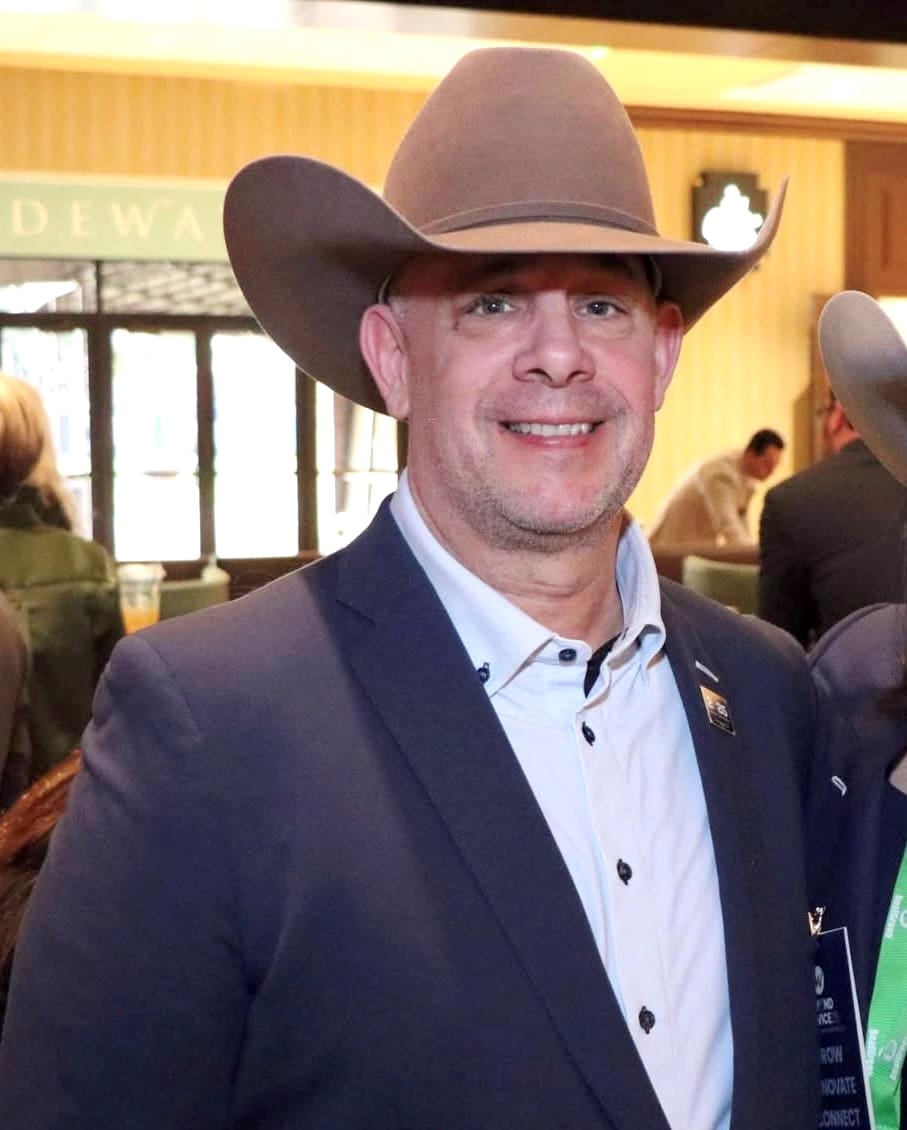
Advocacy doesn’t happen by accident. Mark Kelbacher, owner of MissionGreen Services, based in Chicopee, Massachusetts, discovered this firsthand when he realized that decisions being made at the state capital often lacked input from licensed professionals and were directly affecting how he was able to operate his business and serve customers.
“Rather than reacting after the fact, I felt it was important to be at the table before and offering practical insight from the field and helping lawmakers understand how policy plays out in the real world,” Kelbacher says.
MissionGreen provides lawn care and pest control services to customers in Massachusetts, as well as Rhode Island and Connecticut. One particular piece of legislation that stood out to Kelbacher was when Connecticut banned the application of all pesticides registered with the EPA and labeled for use on lawns, gardens, and ornamental sites, on the grounds of public or private daycares and schools with grades K-8 in 2010.
Kelbacher started getting involved in advocacy to prevent the expansion of this law to include K-12 schools.
Kelbacher says advocacy doesn’t need to be political. You know your business better than anyone else does, so you just need to be willing to speak up.
“Advocacy is really just simply telling your story and explaining how policies affect your work,” he says. “If we’re not speaking up, the opposition is.”
He has been involved in the Connecticut Environmental Council for the past 12-13 years and currently serves as the organization’s president. CTEC represents multiple parties, including the Connecticut Grounds Keepers Association, golf superintendents, nurseries and more. CTEC has served as the lead partner in holding the line against issues such as pesticide usage and the gas-to-electric transition.
Kelbacher also serves on NALP’s government affairs council and is part of NALP’s Advocacy Ambassador Program.
“The program provides structure, education and confidence for professionals who want to protect their industry and shape its future,” Kelbacher says.
Kelbacher says one of the benefits of the Advocacy Ambassador Program is the training it provides members on how to come to the table with legislators and provide factual talking points.
“Working with NALP has been instrumental in staying abreast on any new issues, not just in Connecticut, Massachusetts and Rhode Island, where we service, but nationwide,” Kelbacher says.
Making The Industry’s Voice Heard
As an advocate, Kelbacher helped defeat the CT House Bill 6263, which would’ve prohibited the use of handheld or backpack gas-powered leaf blowers in the state. He achieved this by engaging with legislators early on and explaining how the bill would impose new burdens without improving environmental concerns.
He is currently testifying against a similar bill, SB 319, which would prohibit the use of gas-powered leaf blowers on all state properties and ban the sale of gasoline-powered leaf blowers beginning in 2029 and a prohibition on their use beginning in 2030.
Another troublesome bill is HB 5155, which would require the Department of Energy and Environmental Protection to institute the use of modern technology and methodologies for the reporting of pesticide applications in the state and enable ready knowledge of where pesticides are being used, what pesticides are being used and the quantities of pesticides that are being used.
“Every customer that we service would be public, and our customers are our assets, so that’s huge for us,” Kelbacher says. “Then we would have to report every restricted-use product we apply every single day. That would mean that I have to hire more staff to do the administrative part of that when we already do reporting on an annual basis.”
In other cases, Kelbacher has been able to help find a compromise that would give business owners time to switch over to different products rather than an outright ban of neonics.
“It’s showing in that we are willing to come to the table,” Kelbacher says. “We ultimately want to do what’s best for the residents of Connecticut and the environment.”
Kelbacher also donates to the NALP-PAC fund, as access matters.
“The PAC helps ensure our industry has a seat at the table, whether it’s local or at a national level, and supports lawmakers who are willing to listen, learn and engage constructively with our profession,” Kelbacher says.
Kelbacher adds that being involved in advocacy has made him a better operator and leader.
“Advocacy has improved my understanding of regulations, strengthened my relationships with regulators, and really positioned my business as a responsible, informed stakeholder,” Kelbacher says. “It’s also helped protect our ability to use the proven tools that we use, whether they’re products or blowers.”
Going on the Offensive
Kelbacher stresses that the professionals who are out there doing the work every day need to be a part of the legislative conversations.
“It’s not opposing environmental protection; it’s really about making sure that policies actually achieve their intended goals, and without harming the professionals who are already doing it,” Kelbacher says.
At the state level, landscape professionals can build relationships with their local representatives. He says the key to establishing these relationships is to engage early, be respectful of their time and serve as a resource.
“Trust is built when lawmakers know you’ll provide honest, balanced information,” he says.
The time commitment for advocacy varies greatly. Kelbacher does admit that you have to carve out time for advocacy as he works to strike a balance between running the business, doing advocacy work and his personal life.
“Some months are busier than others, but after the sessions are all over, we’ll review how we did,” Kelbacher says. “We’ll grade ourselves. Were we able to achieve what we were looking for, and was it a win? What can we expect moving forward?”
Kelbacher says that recently, they have started planning two to three months ahead, so they are able to go on the offensive and focus on educating lawmakers.
He says once legislators understand the reality of how regulated and professional the industry already is, most misconceptions disappear.
He adds that real-world examples make a huge difference when explaining to lawmakers how a proposal affects businesses, employees, customers and municipalities.
Rather than getting defensive, Kelbacher says he puts himself in the opposition’s shoes and strives to provide factual information.
“Advocacy is about aligning environmental goals with tools and practices that are realistic, enforceable and backed by science,” Kelbacher says. “If our voices aren’t heard, somebody else’s voices will be heard.”
Ready to become an Advocacy Ambassador? Click here.
An abridged version of this article was published in the June/July/August issue of the magazine. To read more stories from The Edge magazine, click here to subscribe to the digital edition.