

If a picture is worth a thousand words, then a video is worth a million. Yet many landscape companies have yet to explore the possibilities of videography in their marketing efforts or are investing in ineffective formats.
“Video is a fast and proven path to connection,” says Corey Halstead, co-owner of HALSTEAD Media. “Whether the decision maker is a homeowner or a commercial property manager, they’re spending weeks and months learning who you are through your content. Video is the only format that can jump off the screen, stop the scroll, and make someone feel something. It tells the story, explains the ‘why,’ and creates goosebumps when it’s done well. Landscapes are often emotional purchases — video makes that emotion tangible.”
Katy Doss, founder and CEO of Script Marketing, adds that videos are key to building trust as humans want to connect with other humans.
“Video also helps you to explain things in such a greater depth than text and pictures do in our industry,” says Chad Diller, CEO of Landscape Leadership. “There’s a lot of explanation of stories and content and those sorts of things. But I think the biggest thing that video affords, and why it is such an important marketing tool, is it really engages people on an emotional level and helps to build trust in a deeper way.”
Creating a Compelling Message
Connecting with customers via video requires crafting a compelling message. There are several different formats that typically resonate with viewers, including case studies, brand storytelling and explainers.
“With a case study, it could be a commercial property manager,” Diller says. “It could be a design project, but it can also be case studies of people’s career growth. People feel very emotionally connected to somebody’s story. For instance, you can really harness what the family thought of their backyard before, and then what it was like to work with the company, and how they use it now, and how they accomplish their goal.”
Doss recommends structuring these videos in a way that they tell a story and make people put themselves in their shoes and think, “I want that.”
“Remember J. Peterman from Seinfeld, and how the J. Peterman catalog didn’t really describe the clothes, it told a story?” Doss says. “Be like J. Peterman. Talk about how the space is used, how it impacted clients’ lives – that helps people envision themselves in a similar space.”
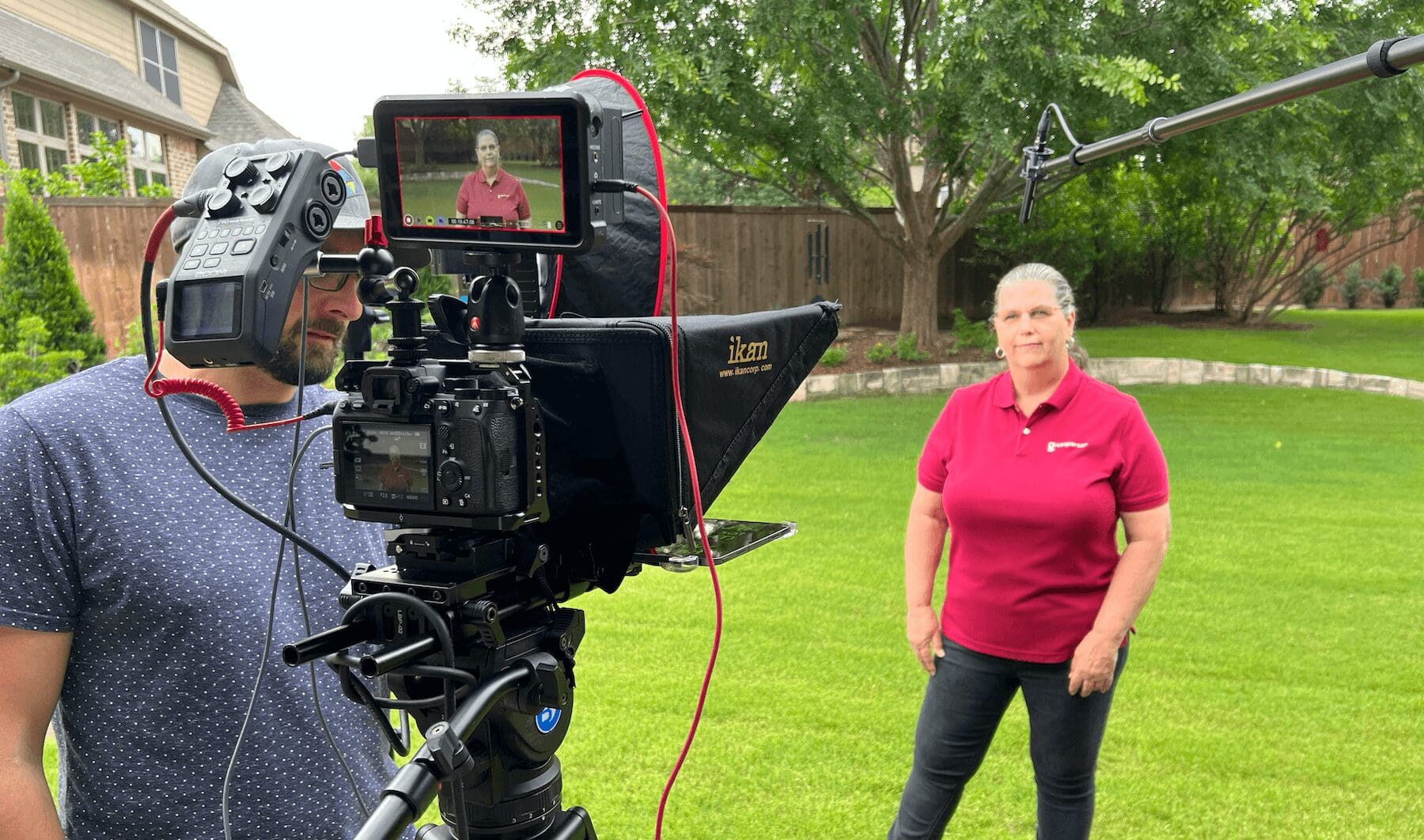
Halstead says for brand-level storytelling, hiring a professional team helps ensure the narrative and positioning are executed correctly.
Diller says explainer videos are useful because often leads are trying to make decisions and understand how things work. These could be anything from what a consultation process looks like for your company to the different types of commercial snow contracts available.
“It really depends on the strategy,” Diller says. “What’s the purpose of this video? Is this video meant to make someone aware of us, or is this video meant to drive deeper engagement of people who already do know us?”
Halstead agrees the best way to avoid creating generic videos is to tie each one to the overall growth strategy, the ideal customer profile, and the specific stage of the marketing funnel.
“Videos become generic when they’re created without strategic purpose,” Halstead says. “When footage is produced with a clear understanding of how it will be used, who it’s for, and what message it needs to communicate, it becomes far more compelling.”
Doss notes showing your personality is one way you can help your videos stand out.
“If you’re funny, if you’re sarcastic, if you’re a plant nerd – show it,” Doss says. “Even posting the bloopers will help connect you with your ideal clients. Talk about the problems you solved. Not ‘We created a beautiful outdoor space,’ but ‘We gave this family a place to be together outside.’”
When it comes to incorporating humor into your videos, Diller says it is an excellent way to seem more approachable as a brand. He encourages committing to figuring out your style of humor and finding the right balance.

“I wish brands would do it more often, just because I feel like in our industry, we take ourselves way too seriously,” Diller says. “Maybe you’re dealing with affluent people who own a $5 million house, but it doesn’t mean you can’t have some subtle humor into it. You can be funny without being an idiot.”
Halstead agrees that when used in the right context, humor can work well. You do need to be mindful of your audience and not harm your credibility.
“Ultimately, people are people — even commercial decision makers,” Halstead says. “If humor is authentic, on-brand, and executed tastefully, it can be an effective pattern interrupt. Problem is, often it comes across a bit cheesy when forced. There’s a risk there for sure.”
Doss says they incorporate humor in all of their ad videos and have received a lot of positive feedback.
“Don’t try to overdo it, though – a smidge of self-deprecating humor or universal truths (you’re going to kill some plants – it’s OK) will take you a long way,” Doss says.
Reasons Why Videos Fail
If you’ve dabbled in videos before but haven’t seen them move the needle, it could be that your videography is guilty of several common mistakes.
Halstead recommends steering clear of anything that feels canned or interchangeable with others in the industry, like ‘We think we’re the best.’
“Videos that brag about brands and how wonderful they are, people don’t want to hear that crap,” Diller says. “They don’t like being sold to. They don’t like cheesy marketing commercials. They want it to be about them as the viewer, not about you as the company producing it. That’s the number one failure.”
Diller says while it’s okay to look up to other brands, it’s critical not to mimic what everyone else is doing with their videography.
Another frequent misstep is lacking a narrative in the video at all. Halstead says that videos without a story almost always fall flat. He says stitching together random clips with no narrative results in content that looks generic and forgettable.
Doss adds you shouldn’t get too technical when talking about plant or hardscaping materials.
“You’re talking to regular homeowners, not fellow landscaping professionals,” she says.
Diller and Halstead say another error in videography is producing something that is low quality with poor lighting or sound.
Landscape companies should also make sure they are producing videos with a plan and understand how they fit within the larger marketing system. Diller recommends not trying to accomplish too much in a single video.
“I’ve watched company videos, and they’re talking about their history, they’re talking about their core values, they’re talking about the customers they serve, they’re talking about all these things,” Diller says. “Don’t feel like you can’t create other videos. Stop trying to do so much in one.”
Diller notes that many landscape companies fail to utilize their videos to their full potential. He encourages companies to view videos as reusable assets they own. These videos can be used in far more places than just the website, including social media and in emails.
“They’re like ‘We posted it on social last year,’” Diller says. “Well, it doesn’t mean you can’t post on social this year. People aren’t going to remember what you posted. They have to look at their video collaterals as reusable assets. It’s like I bought this piece of equipment, we used it on two jobs, and now it sits there. Look at your video that way. How can we get this thing out? How can we use it more often? How can we use it in different ways?”
Key Takeaways
- Video builds trust faster than photos or text because it shows real people, personality and emotion, which is key for both homeowners and commercial decision makers.
- The best-performing videos are story-driven and make the viewer the hero — not the company.
- Have a strategy before creating your videos. Avoid “we’re the best” claims or random clip montages, and treat your videos as reusable assets.