
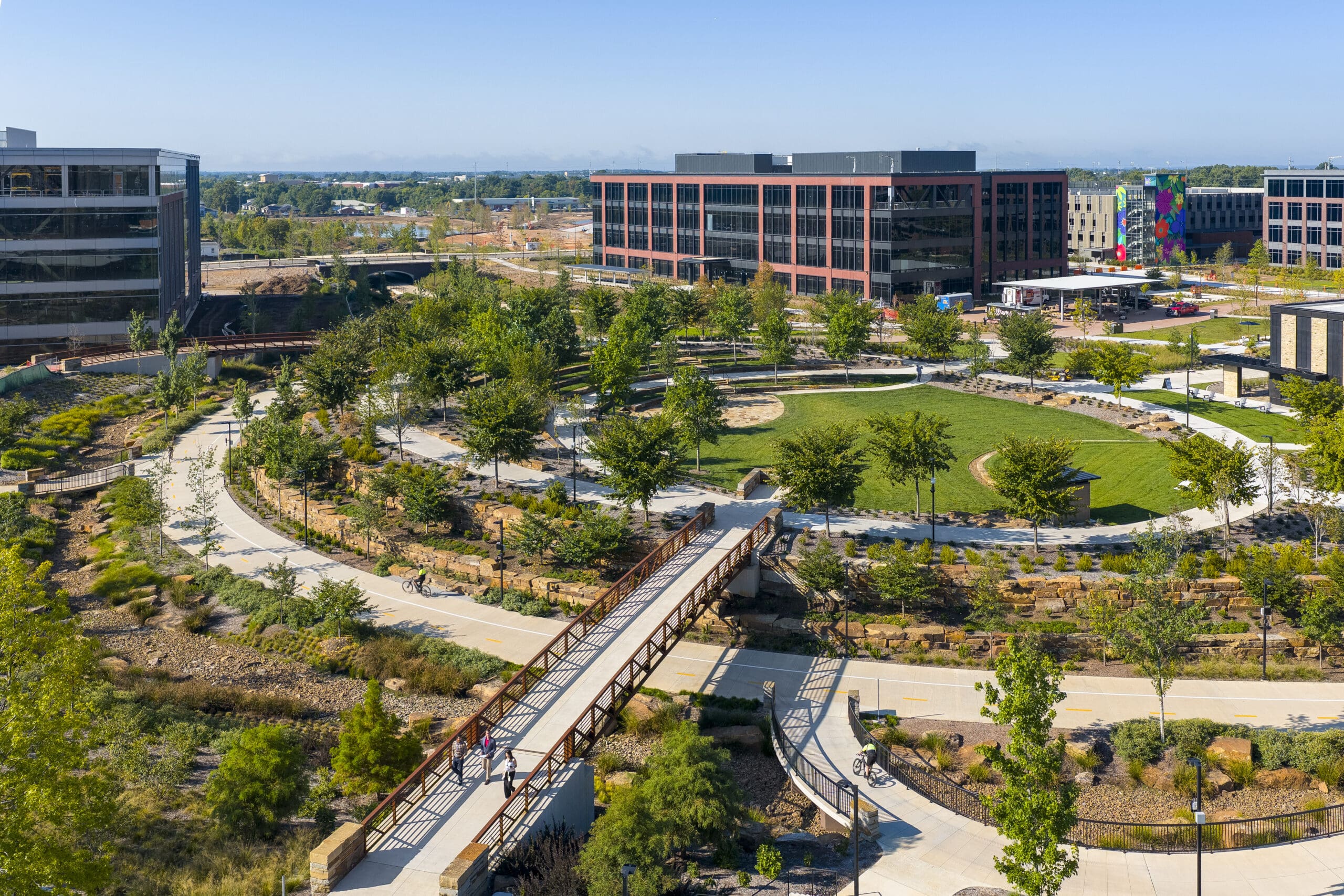
When Walmart decided to create a new headquarters, the scale of the project was like building a city from the ground up. The new home office features 12 office buildings as well as a number of amenity buildings spread across more than 400 acres.
Clay Bakker, director of landscape for Walmart, says the company emphasized listening to associates to determine which amenities truly mattered most.
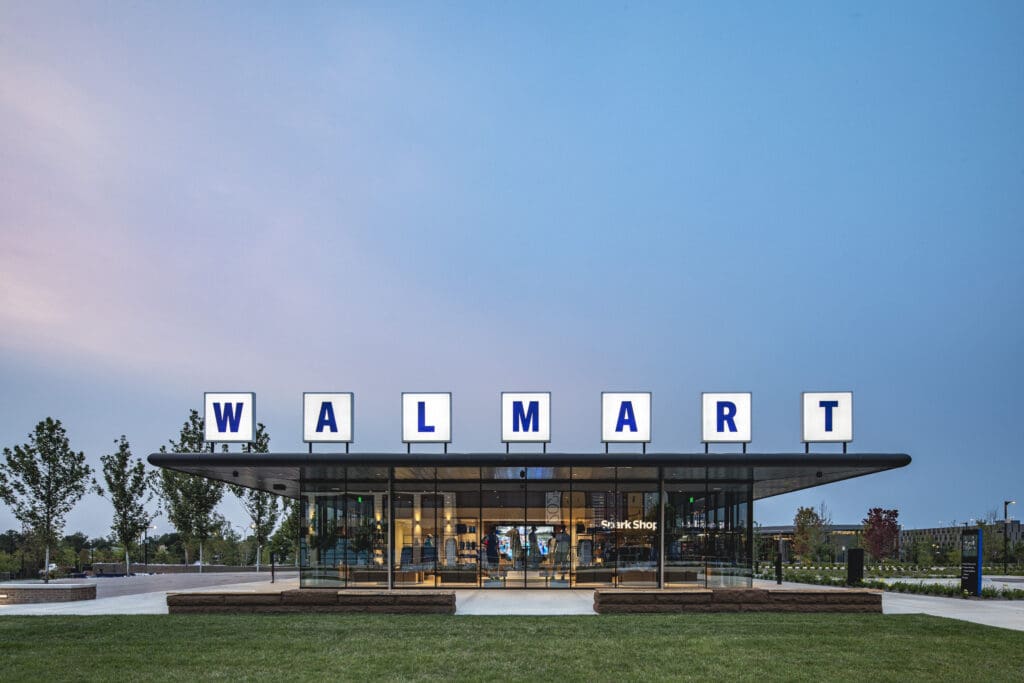
Walmart’s home office is a commitment to associates’ personal well-being and provides quality-of-life benefits such as on-campus child care, a fitness center and a food hall with diverse options. The campus also serves as a model for sustainability and community integration.
“This is where the landscape comes into that picture as well,” Bakker says. “Because I think one thing that’s prevalently understood is that human beings’ connection to nature is a very fulfilling experience. We had areas in between these buildings and amenity spaces, and why wouldn’t we give people that connection to nature?”
Brooke Garcia, senior manager of landscape operations for Walmart, adds that 50% of the campus is dedicated to natural space. This was an intentional design choice.
Unlike many other corporate campuses, Walmart’s home office is open to the public.
“There’s a seamless integration between the community and the greater northwest Arkansas ecological system,” Garcia says.
For instance, Walmart’s bike trails connect to the Razorback Greenway, which is a 40-mile trail that runs from Bella Vista to Fayetteville.
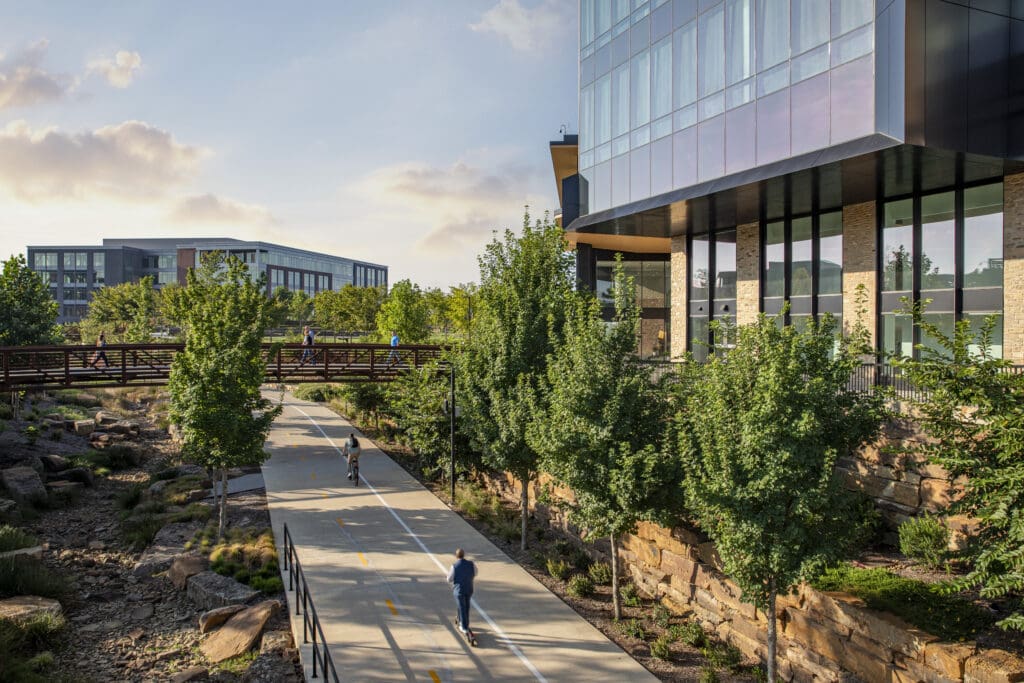
“I think this campus really reflects, in many ways, what Walmart means to the community and what it is capable of on a larger scale as well,” Bakker says.
Bakker says another benefit of the new home office campus is that it brings together and fulfills the needs of 15,000 associates.
“Community is at the heart of our culture,” Bakker says. “It’s a great place to bring everybody together. We maximize our ability to generate ideas when we’re together.”
Throughout the campus, intentional placemaking elements, such as art installations, have been included to tell the Walmart story and carry forward their culture, heritage and core values. Garcia says the team worked with the artists and design associates to bring these installations to life by surrounding them with nature and greenery.
Another space designed for gathering is the Helen Walton outdoor amphitheater, where different teams can hold everything from large events to informal gatherings. This space includes over 60 dogwood trees, Helen’s favorite tree, and was inspired by the Walton family home and yard, where early company picnics were held.
“It had to feel like home, and Bentonville is home to Walmart,” Garcia says.
Taking a Phased Approach
Walmart worked with landscape architecture firm SWA on the design. SWA was chosen for having a strong commitment to sustainability, ecological stewardship and creating connectivity in their design.
Construction started in 2019, and the first landscapes were installed around the central utility plants three years ago. Due to the complex, phased nature of the installation, multiple landscape firms contributed to the various stages of the project. The project was broken down into five zones, each managed by a general contractor.
Bakker recommends landscape companies interested in working on large-scale projects like this understand their limits and not get too far over their head.
“When you are capable, communicate, communicate, communicate,” Bakker says. “That’s key, and like any gigantic project, take it one step at a time and look ahead thoughtfully.”
Garcia notes that one of Walmart’s core values is ‘act with integrity’ and they greatly appreciated the honest conversations with landscape contractors who would let the design team know when a certain plant or tree wasn’t going to thrive.
“Honest, open feedback and communication and collaboration are so helpful on projects of this scale; it’s helpful to have a landscape company in your corner advocating for the quality of the job,” Garcia says.
Garcia says the biggest challenge was balancing an active construction timeline and deliverables with the weather and seasons. Over the past few years, they’ve had to address the effects of wet springs, droughts, and hard freezes on plant material.
“Certainly, we’ve had some challenges with plant health and tree health,” Garcia says. “Installing trees in the middle of the summer is not ideal, but we had to meet deadlines.”
Garcia says establishing meadows from scratch is another challenge for them. Over 750,000 plants were installed throughout the campus, and 200,000 to 300,000 of them are ornamental grasses.
“We bought a lot of species from a good part of the United States in some cases,” Bakker says.
The plant palette also makes a nod to Walmart’s branding with white, yellow, blue and lavender tones.
“It’s a great mix of flowering perennials and grasses,” Garcia says. “We get a lot of texture and color from this plant material.”
Additionally, over 5,000 trees were installed. More than 40 mature trees were also preserved and moved around on the site, giving the property a more established feel.
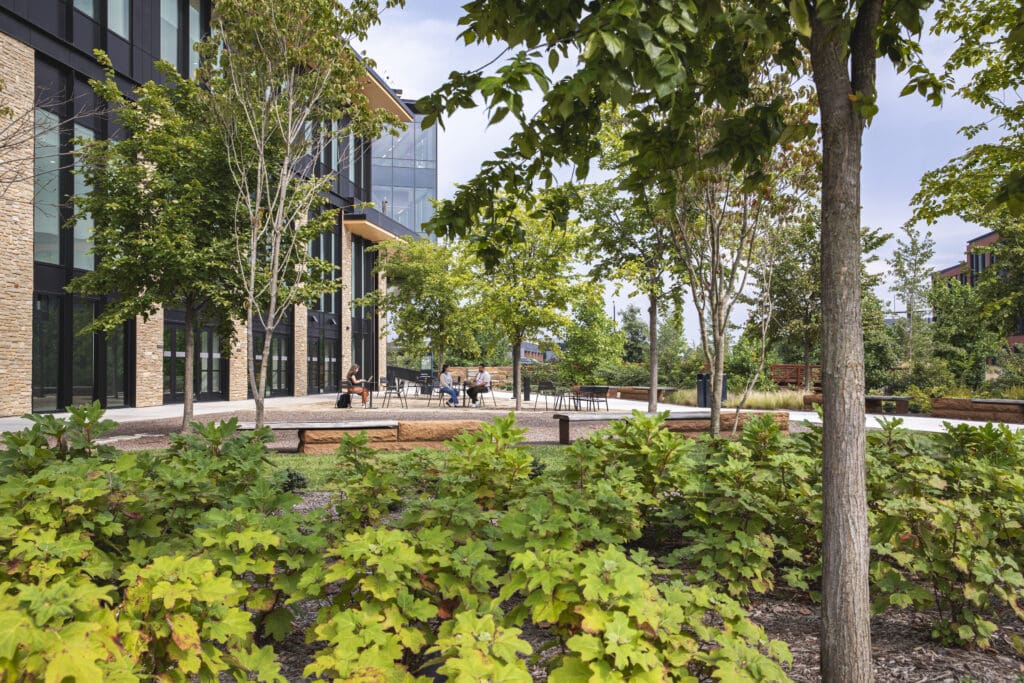
“Trees are a great way to carry out the northwest Arkansas feeling, that feeling of the Ozarks,” Garcia says. “When I think about the Ozarks and this region as a whole, I think trees. That was one of the first conceptual sketches for the campus that came to life as a nod to this region.”
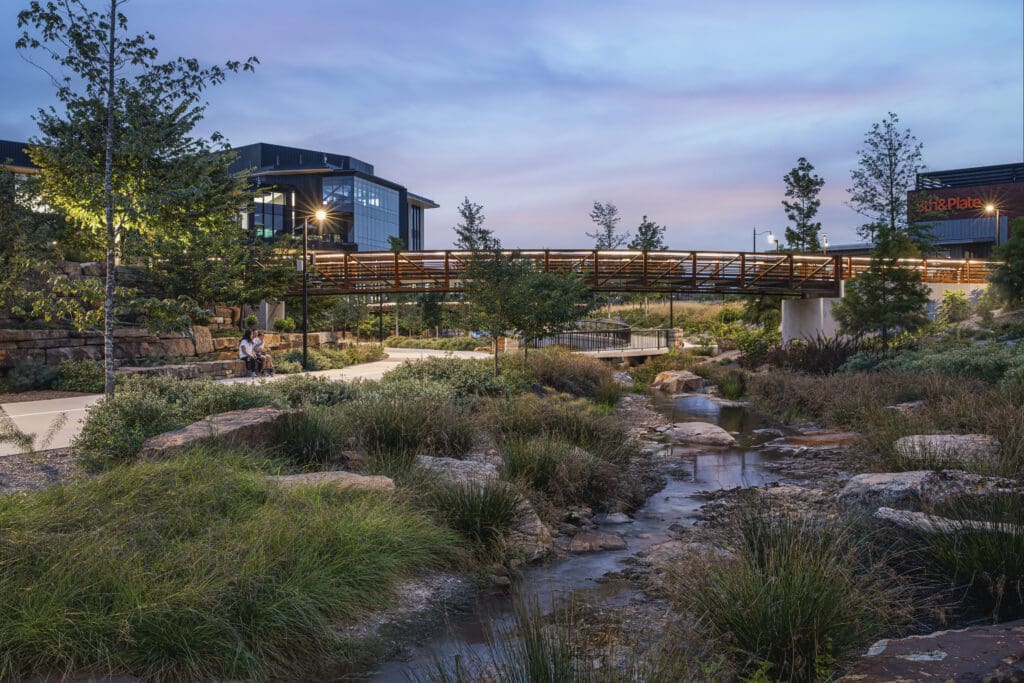
The home office campus also has 2,000 irrigation zones, which are supported by 13 acres of ponds on site that can provide up to 52 million gallons of water. Bakker says they designed their stormwater management system as a closed loop, capturing runoff from their impermeable surfaces on campus.
“We don’t just shed this water away from us for another community or another part of nature to deal with,” Bakker says. “We catch it, we harness it, we reuse it.”
Once a landscape contractor completed an entire zone, Walmart then took over the full-time maintenance of the landscape.
“It’s special that the landscape team is embedded in Walmart, and it’s internal,” Garcia says. “We get to storytell and share the workplace experience in that way.”
Bakker and Garcia are still fine-tuning the size of their maintenance team to meet the demands of the campus. As part of their commitment to sustainability, they are also utilizing autonomous mowers and all-electric equipment to care for this site.
“The goal is to be a steward of nature,” Garcia says. “As we go forward over the next several years, it’s nurturing the landscape design and making sure we’re staying consistent with the original intent.”
This article was published in the June/July/August issue of the magazine. To read more stories from The Edge magazine, click here to subscribe to the digital edition.