

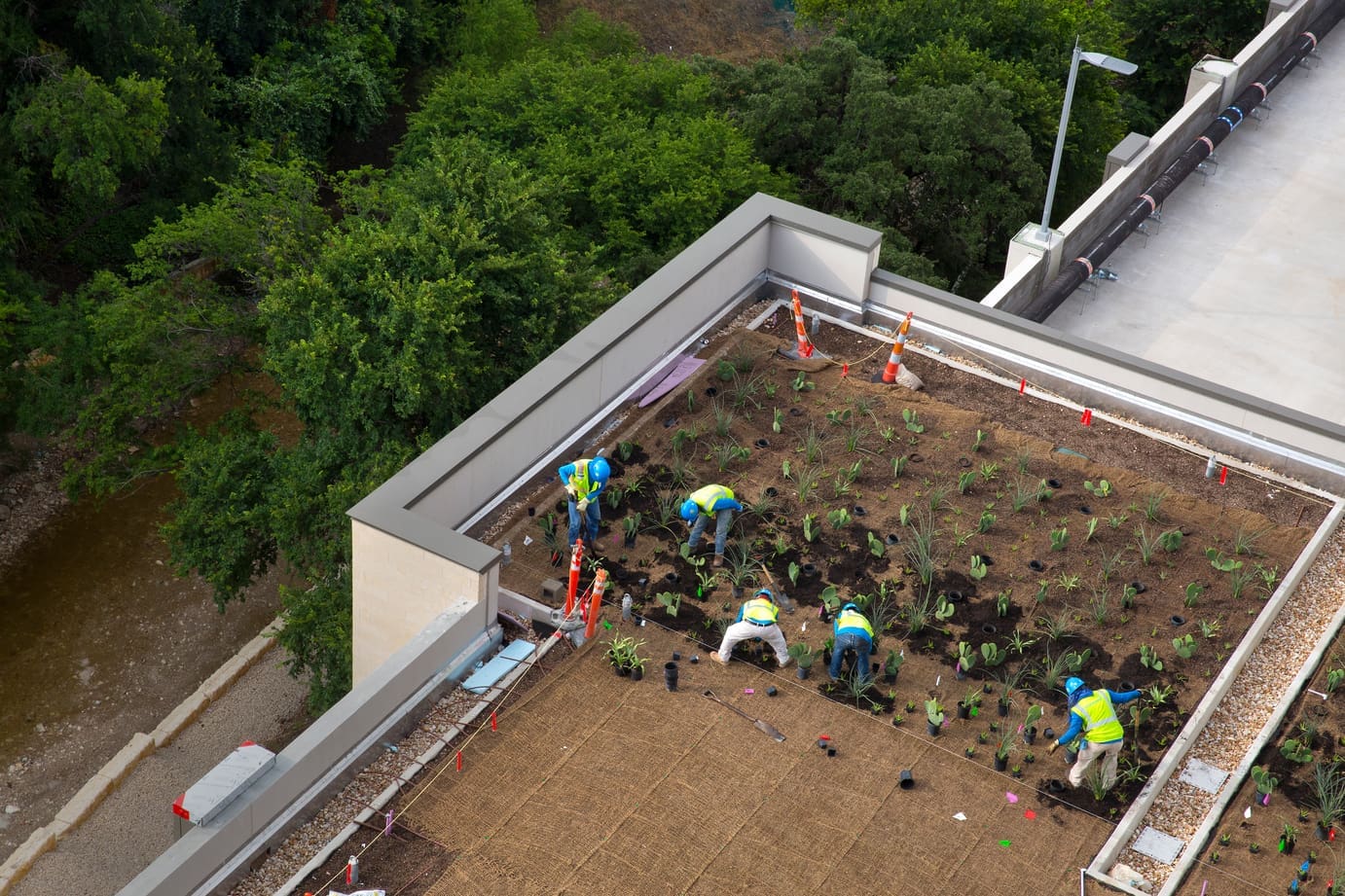
If you’re looking to differentiate your business, green roofs are a sustainable niche offering that offers high-visibility projects to your business.
However, it’s also important to consider key factors such as market demand and the complexity of these installations before adding this offering to your service lines.
Is the Demand for Green Roofs Waxing or Waning?
The demand for green roofs varies greatly by market, so before diving in, first research the common drivers in your area.
The benefits of green roofs include stormwater management, carbon sequestration, energy efficiency, and habitat creation. Because of these environmental benefits, green roofs are a common feature used for those seeking LEED certification.
Alex Fransen, owner of Fransen Group, based in Louisville, Kentucky, says 10 to 20 years ago, LEED certifications were huge in his area, but over the past five to eight years, there’s been less demand for them.
“I think the process of becoming LEED got so expensive that a lot of people just stopped doing that,” Fransen says.
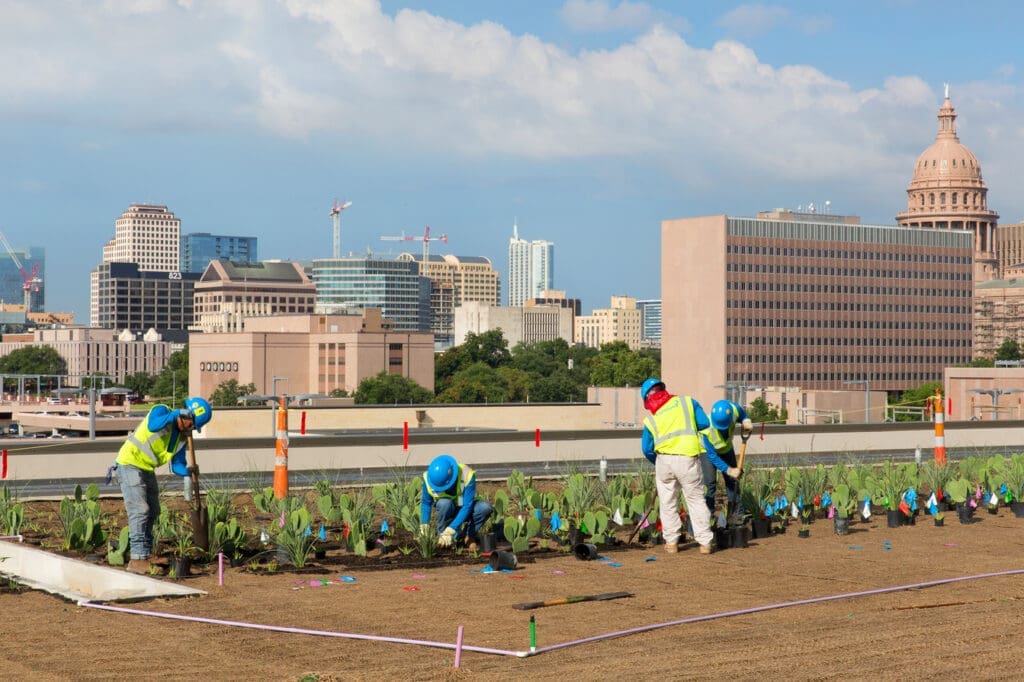
Fransen notes that, in his region, green roofs are typically value-engineered out of buildings as clients try to cut costs at the end of the project.
However, BrightView, headquartered in Blue Bell, Pennsylvania, has seen the demand for green roofs holding steady, with most newly designed urban buildings having an outdoor amenity space in some capacity.
“Architects are utilizing and optimizing these spaces more frequently now to create outdoor spaces that in the past were just rooftops,” says John Reiter, a maintenance account manager with BrightView.
Reiter adds that aside from seeking LEED certification, they have some clients in urban areas who are opting for green roofs to provide green space for high-rise communities.
“We’ve done several hospitals to have therapeutic space for people who may not be able to go outside of the hospital, but can be on a roof plaza area or a confined area that they can be outside, and they can be around nature, which may help their healing, or at least make their stay a little bit better,” Fransen says. “That’s a huge benefit.”
Ed Bailey, owner and director of Rewild Landscapes Ltd, based in Leeds, England, notes that in the U.K., interest in green roofs has been increasing lately, but motivations have evolved.
“While certification schemes can play a role, many clients are now more interested in biodiversity, sustainability and the long-term environmental impact of their projects,” Bailey says.
Installation Realities
Because of the complex nature of green roofs, they often require close coordination with other trades, such as roofing companies. Fransen says in their case, they let the roofer handle the roofing portion, and then they take care of everything on top of it, including the drainage structure, soils, irrigation, plantings, lighting and hardscaping.
Reiter notes that initial underlayment is a roofing expertise, but understanding general roofing and engineering of roofs is beneficial to understanding what can be done and what cannot be done for a green roof.
Logistical challenges such as handling traffic control, minimizing tenant disruption, and addressing limited access are all common hurdles to green roof installation.

“It’s very intensive and expensive because you have cranes sitting out there for weeks just lifting material up to this rooftop, and the crane renewals are very expensive,” Fransen says.
Fransen says that for commercial properties that are still being built, they can rent the cranes on site by the hour to get all the necessary materials on the roof.
Installation requirements will vary significantly depending on the building and access.
“In many cases, logistics such as lifting materials and site constraints can have a significant impact on how the project is delivered,” Bailey says.
Other cost drivers for green roof installations include planters, soils, foam, labor, lifting, irrigation, and decking/pavers.
“However, there is also a design decision around whether the system is being engineered for immediate visual effect or long-term resilience, which can influence both installation and maintenance costs,” Bailey says.
Advice for Others
With these construction-heavy projects, there is a very low tolerance for error.
Fransen encourages other landscape contractors to do their research and team up with a manufacturer to gain expertise. He also recommends taking advantage of the training resources from OSHA and Green Roofs for Healthier Cities.
“For landscape companies considering green roofs, the key is to approach them as a distinct discipline rather than an extension of traditional landscaping,” Bailey says. “Understanding ecological processes, working closely with structural and technical specialists, as well as focusing on long-term performance rather than short-term appearance, are all critical.”
Bailey adds that there is a significant opportunity to move beyond standardized systems for green roofs and develop approaches that are better suited to local conditions and biodiversity goals.
Reiter agrees that knowing which plant materials work and which don’t plays a major role in the success of a green roof.
“It’s critical that you understand how green roofs work and how to maintain them,” Reiter says. “Most clients do not understand the full scope of a green roof and simply look at benefits of LEED certification and it being a need for them. The maintenance that goes with it needs to be understood.”