

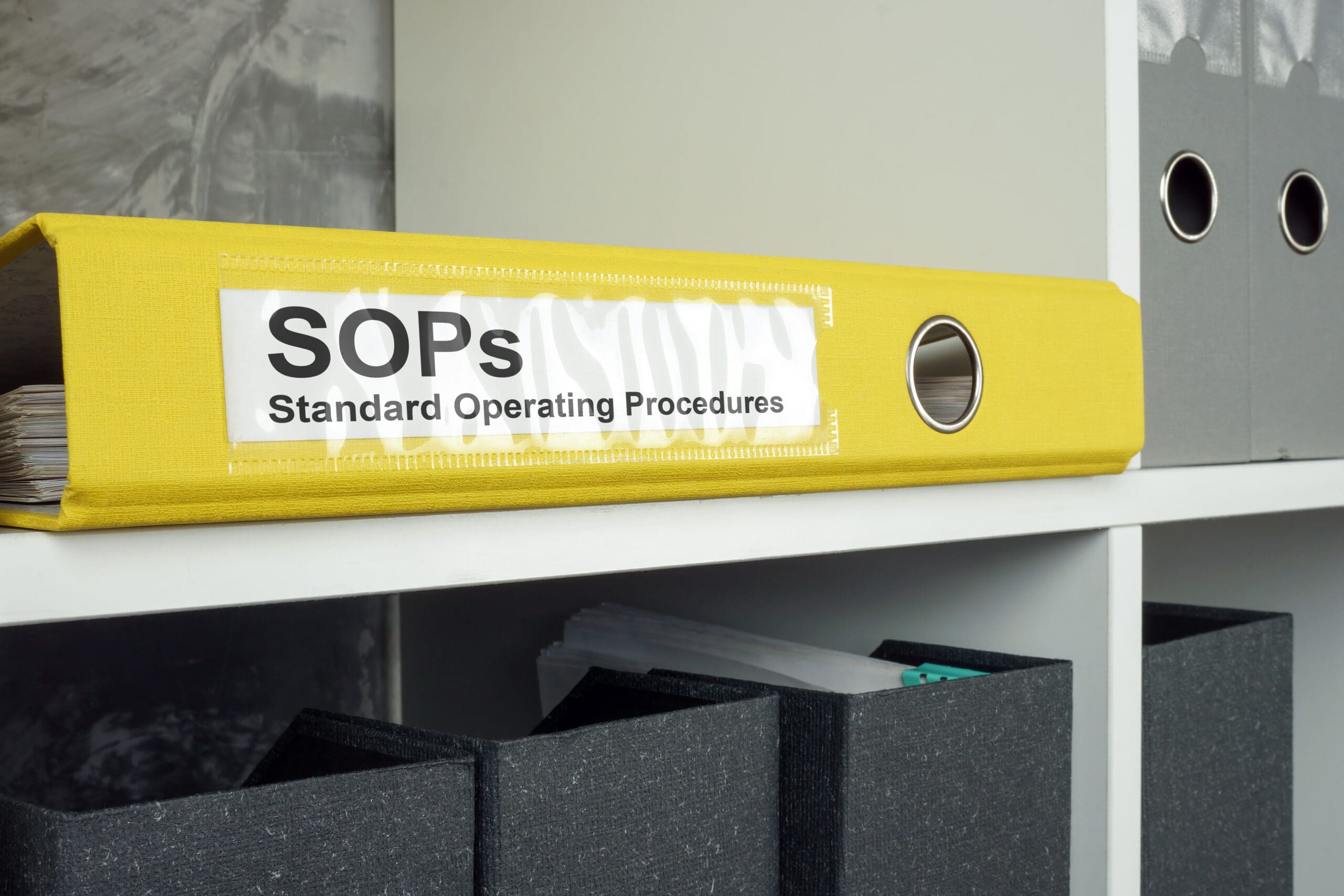
Having standard operating procedures in place from the start can help your company continue to grow rapidly, as every new team member you bring on is on the same page with the rest of your staff.
Without detailed and clear SOPs, everyone will have different approaches to certain tasks. While some methods may reach the same result, they might not be the safest or most efficient option available.
The Benefits of SOPs
SOPs can be implemented everywhere, from how crews get ready to roll out in the morning to how a request for an estimate should be handled. Having systems in place allows your business to scale much more easily, as you can begin to delegate more often.
Written operating procedures are particularly beneficial because they set clear expectations on how you want team members to perform. It also helps with onboarding new hires as they have a resource to turn to if they’re uncertain about how to approach a certain task.
When you have SOPs, you can achieve consistency in your work quality, ensuring that no matter which crew goes out to a job site, clients will experience the same level of service. As you grow and show you can produce predictable, high-quality results time and time again, your clients’ trust in your abilities will only grow.
Outlining exactly how a job should be tackled with SOPs also reduces wasted time and guesswork. Without a specific job sequence, your crews may not be considering the most efficient way to care for a site.
Crafting your own operating procedures also ensures employees know how to safely operate equipment on a jobsite and meet OSHA regulations.
Creating SOPs for Your Company
The purpose of SOPs is to provide a straightforward guide on how to create a repeatable, quality outcome. Think through which areas of the business are repeated the most and what processes affect quality, customer satisfaction or safety.
For instance, if you operate a landscape maintenance company, you should have SOPs for how your crews should mow, prune and fertilize. You should also have SOPs for what order they should complete their tasks when they arrive on a property, such as greeting the client if they’re on site before starting their work.
Work with your team to develop your company’s preferred method for any given task. They can review these guides for accuracy and practicality. By involving your managers and foremen from the start, they are invested in the adoption and long-term success of these guidelines.
Decide how you want to format your procedures. Depending on the task, how many steps, and whether multiple decisions need to be made, will determine which is the most helpful format.
For instance, if you have a procedure with more than 10 steps and many decisions involved, utilize a flowchart. Long procedures with few choices work well for hierarchical steps or a graphic, while procedures with few steps and decisions can use a simple step format.
Write your SOPs with the end user in mind and make sure you break down the task into a series of brief steps and possibly more detailed substeps, if necessary. Include photos, diagrams or videos to help convey your preferred process.
Be mindful of the words used in your SOPs. Strive to use action-oriented words that don’t require interpretation. Avoid ambiguous terms such as ‘typical’ or ‘general’ as they don’t provide consistent direction. Additionally, use ‘may’ in situations where you are giving an employee flexibility depending on the situation. ‘Must’ is for mandatory steps.
If there are any terms that a new hire may not be familiar with, include a definition section in your SOP. While something may be common knowledge to you, it doesn’t mean it is obvious for a person new to the industry.
Because the majority of your team will be out working in the field, make your SOPs easily accessible with laminated cards or digital versions, so they can easily reference them during the day. Also, consider creating Spanish-language versions of your SOPs to avoid misunderstandings with Hispanic workers following these manuals.
Integrating SOPs Into Daily Workflows
After going through the effort of documenting your SOPs, it’s critical that these procedures are actually implemented in your day-to-day.
One option is to launch these new procedures during your spring kickoff when everyone is preparing for the new year. They can also be trickled out in workshops or tailgate trainings. Incorporating them into your onboarding process will ensure new hires know from the start how to do certain tasks.
Crew leaders and supervisors should reinforce these practices through accountability.
It’s also important to regularly measure your SOPs and see if they are driving the behaviors you’re seeking.
For instance, if you’ve created a morning rollout SOP with the goal of getting your trucks out of the yard by 7:30 a.m., you still have to inspect what you expect. Monitor how many trucks are leaving on time versus those that are late to leave. Praising and recognizing those who are following the SOP can quickly become a point of pride and encourage others to follow suit.
Also, talk to your team to make sure the procedures make sense and if there are any improvements that can be made. Never be afraid to fine-tune your SOPs.
