As urban spaces grow, so do impermeable surfaces. This, in turn, causes an increase in stormwater runoff, which collects pollutants and makes its way into waterways. However, thoughtfully-designed landscapes can play a vital role in keeping rainwater on site, reducing water pollution, flooding and erosion.
When clients seek your expertise, consider incorporating some of these various stormwater management strategies into your projects to mitigate this issue.
Bioswales
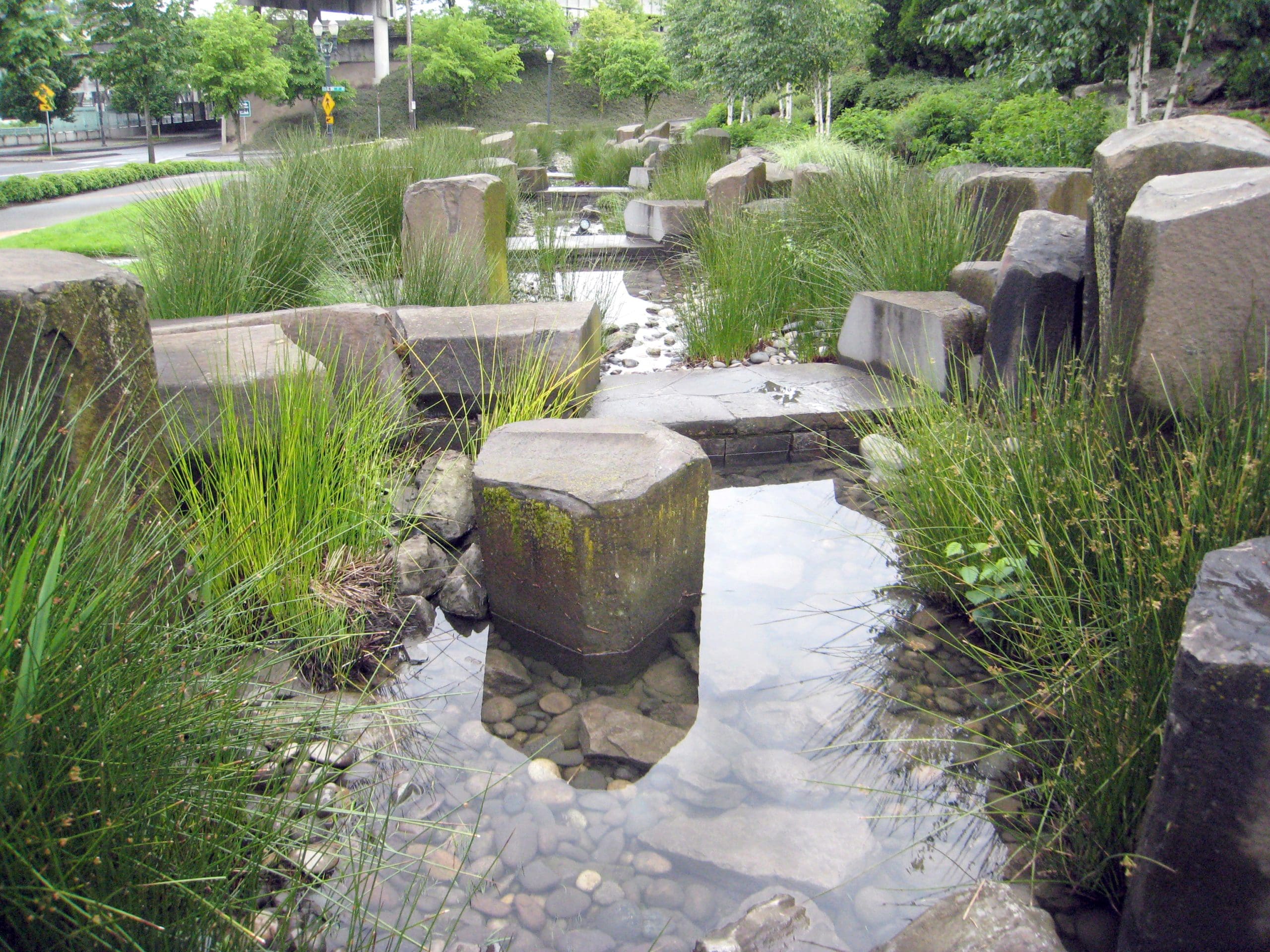
Bioswales are a curved channel that conveys runoff from roads, roofs or parking lots. By mimicking natural hydrology, they filter the pollutants from the stormwater and help prevent erosion. They can also provide more aesthetic appeal than a traditional stormwater detention basin.

Selecting the proper soil type and plant material helps ensure the bioswale functions properly. Check with local agencies that manage storm sewers and waterways, as the regulations can vary.
When designing the bioswale, ensure the soil infiltration rate is half an inch per hour or greater. If the soil is clay-like, underdrains may be necessary. A good rule of thumb is for the bioswale to be at least one percent of the size of the area draining into it. It should also have a high-flow bypass or overflow outlet in the case of large stormwater events.
The plant material should naturally thrive in drainage areas, tolerate both very wet and very dry conditions, and feature a deep root system.
Bioswales are not suitable for spaces with flat grades where water can’t flow or where there are low infiltration rates and high-water tables.
Rain Gardens
Contrary to popular belief, rain gardens are not synonymous with bioswales. They serve to increase infiltration and do not have an outlet to convey the runoff outside the garden’s borders.
Rain gardens are shallow, sunken areas that filter rainwater through a mixture of soil, sand or gravel and the space is filled with plants to help serve as a natural filter. Rain gardens can also be a beautiful addition to yards that support pollinators.
Rain gardens can be a good solution if you need to treat small drainage areas of less than five acres. The bottom layer of the rain garden should be separated from the seasonal high of the groundwater table by at least 2 feet to avoid groundwater contamination.
The plants at the bottom of the rain garden should be able to tolerate wet and dry conditions, while at the edges, species that thrive in dry conditions should be used.
Similar to bioswales, they should not be installed where water pools. They should be installed up-slope of this area to reduce the amount of water flowing to this location.
Permeable Pavement
Permeable pavement is particularly useful when a client is faced with limitations on how much impermeable surface is allowed per property. With this type of hardscaping, rainwater is able to seep through and reach the soil. It is suitable for low-volume, low-speed spaces such as residential driveways and overflow parking.
There are numerous types of permeable pavement, including interlocking pavers, porous asphalt and pervious concrete. Each system features a based one to two inches of crushed stone. The aggregate layer temporarily stores infiltrated water and filters pollutants from runoff.
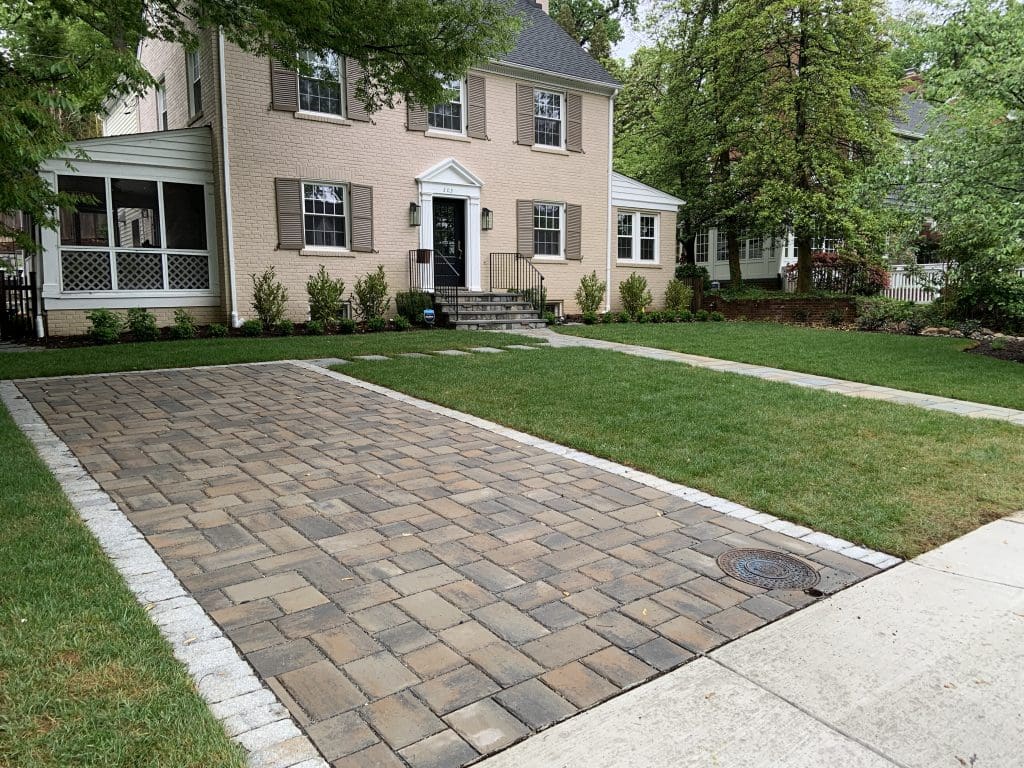
Interlocking pavers are popular in residential settings thanks to their customization options, but can also be installed on commercial properties.
Careful consideration should be given when utilizing permeable pavement in colder climates. To avoid frost heave, the reservoir and soil need to drain within 24 hours. Salt and sand should be used sparingly on these surfaces during the winter. When plowing, take care to avoid catching the edge of paving stones.
Sites for permeable pavement should direct water away from structures and have a slope of less than 5%. Also, avoid selecting sites that accumulate sediment or debris, as this can reduce the effectiveness of the system. Underlying soils should have a permeability of at least 0.3″ per hour.
Green Roofs
For commercial spaces, green roofs are an addition that can help soak up rainwater that would otherwise run off the surface.
According to studies, green roofs are capable of removing 50% of the annual rainfall volume from a roof through retention and evapotranspiration. They are particularly effective in the summer months, retaining 95% of precipitation.
Recommended plant material for green roofs is shallow-rooted perennials with limited growth to reduce toppling and desiccation. It is best to select species that are robust and drought-tolerant. Irrigation systems are critical for the early establishment of these green roofs in order for them to be effective in the long run.
The main limiting factors for adding green roofs are the cost for the client and whether the structure can support the load of green roof materials under fully saturated conditions.