


Klausing Group, PBC, based in Lexington, Kentucky, has always believed that businesses can be a force for good. They decided to take that belief one step further by becoming a Certified B Corporation.
CEO Roscoe Klausing announced his company’s decision to pursue B Corp certification at Leaders Forum in 2023 as part of their strategy to hold themselves accountable to complete the process, which took two and half years to complete.
Becoming a B Corp
Certified B Corporations believe that they must be the change they seek in the world and aspire to do no harm and benefit all. They are held to the highest standards of social and environmental impact.
To become a B Corp, the certification process starts with taking the B Impact Assessment, which helps companies review their practices and positive impact on five key areas: workers, governance, environment, community and customers.
Klausing says the cost to certify is determined by company size, and in their case, it was under $3,000 for a three-year certification.
“However, I elected to work with a consultant who helped navigate the process and formalize our approach, introducing a schedule for completing the B Impact Assessment, submitting the application, and working our way through the third part verification and review by B Labs,” Klausing says. “This was another several thousand dollars.”
Because Klausing Group opted to work with a consultant, their initial BIA score was much higher. The consultant worked alongside them to ensure they had adequate documentation that the standards were being met.
“Our final score was 87.8 overall,” Klausing says. “80 points are required to certify and the median score for ordinary businesses is 50.9.”
Earning this certification is more than a title for Klausing Group. They plan to use it as a living roadmap for their organization as they must recertify every three years.
“The most valuable certification processes incentivize continuous improvement,” Klausing says. “Our goal is to increase our score each recertification period.”
Workers
The worker portion of the BIA evaluates a company’s contribution to employees’ overall well-being, financial security, career development and engagement.
Klausing Group’s worker-oriented benefits include paid holidays, 15 to 20 days of paid time off for almost 90% of employees (nearly double the industry average), five paid sick days, health and dental insurance, life insurance, and free uniforms for all full-time employees. They have also formalized a flex-time policy for year-round positions and introduced remote work options for their management staff.
One of the changes the company made was improving their health insurance so employees now pay the same rate regardless of age or gender. Klausing Group now pays 80% of employee-only coverage and 20% of dependent coverage.
In 2024, Klausing Group committed to their minimum wage starting at or above the living wage in the areas they do business. They also implemented profit-sharing, which is designed to reward every one of their team members.
Lynette Cordero, finance manager for Klausing Group, says it’s been an eye-opening experience learning how B Corp certification sets companies apart.
“I was immediately excited and wanted to help,” Cordero says. “I had never heard of a company with such lofty aspirations, and Roscoe made it clear that pursuing certification would be a big lift. Even without knowing much about the certification or the process at the time, I volunteered right away because it felt like something meaningful to be part of.”
She says her favorite aspect of working for a B Corp is the continual change. She says she’s energized by the leadership constantly evolving as they make choices that align with their mission and values. Cordero adds that having the B Corp standards provides a reliable sounding board for when they’re faced with tough decisions.
“It provides a framework for evaluating options and helps us lean into best practices,” Cordero says. “For example, when we faced a 29% increase in insurance premiums, we could reference those standards to weigh not just the financial impact but also the broader implications for employees and the company’s values.”
Governance
As for the governance portion of the assessment, companies are evaluated on their purpose beyond creating profit and the impact of their actions on stakeholders, not just shareholders.
“The biggest lessons learned were in the realm of governance,” Klausing says. “We do a lot of things well and as a private, closely held company, we haven’t had to formalize or document our practices in the way that is required when a third party is verifying you meet their standards. It was a big lift documenting many of our practices as it relates to governance, policy, and decision making.”
Mission-aligned governance creates legal entities that allow companies to preserve their mission and consider stakeholders in their decision-making.
Environment
The environment aspect studies a company’s impact on the world around them, from renewable energy to resource conservation. Klausing Group considers the health of their community, wildlife and water quality in every plan they build.
They’ve also made simple upgrades at their office like replacing their lighting with LED bulbs and occupancy sensors and purchasing energy-efficient appliances. The company is in the process of selecting electric or hybrid equipment options as they replace old equipment.
Additionally, Klausing Group is reviewing their logistics to reduce emissions and tracking their use of resources and waste and chemical management to improve their overall transparency.
Community
The BIA community section evaluates how a company engages with and impacts the communities it operates, hires from, and sources from. This includes aspects such as diversity, equity and inclusion to charitable giving.
The company has set goals to recruit from more underrepresented populations and shifted their focus to planting more trees for their nonprofit partners since planting trees is the single most environmentally impactful service they can provide for their community.
“Having formalized their commitment to the broader constituencies and the environment through the rigorous certification process, we believe B Corps are seen as more reliable and steadfast partners,” says Michael Potapov with Trees Lexington. “Although many organizations may give back to the community periodically, we believe B Corps are different in that they run their business with the community’s interest front and center and extend their support on a regular basis.”
Since 2000, Klausing Group has had their ‘10% for the Community’. Klausing says as part of the process of becoming certified, they had to formalize their giving program, establishing the Klausing Group PBC 10% for the Community Charitable Fund.
Potapov notes that the B Corp certification provides a very strong signal to the customers, partners, and the greater community that the company’s values and philosophy are meant to endure.
“We are fortunate to have a business like Klausing Group in our community and hope other entities consider embracing the B-Corp model, combining business success with community benefit,” Potapov says. “We look forward to many more years of partnership growing our urban forest in Lexington.”
Customers
Last but not least, the customer portion of the BIA reviews a business’s stewardship of their clients including the quality of their services, ethical marketing and feedback channels. As a purpose-driven company, Klausing Group aims to educate and support their clients with their own environmental and social impact goals.
“It makes me proud to work with a business that has gone to great lengths to strengthen their commitment to their employees and our environment,” says Amy Sohner with Bluegrass Greensource, one of Klausing Group’s clients.
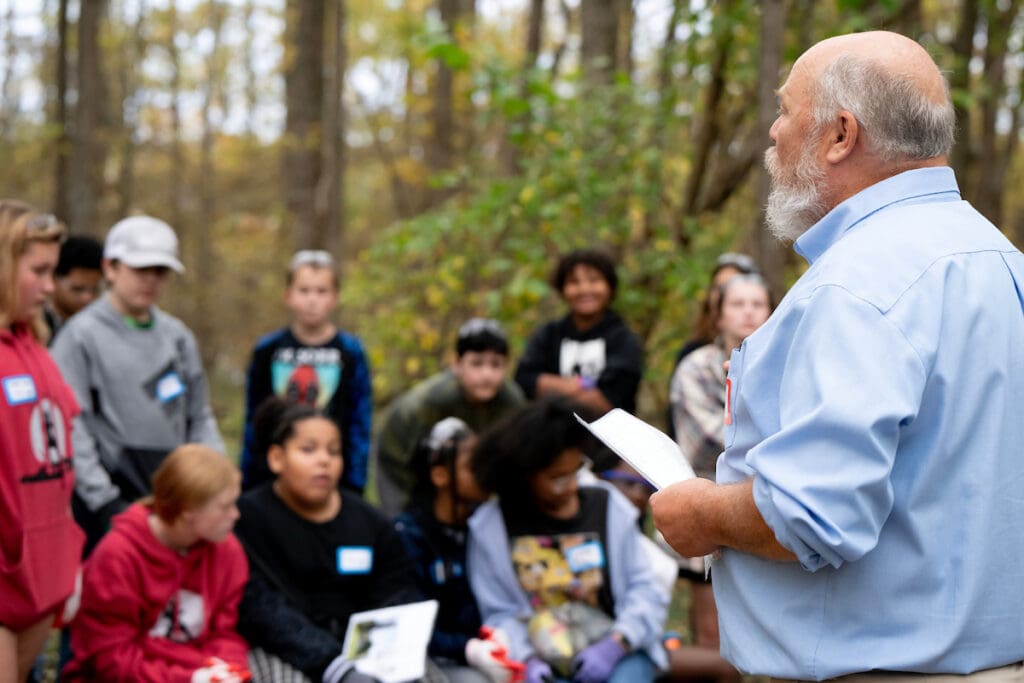
Sohner says that the B Corp certification assures her that Klausing Group has proven to an outside agency that they are doing the right thing for their employees and the environment.
Klausing says that the certification was a heavy lift but worth pursuing and encourages other companies to get involved in the ‘impact business’ community.
“B Labs has regional conferences, and in some states, other organizations have popped up that are also promoting using business as a force for good,” Klausing says. “Give yourself a year to complete the B Impact Assessment and collect your documentation along the way that supports each question you answer. You will be required to submit proof of the standards being achieved.”
