

Meteorological winter isn’t until Dec. 1, but if you’re in the snow business, chances are you’re already eyeing the forecast for the upcoming winter months.
According to AccuWeather, the 2026-27 winter will be greatly influenced by a potentially record-shattering El Niño.
Why El Niño Is Shaping Up to Break Records
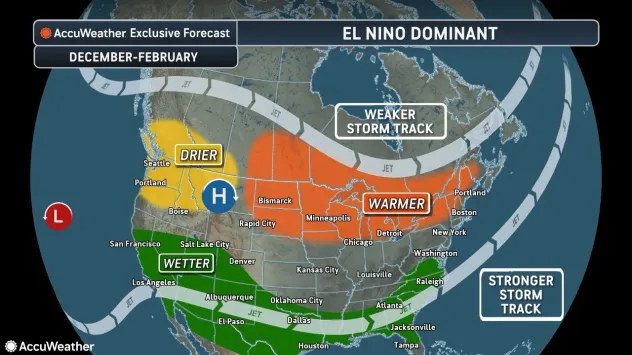
El Niño is a climate pattern in which ocean temperatures along the equator in the eastern Pacific Ocean are at least 0.9°F warmer than average. This will shift the Pacific jet stream and alter the track of winter storms, resulting in milder weather in the northern U.S. and wetter conditions in the southern U.S.
Chad Merrill, senior meteorologist with AccuWeather, notes that the lack of any easterly wind off the coast of South America is preventing the upwelling of cooler water far down below the surface. Similarly, westerly winds near the equator are also keeping any upwelling of cooler water from surfacing.
“This is leading to record warm ocean temperatures within 5 degrees north and south latitude of the equator near the coast of South America,” Merrill says. “In turn, the very strong El Niño will reach record territory by the first half of winter.”
The warmer the water is, the more impactful El Niño is on weather patterns.
“The current trends in the water temperatures and westerly winds crossing the Pacific are on cue to produce a record El Niño early this winter season,” Merrill says.
Water temperatures are expected to peak higher than during the powerful El Niño events of 1982-83, 1997-98 and 2015-16.
Who Can Expect the Most Snow
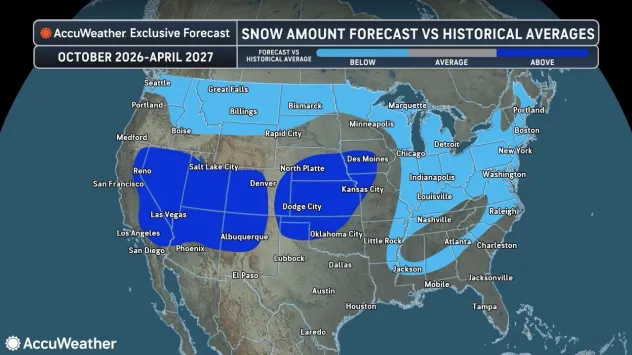
With El Niño influencing weather patterns, it is predicted that many areas that missed out on snowstorms last year will have the heaviest snow this year.
Merrill notes California, Nevada, Utah, Colorado, Arizona, New Mexico, Kansas and Nebraska will be the states most impacted by snow. For instance, Salt Lake City only measured 3.7 inches of snow last year, and this year is forecast to see 50-65 inches of snow.
Atmospheric rivers are also expected to be prominent in California, bringing snow in the mountains and flooding in lower elevations.
Meanwhile, the Northeast, Midwest and Northwest are forecast to receive less snow than average. Philadelphia is forecast to receive 5 to 15 inches of snow while it recorded 30.1 inches last year.
Merrill explains that fewer bouts of cold enough air will sustain snowfall outside of the Adirondacks and Green and White Mountains in the Northeast, while a lack of cold enough air and moisture will impact the Midwest, and a lack of a consistent storm track will keep the snow from making it to the Northwest.
However, this doesn’t rule out the possibility of a major snowstorm in the East in January or February.
Merrill doesn’t forecast any regions being hit with more ice than snowstorms, but the southern part of the Appalachians and the Texas and Oklahoma Panhandle this winter will likely encounter one to two storms of freezing rain and sleet.
Which Regions Will Be Colder or Warmer Than Normal
The Four Corners region and parts of the south-central Plains are forecast to have colder-than-average conditions. Cities including Houston, Las Vegas, New Orleans and Phoenix are all expected to have colder conditions this winter.
Meanwhile, average temperatures throughout the winter season are predicted to be higher than normal for the Upper Midwest and Great Lakes. Minnesota, Wisconsin and Michigan in particular are predicted to have temperatures more than 3 F above historical averages between December and February.
While a seasonal outlook can help you prepare, local forecasts will enable your team to respond as changes in weather patterns unfold.