


For many lawn care and landscape companies, the seasonal nature of the work can make it even more challenging to retain employees, as team members might seek out new opportunities during the off-season.
However, there are a number of engagement strategies to keep your staff committed to your company. David Grover, a branch manager with Pacific Landscape Management, based in Hillsboro, Oregon, says their turnover rates were noticeably higher before implementing off-season engagement programs. He notes that their retention has improved dramatically by focusing on training, consistent communication, and alternative work opportunities.
“Engagement ensures that our team feels valued and invested in the company,” Grover says. “It reduces turnover, maintains productivity, and helps everyone return to peak performance quickly when the busy season resumes.”
Engagement Strategies
There is no one-size-fits-all strategy for keeping employees engaged at different companies. Your region and the makeup of your business will determine the viability of some of these options.
Year-Round Work
While the most obvious option, offering year-round work for your team shouldn’t be overlooked.
“We firmly believe that our team members are the very most important assets in our company and we believe they all want to contribute to the company’s success,” says Jack Moore, CEO of Grassperson Lawn Care & Landscape, based in Lewisville, Texas. “Providing each of them a level of work and income security is paramount to our long-term success, and it’s a key component of the vision and mission of our organization.”
Moore says they have a number of commercial and residential clients that require service throughout the year, including the off-season. They are also looking to secure more annual contracts that will provide more off-season work to keep their teams busy and improve cash flow.
Grover says their landscape maintenance crews focus on pruning, bed cleaning, pre-emergent applications and winter plant care, while enhancement projects concentrate on tree pruning, moss control, drainage, and irrigation upgrades during the off-season.
“Snow removal services are also a significant part of our off-season work,” Grover says. “Additionally, we handle administrative tasks like contract renewals, client communications, and equipment maintenance.”
Moore notes that they typically see a net increase of personnel during the off-season as they are opportunistic when recruiting and note many local companies downsize during the slower months.
“We will entertain anything that our teams are skilled at doing,” Moore says. “We do not chase projects that are not in our wheelhouse as we have tried that before and it has not worked out for us. We are attempting to acquire another facility that will need a lot of repairs and updating this may also help us keep our field teams busy during inclement weather.”
Training and Professional Development
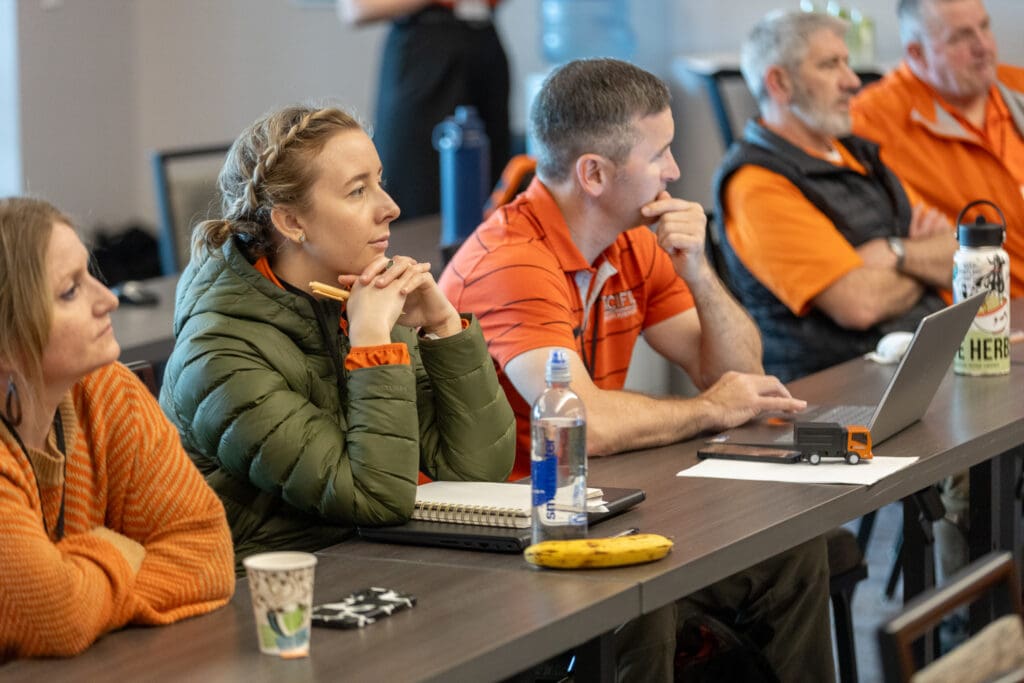
The slower months are also a prime time to invest in your team’s professional development. Not only does this keep them involved in the business, but team members also appreciate being invested in.
Grover says they focus a lot on training during the off-season, completing internal trainings like safety courses and skill-building workshops, as well as offering financial support for external trainings and certifications.
“We attempt to retrain everyone on our standard operating practices and we look to create a few new documented best practices each year that everyone is trained on before the next season begins,” Moore says.
Moore admits they still have room for improvement here because it’s not easy to create a training curriculum and deliver it in a meaningful way.
Planning and Team Building
The off-season can also be an opportunity for strategic planning with your team. You should also consider hosting various team gatherings during the slower months so employees can still have a sense of camaraderie.
Moore says they have a standing monthly all-hands meeting where they share a meal, celebrate birthdays and anniversaries, make general announcements and play bingo as a group.
“We provide prizes to the first 20 bingo winners and everyone seems to have a good time,” Moore says. “ We do a couple of holiday-themed parties including potluck meals where the administrative and sales staff provide a home-cooked meal to our field teams.”
Grover says they also host holiday celebrations, team-building retreats and client lunch and learns.
“These gatherings strengthen relationships among team members and clients while also fostering a sense of community,” Grover says.
Minimizing Layoffs
One tool that Moore and Grover both use to minimize the need for seasonal layoffs is the H-2B visa program.
Grover says while some seasonal adjustments may be necessary, they focus on opportunities to keep their employees working.
“Our use of the H-2B visa program has helped eliminate the need for making seasonal layoffs because those employees with a visa return home at the end of the season,” Grover says.
Likewise, Moore says they have been using the H-2B program for over 15 years and have received their visa workers every year except for 2020.
“This provides a built-in seasonal work staff, which is very useful to our company,” Moore says. “It allows us to employ a lot of full-time, year-round team members and we have never had to lay anyone off at the end of a season. If we did not utilize the H-2B program, I believe we would need to lay off one-third of our field staff each November.”
Grover says they’ve also been able to smooth out some of their seasonality with hard winter pruning and the use of growth regulators. Previously, their staffing would decrease by nearly 30%, but now it typically decreases by 20%, depending on work demand.
Tips for Success
You should also consider tailoring your methods to suit your field versus office staff.
“Field crews often participate in hands-on training or equipment maintenance, while office staff may work on administrative projects, marketing plans, or customer engagement strategies for the next season,” Grover says. “Office staff may also attend workshops on industry trends and technology offered through organizations like NALP.”
Moore says their office staff typically has more than enough off-season projects to keep them busy, including process improvements.
One aspect you have to weigh is how to handle pay during the off-season. Moore says in their case, they keep everyone employed during the slow season, but they do not provide a guaranteed level of income.
“We have salaried and hourly team members so each group has their respective pay plans,” Moore says. “We provide a generous paid time off and paid holiday benefit program that all full-time team members are qualified to receive. We have extended additional pay benefits during significant weather events when we must close our offices.”
Grover says they work to provide consistent pay throughout the year, but if the workload is light, they will potentially adjust their hours to keep everyone employed. He says this hasn’t been an issue over a number of years due to a plentiful workload.
While, in theory, any work that keeps your team employed is good, Moore cautions against pursuing work well outside of your team’s skillset.
“There is a power in focus and when we try to do things that we are not well versed in, we risk hurting our reputation of delivering quality outcomes,” Moore says. “Our goal is to focus on what we do well and it’s incumbent on our sales team to find and convert off-season opportunities that will keep our field staff fully engaged.”
Grover encourages thinking creatively and coming up with ideas to stabilize seasonality but warns against distracting your efforts away from your core competencies and business.
This article was published in the March/April issue of the magazine. To read more stories from The Edge magazine, click here to subscribe to the digital edition.
Key Takeaways
- Seek sources of year-round work and provide training during slower months to improve retention and keep employees feeling valued and invested.
- Monthly meetings, team-building retreats, and holiday celebrations foster camaraderie and community, keeping employees connected and motivated during the slower months.
- Stay focused on core competencies to ensure quality outcomes. Pursuing unfamiliar work can risk damaging a company’s reputation and employee productivity.
