

When E-SCAPES Electric Lawn Care, based in Acworth, Georgia, transitioned to all-electric equipment during the pandemic, they experienced a number of different benefits.
Mike Bellows, owner and CEO of E-SCAPES, says there were several factors that caused him to transition his equipment to battery power. This included high gas prices, the frequent need for repairs, and the loud nature of gas-powered equipment.
“As I was gradually building the transition, I just noticed how the customers were receiving it so much better,” Bellows says. “They would come up and tell me how they really appreciated it.”
The ease of use has also been beneficial as employees only have to press a button to start or stop a piece of equipment. Bellows says the time spent mixing oil with gas for two-cycle equipment was also time-consuming.
Bellows says since switching to electric equipment, his profit margin has increased tremendously.
“When the guys get here, they immediately can leave and get to work, which means we have the availability to add more jobs, which makes more money for them and more money for all of us,” Bellows says.
He adds that not having the expenditures of hiring a mechanic or serving as a mechanic himself has also improved their bottom line.
“I could actually be out marketing or working on some of the jobs, as opposed to being back at the office trying to fix a blower that wouldn’t work,” Bellows says.
Previously, Bellows did business as Dirt Cheap Lawn Care and Repair. After transitioning to electric equipment, he felt the name no longer matched their operation.
“It didn’t really match our image,” Bellows says. “We were wanting to appeal to more than just a bargain shopper; we have more of an upscale approach as a professional landscaper.”
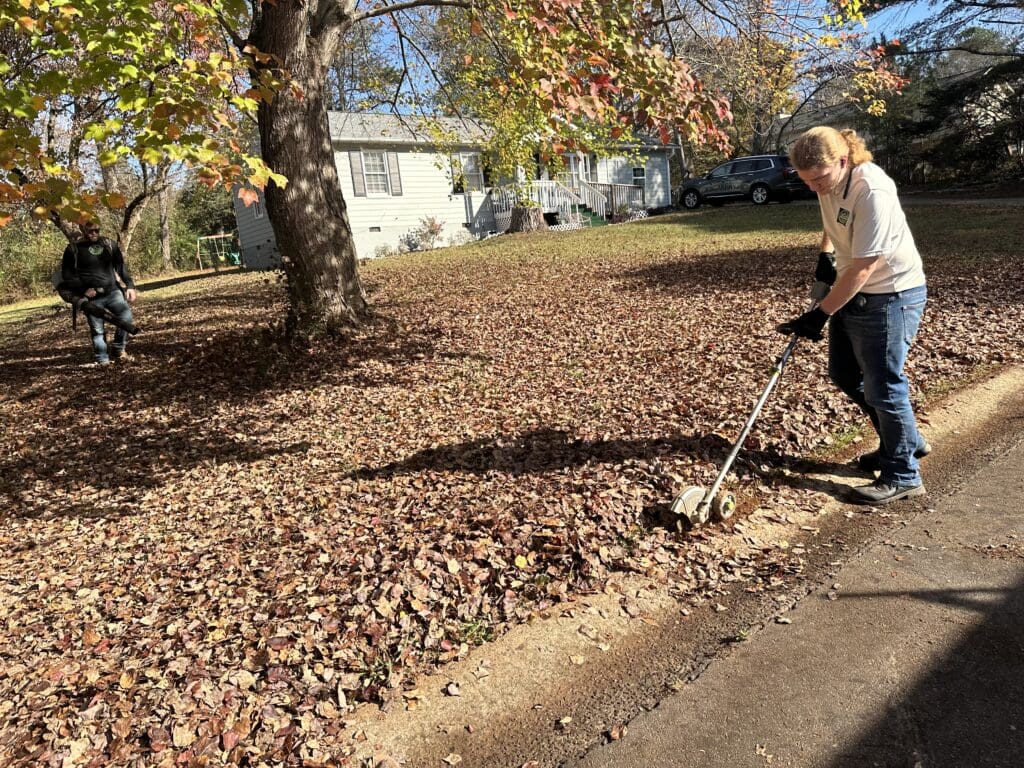
Bellows says he’s also been able to target clients like HOAs and retirement homes that want cleaner and quieter equipment operating on site.
At first, he anticipated they would have to raise their prices to cover the cost of their new electric equipment, but he says his investment paid for itself by no longer having to pay high gas prices or play mechanic.
Lessons Learned from the Transition Phase
Bellows says he did face a learning curve as he tested out the different manufacturers’ offerings and sought a mobile charging solution.
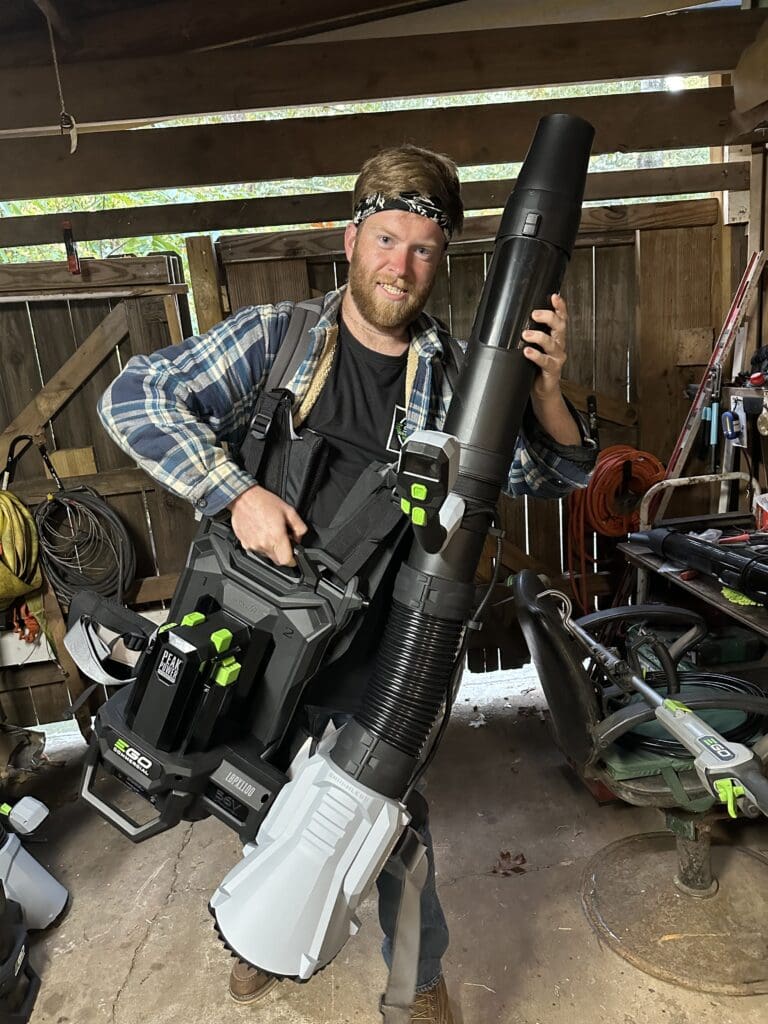
He says he quickly found that he got what he paid for with cheaper brands. He ended up going with EGO because he likes the 56-volt battery system and says the equipment is designed with landscapers in mind.
Bellows says that those who believe battery blowers do not have enough power should do their research as he’s found his commercial blowers are as strong as traditional gas-powered blowers.
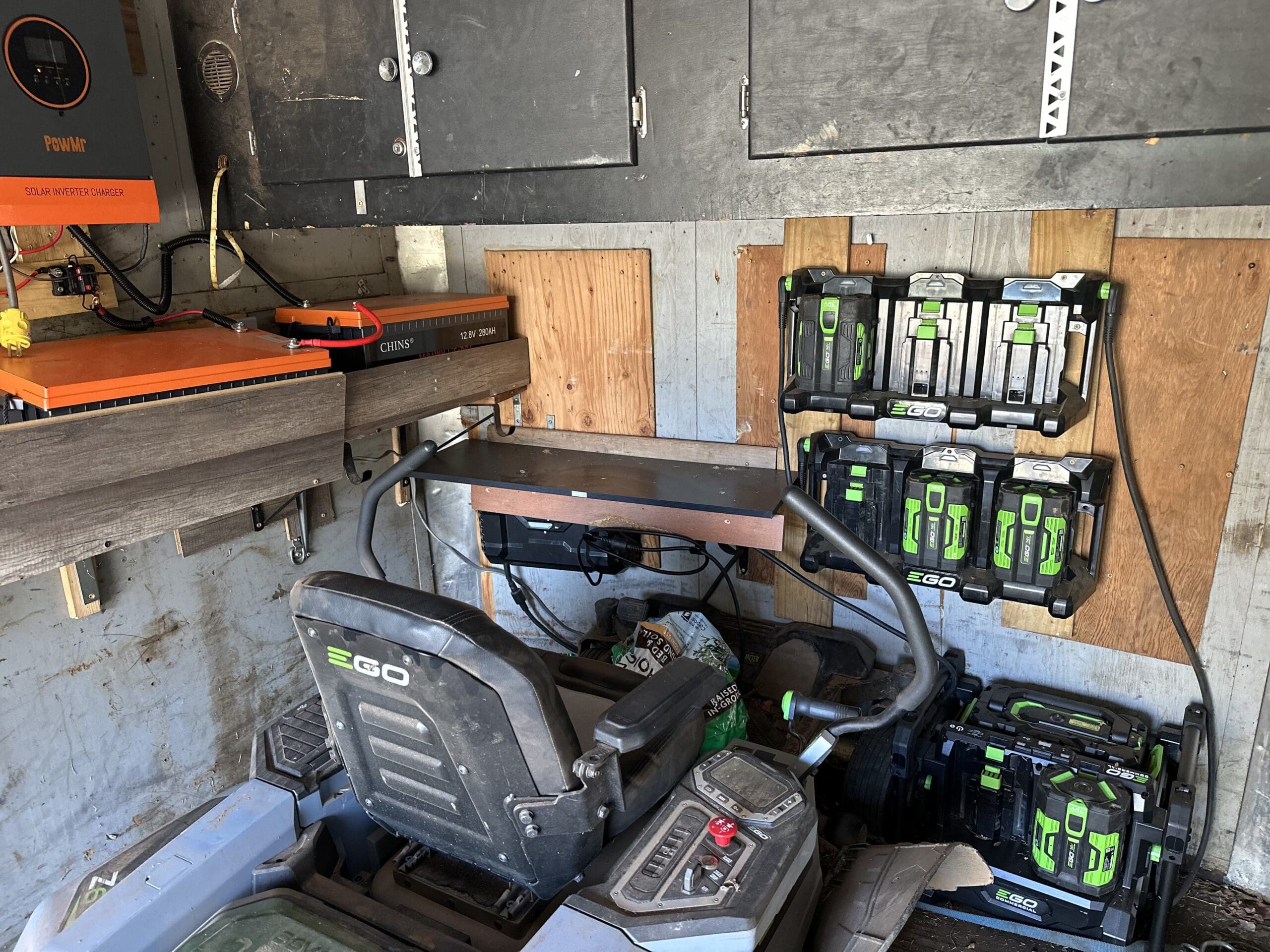
Bellows says his biggest challenge was figuring out his mobile charging station. Early on, they would go out, do a few jobs and then have to return to the shop to charge before going out again.
Using his electrical engineering background, he invented an all solar-powered, mobile charging station for his trailers to keep his crews charged up on the go. It took him a year to create his own solar-powered mobile charging stations to charge his string trimmers and push mowers. When the zero-turn mowers became available, it took him another two years to get it perfected to where he could keep everything powered all day long.
He estimates he spent around $10,000 for the inverters, solar charge controllers, solar panels and large amp batteries that keep the energy on the trailer. Bellows says he tried to access government grants to help cover the transition but was unsuccessful.
“We did it all ourselves and from our own money, no large investors,” Bellows says. “It all came from sales, just keeping up the sales and reinvesting it.”
Bellows says as manufacturers come out with new charging solutions, they are implementing those as well, but he still uses his configuration to charge batteries in the field.
As for their facility’s infrastructure, Bellows says that one plug that was on a smaller breaker would trip when they tried to plug batteries in at night.
“If you’re trying to run everything off the same breaker, you’re going to run into issues,” Bellows says. “There was tweaking of where the power was getting distributed for these chargers. But it wasn’t a massive change, just simply changing out a few breakers.”
Embracing Electric Equipment
E-SCAPES does overnight trailer charging, so when crews leave in the morning, all the batteries are fully charged. During the day, employees swap out batteries and charge those that are getting low.
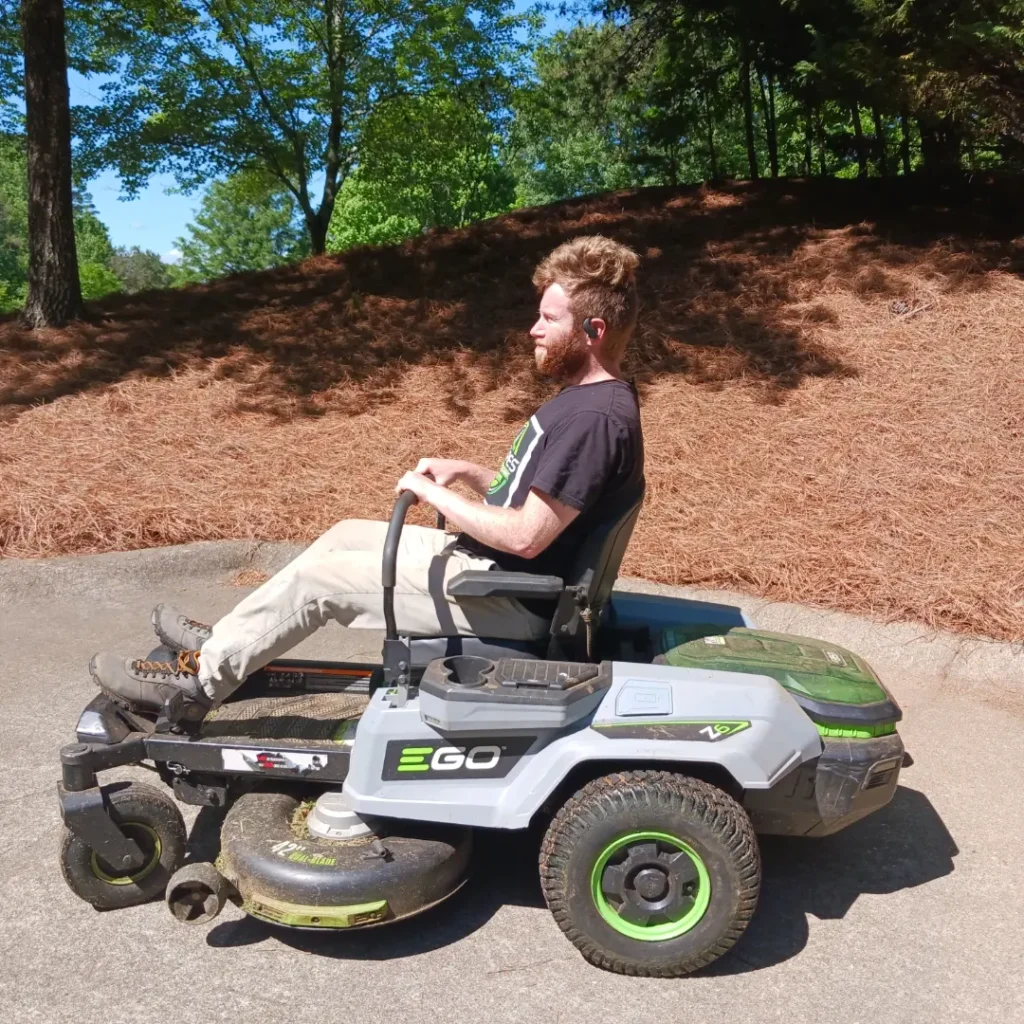
Bellows says depending on the route and the type of properties, their zero-turn mowers can mow up to four acres on one charge. He says one of the aspects he likes about EGO’s ZTR is that you can take the six batteries out and place new ones in to continue your work.
“You only need to use two to really go, but the more you put in, the longer it lasts,” Bellows says. “So I did like having that. Also, the batteries just seem to outperform any of the other companies that we used, and the biggest thing is they also have warranties, so that was a big selling point.”
Bellows says electric power is inevitable with how much quieter and cleaner it is, so he advises going ahead and getting ahead of the game.
“Don’t go cheap,” Bellows says. “It’s going to cost much less because you’re not having to go out and replace it every couple of months.”
He says he documented his process and created a book so others can make the transition as well.
Now that they have their trailers and charging needs dialed in, Bellows expects scaling up to be pretty easy. They currently have three crews and plan to expand to five or six crews this season and eventually grow as a franchisor.
E-SCAPES has over 100 customers, and Bellows says their phones have been ringing off the hook as things warm up.
He says both his customers and employees are much happier as homeowners don’t have to deal with the noise, and team members don’t smell like gasoline at the end of the day.
