


Photo: Derek Murray
Veterans are ideal employees to recruit to the landscape industry thanks to their work ethic, determination, loyalty, and collaborative skills.
“Our military has some of the best managerial leadership training in the world,” says Joe Lewis, a Marine Corps veteran and director with Monarch Landscape Management, based in Houston, Texas. “Providing these loyal leaders with a professional home in our industry can only help us grow.”
The landscape industry is also an ideal civilian career field for many veterans.
“Most veterans are looking for therapeutic work while working independently, especially when we are in transition from military life to civilian life,” says Terry Williams, a Navy veteran and market sales director for Green Lawn Fertilizing, based in West Chester, Pennsylvania. “It gives us the ability to think independently, and we can exert physical activity while learning a new trade.”
How Landscape Companies Benefit
Derek Murray, an Air Force veteran and senior director of customer support for Aspire, notes that most veterans have a strong work ethic and understand the importance of teamwork and camaraderie.
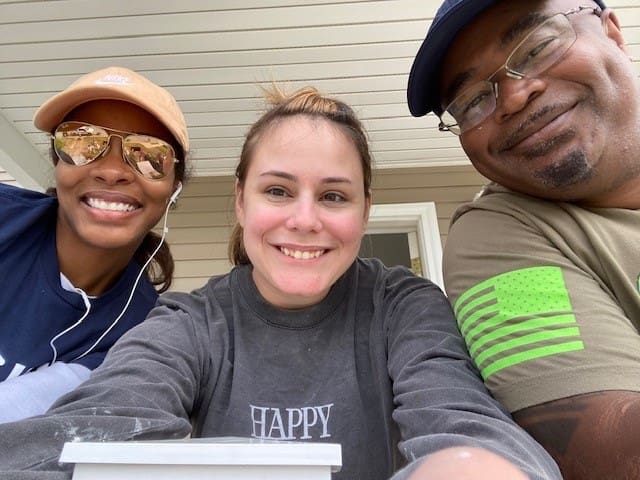
Photo: Terry Williams
“We don’t mind the hard work, and we like the reward of making rank or pay grade increases,” Williams says. “This is how we measure ourselves with the attaboy. Most of us are used to being outside in the weather, and there is a feeling of accomplishment when we are put to the test in a sweat-filled, hard day’s work.”
Lewis says that veterans are adaptable to change, tolerant to adversity, humble to accept guidance, and aware that they can’t do everything on their own.
“The civilian workforce can also gain some wisdom from the military as well, on discipline, on work ethic, different things like that,” Murray says. “I think especially if our veterans could speak to other younger people within the civilian workforce and show them the importance of what the military meant to me. It helped discipline me and helped give me structure. I think there’s an ebb and flow from both sides that can be learned from each other if we just take the time to listen to each other.”
Transferrable Skills
“Veterans have a lot of skills learned through their time in the military that translates into landscaping,” says Brian Chapman, an Army veteran and director of fleet management and safety for SunWorks Landscape Partners, based in Carrollton, Texas. “They work extremely well as part of a team.”
He says one of the most valuable attributes he gained in the Army was servant-leadership.
“Above all things, my employees come first,” Chapman says. “One thing that really puts a smile on my face is getting out and taking the time to work alongside my employees. As a fleet manager, I think it’s extremely important to understand each job function. That way I can provide the equipment that gets the job done as safely, easily, and efficiently as possible.”
Williams says his military experience provides him with integrity, commitment, leadership skills, and the ability to take orders and fulfill objectives.
“The focus on mission accomplishment and troop welfare has transferred well to the landscape industry,” Lewis says. “I also feel the managerial leadership skillset I was able to learn and develop alongside my skills as a trainer have transferred very well to the landscape industry.”
Murray says that his military background gives him both a sense of dignity and humility. He says he would do it all over again if he had the chance.
What Veterans Appreciate About the Industry
Murray appreciates how the people in the landscape industry love what they do and how they do it with a passion. He says he’s enjoyed participating in Renewal & Remembrance the past two years and seeing the fruits of his labor later on.
“Just knowing that you’re a contributor to making something beautiful is really an awesome thing,” Murray says.
Chapman also says his favorite part of the industry is the people.
“I really enjoy talking to people at events like ELEVATE and Renewal & Remembrance and learning more about their roles and what they do,” Chapman says. “There is a lot of support in the industry for veterans and I enjoy spreading awareness about our skillset and why vets are a great fit in their organizations.”
Murray says he’s also gained an awareness of the landscape industry and its impact on the environment.
“They beautify everything and make everything so much more beautiful,” Murray says. “To be able to tap into something like that for veterans to be able to see their handiwork, I think, is vitally important for our success as veterans when we are transitioning into a civilian workforce.”
Williams says he enjoys the camaraderie and celebrations the most.
“I appreciate the opportunity to continue my growth as a professional,” Lewis says. “My favorite part about working in this industry is that I am able to continue to have an impact on people and the people within an organization.”
Chapman says one of the great things about the landscape industry is that you can see the difference that you make each day.
“Most vets joined the military to do just that; (to) make a difference,” Chapman says.
Join the Veterans in Landscape Network here!
