


Skilled labor is hard to find, which is why many lawn and landscape companies opt to start from the ground up with their employees. Even when they do hire an employee with prior industry experience, it is still important to train them so they’re on the same page.
“Training is a key ingredient in developing our team,” Bryan Word, president of Blackjack Horticulture, based in Birmingham, Alabama. “If we want to be excellent in our service and our work, we must continue to teach and develop our people. As new people come in, we can’t assume everyone knows everything we expect.”
Shawn Fitzgerald, technical advisor for The Davey Institute’s commercial landscape service line (CLS), based in Kent, Ohio, says training is essential because it allows their team to keep up with new technology and science. It also helps them attract good talent and retain them.
Engaging Employees
One of the greatest challenges of training can be getting your employees to engage and care about the information you’re conveying. This is why Ryan Lawn & Tree, based in Merriam, Kansas, decided to reverse their model.
Shawn Scheffler, director of learning and development for Ryan Lawn & Tree, says they stopped pushing training and requiring employees to use their learning management system (LMS) a few years ago.
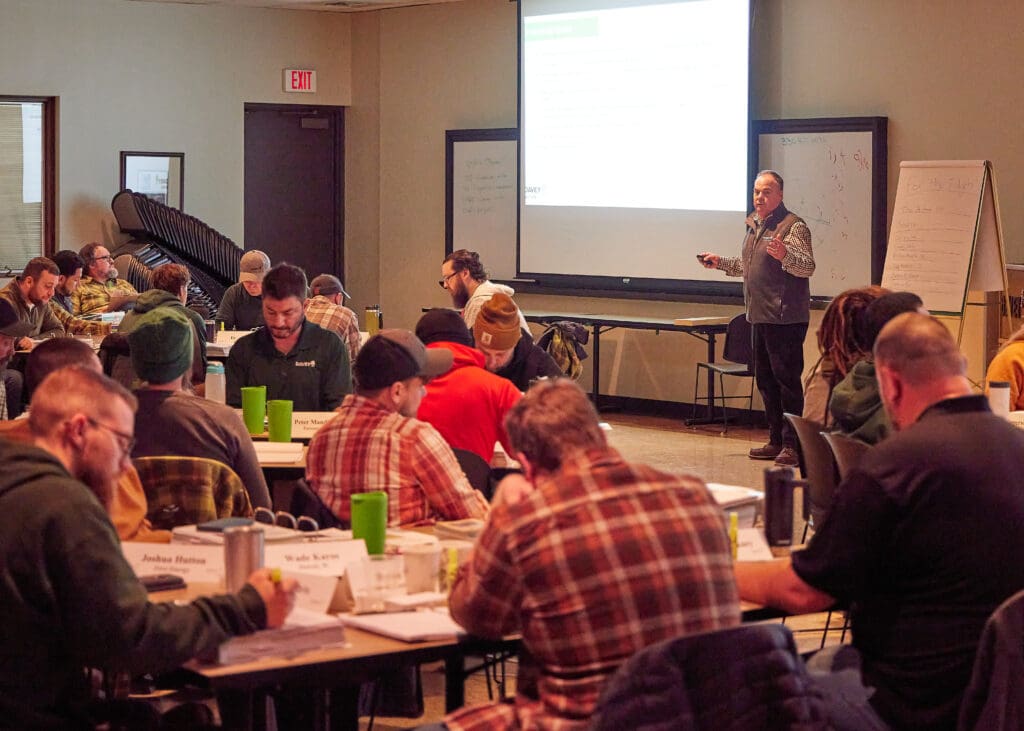
“Rarely do you get performance,” Scheffler says. “You just get compliance, and rarely do you get buy-in or productivity. You just get people who don’t like training because they’re forced to do it. So we flipped the table.”
Now, Ryan Lawn & Tree employees can choose to access the education needed to advance to the next job title when they’re ready to pursue it.
“There is a job progression to specialist one, specialist two, senior specialist, crew lead and on, all the way up,” Scheffler says. “Each one of those bumps in title also gets an additional $10,000 in salary.”
Scheffler says their employees tend to be engaged without needing all the bells and whistles or gamification. Tying the training to their career advancement is motivation enough.
“If they choose not to engage with it, they’re probably not engaged with Ryan Lawn and Tree, and that’s important,” says Matt Evans, director of arboriculture training for Ryan Lawn & Tree. “I would rather have 30 people who are engaged and wanting to develop themselves and join in the conversation, versus the other 470 that didn’t care a hoot about being there at all.”
A trainee who is a go-getter can move up to specialist one within about a year.
“We’re not dictating to them to get the training done, with the exception of anything that’s safety or compliance related,” Evans says. “We’re providing them an opportunity. They choose not to take advantage of the opportunity. It’s really on them but the worst thing we could do is check them off on things and give them a bump in pay because that doesn’t teach them anything.”
Word says they keep their employees engaged by making the training topics applicable to what they may see in the field at that time of the year.
“We also try to work in a friendly competition a couple of times a year to sharpen skills, but make it fun at the same time,” Word says.
Word says there’s no shortage of training topics for them to cover, and it never hurts to cover the same topic again, especially if they see reoccurring issues in the field.
Conducting Training
Word says they conduct weekly training for each team where they focus on a specific topic as well as safety. For new employees, they have first-day and first-week training.
“We also have additional training sprinkled in throughout the year, some in the form of competitions to make it a little more fun,” Word says. “In the winter months, we do a lot of focused training and often bring in an outside person to teach specific topics.”
Currently, Blackjack’s division managers are responsible for executing the training, but Word says he is seeking to fill a full-time employee training and development position.
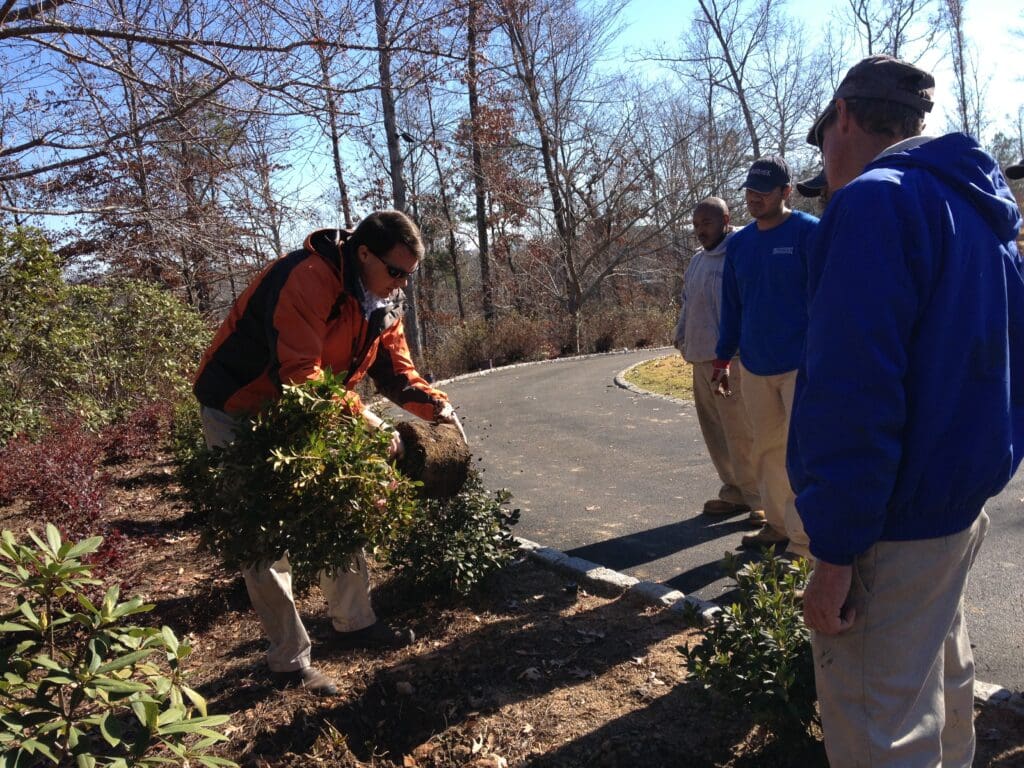
Word says they try to mix up the training methods from being in the classroom to hands-on field training.
“Occasionally, we’ll have designated crews even meet at a client’s property to look at a specific topic, like how to prune a mass planting of a certain plant,” Word says.
Davey Tree’s commercial landscape service line has two annual week-long training programs. One is called the Davey Institute of Grounds Management (DIGM), held in March and CLS Advanced Leadership Training, which is held in August. Both of these programs require the employees to meet specific qualifications before they can apply for the training program.
Davey also held their first Spanish-language DIGM last year. All courses were taught in Spanish.
“We hope to take that company-wide next year because the response from our Hispanic workforce was amazing,” Fitzgerald says. “They really appreciated that we did that.”
Fitzgerald says they prefer to conduct hands-on training, which is why they require their employees going through DIGM and the advanced leadership training to come into their headquarters in Kent, Ohio, for a week.
Additionally, Fitzgerald will visit branches to lead training as needed. He will ask in advance if there is anything they’d like him to cover specifically.
“A manager may say, ‘Yes, we need help with our seasonal color displays,’” Fitzgerald says. “So then I prepare a program and schedule a couple of days to stay and work with the crew and actually install some seasonal color displays and give them suggestions on how to do it successfully.”
While Fitzgerald covers the Midwest and Northeast, Davey has CLS tech advisors for the Southeast and Southwest as well.
“We’ve strategically placed the trainer where they’re needed,” Fitzgerald says.
Davey Tree also has a LMS that employees can tap into on their own.
“All Davey employees have access to our LMS, which allows them to take hundreds of different courses in the horticulture industry, and not just on plants and insects,” Fitzgerald says. “We also have courses in communication skills, sales, leadership and management.”
For Ryan Lawn & Tree employees seeking out training, they have virtual online training including Tree Talks with Matt, their LMS, paper-based training materials, videos, quizzes, and field assessments. The field assessments are where the employees show they can execute the necessary skills.
Evans says their employees prefer hands-on training the most so they will put on events to bring people together and verify their abilities.
“We try to create an ecosystem that supports it,” Evans says. “So we come at them from multiple directions.”

They have a staff of 16 learning coaches who are subject matter experts who develop, train and facilitate the field assessments. Training is 25% of their focus, and the other 75% is their normal job. Evans says these are individuals who enjoy growing other people. Evans says 10 years from now, these will be full-time positions.
“The incentive structure for the learning coaches is tied to the performance of our team,” Scheffler says. “We pick metrics that are meaningful to the business and are tied to the organizational goals. We don’t say, ‘How many people did you train?’ We don’t care about dollars per hour of training. None of that stuff. We don’t care about butts in seats. It’s literally, are you supporting the goals of the company?”
They monitor where they have the greatest impact, such as first-year retention.
“Instead of losing 50% of all new associates, roughly $500,000 a year, walking out,” Scheffler says. “We turned that around, and we’re at 91% retention now.”
Another metric they monitor is speed to competency. They have decreased this from six month to get someone competent in their role to 45 days.
“We’re trying to change the paradigm from what I call passive learning, which is sit in a meeting and listen to somebody spit something out or go to a conference and listen to somebody just talk to actually showing that you can do something,” Evans says.
Scheffler notes that they are reaching a tipping point as their company grows. He says their projections show them doubling in size over the next three to four years, going from 500 to 1,000 people, which means their current learning coach model will be harder to scale.
He anticipates they’ll switch to a hybrid model where each location will have a couple of full-time coaches and additional part-time learning coaches.
Skills to Focus On with New Hires
When it comes to training new hires specifically, you must first address their current skill level. Evans says if a new hire has the skills of a specialist one already, they would be hired and paid as a specialist one, but they would start as a trainee.
“We can’t just put you in because you’re not going to learn anything about the culture of Ryan Lawn & Tree, how we service our clients, the different nuances, how to use the software,” Evans says. “All of those things have to be addressed.”
Fitzgerald says they focus on covering safety topics first and educating new hires on the different tools available through the Davey Institute, such as the mulch calculator.
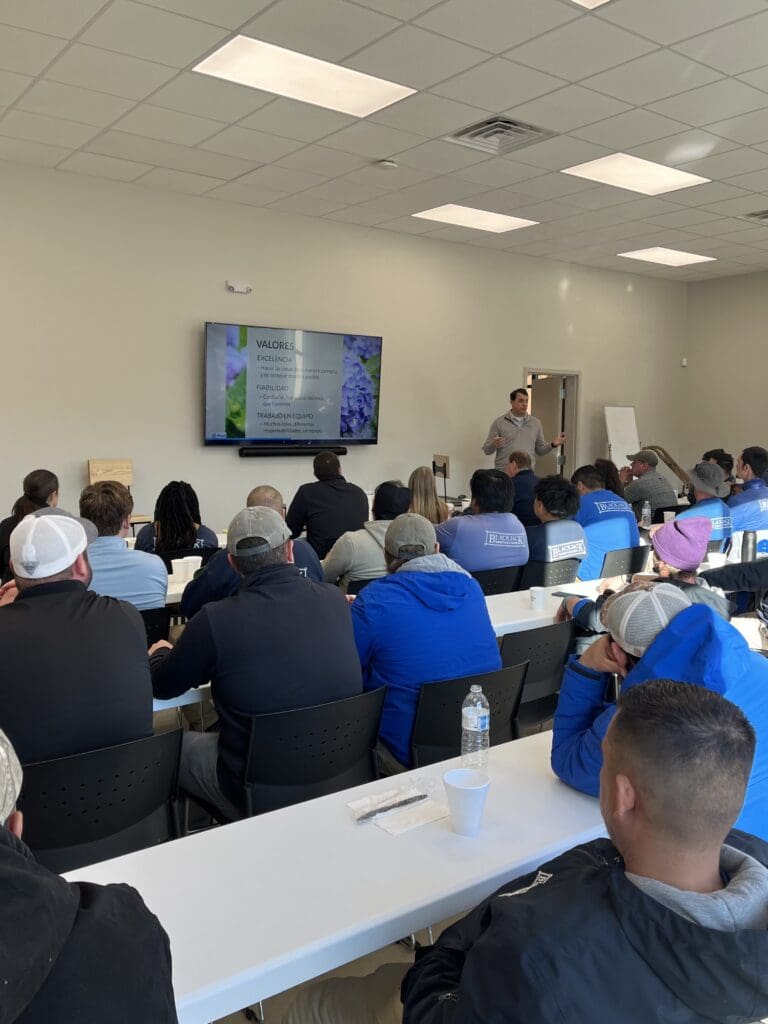
Word says depending on the division the employee is working in, they may approach their initial training differently.
“If they are in our maintenance division, we have them demonstrate certain basic skills before we put them on the truck,” Word says.
Evans says they also break their trainees into different categories with a curriculum covering topics relevant to divisions like turf, irrigation and landscape. They cover their beliefs, history, culture and what customer service should look like, as well as necessary compliance safety standards. Evans says this baseline checklist must be done within 45 days.
After covering the basics, Word say training attention to detail is the most significant skill to fine-tune.
“Good basic skills add up to a much better finished product,” Word says. “However, noticing details is the key to setting a company apart from others and achieving great results. A crew member or crew leader will need to know to look beyond a checklist of ‘to do’ items.”
It’s also important to address when a new hire displays a bad habit they may have picked up at a previous company.
“We just say, ‘That’s not the way we do things here at Davey Tree,’” Fitzgerald says. “This is the way we’d like you to do it.’”
Word says managers and crew leaders will explain why they do something differently and demonstrate how they want it done. He says reinforcing this behavior takes time and frequent reminders.
Evans notes that some of their best management practices have come from new employees or other partners in the industry.
“My mindset as an educator is I am open to anybody’s idea,” Evans says. “I tell people this in new associate orientation if you come in and you have a better, safer, more efficient way of doing something. I’m all ears because I’m a business owner, and I want to use what you know.”
Upskilling and Career Advancement
If you want your team members to continue to upskill, it’s crucial to tie this to their career advancement.
Fitzgerald says they offer compensation to employees who obtain different licenses like irrigation or arboriculture because they are bettering themselves and the company.
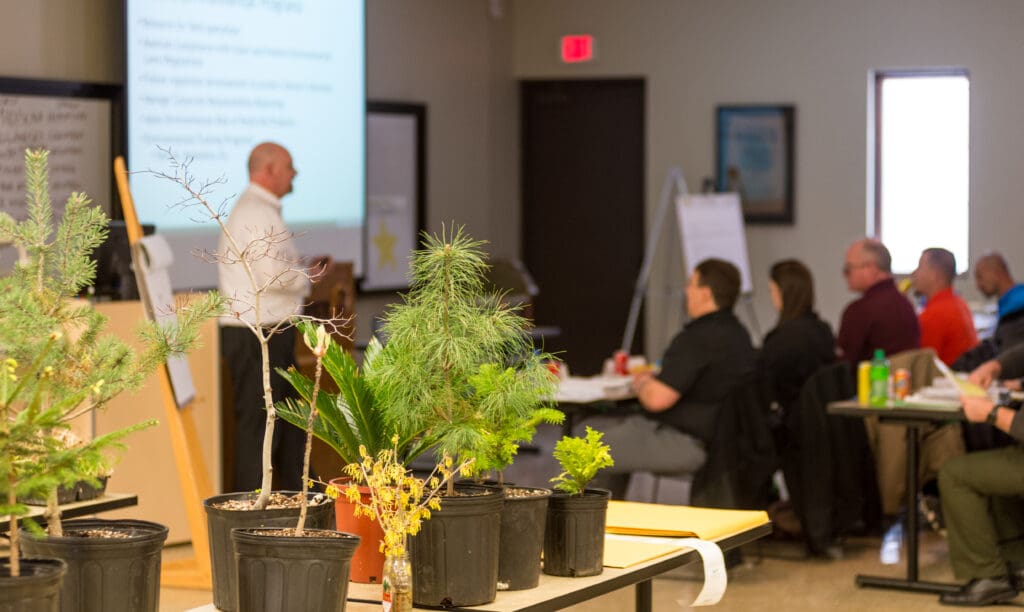
Word says they are continually refining and enhancing our training program. He says soon they will offer optional classes that will be tied to bonuses and pay raises once a team member has completed a certain level course in our plan.
“We want this to reward them, but it will also require them to demonstrate the initiative to take advantage of opportunities outside of standard work hours,” Word says.
For Ryan Lawn & Tree employees seeking out the senior specialist level, they have it tailored to the associate so they can choose between three different tracks. For instance, if they work in the turf category, they can choose to go the research and agronomy route, management route or the trainer route.
“We’re trying to develop them, but we want them to be able to go out and figure out how to develop themselves,” Evans says. “At the senior level, we’re really pushing people to choose where they want to go in the future.”
Evans adds that even if an employee isn’t interested in the management route they are still paid at the senior specialist level because they have the utmost respect for their ‘green collar’ workers’ technical knowledge.
This article was published in the Jan/Feb issue of the magazine. To read more stories from The Edge magazine, click here to subscribe to the digital edition.
Key Takeaways
- Regular employee training is essential to develop technical skills, align with company culture, and maintain a competitive edge.
- Hands-on, field-based training resonates the most with employees, offering real-world applications of learned skills.
- Tying career advancement to training motivates employees and incentivizes them to grow.
