

Photo: ©Morgan Howarth
Annuals are fleeting, but how you design your client’s landscape can provide them with year-round interest in their property.
There is no one set way to craft a design that provides color, structure and allure in a landscape throughout the seasons, but below are some of the different techniques and plant material to consider.
Creating Structure
If you’re starting with a blank slate for a yard, you first need to consider what elements will provide structure in the design rather than fixating on any specific plant species.
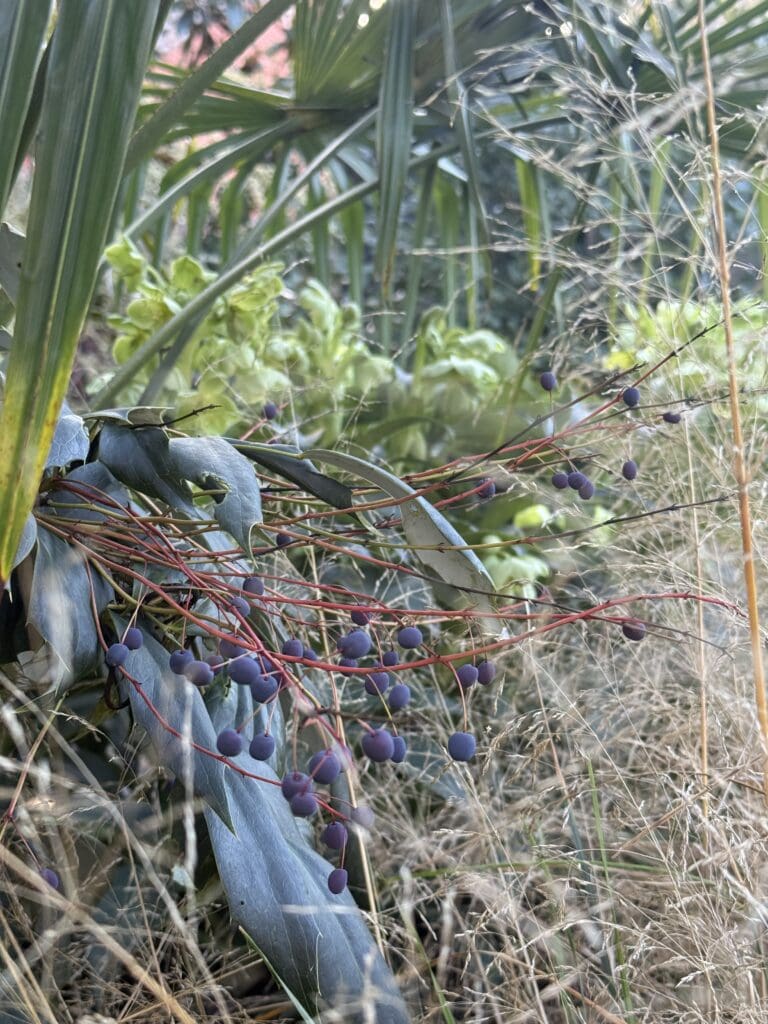
Photo: Ryan Kauffman
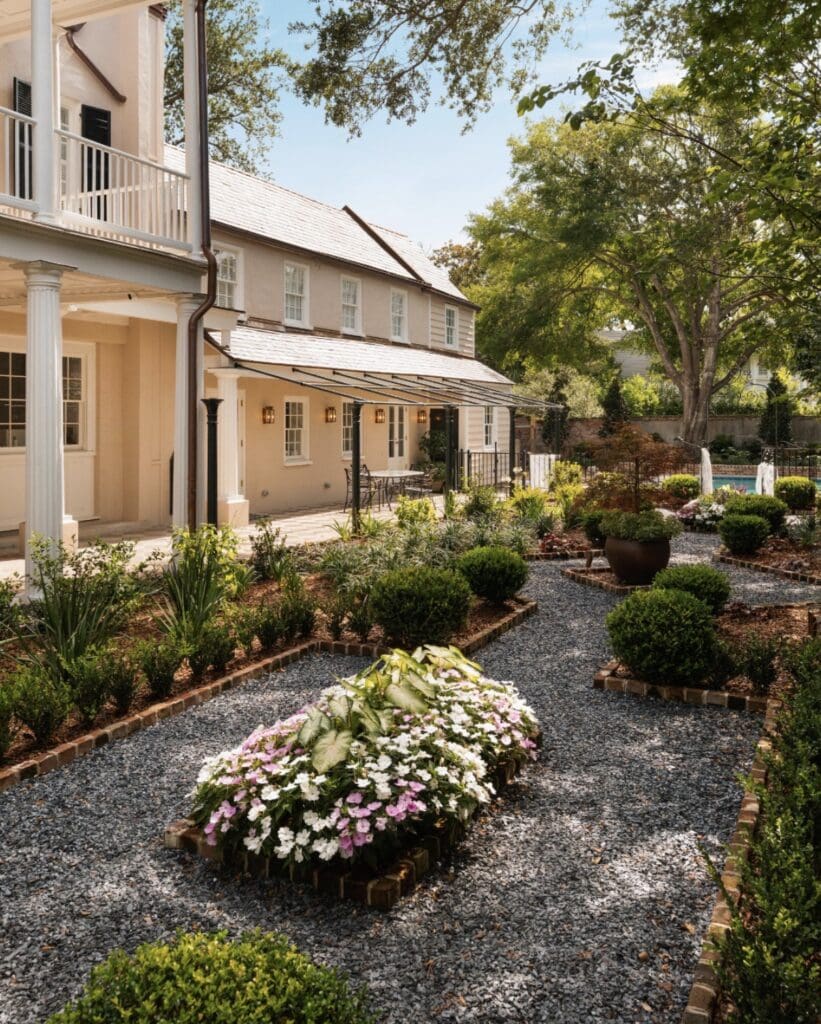
“Think through evergreen shapes,” says Lindsay Ables, exterior designer with Ables Landscapes, based in Hollywood, South Carolina. “Think about shapes and think about what in your garden will be there year round, and create that structure so that when the perennials and the annuals and such ebb and flow throughout the year, you have these solid anchors in your space.”
Ryan Kauffman, design and sales consultant with DeSantis Landscapes, based in Salem, Oregon, agrees evergreens are the most important element to creating structure in a four-season landscape design.
“Starting any design with structure, that’s going to ensure good winter interest,” Kauffman says. “You’re looking for things like strong structure, interesting forms and habits of plants, also looking at different textures of foliage. These are small things that a lot of people may overlook, and things that I think are really important.”
Aside from evergreens, ornamental grasses and trees can also provide year-round interest and structure to a space.
April Sullivan, senior design and sale consultant for Rossen Landscape, based in Great Falls, Virginia, says she is fond of including a legacy tree, especially on bigger projects or a newly built house.
“Anywhere I can put a big tree that’s not for them, that’s for the family three houses from now, to enjoy,” Sullivan says. “Creating shade, creating something beautiful to look at, is so important and just giving shape to the landscape with something that is architecturally interesting, in terms of plant material, like a hornbeam or Japanese maple that has a cool shape, or something that you can put a light on and enjoy is hugely important.”
Less Is More
One risk of trying to create year-round interest is overloading the space with so many plants that the landscape ends up feeling too busy or cluttered.
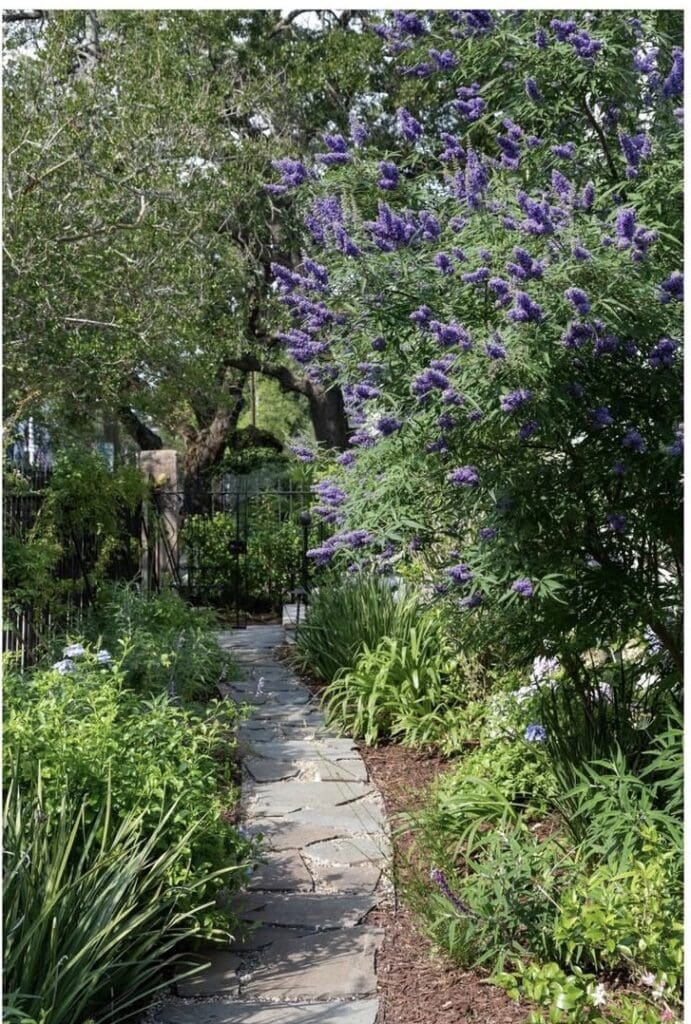
Instead, it’s best to choose a theme and stay consistent, particularly if the property you’re designing for is on the smaller side. Kauffman advises sticking with a more restrained plant palette and having repetition throughout the site.
Grouping plants en masse can also help prevent a design from feeling too chaotic.
“Planting in layers is helpful,” Sullivan says. “You can have something in the background that might be doing something more in the winter and something in the foreground that might give you that spring color, and something next to it that may carry through a fall with some fall foliage. Echoing those keys throughout the property where you see that repetition, so it makes sense.”
Sullivan says an example of this would be if she uses Nepeta in the foreground and then repeats those purple and blue tones with a Vitex or a Caryopteris off in the distance, with different bloom times throughout the year.
Sullivan adds that in some cases, it’s best to select plants that make sense year-round, such as amsonia.
“It’s got wonderful texture, really pretty flowers in the spring,” Sullivan says. “It gives you good texture during the summer months, but then in the fall, you get this great yellow/orange coloration to it, so it moves really well even in the fall.”
Ables notes that it’s equally important to let the eye rest and not fill every little space with plants.
“You can have space where it’s just the mulch in the bed, just the pine straw, before you get to the next thing,” Ables says.
Ables says they’ve also seen a shift from huge annual beds to now residential clients prefer little containers in different areas of the landscape to serve as their hit of annual color.
Seasonal Superstars
Ables recommends embracing the seasonal nature of different plants, as it makes each part of the year special as a new plant steps into the spotlight.
One aspect Sullivan takes into consideration with her plant material is how long the plant will look interesting.
“If it’s a short-lived thing, I have to really be passionate about using it, because I know that the rest of the year it’s going to look completely different and probably not give you that wow factor,” Sullivan says.
While the viability of certain plants depends on your service area, Sullivan and Ables note you can’t go wrong with bulbs, as they tend to be one of the early indicators that spring is on its way.
“Nothing makes me happier in the doldrums of February to see a yellow daffodil,” Ables says. “It’s just so happy.”
Sullivan agrees that daffodils are one of the best plants to plant en masse. Other strong spring blooming plants include azaleas, forsythia, dogwoods and redbuds.
Kauffman says if you want to go beyond just bulbs, hellebores and osmanthus can bloom from late winter to early spring.
Sullivan encourages designers to plant something more unique and interesting like witch hazel or camellia.
“Camellia has always surprised my clients,” Sullivan says. “They’re like, ‘I thought this was just a green bush and now there’s flowers over it.’ Something that gets them excited in the dead of winter is always something good.”
Summer is one of the months that can be overlooked and presents a challenge for plant material as it’s hot and not everything is looking its best.
Kauffman says he tends to lean toward drought-tolerant summer-loving plants like Epilobium and Agastache.
Ables says some of her favorite summer plants include hydrangeas, coleus, crotons and liriope.
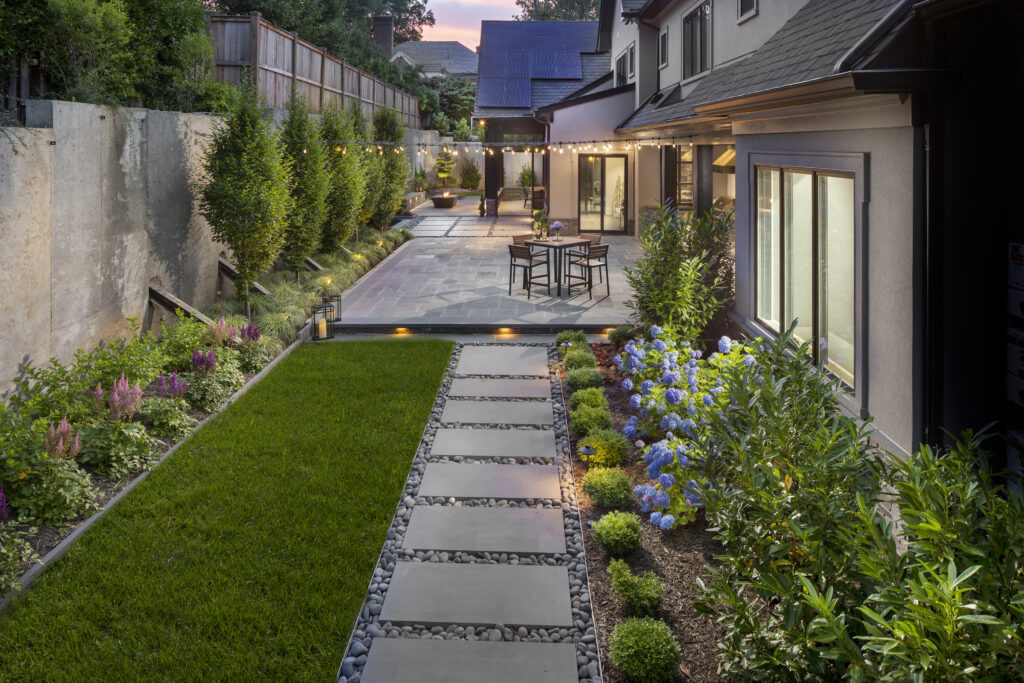
Photo: ©Morgan Howarth
“People treat it (liriope) like a ground cover, but come July, they put up this little purple/blue bloom, like a little spire,” Ables says.
Sullivan prefers to use natives that attract pollinators like bee balm and clethra for the summer months. She also strives to find plants that bridge the gap between common bloom times, such as Japanese snowbell, which blooms in June when the spring flush has ended, and the summer flowers haven’t started yet.
As for the fall, Kauffman notes you don’t only have to lean on fall foliage for seasonal color. He’ll look for what blooms in the fall and early winter when designing. Ables says because it is typically still warm long into the fall in her area, they will continue to use crotons as well as cabbages and pansies.
Sullivan says she tries to pick plants that bronze well with evergreens.
“Itea is a really cool native because it also has killer red color in the fall,” Sullivan says. “They’re one of those really easily maintained plants that you can plant en masse. They tolerate shade. They tolerate drought. It’s a magical plant.”
Beautyberry is another good transition plant as it offers yellow leaves in the fall and bright amethyst berries that persist into the winter before being eaten by birds. Sullivan adds that Japanese maple varieties ‘Sango Kaku’ and ‘Emperor One’ provide sensational fall color as well as winter interest.
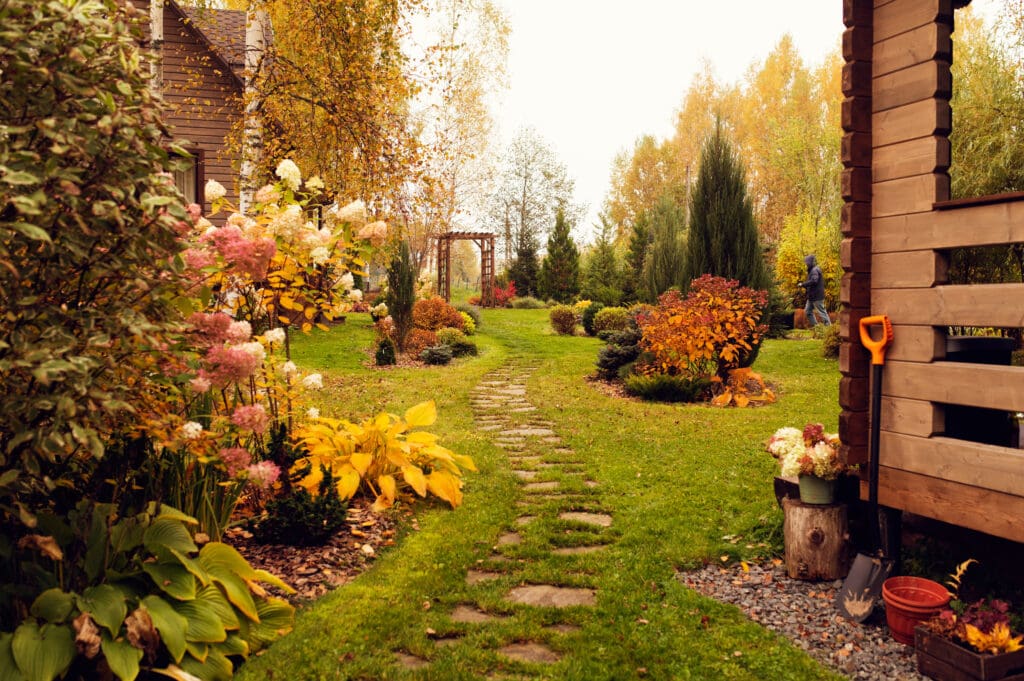
Sullivan says grasses are also severely underused for the fall. Often, these can carry over into the winter as well.
For the wintertime specifically, it’s important to have maintenance conversations with both your clients and crews to prevent what you included for the purpose of winter texture being trimmed back.
Ables says if a client wants their grasses trimmed back during the winter, she suggests weaving in evergreens like boxwoods or pittosporum to provide some structure to the space.
Sullivan recommends looking for plants that are able to hold their own during the harsh winter months and provide some type of color or texture. Winterberry holly and red twig dogwood are two examples of this.
Kauffman adds that paper bark maples are a good tree that provides a lot of interest in the winter and can help anchor a landscape.
Kauffman and Sullivan recommend visiting local nurseries, public gardens and nearby parks as you never know what new plant material you’ll encounter.
“Go to find your favorite garden and go to it multiple times a year and see what they’re doing,” Sullivan says. “Just because you have a great idea doesn’t mean somebody else doesn’t also have a great idea.”
