


If you aren’t utilizing digital recruiting methods in your business, you might as well be trying to play basketball with one hand tied behind your back. In today’s competitive job market, you need to tap into every advantage available.
“The days of paper applications and reliance of prospective employees walking through the door are numbered,” says Terry Shaffer, co-founder and CEO of Summit Lawn and Landscape, based in Grandview, Missouri. “Tech platforms are the future. As we move forward, we have to utilize new technology and trends within the industry without delay to be a thrive in today’s culture. Our applicants have technology at their fingertips; we need to be on the other side, ready to respond.”
Adopt a Multichannel Approach
Just like you shouldn’t solely count on yard signs to drive new customers to pick up the phone, you need to engage your potential candidates in multiple online spaces.
Mike Voories, founder and CEO of Business Resources One, based in Brighton, Michigan, says they leverage everything from posting jobs on mainstream job boards like Indeed, ZipRecruiter, and LinkedIn, to their niche landscaping job board they created, GreenIndustryCareers.com. They also advertise jobs across their social media channels and on the careers page of their website.
Shaffer says they also have a dedicated careers page that lists their open positions and they post on LinkedIn, Facebook and Instagram. He says they utilize Team Engine to connect to hiring sites like ZipRecruiter and Indeed.
“The most effective companies think about resumes like sales leads — they use multiple channels to source applicants, move fast, and follow up,” says Carlos del Pozo, CEO of TeamEngine, based in Boulder, Colorado. “That means posting jobs broadly across platforms like Indeed, Facebook, and their own website, then responding to applicants within hours — not days.”
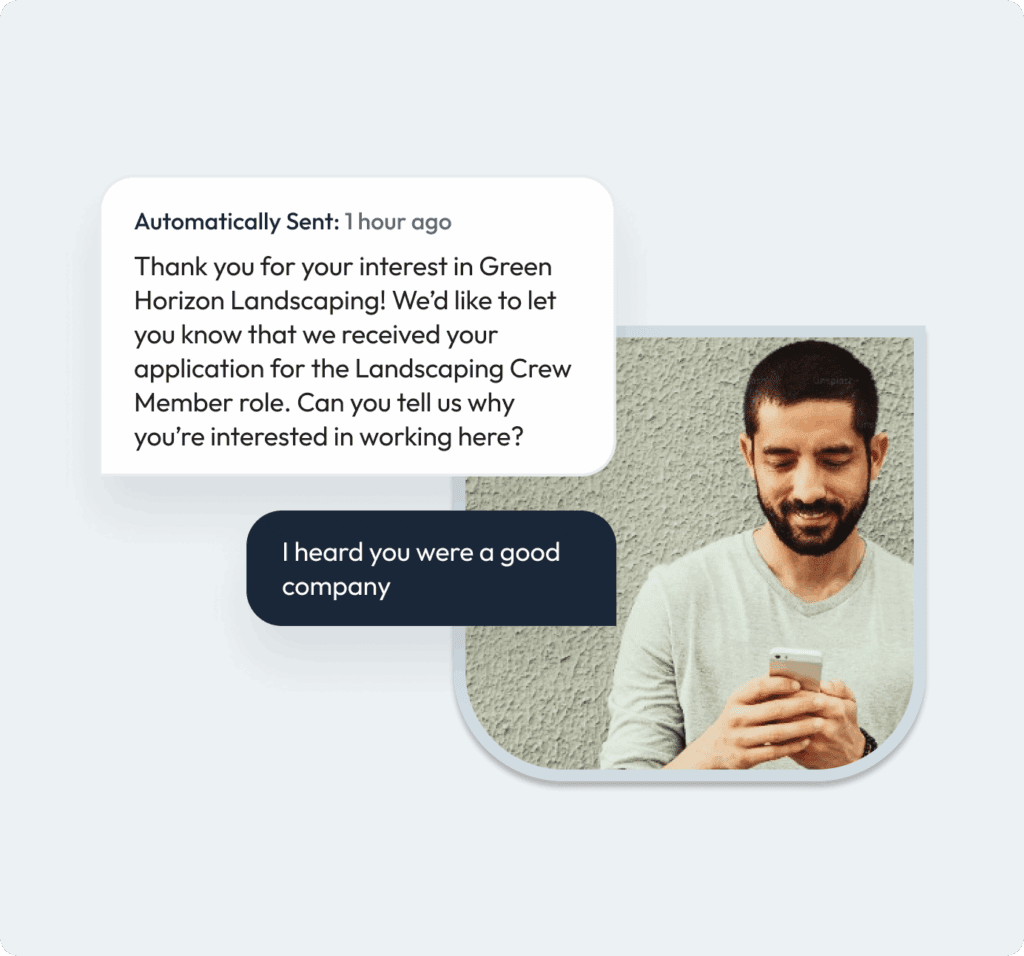
Tito Caceres, managing director of Bloom Talent Solutions, based in Miami, Florida, agrees you should treat your recruiting like marketing by having calls to action, consistent messaging and utilizing automations for timely follow-ups.
Shaffer says applicants have commented on how impressive their response and follow-up are after applying.
“We have automated responses that generate immediately once an applicant has submitted a resume,” Shaffer says. “We then maintain constant communication with the applicant through text and email throughout the entire recruitment process.”
Leverage Your Branding
Your company’s branding is foundational to whether your digital recruiting efforts will be successful. Voories notes that the best candidates want to be associated with the best brands.
“If you’re not really investing in it however you can, I think you’re missing an opportunity,” Caceres says. “It’s ultimately attracting better talent before you’re even posting. You’re shortening your hiring timelines instead of someone trying to figure out who you are and investigating too deeply because they see who you are all over the place. It differentiates your company from being this generic great culture to an actual great culture.”
Dan Klemencic, marketing manager for David J. Frank Landscape Contracting, Inc., based in Germantown, Wisconsin, says they highlight their company’s culture by hiring a firm to produce short, high-quality, uplifting recruitment videos. These videos target their audience, comprising landscapers, blue-collar workers, outdoor enthusiasts, and general job seekers, through social media advertising.
“Hearing them say unscripted, ‘You don’t feel like it’s a job,’ or ‘The company really takes care of you,’ is pretty powerful,” Klemencic says.
Klemencic says people love their videos and often say it’s one of the main reasons they applied.
“Hearing directly from employees builds trust and gives potential hires a realistic picture of what it’s like to work there,” del Pozo says. “Short videos — especially ones filmed on the jobsite or in the shop — perform well on social media and career pages. Testimonials that highlight career growth, supportive leadership, or a strong team culture go a long way in convincing people to apply.”
Shaffer says they outline all the benefits of working at Summit Lawn and Landscape on their website, including their perks and benefits, training and certification, as well as advancement opportunities.
“Your brand isn’t just your logo or website; it’s how you’re perceived by the people who’ve worked for you, applied to work for you, or know someone who has,” del Pozo says. “That perception is shaped by how you treat applicants and employees: responding quickly to new applications, not leaving candidates in limbo, offering real opportunities for growth, and listening to team feedback.”
People talk, and when you consistently provide a good experience for candidates and employees, then you can build a strong employer brand.
“Your online presence can help reinforce that, but it’s secondary to the reputation you earn on the ground,” del Pozo says.
Caceres stresses you need to start building your employer brand now rather than only working on it when you need to hire someone.
Craft Social Media Posts That Resonate
When posting recruiting-related ads, you want to make sure they truly resonate with your audience so it’s not a wasted effort.
Caceres says that authenticity is king when it comes to relatable social posts.
“You don’t have to go out there and be something that you’re not,” Caceres says. “You don’t have to look at your competitors and think you need to be them either. I think that’s a huge mistake. Ultimately, people want to see what’s real. People want to see what’s raw. People want to see your world.”
Caceres encourages using real photos of your team in action instead of relying on stock photography.
“Really take pride in your own company, your own identity, your own company culture, because people appreciate that as well,” Caceres says. “Just take a moment to snap a picture of your team working and just show that. That goes a much longer way than using stock photos, and it’s so much easier to take to take footage of your own team.”
Videos are another powerful type of social post to tap into.
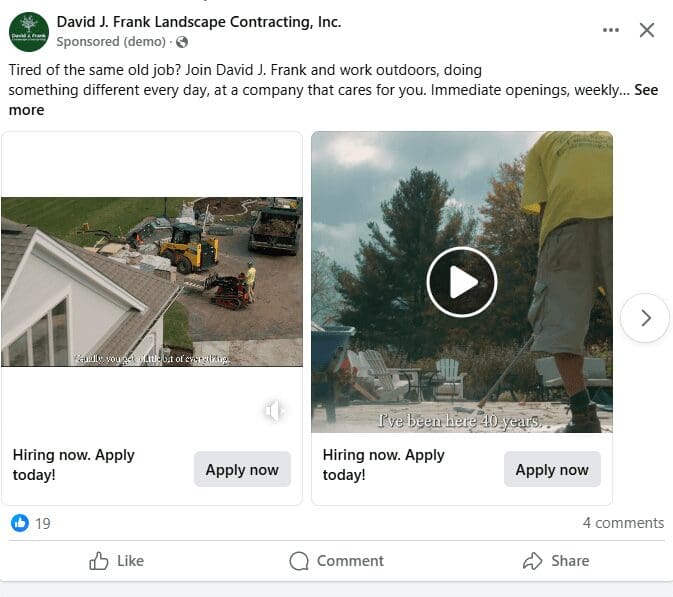
“Short videos are great because it’s the type of content a lot of job seekers are used to absorbing nowadays,” Voories says. “Real employee testimonials are invaluable; social validation is huge!”
Caceres says you don’t need to worry about having high-production quality videos. What matters is showing candidates why people joined your company and why they stay.
“More people should get involved,” Caceres says. “Include your field staff; have them show some pride by recording some content of them doing their work. I promise you, if you just simply ask them, ‘Hey, can you maybe film a video of the week?’ and now you’re building up a full library of videos.”
Sharing posts that cover a day-in-a-life or employee stories can help candidates picture themselves working for your organization. Caceres says these can be more impactful than reading a job description posting.
“Also, a job post doesn’t need to be a carbon copy of the job description,” Voories says. “Candidates want to see two things: tell them about the company and what’s in it for them.”
Social media posts that convey professionalism are also important.
“Candidates are looking for visual cues that tell them what kind of company you are,” del Pozo says. “Clean and well-maintained vehicles and equipment, uniforms, and real photos of your team working together all signal a strong, organized operation. Posts that show off a team atmosphere, pride in completed work, or the quality of your job sites tend to perform really well.”
Engage Passive Candidates
Voories says the most effective digital recruiting strategy for them has been targeting passive candidates. These are individuals who aren’t actively looking for a job.
“We try to stay in front of green industry professionals by sharing helpful content, sending emails and text messages, and sharing actual reviews from others who’ve had an excellent candidate experience,” Voories says. “Our recruiters use several digital tools to research and contact passive candidates about active searches we’re conducting. In addition to our own internal database, we pay for access to third-party databases and sourcing tools.”
Del Pozo notes that social media can be a powerful way to reach passive candidates if you are expanding your reach through targeted ads.
“You can also tap into local community groups where potential candidates are already active, like Facebook, LinkedIn, NextDoor, and more,” del Pozo says.
Caceres says it’s all about getting in front of people.
“If I’m a candidate who is gainfully employed, and I’m not looking, and I might be on TikTok one day, and I had a really crappy day today, and I see this really cool reel, I might say, ‘Hey, you know what? What’s going on over there?’”
Voories adds you need to have a strong employer brand in place, as passive candidates are likely to conduct some research before deciding to respond. What will they see, hear and read about your organization?
“Recruiting passive candidates is like a sales job,” Voories says. “It often takes multiple touches from multiple methods of communication to get a response. LinkedIn, email, text messaging, and even the phone works well. Use them all!”
Caceres says if you want to stand out to passive candidates, you need to develop personalized outreach campaigns.
“Share stories and culture content that create FOMO (fear of missing out),” Caceres says. “Some of the industry guys and gals start podcasts. All of those things are great ways to show the marketplace and the passive talent, ‘Holy crap, they’re doing something different. Let me go check them out.’”
Optimize Job Descriptions
How you go about writing your job descriptions can greatly impact a candidate’s willingness to apply.
“Avoid long and corporately rigid sounding job descriptions for recruiting,” Voories says. “If you want to introduce something longer and more comprehensive later in the process, go for it. The recruiting version of the job description is an advertisement; treat it like an advertisement. Candidates want to know about the company, the job, and what’s in it for them — in short form that can be quickly skimmed.”
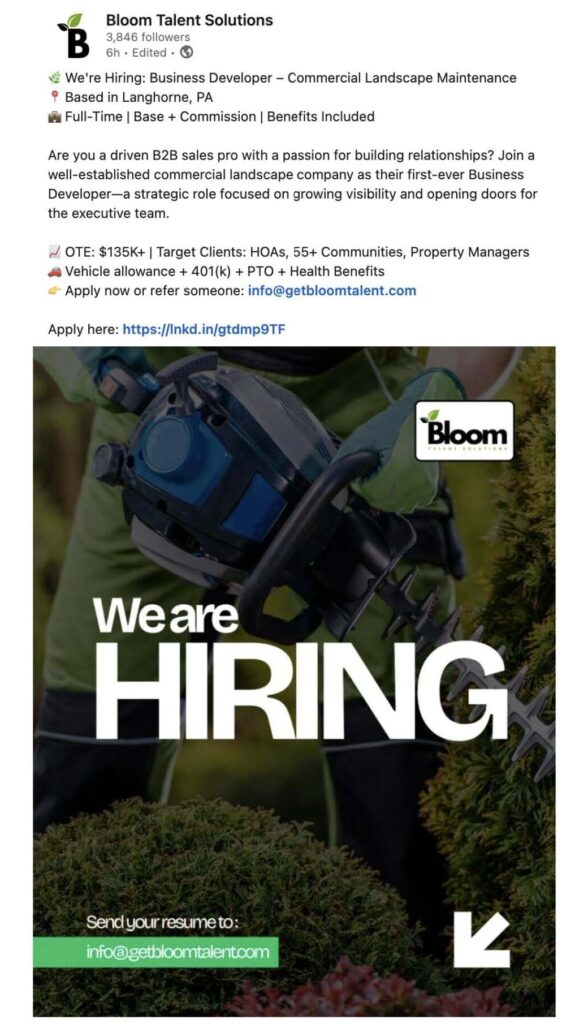
Del Pozo agrees that you should avoid corporate jargon and instead write the description.
“A good rule of thumb is to write it like you’re explaining the company, culture and type of work to a friend who’s thinking about applying,” del Pozo says.
Caceres says you should start with a strong why. Rather than just listing the job duties, cover the job’s purpose.
“You have to have a why,” Caceres says. “The more purpose, the more I want to join.”
Caceres also cautions against using AI too much in developing your job postings. He says it’s important to maintain the integrity of your tone of who you are as a culture and reflect that through the job description by highlighting key selling points.
“Be very clear with benefits,” Caceres says. “People, believe it or not, actually read into that stuff because sometimes that could be the difference maker between me staying here or me even looking out elsewhere.”
Keep your descriptions short, clear and mobile-friendly. Del Pozo recommends leading with the most compelling information like competitive pay, year-round work or a sign-on bonus. Use bullet points to cover the main responsibilities and qualifications.
“Err on the side of more information because job posts that leave applicants guessing about pay, benefits, or expectations don’t perform as well,” del Pozo says. “Plus, job boards reward more complete listings with better visibility, and candidates are more likely to apply when they know what they’re getting into.”
Also, consider including keywords that job seekers frequently use in their search. For instance, if the job title is something unique to your organization but features the responsibilities of an account manager, work to include that phrase in the job description.
Advice for Others
Del Pozo recommends looking at recruiting as a system, not a task.
“The goal isn’t just to fill a position when someone quits — it’s to stay fully staffed so you can deliver work reliably, sell with confidence, and invest in leadership and skills training,” del Pozo says. “That kind of stability only happens when recruiting is proactive and consistent.”
Caceres says the top-performing companies in the industry work to build year-round talent pipelines instead of hiring reactively.
“Just like sales and marketing, your recruiting efforts need to run all the time — not just when you’re desperate to hire,” del Pozo says. “The companies that build a systematic approach to hiring are the ones that stay ahead.”
Also, don’t forget to measure the success of your digital recruiting efforts.
“The good thing about digital ads is that everything is measurable: how many people they reached, how many clicked on it, how many followed the link to our website, and how many applied,” Klemencic says.
Voories says you need to focus on what’s working, decrease what isn’t, and continue to explore new ways to identify, attract, hire, and retain the right talent for your organization. He encourages companies to embrace the ever-evolving technology available and avoid sticking with the comfort of doing what they’ve always done.
“Give digital a try,” Klemencic says. “You have less to lose. Digital recruiting is more targeted, measurable, and provides a better return on investment than traditional means.”
This article was published in the July/August issue of the magazine. To read more stories from The Edge magazine, click here to subscribe to the digital edition.
