


As you grow your lawn or landscape company, your leadership team needs to scale up as well. Hiring externally can meet this need, but promoting from within your organization not only provides new career opportunities for your top employees but can help maintain continuity.
“By raising leaders from within your organization, you have the advantage of ensuring that they understand the company’s culture and values,” says Amy Snyder, director of public relations for Ruppert Landscape, based in Laytonsville, Maryland. “As a company grows, that cultural alignment plays an important role in ensuring that everyone is moving in the same direction.”
Traits to Look For
When looking for these future leaders in your company, there are a number of traits to be on the lookout for.
Curtis Atkinson, founder and CEO of Sunline Landscapes, based in Bluffdale, Utah, says he looks for employees who align with their core values and want to advance. He adds you should seek out qualities that require zero talent like being coachable, outgoing, leading by example and punctual. He says all these little things add up to the characteristics of a good leader.
Brad Blair, vice president of operations for residential & tree care branches for Southern Botanical, based in Dallas, Texas, says he loves someone with a competitive spirit who wants to win and is always challenging the process.
“Not just complaining, but rather pointing out an area that could be improved upon and bringing ideas to the table,” Blair says.
Snyder says Ruppert prioritizes traits like integrity, self-awareness, respect, and resilience, but soft skills are equally important.
“We seek individuals who communicate and listen effectively, have a positive outlook, excel at problem-solving, and have strong organization and time management skills,” Snyder says.
Similarly, Angela Cornish, vice president of corporate administration for Virginia Green, based in Henrico, Virginia, says they look for employees who can deal constructively with increased pressure and adversity and maintain cooperative relationships. Other qualities they prize include a drive to take on more responsibility and a natural desire to learn new things.
Assessing Leadership Potential
Snyder says identifying rising leaders can be as simple as recognizing the people in your organization who work hard, communicate well, motivate others and adapt quickly when challenges arise.
Cornish says for their service leaders to progress, they must train new hires and seek opportunities to facilitate seasonal and annual training. This allows them to see their potential leaders in action and verify how they’re doing through the success of the new hires.
While the employee’s tenure with your company is important, this shouldn’t keep you from passing over a potential leader.
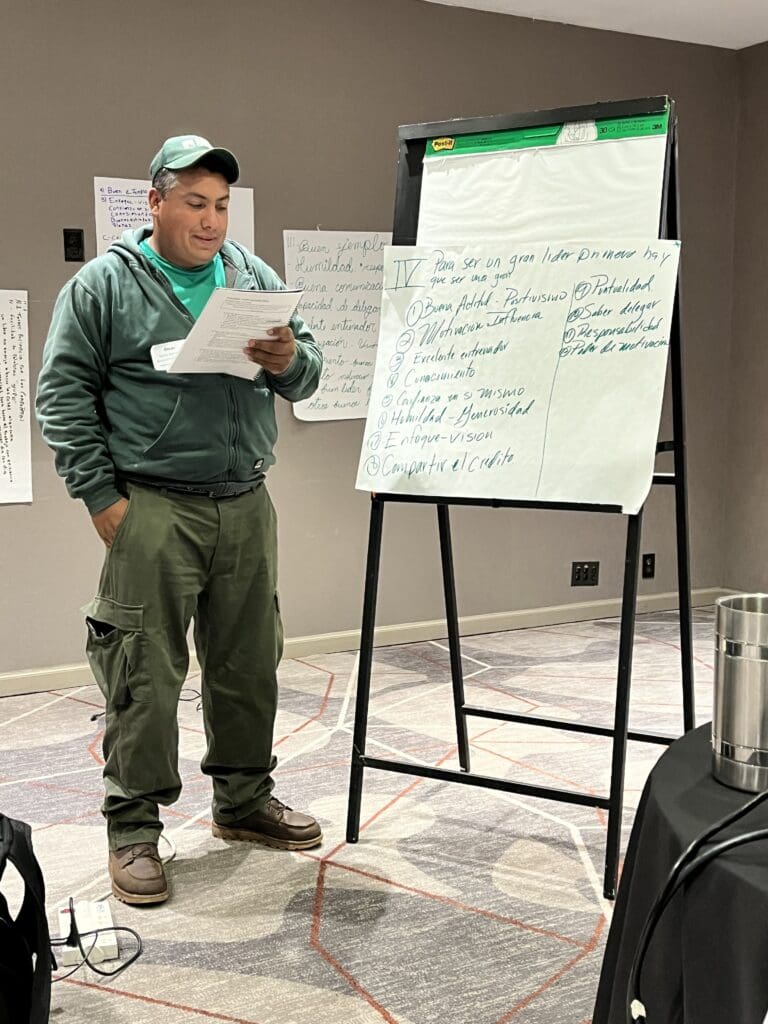
“We definitely value tenure; however, if we observe these traits in a new hire, even within the first six months, our managers will have career development discussions with them,” Cornish says. “And they will help to ready them for other opportunities.”
Once you know how well a potential leader performs in their current role, Blair suggests observing if they lift up others around them as well as delving into how they stay organized, as leaders have to spin multiple plates.
“If someone’s doing their job very well as part of our review process, we just ask them questions like, ‘Have you ever thought of being in a leadership role, like a crew leader or production manager?’ or ‘I’m thinking of you in this position, what’s your thoughts?’” Atkinson says.
Snyder says sometimes planting the seed of possibility and acknowledging a team member’s talent are all it takes to give them the confidence to take the next step.
“Our managers will take time to highlight and reinforce their observations with employees, sometimes to help bolster confidence or share an opportunity the employee may not have thought they were ready for,” Cornish says.
Virginia Green also has a program called Learn Virginia Green, which gives interested employees a chance to spend time with multiple departments and branches to understand better what they do and to help identify potential areas of interest.
Atkinson says it’s important to gauge the employee’s interest in moving into a leadership role. He says if an employee isn’t excited about the opportunity, he doesn’t push very hard.
“If you have brought this up several times without them biting, then back off,” Blair says. “Make it clear you want to consider them for a leadership role, but if they make it clear that they don’t want it, then move on to the next candidate.”
Preparing Prospective Leaders
Once you’ve identified prospective leaders in your company who are eager about the chance to move up, make sure you have formal training in place. This can look different from organization to organization. For instance, Atkinson says he leans on the NALP certification programs and has these employees talk to someone who is in the same role at one of the companies in his peer group.
“That’s been actually hugely beneficial because we might be using the same software or might be dealing with some of the same things, and they’re able to talk to somebody that’s doing it in across the country, doing the exact same role that they are in, and they’re able to bang ideas off each other,” Atkinson says.
Blair starts by testing the employee with stretch assignments, including them in additional team meetings, as well as assigning them to mentor and be mentored by someone in the company.
“Have a road map with focal points and timeline check-ins,” Blair says. “Make it their responsibility to keep up with and update you on. They have to own this.”
Virginia Green has a series of in-person and virtual sessions on understanding yourself as a manager, leading your teams, communication, coaching, conflict resolution, and leading through change.
Beyond feedback and training, Ruppert provides opportunities for employees to engage with senior leaders and get involved in external organizations.
“Connecting with groups like NALP, ABC, charitable organizations, or local schools and universities offers valuable outside perspectives,” Snyder says. “Emerging leaders can observe successful practices from other organizations and apply those insights to enhance our own.”
Snyder adds another essential part of leadership preparation is empowerment.
“By giving employees ownership of decisions in their current roles and gradually expanding their decision-making responsibilities, we help them build the confidence and skills needed for future leadership positions,” Snyder says.
This article was published in the November/December issue of the magazine. To read more stories from The Edge magazine, click here to subscribe to the digital edition.
