
Your uniforms are a reflection of your company, so naturally, you want all your team members to feel comfortable and professional in them.
Unfortunately, while more women have joined the landscape industry, the availability of workwear designed specifically for women has lagged behind.
“Many solutions historically focused on adapting men’s products rather than addressing the unique functional and fit-related needs of women on the jobsite,” says Nadia Sinner, product marketing manager at Milwaukee Tool.
If you have female team members struggling with their uniforms not fitting well, or if you want to be able to attract more women to your team, making an effort to address this issue can go a long way.
Listen to Your Team
Alison Falkenburgh, container division manager, field manager and lead gardener for Poplar Point Studio, based in Genoa, New York, says the first step in remedying this situation is to speak with your female team members to find out what they actually want.
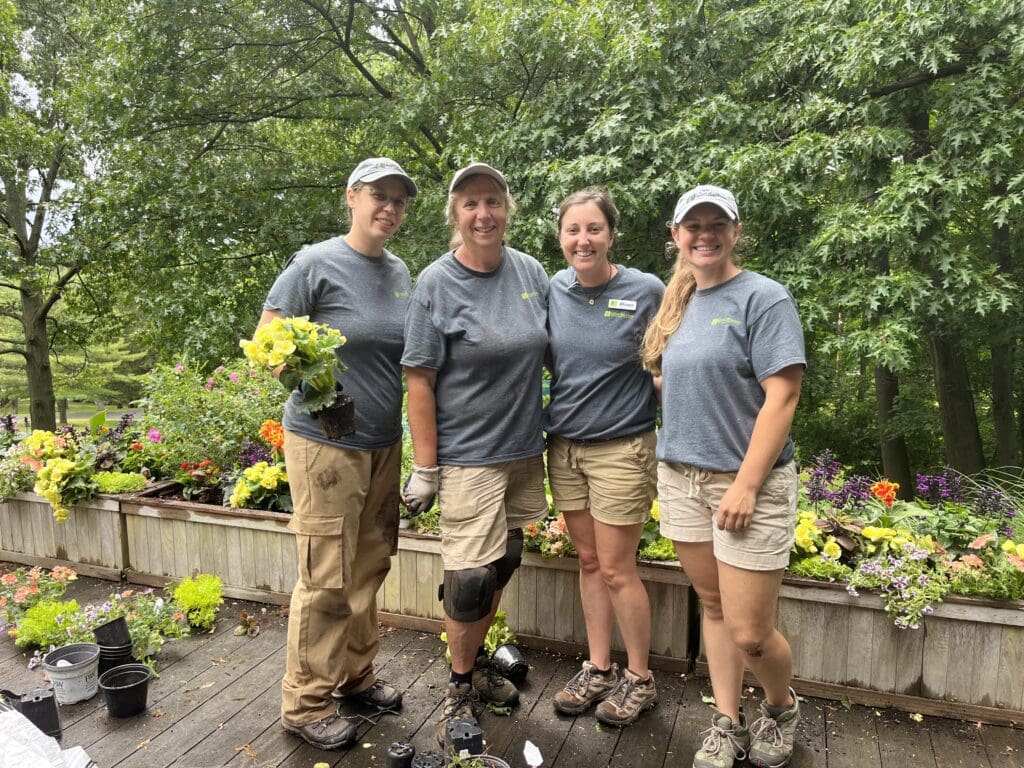
“You do not want to make an assumption that since they are female, it means they want a V-neck shirt or the female fit,” Falkenburgh says. “Everyone is different, so allow them to put in their input and then go from there. Communication is key, whether it is a female or male team member.”
Falkenburgh says throughout the years they’ve asked for feedback from their team on what fits best and tailored their uniform options around that. They offer unisex options that they feel fit females well, but also have specific choices that are labeled men or women as an option.
“The feedback loop is how we started offering both cotton and polyester/spandex uniform tops, crew neck sweatshirts and hoodies, different styles/size winter hats, as well as baseball hats, visors and garden hats,” Falkenburgh says.
Consider Key Design Features
If you don’t currently have any women employees to poll, some of the main design features to look for when sourcing uniforms include durability, mobility, comfort, and coverage. When workwear pieces are properly engineered, they reduce restriction and allow women to move confidently throughout their workday.
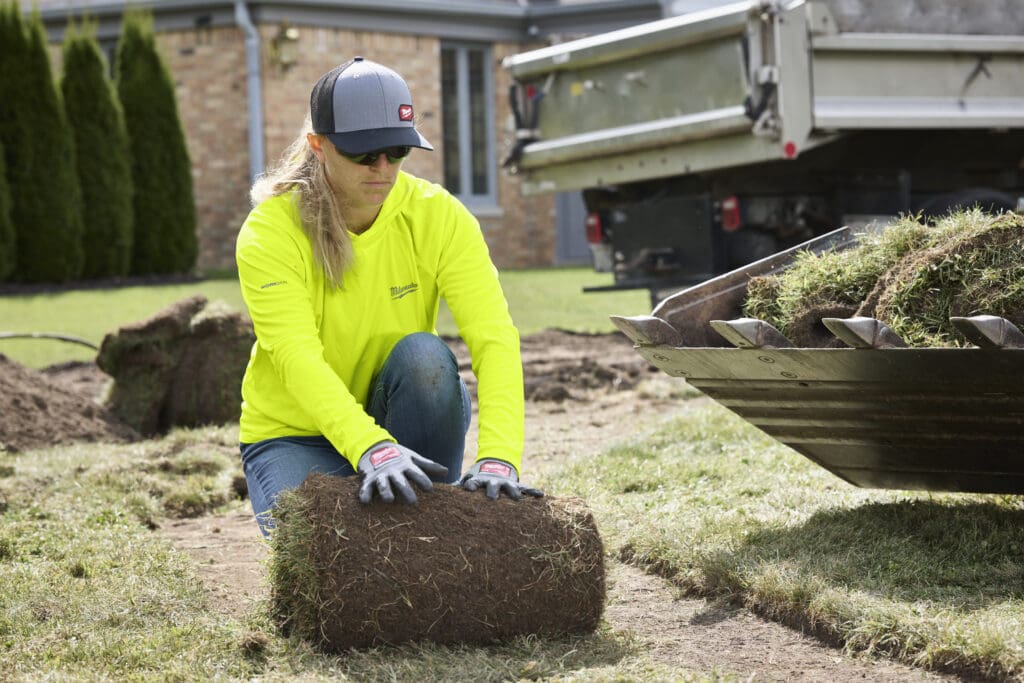
“High-waisted pants with wide, reinforced waistbands provide added coverage and support during repetitive bending and lifting,” Sinner says. “Elastic waistbands and jogger-style silhouettes enhance flexibility while maintaining a secure fit. Fabric innovations that improve stretch, breathability, and abrasion resistance are especially important for outdoor conditions, where exposure to heat, sun, and rough terrain is common. Together, these features ensure workwear performs reliably while supporting a full range of motion throughout the day.”
Other features, such as reinforced pockets, anti-microbial fabrics, and thoughtfully placed stretch zones, help minimize fatigue and discomfort. Sinner adds that clothes with longer sleeves and drop-tail hems enhance coverage and protection when bending, reaching, or doing overhead work. This allows women to focus on the task without the distraction of ill-fitting apparel.
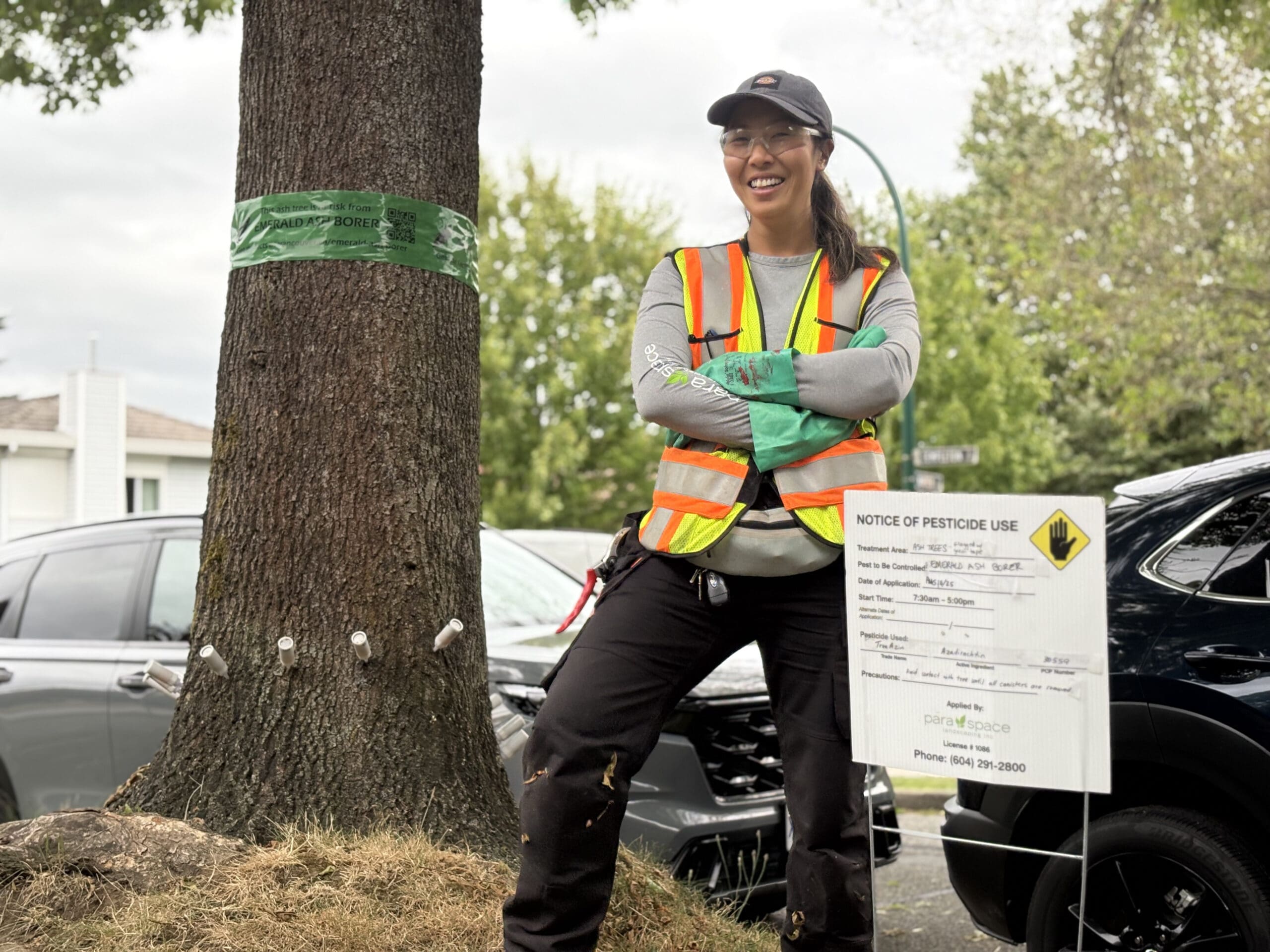
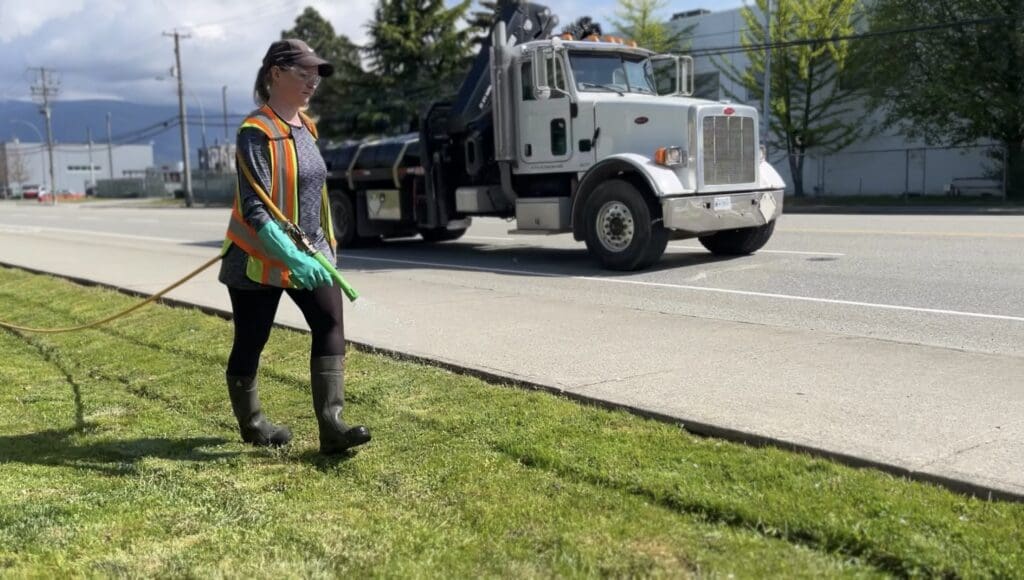
Katie Bush, irrigation and safety manager for Para Space Landscaping, based in British Columbia, Canada, says when it comes to PPE, look for adjustability in safety gear.
Test Gear Before Buying in Bulk
Bush encourages other companies to be open to trialing different options with their workers and listening to their feedback. She says they tried a variety of styles before they settled on their current safety glasses for employees.
“Order samples and allow one of the female team members to take the lead and look for uniform pieces they think will work best,” Falkenburgh says. “Do not compare one female to another because their needs, body shape and size all vary, and it is important to allow them to express what is needed.”
Provide Flexibility
Falkenburgh adds that they look for options when it comes to company uniforms.
“Some female team members are happy with the fit of a unisex shirt, but others prefer a style that is fit more for the female body, so we have different options to make sure they can pick what feels best for them,” Falkenburgh says.
For certain aspects of company uniforms, such as pants and footwear, where body types vary greatly, it may be best to offer stipends that allow employees to find what suits them best.
“You cannot always accommodate every single individual team member, but if there is a way to have a website with the different options for team members to pick which workwear feels most comfortable for them, then allow that,” Falkenburgh says. “If they are really struggling, perhaps change the policy so they can use a stipend to buy pieces that work best for them, but they must wear a name tag every day, only certain colors to match company colors, they must have a hat/visor with the company logo, etc.”
The goal is to provide workers with clothing that supports their overall productivity, safety, and confidence.
“Be open to change,” Bush says. “It might seem like more effort at the start, but it pays off in the end.”