

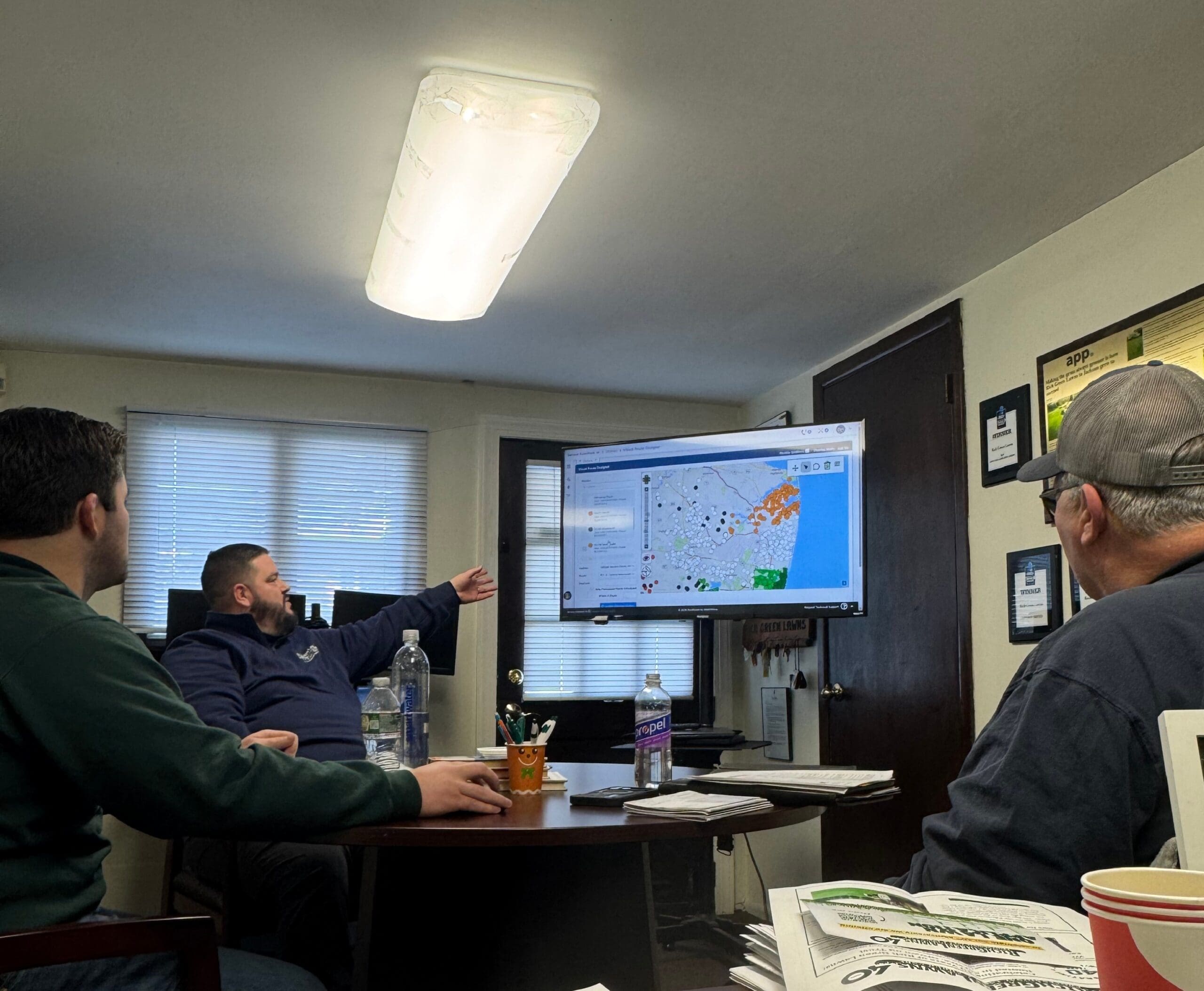
When it comes to lawn care, route density isn’t just a ‘nice-to-have’ aspect of the business. It plays a direct role in your company’s profitability, efficiency and ability to deliver a better overall customer experience.
“When your stops are tighter together, your trucks spend less time driving and more time actually servicing customers,” says Eric Lehmann, COO of Rich Green Lawns, based in Jackson, New Jersey. “That means lower fuel costs, less wear and tear on vehicles, and more productive hours out of every technician. For our clients, we are able to provide faster response times, improving their experience.”
Cam Cundiff, director of administration with Weed Man – Kansas City franchise, says their goal is for technicians to visit 25 to 30 houses in a day. He says in some cases where they have tight routing, an employee can have 10 houses done by 10 a.m. and be done by 3 p.m.
“By tightening up our routes, we were able to reduce overtime significantly,” Lehmann says. “When stops are closer, technicians spend less time driving and more time working, which keeps days on schedule and minimizes the need for extra hours. It’s better for the team and for controlling labor costs.”
Route Density as a Growth Engine
Aside from boosting employee morale, tight route density can lead to increased consumer awareness of your brand as your trucks are seen more frequently in an area.
Cundiff says in branches like Milwaukee, they have very dense routes, and it’s much easier to sell there because everyone is already familiar with their company and sees their yellow and green trucks on a regular basis.
“The denser you are, people just get familiar with seeing you, and that puts you ahead of the game,” Cundiff says.
Lehmann agrees that since they’ve improved their route density, their organic growth has increased.
“By clustering stops and serving neighborhoods more efficiently, we reach more potential clients through referrals and neighbor-to-neighbor visibility,” Lehmann says. “It’s created a ripple effect to help drive new business without extra marketing spend, which has been a win for both efficiency and revenue.”
Route density also allows companies to serve more clients with the same resources. Cundiff says they prefer a truck to serve around 400 customers, but when they aren’t as dense in a territory, they need two trucks to service that number of properties.
“Because of the organic growth we’ve experienced, we actually needed to add routes rather than reduce them,” Lehmann says. “That said, the increased route density meant that each truck we added was far more productive, so even with more vehicles, we’re getting more out of every route and every technician.”
The Path to Density
When it comes to achieving route density, no tool or software is going to do much good until you’ve addressed gaps in your routes via strong marketing.
Lehmann says they’ve always prioritized route density, but once they really focused on improving it, they found just how much more they could get out of each day. He says they concentrated on targeted marketing.
“For example, we reached out to neighbors of our existing clients if their property lines touched, we added them to our marketing leads and sent them personalized mailers with real pricing,” Lehmann says.
Cundiff says they also rely heavily on direct mail and send frequently to areas where they know they are dense or would like to be dense. He says they also use a strategy called the ‘star method’ where their technicians will leave door hangers at the houses on the left and right of their customer and the three houses across the street.
Weed Man has also found their online marketing efforts are key to increasing their density.
“For Facebook, we’ll use look-alike campaigns,” Cundiff says. “With look-alike campaigns, we’ll take the demographics of our customer base, give it to Facebook, and Facebook will go market to all the look-alikes that look exactly like our demographics. Google does look-alike campaigns. Facebook does look-alike campaigns. Instagram does look-alike campaigns. Those are massively beneficial.”
Lehmann says they’ve also worked to build strong relationships with other industry professionals who offer services they don’t.
“Creating that referral network not only helped us grow our client base in key areas, but it also opened opportunities for subcontracting work,” Lehmann says. “It was a combination of smart marketing and strategic partnerships that made a big difference.”
The Importance of Data Accuracy
Once you have a good number of customers in an area, then comes the task of refining routes so they are as efficient as possible.
The data you collect plays a key role in whether the routes you build are ones that allow technicians to make the most of their day or not.
“If your data is off, even by a little, routes can end up being unrealistic; technicians might be overbooked, and you lose the efficiency you’re trying to gain,” Lehmann says. “But when your numbers are solid, the software can optimize routes effectively, saving time, reducing costs, and improving the customer experience. It really is the difference between good data and not.”
Lehmann recommends monitoring your data on a regular basis so when you are reviewing and optimizing your routes, the information is reliable.
Cundiff says that recently they’ve started utilizing Deep Lawn to assist with their web sales, as it provides accurate property data.
“Property measurements are massively important to us,” Cundiff says. “Everything we do is square footage-based, and that’s how we know how much the tech gets paid. That’s how much we know how to cost it, and for inventory, how much product do I need to leave the shop with. Mismeasured properties are a big deal in lawn care because you get out to a lawn and it’s measured at 6,000 square feet, but you get out there, and it’s 15,000 square feet; they can throw some numbers off. The technician doesn’t get paid correctly.”
Blending Tech and Human Insight
While many lawn care companies lean on their CRM or fleet software to assist with automating routing, it’s best to still review its suggestions with your own background of experience.
“There have definitely been times when an automated route looks good on paper but doesn’t make sense on the ground,” Lehmann says. “Traffic patterns and neighborhood quirks are considerations that have made a difference. That’s why we like to step back and look at the big picture, combining the software’s recommendations with our lived experience. Using all of our tools together helps us make smarter, more practical decisions.”
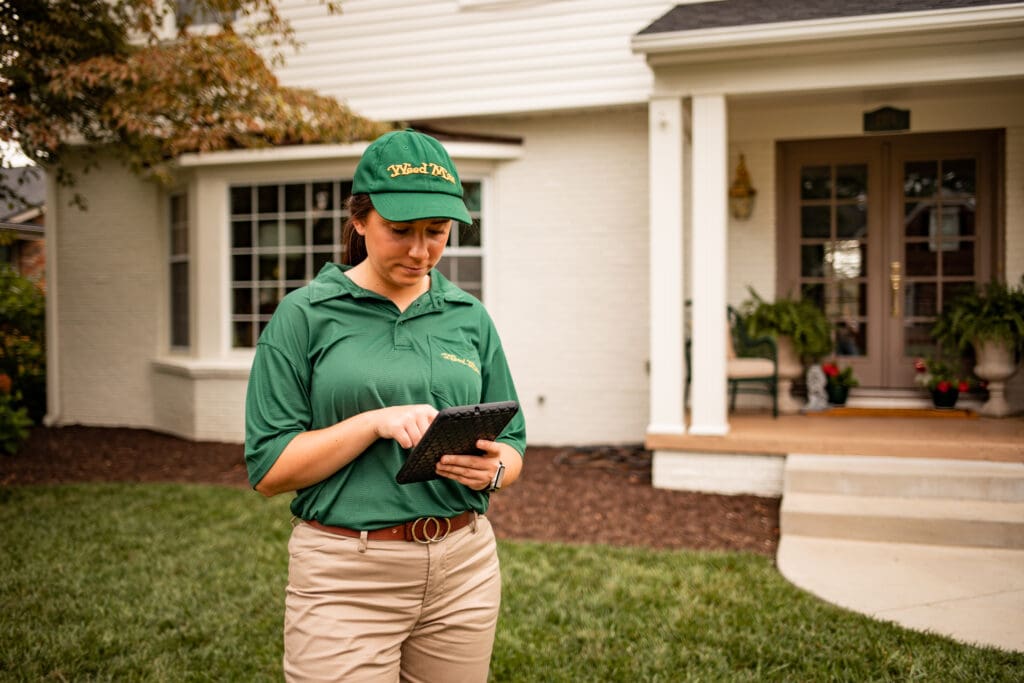
Weed Man sends routing information to their technicians’ tablets, which constantly optimizes their route depending on who canceled during the day or when jobs have been added. Their proprietary software structures their routes so they only have to make right turns versus having to cross the street.
Cundiff says that for their technicians who are new to an area, their internal routing software serves as their lifeline, but over time, they become familiar with the houses on their route.
Lehmann recommends using routing software as your guide and then layering in your knowledge of the area and the specifics of each job.
“For example, we might know that certain streets are impossible to navigate at certain times, or that some properties take a little longer than the average,” Lehmann says. “So, we take the software’s optimized routes and tweak them where needed. It’s a balance of trusting the technology, but validating it with real-world insights to make sure routes are both efficient and practical.”
Practical Advice
Even after fine-tuning your routes, it’s a good practice to regularly review them to see if they are still optimized.
Cundiff says on a yearly basis, they’ll review their territory lines if any changes need to be made, and their routes are optimized on a minute-by-minute basis in their software. Lehmann says they currently re-optimize their routes once a year and are looking to improve.
“Ideally, we should be reviewing and adjusting routes quarterly to account for changes in client growth, neighborhood patterns, or seasonal factors,” Lehmann says. “More frequent optimization would help us stay efficient and responsive throughout the year.”
Take time to determine what factors matter the most to you when creating your ‘ideal’ route density. Metrics like revenue per day, stops per day, and service time should all be considered.
Cundiff says they typically pay attention to the number of stops per day the most, as they are commission-based, and it helps ensure their technicians receive good pay.
“We don’t pay hourly, and we use that commission structure as a form of influence on their efficiency,” Cundiff says. “They say, ‘Hey, I need to make more money.’ Well, how can you do more jobs in the day?”
Lehmann says their key indicator of an ideal route is reduced windshield time.
“The less time a technician spends driving between jobs, the more efficient the route is, and the more productive the day becomes,” Lehmann says. “If we can minimize that driving time while still hitting all our stops, we know we’ve hit a good balance between efficiency, customer service, and profitability.”
This article was published in the June/July/August issue of the magazine. To read more stories from The Edge magazine, click here to subscribe to the digital edition.