

When it comes to methods to grow your business, franchising your brand is certainly the road less traveled, but for some owners, this strategy can make all the difference.
“Franchising allows us to combine the strength of a nationally recognized brand with the passion and entrepreneurial drive of local independently owned and operating business owners,” says Lori Johnson, president of The Grounds Guys, a Neighborly company, headquartered in Waco, Texas. “Landscaping is inherently local, and franchise owners bring market knowledge, community relationships, and a personal investment in success that is difficult to replicate through a corporate-owned model. Franchising enables us to grow while maintaining a strong local presence in every market we serve.”
Similarly, U.S. Lawns chose to franchise because they wanted to replicate their business model while having an owner in the community they are serving.
“There’s something about having an owner in the community you serve who can adjust, react, respond to nuances that are happening,” says Ken Hutcheson, board member and senior board advisor of U.S. Lawns, headquartered in Orlando, Florida. “That’s what the founding company was built on: owner involvement. Close to the customer, close to the employee, responsiveness.”
Josh Malik, CEO of Joshua Tree Experts, headquartered in Stockertown, Pennsylvania, says he was attracted to franchising as it allowed him to grow strategically and quickly without having to turn to investors.
“Getting franchisees with skin in the game, it’s better than getting general managers who can come and go, and then you’re in a market that is thousands of miles away and trying to fill that position could be really hard,” Malik says. “Putting it on the franchisees to help them grow, it’s just a better model for me.”
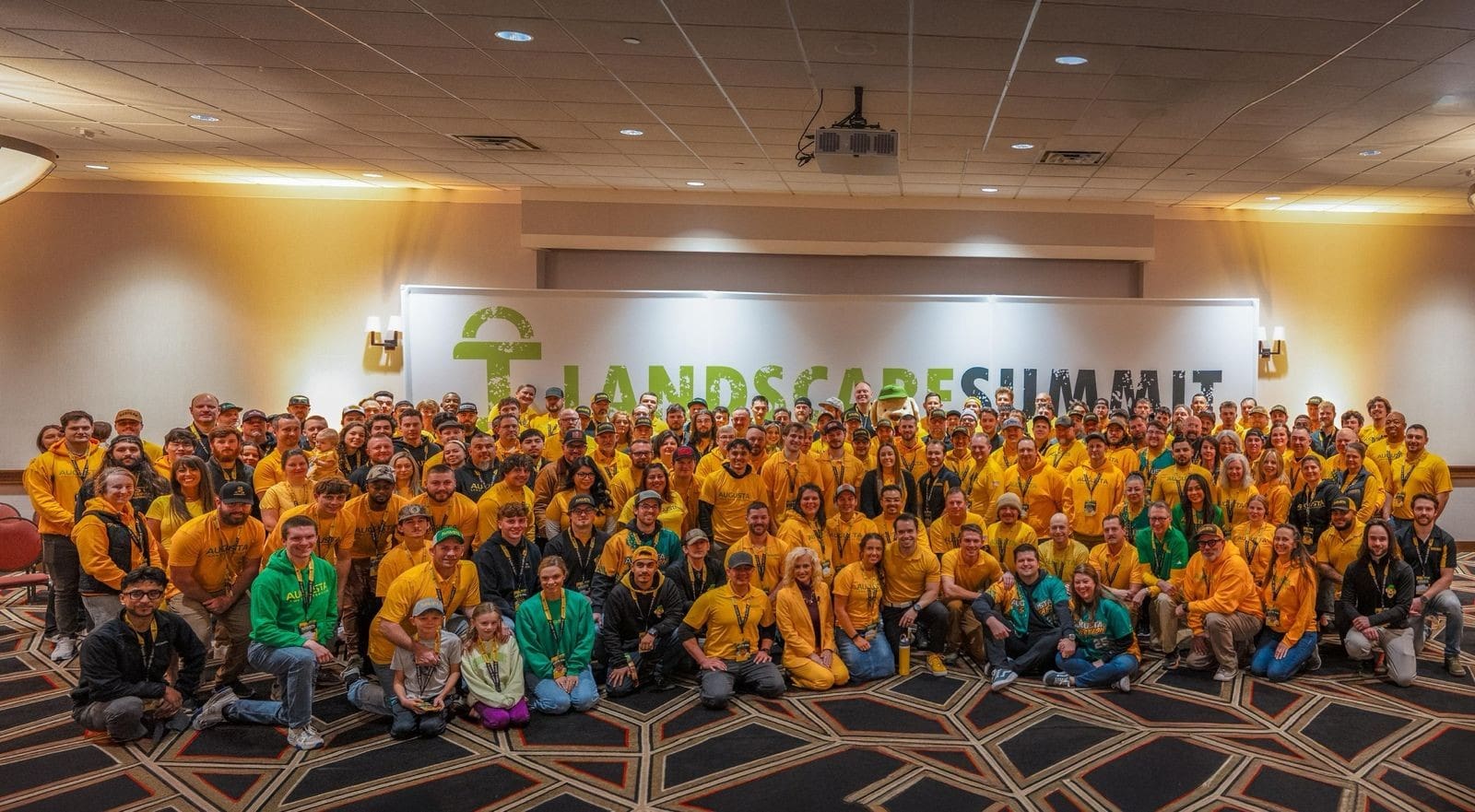
Mike Andes, founder of Augusta Lawn Care, headquartered in Bellingham, Washington, agrees franchising is a faster form of growth. He says he would not have been able to grow to over 200 territories with 150 owners in five years by himself.
“I think if anyone’s thinking about franchising, you have to start with the end in mind,” Andes says. “What’s the goal? For me, it was to change the level of professionalism in the landscape industry, and I knew I couldn’t do that myself. I would have to be able to tap into a community, and I feel like we need 1,000 territories sold across the U.S., Canada, and Australia, to be able to have that kind of impact.”
Franchising Is Not a Shortcut
While franchising your brand can allow you to grow more rapidly, it is not a ‘get-rich-quick’ scheme or something to be taken on lightly.
“Franchising requires a significant investment in training, support, communication, and relationship management,” Johnson says. “Success depends on alignment between the franchisor and franchisee. Unlike a corporate-owned location, franchise owners are independent business owners, so maintaining consistency across a large network requires ongoing collaboration and support.”
Andes notes that just because franchises allow you to scale faster doesn’t mean you’ll necessarily be more profitable.
“You need to basically make 20 or 30 franchisees before you make the revenue of one location that’s corporately owned, let alone profit, just revenue,” Andes says. “When you do the math, corporate expansion might actually be easier doing three or four more locations, compared to getting 100 franchisees.”
Malik agrees that franchising is an expensive long-term game.
“You’re not making money from your franchise partners in year one or two; it doesn’t matter if they’re paying royalties,” Malik says. “It’s year three or four, you start seeing that return come back. Year five or six, it really starts climbing up.”
One of the costs associated with franchising is marketing and selling your system to potential partners. One option is to work with consultants who network and find potential franchise owners for you, but these consultants make money from your franchise fee. There are also franchise sales organizations you can belong to that help find candidates as well.
“Between those two, they’re taking a large chunk of that initial franchise fee,” Malik says. “So, then you got to focus more on royalties, tech fees, our contact center fee, different things like that to really drive revenue to the bottom line.”
Malik says if you decide to be your own salesperson for the franchise, you have to put together a strong discovery process, complete with slide decks and visuals to sell candidates on the brand. He says you also need to think long-term and consider how to best support your franchise partners.
“If your franchise partners are doing well, you’re doing well,” Malik says. “If they’re not doing well, you’re not doing well, and you need them to be able to validate for you because as people come into the business, they want to talk to current franchise owners, and your first 10, they’re the hardest to get to.”
Andes says many franchises die after five to seven locations because they don’t have enough money from royalties to sustain the infrastructure required to support the franchisees.
Hutcheson says it’s not uncommon for owners to partner with a private equity firm that will help them with the costs associated with launching a franchise brand. Malik funds his franchise system with the profits of his corporate location.
It’s also important to understand that creating a franchise is entirely separate from your current work.
“It’s a completely different business than whatever you’re actually doing,” Andes says. “If you’re mowing grass, if you’re doing landscaping, when you franchise, you are no longer doing that. You are in business development, you’re in systems building, you’re in training, and there’s a lot of legal and compliance stuff that has to go through.”
Hutcheson says because franchising is an industry unto itself, you’ll need to bring in experts familiar with the franchising process to be successful.
“Don’t look at it as a short-term fix for whatever your problems are; this needs to be looked at as I’m ready to do a new business in a new industry,” Hutcheson says. “It’s not just a way to quickly expand your business, because it’s not your business anymore.”
What Must Be In Place
The first building block to your franchise model is having a successful, proven business model that can be shared with others. Hutcheson stresses it should be well documented over at least three to five years, rather than just a flash in the pan.
A successful franchise needs documented operational processes, training programs, technology platforms, brand standards, marketing systems, financial performance benchmarks, and a dedicated support structure.

Johnson points out that franchising is far more than selling territories. You have to create systems that others can successfully follow.
Malik says he first started thinking about franchising in 2019, but he didn’t launch his franchise system until 2022.
“I did some research on what it takes to franchise the system, what it takes to be successful, how you grow a franchise system, how you grow a team in the franchise system,” Malik says. “You really have to have your processes together. You’ve got to almost think of it like you’re putting a business in a box that you’re handing off to a franchise partner.”
You also need to create a franchise agreement, franchise disclosure documents and an operations manual. Your FDD will outline elements, including the initial investment, ongoing fees as a franchisee and a financial performance review of your business.
“We disclose everything,” Malik says. “This is what we did in 2025, so our 2026 FDD shows basically a P&L of what we did. That way, franchise partners can look at that and say, ‘Hey, this is an investment model that I want. I can make X percent in EBITDA at the end of the day. I can do different lines of revenue with the tree care, lawn care, and the pest control,’ and it really breaks it out just like a P&L does. It gives them guidance on making a very educated decision.”
Malik says they opened a prototype office prior to launching their franchise to understand the marketing costs to get brand exposure, clients, market share and to recruit employees.
“It really helped us understand what the cost would be to launch the new location, and then we took those costs associated, and we looked at our cost at my main headquarters and did a blended rate where we said this is what it’s going to cost for marketing,” Malik says.
Joshua Tree’s operations manual is around 280 pages long and covers everything related to how they perform tree care, lawn care and pest control. Malik says it’s important to have all of the specifics laid out because not all franchise owners come with industry-specific knowledge.
“We have not one franchise owner who has tree care, lawn care, pest control experience,” Malik says.
Once you have all of these materials prepared, then you have to navigate the variety of legal requirements that differ from state to state. Malik says in registration states, it took them around nine months to go through that process to launch legally.
“There’s a lot of legal tape and compliance stuff in terms of what you can say online, what sort of claims or promises or revenues you can disclose,” Andes says.
Growing Strategically
Once you’ve launched your franchise brand, it’s important to grow sustainably, as building out a scalable support model is one of the most difficult aspects of franchising.
Johnson says they work hard to maintain consistency across their network of franchisees.
“Ensuring every customer receives the same high-quality experience while supporting franchise owners with different backgrounds, market conditions, and business goals requires strong systems, communication, and operational support,” Johnson says.
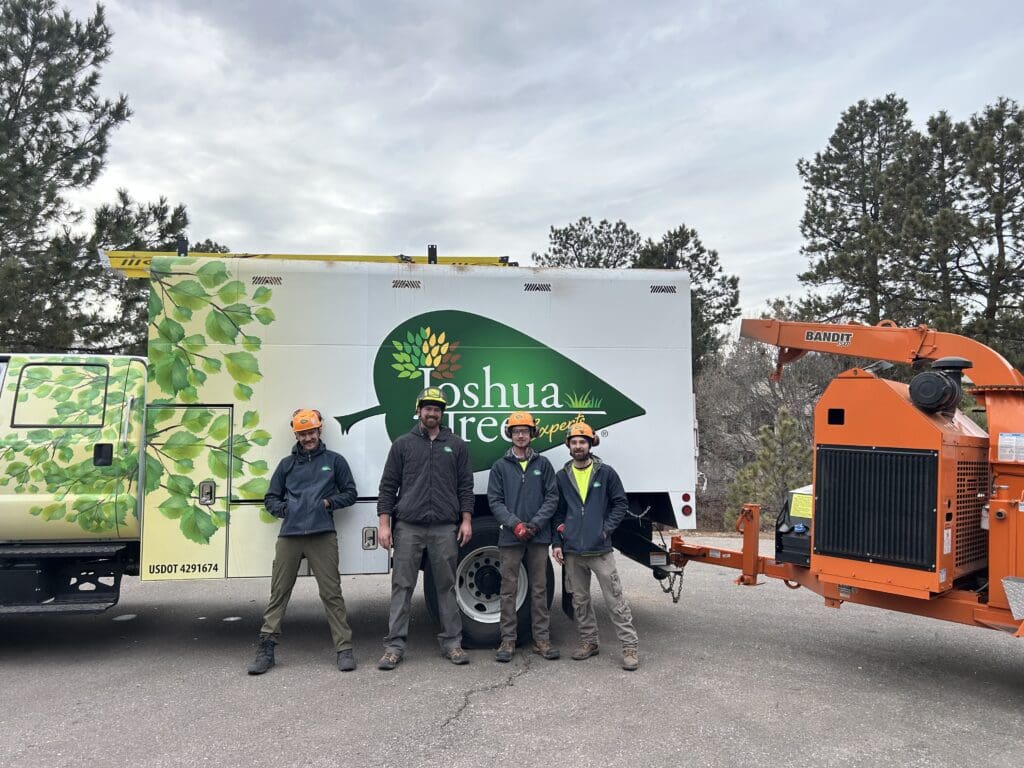
Malik says he tries not to look further than 10 years ahead due to possible changes in the market, but currently he’s looking to grow by 20 to 30 units a year.
“It shows us a really good, steady growth plan, where we can continue to control the brand, we can continue to control the training and our vendor relationships to make it more powerful,” Malik says. “We’re not outspending ourselves, and we can really put some really good models together for ourselves on how we’re going to grow our team to be able to support the franchise system.”
One benefit of franchising is it allows you to consider secondary and tertiary markets that you may not be able to expand into with a company-owned brand.
“If I’m working for one of the large companies, we’re not going to enter a market unless it can produce $20, $30, $40 or $50 million because of the investment required,” Hutcheson says. “We actually find great success in those secondary and tertiary markets. Our customers are there, and we build around our customers.”
Andes says an ideal market for them is anywhere they can build a $1 million business. He says they look for a growing population of 100,000.
Some of the metrics The Grounds Guys evaluate include population growth, economic indicators, household demographics, competitors, demand for landscaping services, and the overall business environment.
Hutcheson says they encourage their franchisees to create density in their territories, but they’re not opposed to moving into new geographies as well.
Johnson says they take a similar balanced approach, as market density can create efficiencies in brand awareness, recruiting, and operations while strategic growth allows them to reach untapped customer demand.
Malik says they focus on areas of the country that can support general tree care and plant healthcare services. After year one, they will add on lawn care and pest control services. He says their goal is 20% growth year-over-year, and the additional service lines allow their franchisees to grow in density.
What Defines Success in Franchising?
It doesn’t matter how many territories you sell if your locations have poor unit economics.
“In the long run, if the unit economics of the locations that you start as franchisees are not successful, the franchisor will not be successful,” Andes says. “The only thing we measure is unit economics around revenue per location, leads per location, close rate, and seeing that go up 20-30% every year. That indicates to me that we’re doing something right, and that we’re on the right trail.”
Andes says if these numbers ever go down or aren’t going up, they are early warning signs that a franchise system is going to decay and fail.
“If you’ve got strong unit economics at the local level, you’re golden,” Hutcheson says. “Life is so much easier. We want to make sure our margins are increasing locally. Our revenue is increasing at the right pace, and that key word is right pace, right margins.”
Johnson says their goal is sustainable, profitable growth.

“We want to continue expanding our footprint while helping existing franchise owners grow their businesses,” Johnson says. “Success isn’t measured solely by adding locations; it’s about helping franchise owners build strong businesses that serve their communities, create jobs, and generate long-term value.”
Andes says they look to create locations with six to eight technicians doing $800,000 to $1 million in revenue.
“We don’t just keep adding more trucks, hiring more people, and expanding,” Andes says. “That allows us to have one general manager, six to eight technicians, and the admin being handled at the command center, and be very profitable and lean at that size.”
Andes says that unlike other franchisors, they do not have royalty fees. Instead, they opt to charge a flat monthly fee. He says this incentivizes the franchise owner to make their business as successful and profitable as possible rather than inflating top-line revenue.
“Someone doing $2 million in revenue is still paying $1,600 a month, and that’s it,” Andes says. “It doesn’t matter if you do $200,000 a month in revenue or $50,000 a month in revenue, you’re still paying $1,600 a month to be part of the franchise.”
Who Does Franchising Make Sense For?
If you have a proven, profitable, repeatable business, this doesn’t automatically mean that franchising is the right fit for your organization.
You also need enough capital to support franchisees and be comfortable with coaching independent business owners instead of managing employees.
Malik says you also need to consider your value proposition if you want to franchise your brand and truly understand all the costs associated with building out a franchise model.
“I think talking to an advisor is important,” Malik says. “They can guide you through the process and have an evaluation done of your business to know if it’s ready to franchise or not. A lot of franchisors want to franchise their businesses, but they’re not there yet. If you work with an advisor who’s specifically in franchising, they can look at your team, your processes, your services, your P&L, and say, ‘Hey, now’s not the right time. Over the next 12 to 24 months, work on these things and get these things aligned before you go into it, or you’re going to fail.’”
Andes stresses that if you don’t have a clear reason for why franchising will help you reach your overall goal, it’s probably not a good idea. He adds that creating a franchise solely to make more money will make it challenging to convince someone to join your brand.
“Without knowing what that goal is, we should never franchise, because for most people, they’ll make more money, especially in the first five or 10 years, if they just do corporate expansion,” Andes says. “We didn’t make any money until we were over 100 locations, and the vast majority of franchises never get to 100 locations.”
This article was published in the Sept/Oct/Nov issue of the magazine. To read more stories from The Edge magazine, click here to subscribe to the digital edition.