
Lawn and landscape companies have a unique storytelling opportunity with their services as the work they do leaves a positive impact on the environment. Oftentimes, responsible landscape practices get compressed into the concept of sustainability, which can easily be glossed over or not fully understood by customers.
“I think that we sometimes reduce this to a marketing strategy when I think it’s much more fundamental than that,” says Mick Mulhall, president of Mulhall’s, based in Omaha, Nebraska. “I think it’s existential, and when it becomes that, then everything starts to coalesce, and you can’t help but talk about it this way. You can’t help but be this way, and then the impact starts to be much greater. I’m really grateful today to work with a team of people that I believe shows up every day, aligned in making Omaha a more beautiful place to live and work, and not just in some superficial way, but in a real way of better connecting people to the natural world.”
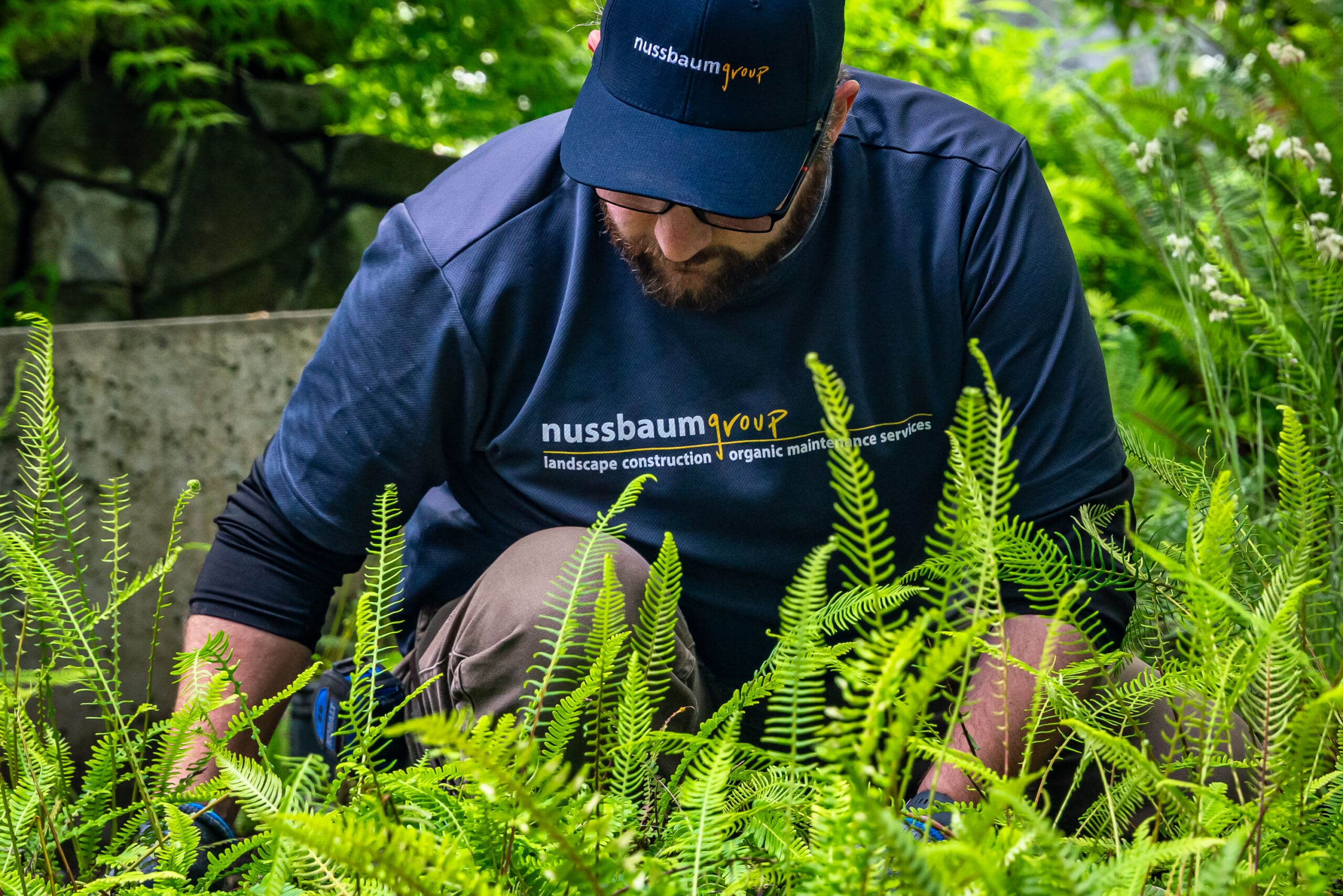
Dale Nussbaum, founder and CEO of Nussbaum Group, Inc., based in Redmond, Washington, says one of the biggest opportunities the industry is missing when it comes to telling its environmental story is helping people understand that sustainability is not a separate goal from creating exceptional landscapes.
“The two go hand in hand,” Nussbaum says. “When we make thoughtful decisions, use sound horticultural practices and organic materials, and care for landscapes with a long-term perspective, we create spaces that are healthier, more resilient, and better for everyone they serve.”
Match Your Words with Your Actions
Before you can begin sharing about your sustainability efforts, Nussbaum says you must first believe in the steps you are taking to minimize your environmental impact while still delivering a great result, cement those steps by incorporating them into your values, and finally create the processes to deliver them.
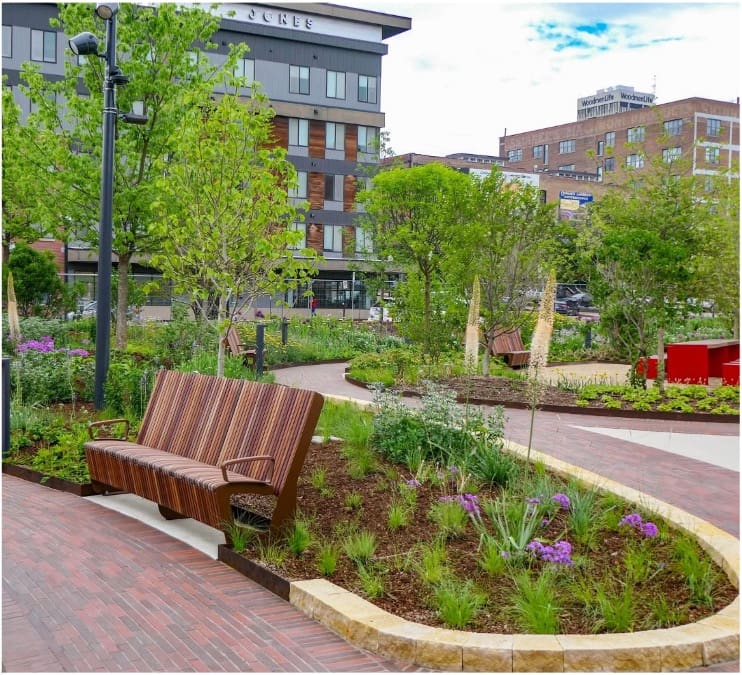
“It has to be a part of your DNA if you are going to build a reputation around it,” Nussbaum says. “We did the hard work to make our sustainable work an unflinching part of who we are, and we review our actions every day to make sure we are walking our talk.”
Mulhall says they are a purpose-first business and the reason they operate as a company is to beautify their community.
“We don’t mean that in the sense of making things more pretty, but in the sense of we believe that we as people have a natural and innate connection to the natural world,” Mulhall says. “We think that the real environmental work we’re doing is reminding people of that connection. We really see it as our charge in our landscape business to bring that natural world to where people already are living and working and playing.”
Managing Misconceptions
You can encounter different types of customer misconceptions when it comes to communicating your environmental impact, but the best way to address each one is through thorough education.
“They don’t know what they don’t know because they aren’t sure where to start researching, so they tend to think everything is bad,” says Don Zerby, CEO of Ecolawn, Inc., based in Eastlake, Ohio.
Zerby says all of their branding is designed to educate clients about their environmental responsibility efforts in the services they offer. They achieve this through in-person communication, a monthly newsletter, social media, and educational blog posts on their website.
“The mass media is such a powerful force,” Zerby says. “We’ve always felt the need to educate our staff so that they can educate the consumer who subsequently becomes a teacher when others approach them with misinformation.”
Mulhall says one point they strive to educate their clients on is that even making a property 10% better can make a big impact.
“We’re not as inclined to talk about wholesale changes,” Mulhall says. “We’re not oftentimes very successful there. But how do we incorporate small movements towards a deeper connection with the natural world that can then build not only within that property, but on other properties around them?”
Nussbaum adds that sustainability in landscape stewardship is not about a single practice.
“It’s the result of hundreds of small decisions over time that are aimed at the big picture of maintaining a healthy, self-sustaining ecosystem,” Nussbaum says.
Nussbaum says that, in their case, most clients believe opting for 100% organic means compromising on aesthetics.
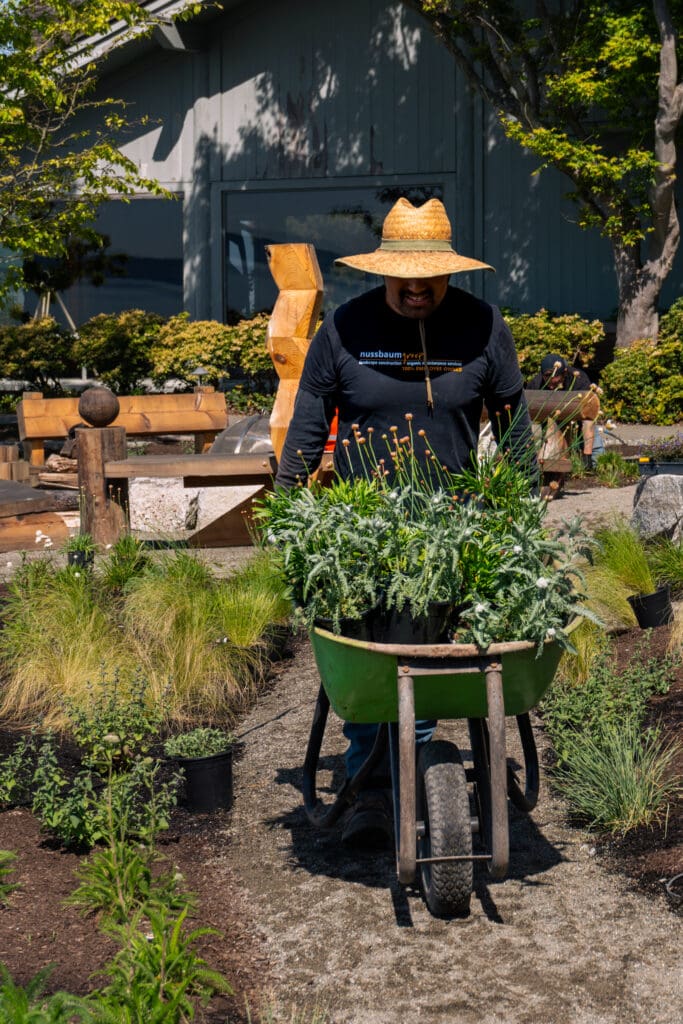
“We have some of the most beautiful, lush, amazing gardens in the Pacific NW and they are 100% organic,” Nussbaum says. “When you start with the right methods, use the right horticultural techniques, pay attention to and test for what the landscape needs, and be proactive, there are no compromises.”
Another misconception Nussbaum combats is the belief that organic services are more expensive because they are not using herbicides and pesticides. He acknowledges that while organic maintenance does call for more manual labor in the short term, it is not forever, as these practices can create a healthy, self-sustaining ecosystem.
“The aesthetic and financial cost of replacing a tired landscape with sterile soils and unhealthy plants when not maintaining organically is far more than the minor incremental difference annually,” Nussbaum says. “It’s all about smart investment for the long term.”
While educating clients about your impact can help distinguish your company in the marketplace, Mulhall hopes environmental stewardship becomes less of a differentiator over time.
“My hope is that it doesn’t differentiate us from our competitors but invites our competitors to join the journey that we’re on and make our entire community better and our entire community live more in concert with the natural world,” Mulhall says. “We’re more focused on growing that conversation and inviting people to participate than we are on this being something unique that we’re doing.