
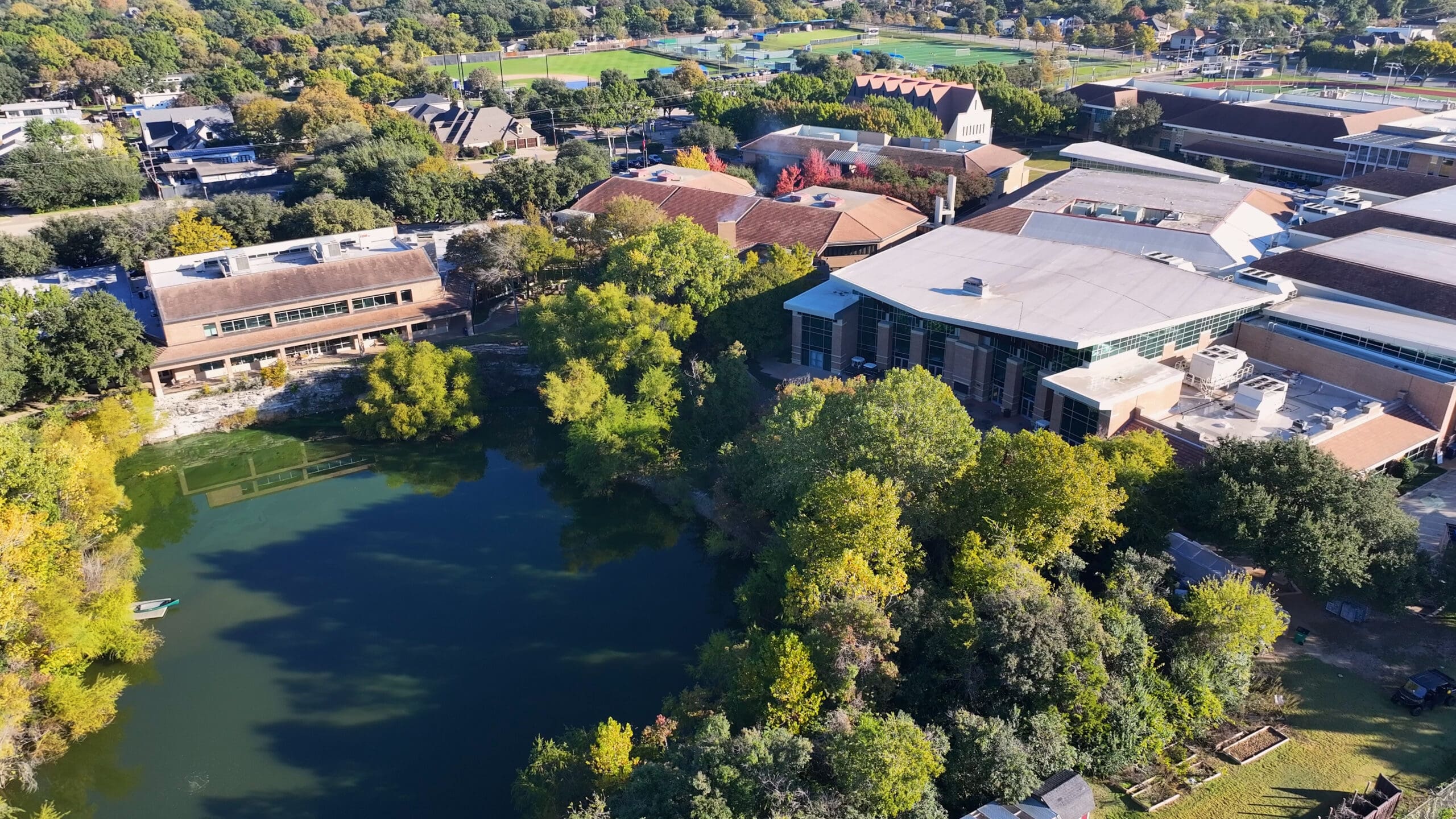
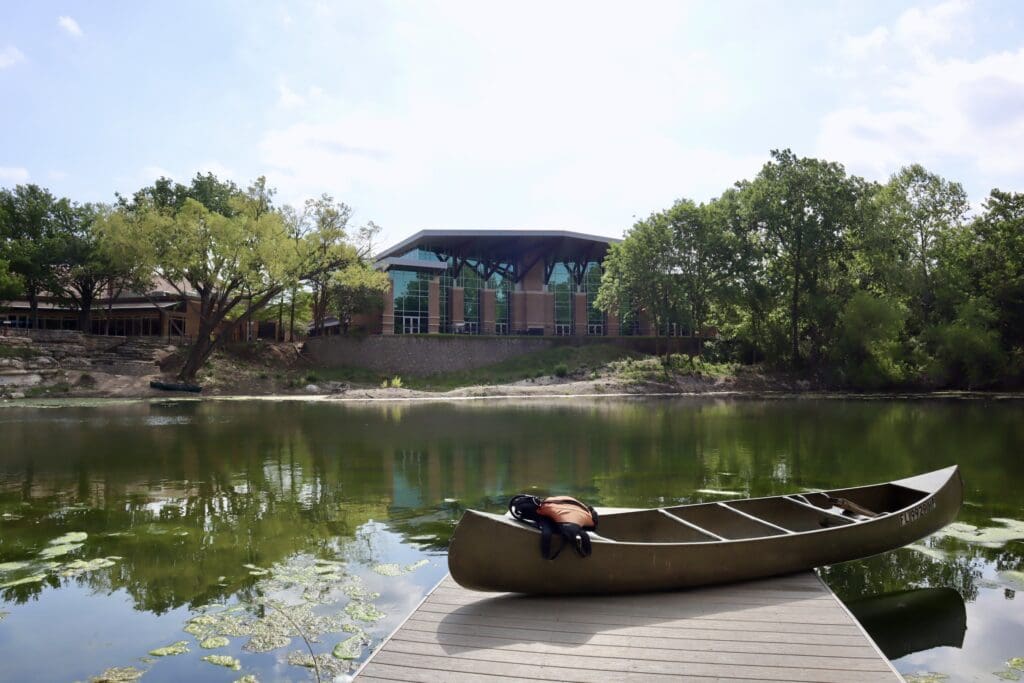
For many years, this quarry was a notable feature of this private school in Dallas, Texas. Over time, the site became neglected, overgrown with vegetation. This led to safety concerns for students and reduced the visual appeal of the area. To restore order, the school reached out to Southern Botanical, Inc., based in Dallas. Their efforts led to them earning a 2025 Gold Award of Excellence.
“Winning an Award of Excellence is a tremendous honor and a reflection of our team’s dedication, innovation, and commitment to excellence,” says Kenney Shook, certified arborist with Southern Botanical. “It recognizes not only the craftsmanship required to complete a technically demanding project but also the expertise of our ISA Certified Arborists and our TCIA Accredited Tree Care program in protecting and preserving the landscape throughout the process. This award reinforces the trust our clients place in Southern Botanical and demonstrates our ability to deliver exceptional results — even on the most challenging projects.”
Access to the quarry was limited, especially along the steep banks. The team brought in boats to improve the workflow, but progress was slow because of cold water and problems with the boats. This was one of several changes to the original plan.
“As the project continued, we had to adapt our approach to accommodate a demanding timeline,” Shook says. “These challenges required careful planning, ongoing coordination, and creative problem-solving. By remaining flexible and collaborating closely with our field teams, we were able to keep the project on schedule without compromising quality, safety, or craftsmanship.”
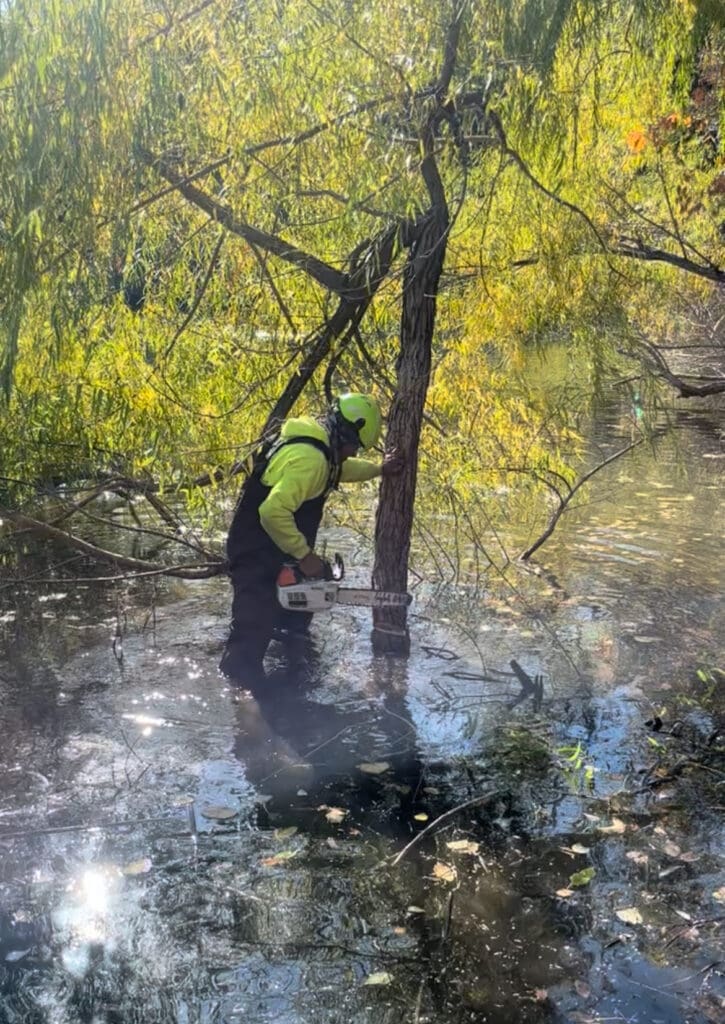
Multiple crews worked in different areas of the quarry, which also contributed to the challenges. Since the motorized boats were a problem, the crew adapted by using waders and pull saws to remove vegetation.
The team also encountered various safety hazards at the quarry, which required a proactive approach to avoid injuries.
“Crew members used communication headsets to maintain constant coordination, wore high-visibility safety gear, and relied on specialized rigging systems to safely transport personnel, equipment, and materials across the challenging site,” Shook says.
In the most dangerous areas, crews were harnessed to fence posts to remove trees from the ledges. Other hazards included poison ivy, snakes, and bobcats.
While much of this project involved removal, the team also preserved the existing landscape.
“Rather than using conventional methods that could disturb the surrounding landscape, all debris was carefully transported by raft to a centralized collection point on the lake,” Shook says. “From there, it was winched to an elevated staging area for removal. This innovative approach minimized soil disturbance, protected existing trees and vegetation, and reduced the project’s environmental impact.”
After reaching the staging area, a little giant loader transported the brush to a wood chipper.
As the brush was removed, the quarry was restored to its former state. And for Shook, this project was unique compared to others.
“It was unlike any other because of its remote location, the size of the lake, and the extremely limited access to the site,” Shook says. “Combining landscape construction with expert arboricultural care allowed us to successfully complete a highly complex project while preserving the property’s natural character.”
Interested in participating in the Awards of Excellence? Contact the NALP Awards team!