

Too often, sustainability is viewed through a keyhole. Rather than merely focusing on the environmental aspect, choosing to operate sustainably should make sense for your business holistically.
“Every decision we make must equally support our people, our company, our clients and our community,” says Dale Nussbaum, founder and CEO of Nussbaum Group, Inc., based in Redmond, Washington. “Being sustainable matters because we can look each one of these stakeholders in the eye and not only say, but absolutely know, that we are doing the best we can to both protect them and make a positive impact on their lives and their futures. It just feels right with no excuses. Sustainable methods and most importantly materials allow us to do that.”
Jennifer Nichols, president of GreenWeaver Landscapes, based in Media, Pennsylvania, says they strive to be a triple-bottom-line company, focusing on people, planet and profit.
Sustainability in Action
Sustainability comes in many forms. Nussbaum says it is not just the big gestures; it is the little things done repeatedly that stack up.
Nichols says when it comes to people, they offer a great place to work with top-tier benefits to everyone in the company. They are also actively involved in the community through volunteering, teaching, and donating time and resources.
Nussbaum says they chose to become an ESOP in 2024 to help people build sustainable lives and futures while keeping jobs and the positivity they bring as a company in their local community.
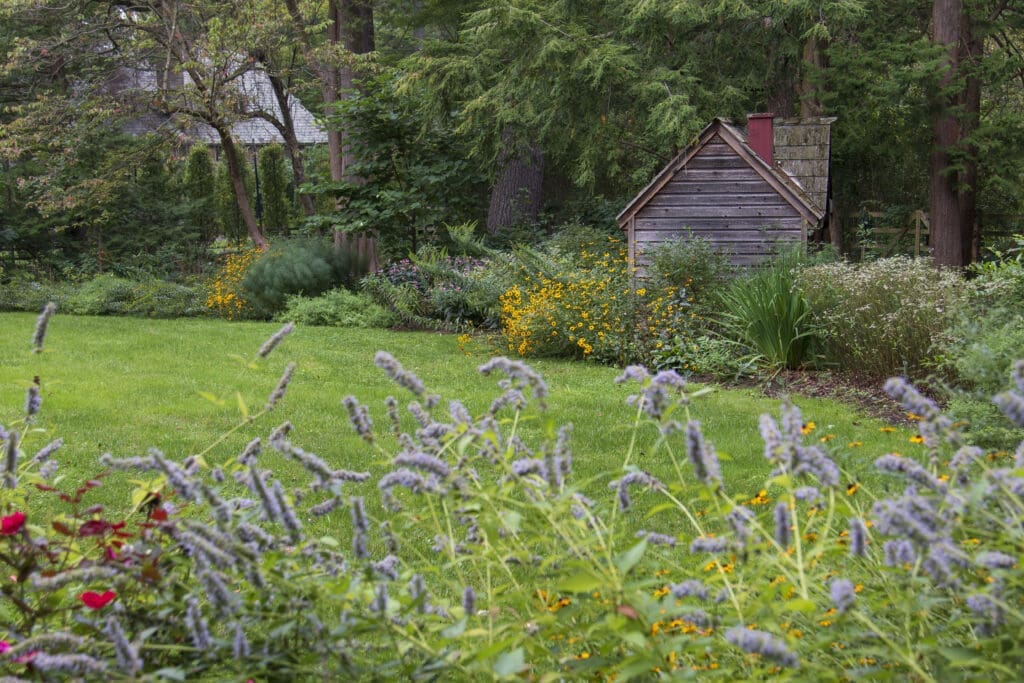
For the planet, Nichols says they approach each property holistically and look at the plants, how water moves, the soils, and the people using the space, and then consider how they can improve it.
“Specifically, we add as many native plants as we can to create habitat,” Nichols says. “We leave the leaves in the fall and leave cut stems during spring cleanup season for insects. We manage water by minimizing turf and other impervious surfaces, and we try to keep stormwater on site with rain gardens and other SMPs. When it comes to pesticides, we use IPM and always allow clients to opt out.”
Jeff Rossen, CEO of Rossen Landscape, based in Great Falls, Virginia, says he also makes an intentional effort to utilize native plants as they are adapted to their soils, more resistant to disease and insects, and require fewer inputs.
“When we can design with nature, it just goes much better with regard to the plant health in general,” Rossen says. “That’s one reason to do it. When we have a job, and we know which plants are going to thrive, which the natives always do, it reduces the amount of warranty work we have to do. It reduces the amount of recurring maintenance that needs to be done on the site. Those are some of the benefits of using the natives.”
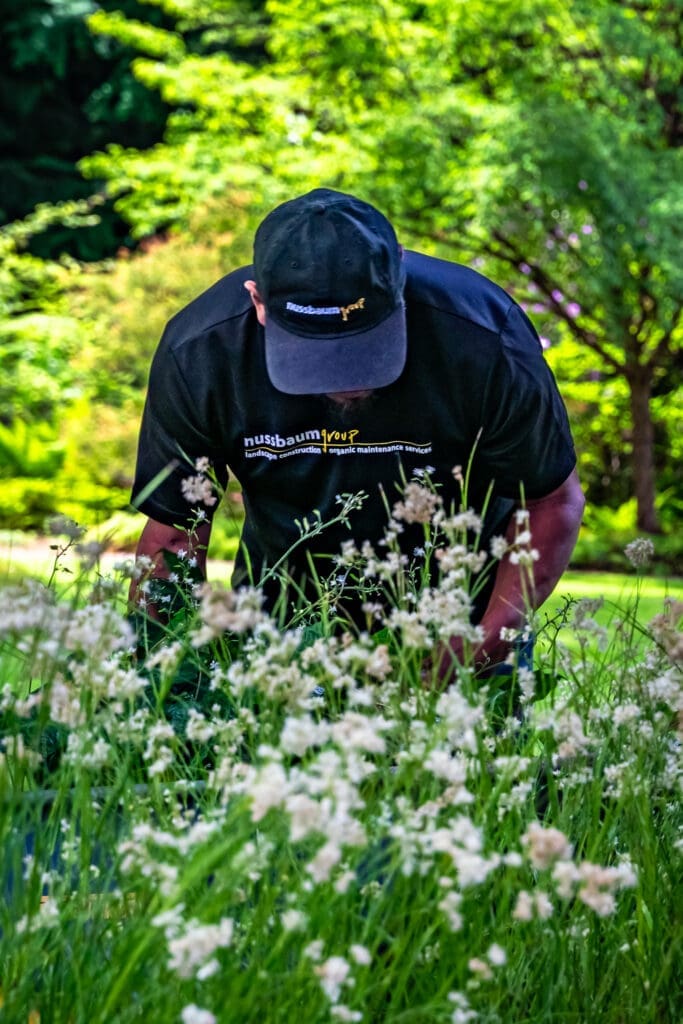
Nussbaum Group chooses to maintain all of their landscapes 100% organically, not as an option, but the only method.
“Being 100% organic means using the best horticultural methods and integrated pest management and other ground-breaking techniques, combined with 100% organic materials to build healthy, self-sustaining ecosystems,” Nussbaum says.
Additionally, GreenWeaver has converted to battery-powered equipment and Nussbaum Group is looking to make the transition as well.
Rossen says while battery-powered string trimmers are equally effective as gas models, he doesn’t appreciate when legislative regulations force change, such as banning gas-powered backpack blowers.
“We’re just not able to do the job efficiently,” Rossen says. “We want to be sustainable, but we also want to be able to do our job.”
Profitability cannot be overlooked either, as a company cannot operate for long otherwise. Nichols says they achieve this through business planning, setting standards, documenting processes, training, and building a culture of accountability. They have seen steady growth as a response.
“If you can make money at landscaping, you can make money at ecological landscaping,” Nichols says. “So why wouldn’t you?”
Nussbaum says focusing on quality and operating ‘The Nussbaum Way,’ which is the process of how they treat a client from the first phone call to the perpetual maintenance of the property, allows them to be successful with clients who have been with them for over 20 years.
“This process is built to deliver consistency and is the foundation for training – our people make it better, but no one person is responsible for its success – especially not just me as the founder,” Nussbaum says.
Measuring Impact
How you go about measuring the impact of your sustainability efforts should be multifaceted as well.
For Nussbaum, they track their financials closely, but their true lens is ‘Are our landscape exceptional?’
“I am proud to say that in the over 20 years we have been building and maintaining we have never flinched once on doing the right thing,” Nussbaum says. “Looking back over decades of being proud of every single project we’ve done is a huge measure, and our employees (now owners) are proud of that.”
Nichols says one way they avoid becoming complacent is by becoming a 1% for the Planet business partner.
“This means we commit to donating 1% of sales to environmental non-profits, and it holds us to very high standards,” Nichols says. “We are very proud of the fact that we have donated over $100K to local environmental organizations in both monetary and in-kind donations.”
Rossen says they know their actions are the right thing to do even when they don’t see the results firsthand.
“The results are in the watershed, in the rivers and in the streams and in the atmosphere,” Rossen says. “While we don’t see it, per se, we can feel the impact that we’re making.”
Advice For Others
Committing to sustainability needs to be authentic, not driven by marketing. Nussbaum encourages others to be sincere in their approach, as it improves the industry as a whole.
“To be more sustainable and to approach sustainability, I believe you must believe,” Nussbaum says. “Focus on the facts and the reality. A sustainable company, and sustainable work is not a fantasy. It is doable and beyond rewarding from every aspect – quality of work, finances, impact, pride, you name it. Why would you not want that?”