
It’s common for a forensics team to be called in to investigate the questionable death of a person, but are you taking the time to conduct a forensic analysis when a tree dies on your customer’s property?
“Conducting forensic analysis on dead, dying or failed trees can give a plethora of information and insight into the tree’s life and how it was treated,” says Scott Seargeant, ISA Certified Arborist and owner of Seargeant Landscape & Arboriculture, based in Visalia, California. “There are several reasons to perform a tree autopsy, including finding fault or assigning a responsible party, especially when there is improper treatment or care.”
As lawsuits over mis-pruned trees continue to increase, conducting forensic analysis on trees can help you defend your projects if you become involved in a dispute over dead or damaged trees.
What Does a Forensic Tree Analysis Include?
Seargeant says the main items to investigate include past pruning or mis-pruning cuts and how that affected the health and structure of the tree afterward, which typically involves a tree autopsy.
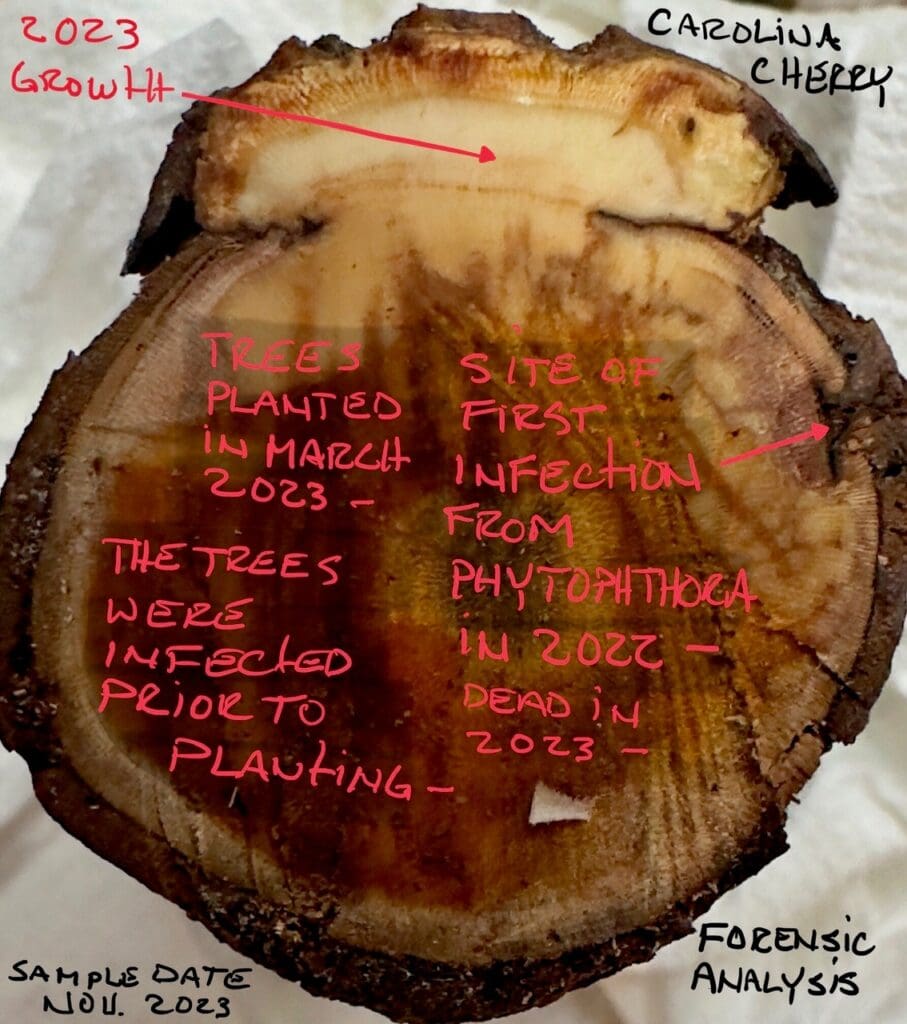
Photo: Scott Seargeant
“To do this you must have a solid understanding of tree anatomy, physiology and growth rings and how false growth rings occur, etc.,” Seargeant says.
Trees often hide their injuries with new growth or wood, but these can be discovered after forensic analysis, revealing if mis-pruning, root injury or girdling from tree ties occurred.
He says knowledge of the chronological age of the tree as well as its history, care and mistreatment are essential for diagnosing the initial causal agent.
“These facts are helpful to confirm a diagnosis or specific findings during the analysis,” he says. “An example could include how often and how much water the tree(s) receive over time. Spraying records help especially when herbicide damage or death is suspected.”
Determining Cause of Death
Oftentimes, weather such as wind, rain or snow gets blamed for tree death, but these are rarely the initial causal agent.
“The wind, rain or other natural stressors usually cause structurally weak trees to fail,” Seargeant says. “Mis-pruning is often the initial causal agent to tree death and/or failure.”
To reach the proper cause of death, you need to take tree anatomy, physiology, and the species of tree(s) you are working on into account.
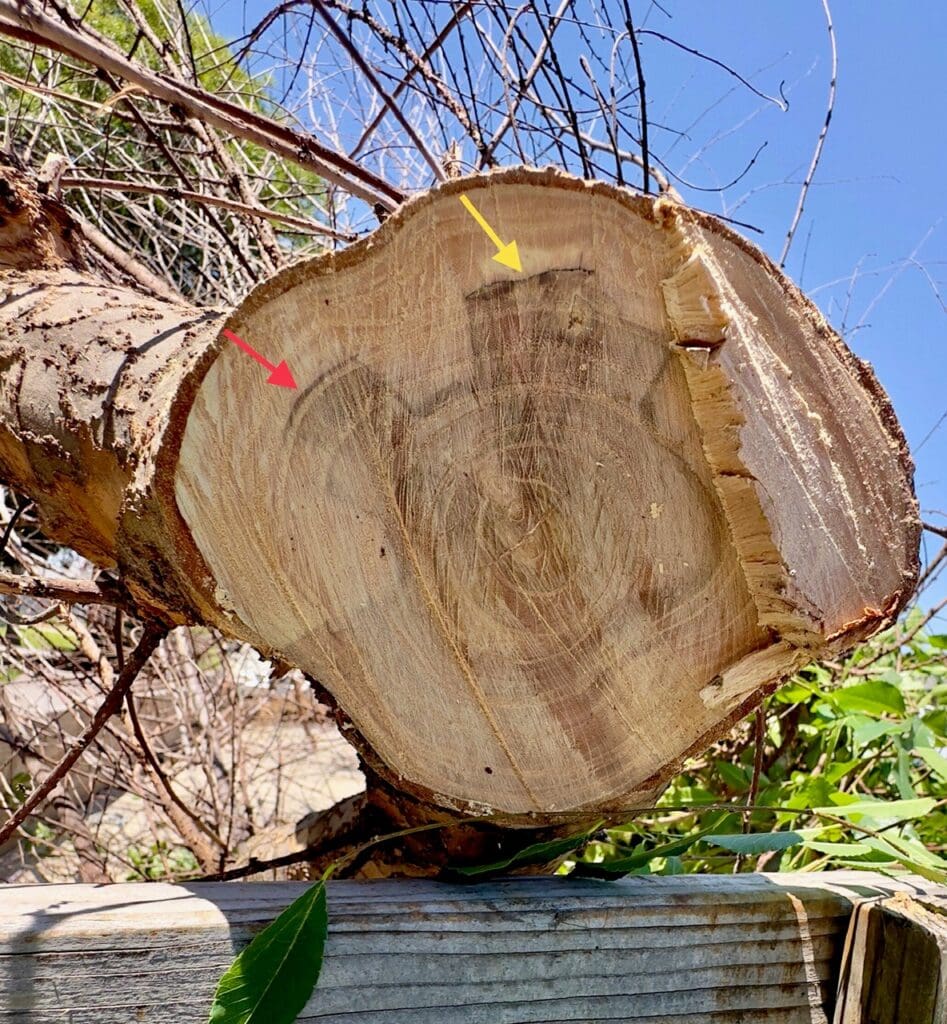
Photo: Scott Seargeant
Seargeant says typically there is one initial causal agent involved in tree death, and other factors such as boring insects can be confused as the initial agent. However, these insects detect and attack weak trees.
“The trees have become weak from mis-pruning, then they are invaded by boring insects,” Seargeant says. “Pruning was the initial causal agent; the boring insects were a secondary agent.”
Both acute and chronic injuries can lead to tree death and failure. The difference between the two is the time between the injury and the death. For instance, topping or over-pruning a mature tree in winter can lead to a chronic death. In the spring, the tree will sprout epicormic growth, and this new growth can’t provide enough energy to support the tree, causing it to slowly starve.
“This is when secondary agents including insects and disease invade the weak tree,” Seargeant says. “Usually, the tree dies within one to three years.”
Meanwhile, if the same topping is conducted in the summer, this will lead to an acute injury that results in a quick death. The tree will try to sprout epicormic growth, but the extreme heat increases the need for water, and the disruptions to the transportation system limit the tree’s distribution, causing it to die of dehydration rapidly.
“Pruning in all forms is the number one cause of tree injury,” Seargeant says. “Mis-pruning is the number one cause of tree death in urban communities. Other injuries include tree spikes, root pruning, vehicle and mechanical damage, chemicals, fertilizers, over- and under-watering, and more.”
When to Conduct Forensic Tree Analysis
Seargeant says that he opts to examine every tree he can to learn what happened and make adjustments in his tree care practices to eliminate causal agents, but not every tree needs to be analyzed.
If you do opt to conduct a forensic analysis, it’s best to communicate your findings in a professional written report. Include photographs, parts of the tree or physically show your client your findings on the tree.
“Most of the time the initial causal agent will be a result of improper maintenance practices and/or site conditions,” Seargeant says. “Do not be afraid to identify those responsible for tree death or failure. We must hold others accountable if we expect our industry to change.”
Advice for Others
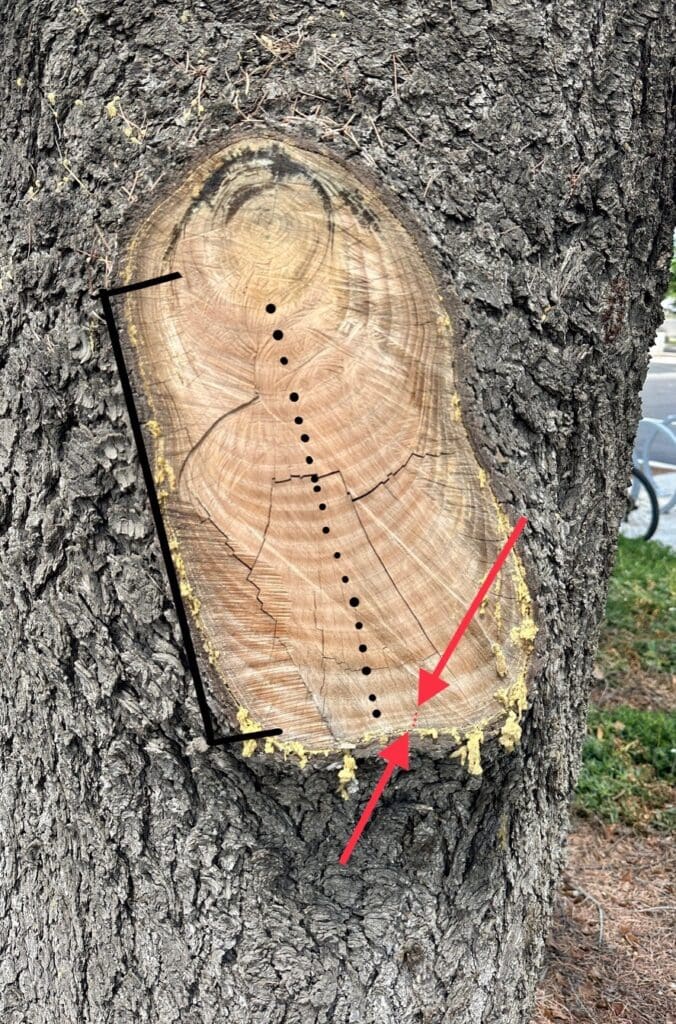
Photo: Scott Seargeant
Seargeant cautions that while this field has relatively little competition, it is not something to jump into on a whim. It requires strong background knowledge, science and experience to properly diagnose the causal agent(s) of a tree death and disfigurement.
“Forensic analysis is not widely taught,” Seargeant says. “I learned it from attending many of Dr. Alex Shigo’s seminars, then practiced it in the field until I felt comfortable using it commercially and in legal matters.”
He also recommends creating a collection of tree death data to broaden your knowledge.
“When a tree dies in your area, ask if you can have sections of the tree to perform an autopsy,” Seargeant says. “Even small trees can provide information. Take photos and put them in a file for future reference.”