
When your business is growing, there comes a time when there is simply not enough space to operate efficiently at your facility.
Investing in expanding or relocating is a major financial decision, which is why it’s important to think through all the various considerations. Buying more land or a new building shouldn’t just solve the issue of providing more space but serve your long-term strategic goals as well.
When Is the ‘Right’ Time?
You don’t necessarily have to wait until you’re bursting at the seams to begin considering a new location.
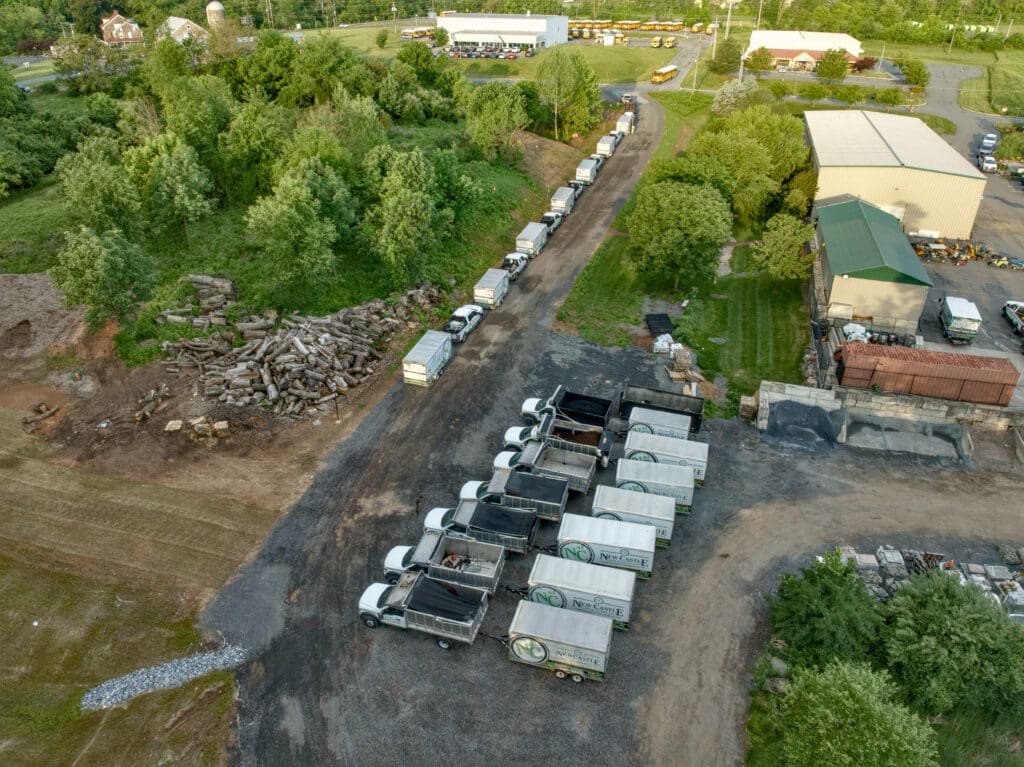
Brad Stephenson, co-owner and CEO of New Castle Lawn & Landscape, based in Birdsboro, Pennsylvania, says they knew they needed more space five years after they moved into their facility in 2007. But the real breaking point was in 2020.
“We calculated the time it took to back vehicles and trailers up into the parking lot, and we couldn’t believe the amount of time that had to be spent. You need a spotter, a driver, guys punched in. We calculated $125,000 just in backing trucks up.”
He says not only were they losing hours spending time maneuvering trucks, but the morale of the team decreased as well.
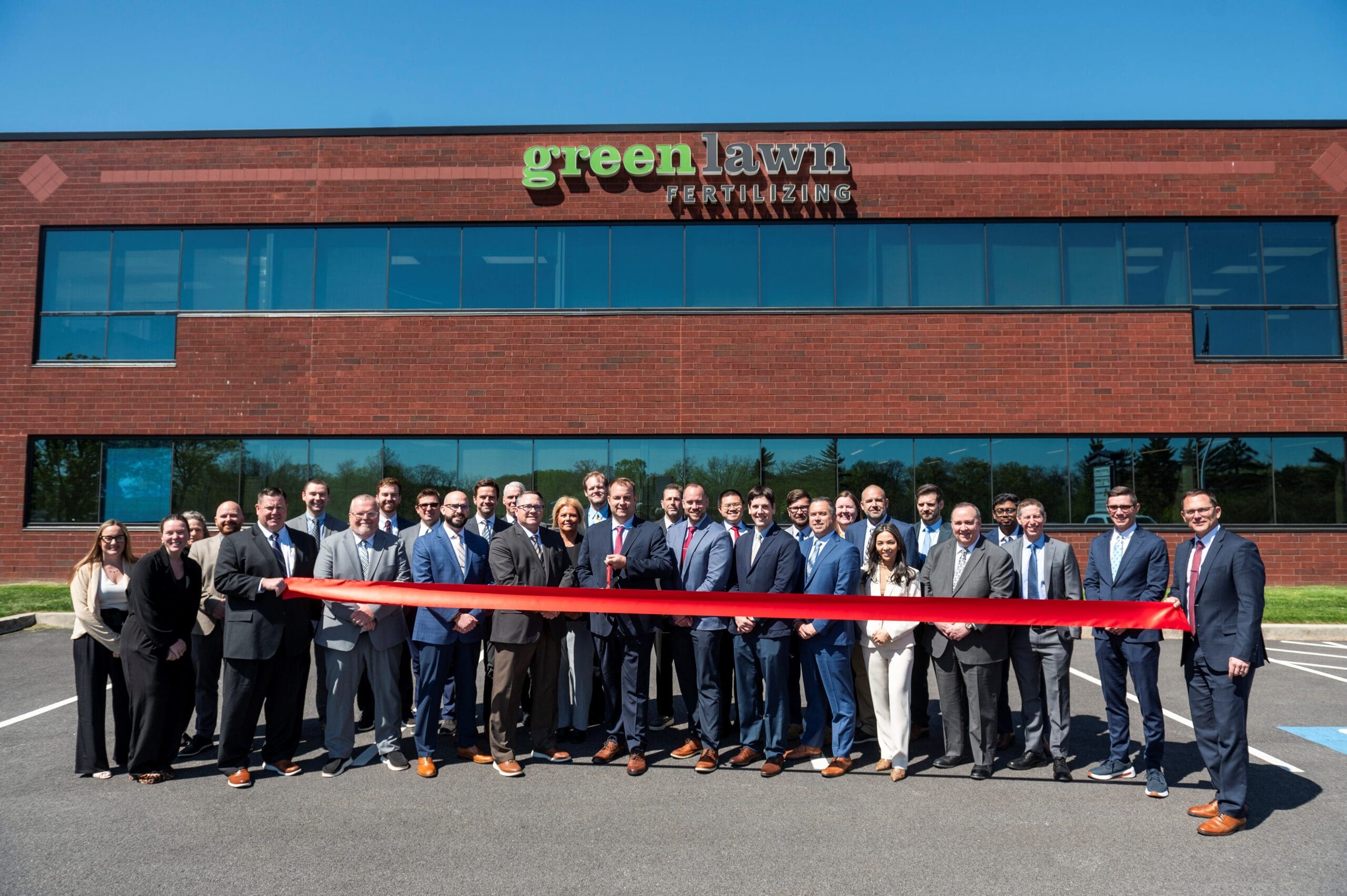
For Green Lawn Fertilizing, based in West Chester, Pennsylvania, it was a combination of not having enough space to host training events on site and not having a professional place to meet.
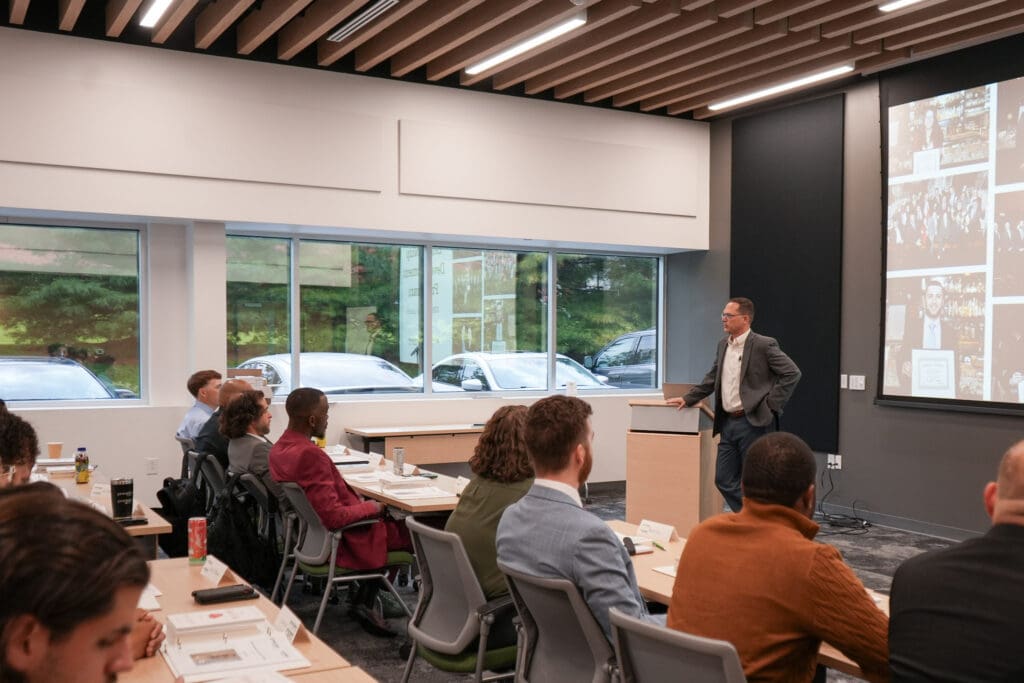
“Professionalism is something that permeates every part of our business, and it was getting increasingly difficult to do that when cramming people into small spaces and bringing managers in for training sessions on how we believe our branches should look and the professional image that we should have at the company,” says Josh Willey, president and COO of Green Lawn Fertilizing.
When contemplating if expansion a good investment, consider your mission and overall business strategy.
Willey says it’s very easy for a new headquarters to turn into a vanity project, which is why they took the time to ensure they had invested in their branch locations first. He advises owners to determine if the resources for a new building may be better placed somewhere else at that stage of the business.
“Does a professional building enhance your culture?” Willey says. “Does it take away from it? I think if we had built this five years ago, I think it would have torn our culture down, not up. This was an investment that made a whole lot of sense because it reinforced our culture. It’s in line with our long-term strategy of attracting top talent into our headquarters facility.”
Stephenson says it’s also critical to understand your market and look at your three, five and 10-year vision.
“Make sure that you’re not just dropping money just to get more space to save 5%,” Stephenson says. “That doesn’t make much sense. Your sales have to go up.”
Relocate or Expand?
Once you’ve found that investing in your facility is the right move financially and strategically, then comes the decision of whether you need to relocate entirely or if you can expand at your current location.
Many factors will determine if either of these is an option. If you are hemmed in on all sides and there is no additional land near your property, expansion is obviously off the table. Stephenson says originally, they had looked at moving to other locations, but when they calculated the costs of the disruption, they found it was more appealing to purchase the 12 acres of land next door.
“We just wanted one acre, which is what we asked for, but the guy did not want to subdivide,” Stephenson says.
Their realtor also insisted the property owner was not motivated to sell.
“I ended up writing a love letter to the owner of the property, and through that, he came back, and he actually knocked off $100,000 off of the total price, just with that love letter telling him what we do as a company because he wasn’t on social media, he didn’t realize what we do for the community,” Stephenson says.
With this new parcel of land, New Castle has been able to continue operating without missing a beat, and they’ve gained more visibility with road frontage.
If you do decide to develop land for your needs, Stephenson stresses you need to be prepared to navigate the red tape. Even though their parcel is zoned for commercial use, they still have to address specific township requirements.
Green Lawn Fertilizing was also fortunate enough to buy a building only about 100 yards from their previous location.
“We were pretty dead set on staying in the zip code where the business was founded,” Willey says. “It’s where branch one is, our original location, and there’s a lot of property that is facing this highway here, Route 202, so we were looking for something in the zip code on this highway.”
If you have narrow location criteria, Willey recommends working with a broker who is familiar with the area, as they will know what is about to become available and which landlords could be persuaded to sell.
He says that by buying a building with good bones, they were able to take roughly 65% of the space and do a custom buildout exactly how they wanted. The remaining 35% they currently lease to other tenants, which helps offset the expense of the facility. Willey says this is a nice-to-have aspect. He doesn’t recommend owners consider purchasing a building where they are dependent on tenants staying in order to stay on target.
“You have to be so transparent with those tenants and exactly what your goals are,” Willey says. “No conflicts, we don’t need a distraction. We’re not landlords. That’s not our primary business, and if one of our tenants was upset about something, we would be very amenable and let them break the lease.”
Questions to Ask Before Investing in a Facility
Before buying, leasing, relocating or expanding your facilities, ask yourself these questions:
- What specific problem are we solving: office space, yard flow, training capacity, recruiting, morale or future growth?
- How much are current inefficiencies costing us?
- Does this investment align with our core values and strategy?
- Have we already invested our resources in other necessary areas?
- What size space does our growth plan require?
- Is our market large enough to support the growth needed to justify this investment?
- Will this facility improve employee experience or simply look impressive?
- What zoning, township requirements or permitting hurdles could slow the project?
- How will this impact cash flow?
- Are there financing options beyond a traditional bank loan?
- Are we planning enough future capacity without overextending today?