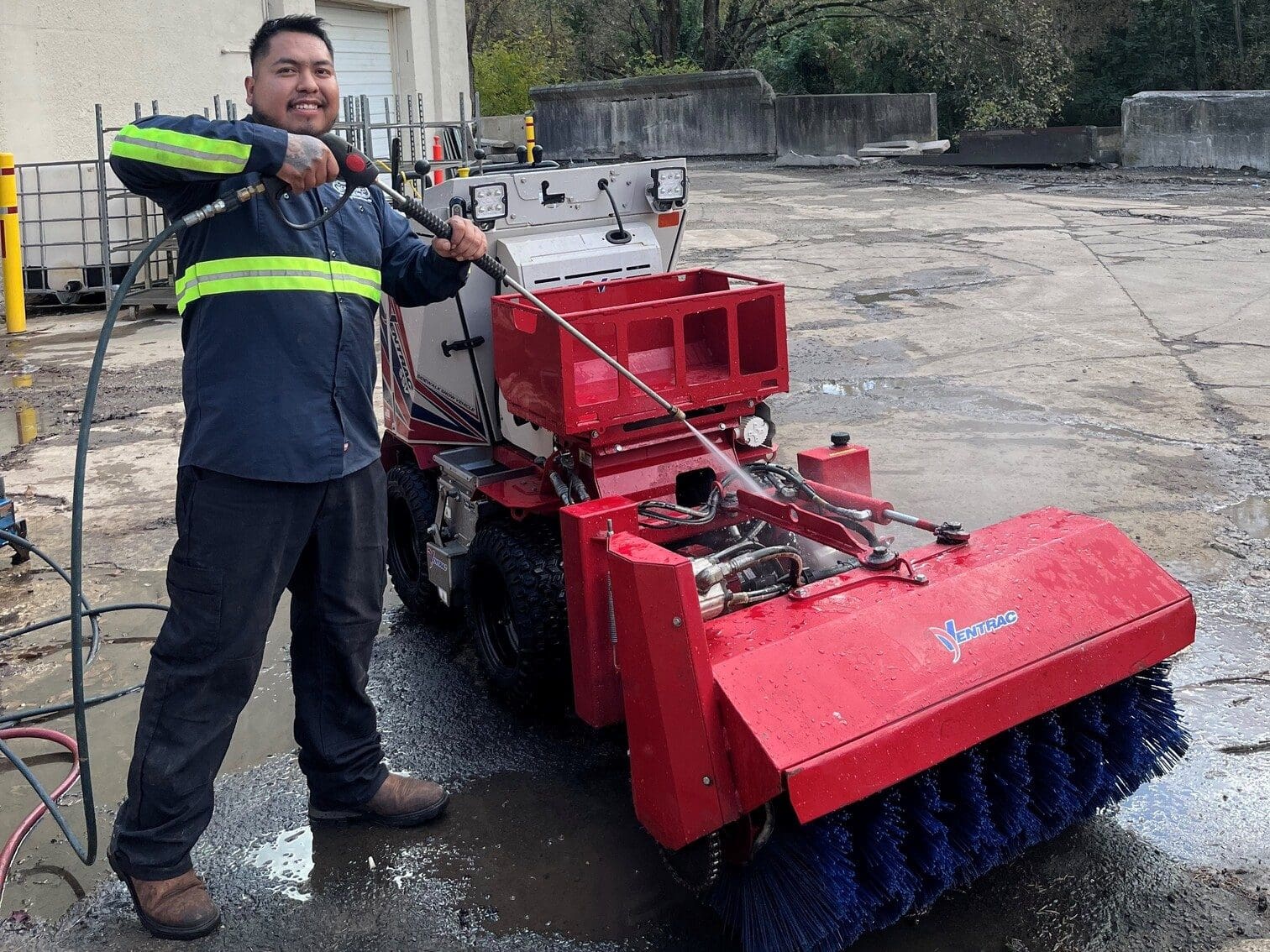
When you’re evaluating your snow fleet in the summer months, being proactive doesn’t just mean conducting preventive maintenance on your plows and spreaders.
This is also a chance to reflect on the bigger picture and ask if your fleet matches the type of snow work your company wants to perform.
Match Your Machines to Your Ideal Client
It’s easy to end up with a hodgepodge of different snow and ice management equipment if you’re saying yes to any and every client. However, thinking critically about your ideal client can help you fine-tune your fleet.
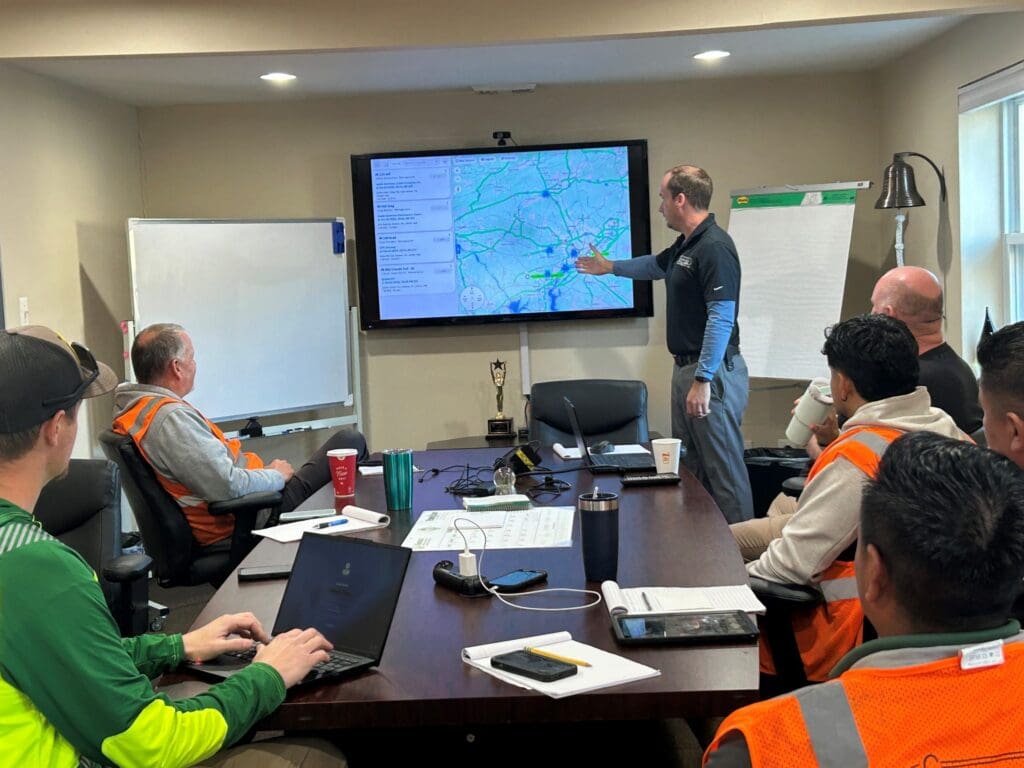
“In the green season, we all identify your ideal client and target those areas,” says Alex Bonnard, director of purchasing and estimating for C. Caramanico & Sons, Inc., based in Upland, Pennsylvania. “It is the same for snow. Are you looking for large commercial sites where you can park a bunch of machines? Or are you looking for residential route work? Your snow-removal clients should mirror your green-season clients. Those are the types of properties and clients your crews are used to working with.”
Chris Kujawa, president/CEO of Kujawa Enterprises, Inc., a Sperber company, based in Oak Creek, Wisconsin, encourages owners to ask what their book of business looks like and if it is working for them.
“Are you skewed more to large wheel loader type sites?” Kujawa says. “Are you servicing an outsized amount of ‘sidewalk labor’ sites? Are you doing more typical suburban office sites or HOA-type accounts? Segregate those into groups and analyze the things that will help you gain some insight.”
Some of the questions to ask when determining where to focus on and what equipment you need include:
- What is my best profit margin per segment?
- What are my highest pain points per segment?
- What are my biggest staffing issues per segment?
“Choose the type of sites that you feel you can service best,” Kujawa says. “Evaluate your people, your client expectations by segment, your supervisory capabilities and capacity, your labor skill sets and your fleet. Once you have a handle on that, analyze your readiness and proceed accordingly.”
Expanding Your Fleet
Reviewing your data from the previous snow season, along with your current contracts, can also help you determine whether additional equipment is actually needed.
“Start by assuming you will renew all the contracts you had last winter,” Kujawa says. “Evaluate each operation and determine if you had the right pieces to meet the demands of that site and that you felt you did possess operational efficiency. If the answer is no…make a change! Do this across all service sites and make changes as needed.”
Kujawa also recommends conducting reviews during and after the season with the supervisor in charge of those sites. Honestly, ask yourself, “Are we using the best type of piece for this job?”
“Snow work is about safety, discipline, and matching the equipment to the site,” Kujawa says. “Wrong equipment (and people for that matter) and the job will not perform no matter what.”
Once you’ve ensured you have the right machines for your current clients, then you can forecast who would be a good candidate for a new snow contract, determine what those properties might need, and purchase accordingly.
Bonnard says by tracking hours on their equipment, they can determine if each piece is being deployed efficiently. This also lets them identify which machines are being used the most and least.
“Because of the early planning, we can pencil in equipment and crew assignments,” Bonnard says. “This allows us not to be spread too thin. If a desirable contract comes in, we know exactly what is available to assign to it or if we need to secure additional equipment.”
Your snow fleet doesn’t necessarily have to be the biggest. What matters is having the right machines for your client mix.