

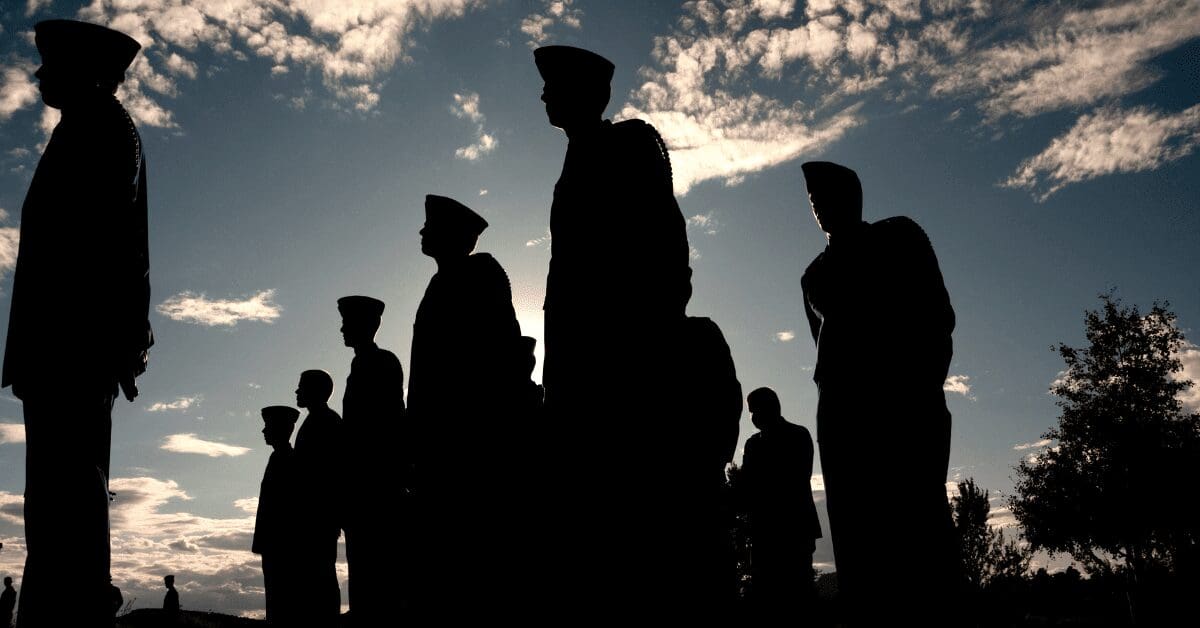
Veterans are accustomed to leading without micromanaging, empowering without losing control and having a mission-first mindset. This makes them a powerful asset to your team.
“They’re used to hard work, following structure, and adapting quickly,” says Mike Felts, division vice president for Ruppert Landscape, based in Laytonsville, Maryland. “Those qualities make them a perfect fit for the landscape industry, where conditions change constantly and teamwork is everything.”
Tapping into the Military Mindset
Serving in the military reshapes veterans’ thinking to approach tasks systematically by planning, executing and adapting.
“That mindset carries over perfectly to landscaping, where we’re constantly managing people, equipment, schedules, and customer expectations,” Felts says. “You learn to stay calm under pressure, assess the situation quickly, and make decisions that keep the mission (or in the case of landscaping: the project) on track.”
Joe Lewis, VP of implementation for Monarch Landscape Management, based in Houston, Texas, says he constantly takes the time to observe, orient, decide and act when refining processes.
“It’s about staying disciplined yet adaptable in every situation,” Lewis says.
Jesus Guiterrez, director of administration for United Veterans Construction and Landscape Solutions, Inc., based in Fort Worth, Texas, says he teaches team members that they are part of a system that must follow processes in order for them to accomplish the mission. He says he prioritizes his team members first, then the equipment the team needs, and then the client.
“If we focus on the first two, then automatically, the client will be happy, simply because we’re providing the best service,” Guiterrez says. “Our team members are going to be engaged. Our equipment is going to be either working at 100% or if not, because I’m I do accounting and finances, I know what money we can spend in buying new equipment.”
Dan Smalt, Safety, Health, Environment, and Procurement (SHEP) team safety workshop assistant for Senske Family of Companies, says he learned in basic training the concept that being efficient and effective requires significant effort from everyone on the team.
“The military teaches you to examine a problem or task, quickly establish what steps to take that will resolve the issue, act decisively, and be prepared to react to a rapidly changing environment,” Smalt says.
An example of this was when Smalt’s company installed a large and complex bulk product mixing system. He did a deep dive on the fill system equipment installation and wrote detailed operating procedures on how to make, transfer, agitate and dispense lawn care and tree shrub products.
“The installation of the new system, and processes we established, resulted in a significant improvement in safe operations,” Smalt says. “We no longer need to climb ladders to add products to a batch tank and mix products. It also resulted in a substantial reduction in the time spent at the end of the day when technicians are filling equipment in preparation for the next day’s route.”
Tackling Training
Smalt says one program that has translated well into the landscape industry is the Navy’s Personnel Qualification Standards.
“The basic principle of the program is that after you have been trained in how to perform a task, you must demonstrate proficiency and sustain superior performance to get a signed off in your PQS book which then allows you to perform the task without supervision,” Smalt says.
Smalt says they use this concept in their new hire training.
Similarly, Lewis says he follows PESOS, which ensures a task has a condition and a standard. He teaches team members by preparing, explaining, showing, observing and supervising. He says they also approach training through mentorship and structure.
“Like in the Marines, we teach the ‘why’ behind every task,” Lewis says. “When people understand purpose, they take ownership, and that’s how efficiency and pride are built.”
Felts says Ruppert makes a point to train their employees under real-world conditions.
“Those coaching sessions focus on teamwork, communication, and understanding why each step matters,” Felts says. “Also, when possible, asking a team member to demonstrate what they just learned helps build muscle memory and accountability, just like in the service.”
Addressing Inefficiencies
Lewis notes the root cause of inefficiencies tends to stem from unclear intent, poor communication or lack of structure.
“Military structure with a focus on ‘chain of command’ helps reduce those challenges,” Felts says. “Everyone knows their assignment, who to report to, and what success looks like. Applying that same chain of command within landscape teams can help minimize confusion and enable more efficiency.”
Smalt notes that military thinking also helps when getting their technicians ready for the day.
“We make sure the technician looks professional in their working uniforms,” Smalt says. “While that may seem insignificant, professional appearance has a positive impact on customer perception and technician morale. The military also teaches you to perform tasks with ethics, responsibility, and discipline. Sharing those principles ensures that service for clients is completed correctly, on time, and without taking shortcuts.”
Felts says their SOPs help them stay on track and hold others accountable to that benchmark.
“We do morning inspections as teams leave the yard, we provide training, we inspect what we expect on things like safety, uniform/appearance, facilities, equipment,” Felts says. “This ensures that our teams are operating efficiently, producing high-quality, and living up to company standards.”
Guiterrez says humans will always have inefficiencies, but the military addresses this by implementing structure and keeping everyone engaged. He says one of the best ways they have boosted their engagement is through fostering open communication.
“There are employers that never connect with their employees when it comes to their family life,” Guiterrez says. “I think that’s a huge factor in letting you know team members know, ‘Hey, we really care about you.’”
Felts agrees that a cohesive team is established by taking the time to get to know people outside of work.
“Whether it’s grabbing lunch, celebrating milestones, or just catching up informally, those personal connections build trust and respect,” Felts says. “When people feel genuinely known and valued, they’re more willing to go the extra mile for each other and for our customers.”
Guiterrez says everyone on staff has to understand the meaning of teamwork.
“We try to keep UVets as structured as possible,” Guiterrez says. “We’re always thinking about ways to improve, whether it be operations or the relationships that we have with our team members. I believe if we don’t focus on the things that we have to do to make sure that we’re being effective team members, then it’ll never work.”
Join the Veterans in Landscape Network here!